

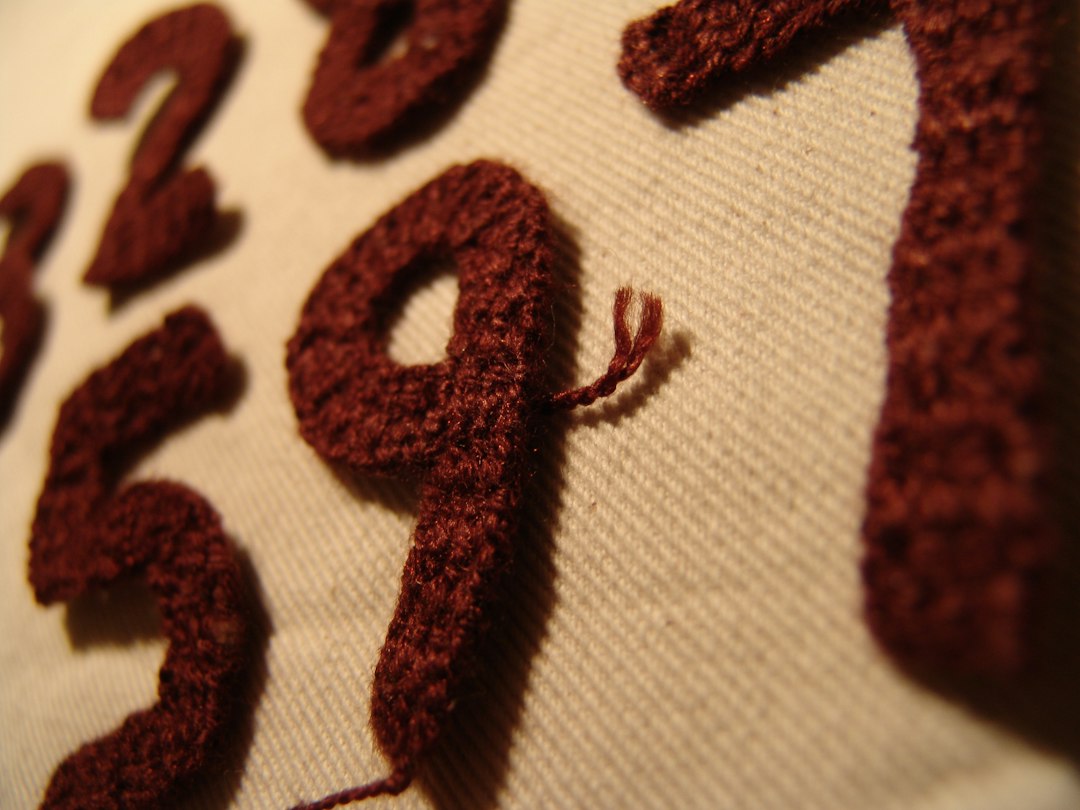




Before the first whistle blew, before you ran a route or took a shot or dove for a ball, someone already had an impression of you.
They read it off your back.
Remembering your jersey number isn't just nostalgia — it's remembering the first version of your athletic identity, the one that existed before you'd proven a single thing. That number was a signal, a shorthand, a reputation compressed into one or two digits that your teammates, opponents, coaches, and parents read before they ever watched you move. It told a story you didn't write. And somehow, it became yours anyway.
If you played any organized sport at any level, you know exactly what we're talking about. You remember that number. You may not remember every game, every score, every play. But you remember the number.
Here's why it meant so much more than you probably realized at the time.
Numbers Weren't Random — They Were a Language
Walk into any locker room and the number distribution tells you everything about how a team thinks about itself, its positions, and its pecking order. Numbers were never purely administrative. They were loaded with meaning the moment organized sport decided that certain digits belonged to certain roles.
In football, quarterbacks wore single digits and low teens. Running backs claimed the 20s and 30s. Linemen were exiled to the 50s through 70s — numbers nobody made posters of, numbers that never led the highlight reel. The NFL formalized this with its numbering system, and every level of football beneath it inherited the same unspoken logic. Your number told people your job before the huddle broke.
Basketball had its own grammar. The 3 was a scorer's number. The 32s and 33s carried the weight of legends — big men, power players, the kind of number you'd inherit from someone who already made it mean something. Some programs retired numbers entirely, which meant that wearing a certain digit placed you in a lineage you were expected to honor.


Soccer attached numbers to positions so rigidly that for decades, the No. 10 wasn't just a number — it was a title. It meant you were the most creative player on the field, the one who saw angles others missed, the one the system was built around. Wearing 10 in soccer carried a weight that wearing 10 in baseball simply didn't.
Baseball's numbering was famously quirky — Ruth wore 3 because he batted third, DiMaggio wore 5 because he batted fifth, and the logic was positional in a different sense entirely. Over time, those numbers shed their original logic and accumulated mythology. The number outlasted the reason for it.
Every former athlete who remembers their jersey number is, in part, remembering where they fit in this language. Whether they were handed a number that confirmed their role or one that felt slightly aspirational — slightly larger than their current status — the number planted a flag.
The First Impression You Never Got to Make Yourself
Here's what nobody tells you when you're thirteen and pulling a practice jersey over your head for the first time: your number is doing social work you're not even aware of.
Your teammates are sizing you up. Your opponents are cataloguing you. Your coach is watching to see if you'll grow into it or shrink from it. And all of that is happening based, in part, on what's printed on your back.
If you played, you know the specific feeling of walking onto a field or court for the first time with a new team and scanning the numbers of everyone around you. You were reading the room. You were building a map of who was who before anyone had demonstrated anything. The kid in the No. 1 either believed something about themselves or was about to be tested on it. The kid in the No. 55 was probably a grinder — someone who didn't need a glamour number because the work would speak.
This is what made jersey number assignments feel so consequential, even at the youth level. Even when the coach was just going down a list alphabetically or handing out whatever was left in the bin.
You still formed an opinion. And so did everyone else.
Marisa T., 34, played club volleyball through high school and still talks about the season she was assigned No. 2 after three years of wearing No. 11. "I'd built my whole identity around that number," she says. "The new one felt like it belonged to someone else. It took me half the season to feel like myself again." She ordered a custom jersey with No. 11 when her daughter started playing, just to have it back.
The Numbers Athletes Fought Over (And Why)
Not all numbers are created equal, and every athlete at every level understood this instinctively. Certain numbers carried weight. Others felt like placeholders.
The single digits were almost universally coveted. Wearing No. 1 is a statement — it says something about how you see yourself, or how your coach sees you, or at minimum how willing you are to carry that expectation. Some athletes avoided it deliberately. The pressure wasn't worth it.
Double digits had their own hierarchy. The teens were strong in most sports. The 20s and 30s were athletic numbers — they moved, they scored, they mattered. The 40s and 50s started feeling like utility numbers in some sports, though in others they belonged to icons. The 80s and 90s were the wide receivers in football, and for a generation of kids who grew up watching those positions become the most glamorous on the field, those numbers became desirable in a way they hadn't been before.
What shifted the meaning of a number, more than any numbering convention, was what a specific person did while wearing it. Numbers accumulate history. They absorb the reputation of everyone who wore them before you. When a coach hands you a number that someone else made famous on that team, there is a moment — brief but real — where you feel the weight of what came before.
In our experience talking with former athletes, the ones who wore "legacy numbers" — numbers that had been retired or honored in some way — describe it almost universally as the most pressure they ever felt before a season began. And the ones who built the legacy from scratch, who took an unassuming number and made it their own, describe a different kind of pride. The quiet satisfaction of making something mean something.
What It Meant to Finally Get the Number You Wanted
There is a specific kind of joy that belongs only to athletes, and it goes like this: you wanted a certain number, you didn't get it for one or two or three seasons, and then one day — either because a roster spot opened, because you earned it, because you asked and were finally told yes — you got it.
Every former athlete remembers that moment. The number on the jersey wasn't just a number anymore. It was confirmation.
Confirmation that you'd moved up. That the coach had noticed. That you were no longer who you were the season before. It's remarkable, when you think about it rationally, that two digits could carry this much symbolic weight. But sport is never entirely rational, and the jersey is never entirely logistical.
The reverse is also true. Athletes who were stripped of a preferred number — through team changes, through position shifts, through the simple politics of who asked the equipment manager first — describe a mild but real grieving process. Something was taken. The number was part of the identity, and now it had to be rebuilt.
This is what people mean when they talk about remembering a jersey number. They're not talking about the digit itself. They're talking about everything the digit contained: the season they wore it, the team they wore it with, the version of themselves they were when they wore it.
The Number You Wore Became Part of How You Saw Yourself
Sport is one of the few environments in life where identity is literally printed on your body and visible from a hundred feet away. Your name goes on the back. Your number goes below it. And for the duration of that season, that uniform, that chapter — that combination is you.
Athletes internalize this. They start thinking of themselves in that number. They sign autographs with it. They choose it for unrelated things — locker combinations, team codes, usernames — because it's become a shorthand for a self they were proud of. The number bleeds outside the lines.
There's a reason that when athletes are asked, decades later, what number they wore, they answer without hesitation. The number is encoded at the same level as the sport itself. It's not trivia. It's biography.
What is a jersey number, at its core? It's the first identity marker a team gives you. Before the coach knows your tendencies, before your teammates know your instincts, before the other team knows your name — they know your number. It is, in the most literal sense, what you are to everyone watching before you become who you actually are.
And the remarkable thing is that the number starts becoming true. You become associated with it. Your performances attach to it. After enough games, enough seasons, enough moments — the number is no longer just what they gave you. It's what you built.
Why the Number Still Matters Now
You're not wearing that jersey anymore. The season ended. The team disbanded or moved on or became something different. The number was reassigned to someone else who is now building their own relationship with it.
But you still remember it.
That doesn't make you sentimental in any excessive way. It makes you someone who understands that identity is built in chapters, and one of yours was written in a locker room, on a practice field, in a gymnasium, in the language of organized sport. The number was the chapter heading.
This is why former athletes seek out custom jerseys with their old numbers. Not to pretend the playing days aren't over. Not to live backward. But to hold onto a specific, tangible version of a self they worked hard to build. The number on the back of a custom jersey isn't nostalgia for its own sake — it's the same impulse that leads people to frame diplomas or display trophies. It's honoring a chapter that was real.
Your number tells a story. And it's a story worth keeping.
Your jersey is still out there waiting.
Design yours in minutes and see your name and number exactly the way you remember it.
Frequently Asked Questions
What are jersey numbers for?
Jersey numbers exist primarily to identify individual players on the field or court — for officials, scorekeepers, coaches, and spectators. They allow referees to record fouls, penalties, or actions to a specific player without stopping play to confirm names. At higher levels of sport, numbering systems also indicate positions, with specific number ranges assigned to specific roles to help officials enforce position-based rules.
Why do jerseys have numbers?
The practice of numbering jerseys became standardized in the early twentieth century as organized sport grew in scale and spectatorship. Before numbers, programs and announcements were the only way to identify players, which created problems in live competition. Numbers allowed real-time identification of players from the sideline, the stands, and later, on broadcast. Over time, numbers also accumulated cultural and historical meaning — they became associated with positions, with individual players, and with team tradition.
Does a jersey have to have a number?
In organized competitive sport, yes — virtually all sanctioned leagues and governing bodies require players to wear a legible number for identification purposes. The specific requirements vary by sport and level: some leagues mandate number placement on both front and back, others specify minimum size requirements for legibility. For custom or commemorative jerseys made outside of league play, there is no rule — a jersey can display any number, name, or no number at all. The requirement exists for competition; the meaning exists everywhere else.
What is the significance of a jersey number to a former athlete?
For most former athletes, their jersey number is one of the clearest triggers for athletic memory and identity. It represents a specific period, team, role, and version of themselves. Because numbers were worn publicly, associated with performance, and in many cases competed over or inherited from predecessors, they carry more emotional weight than most people outside of sport would expect from two digits. Research on autobiographical memory and sport identity confirms that symbols tied to high-emotion, repetitive experiences — like a season of competition — tend to be retained with unusual clarity across a lifetime.
Can you wear any number on a custom jersey?
Yes. Custom jerseys made for personal use, commemoration, or display are not subject to any league numbering rules. You can reproduce the exact number you wore, choose a number with personal significance, or honor a number from a team or era that matters to you. The only restrictions apply to trademarked team logos or officially licensed designs, which require authorization. The number itself — your number — belongs to your story.
See also: why personalized sports gifts hit differently than generic ones | the psychology of why high school sports still matter to adults | how athletic identity follows you long after your playing days end | why your senior season memories are burned into your brain so clearly