
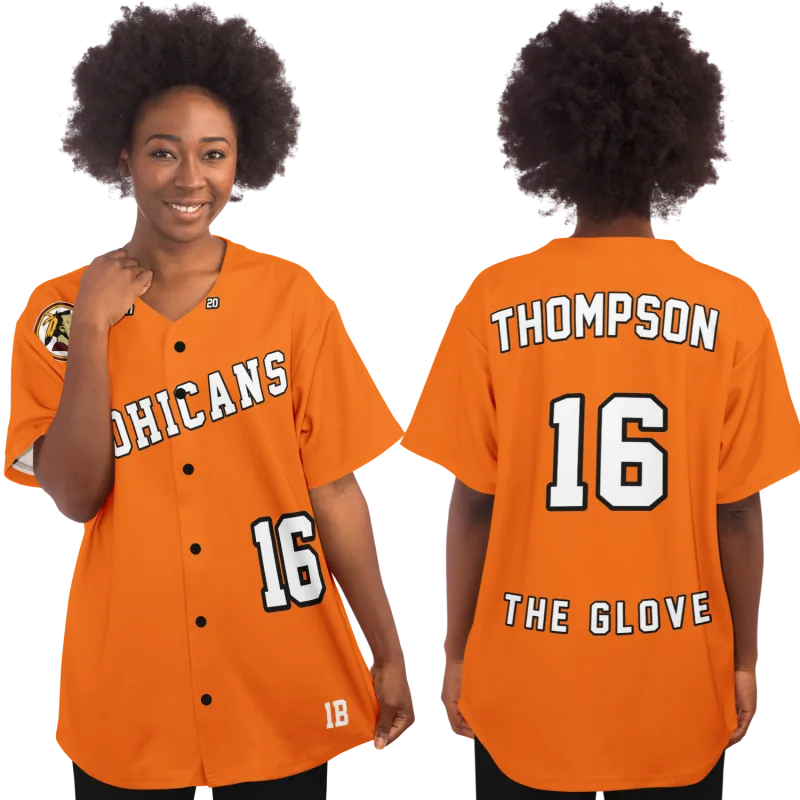
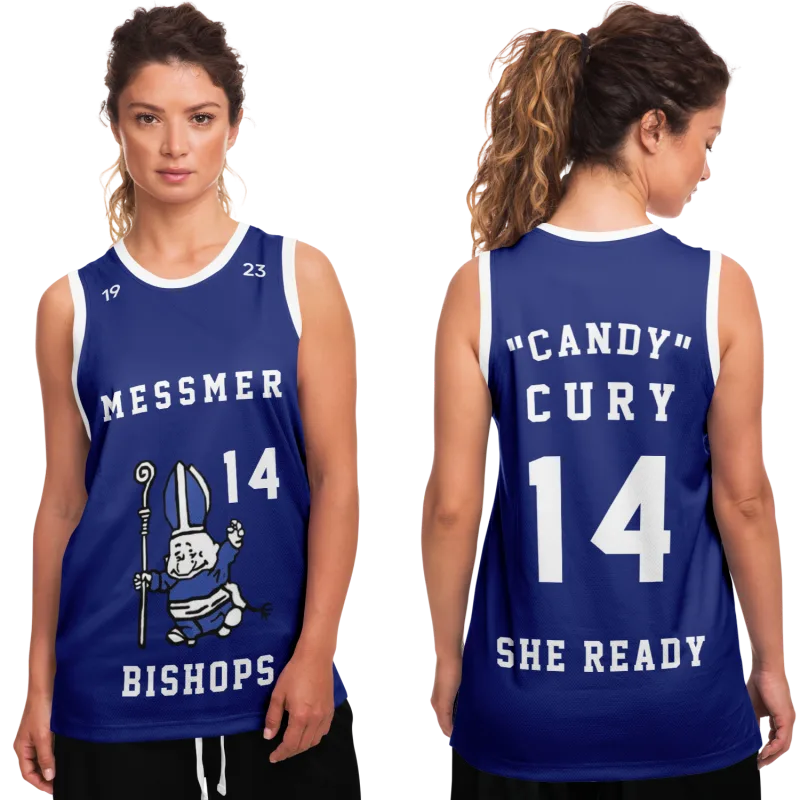
There's a number you still know by heart.
Maybe it's 7. Maybe it's 14. Maybe it's a goalkeeper's 1 you carried for six straight seasons on a club that no longer exists. You know the exact weight of that shirt on a cold November morning, the way the collar sat, the specific shade of your team's blue or red or green that no mass-produced kit has ever quite captured.
A custom made soccer jersey is the only way to get that back. Not a licensed fan kit with someone else's name on the back. Not an off-the-shelf tribute to a pro you watched. Yours — built from your specifications, with the details that belong to your playing history and nobody else's.
The customization form, though, asks you questions. Name or no name? Which number? What shade? Is there a crest, and if so, where does it go? Those fields look like product options when you're staring at a builder. They're not. They're decisions about how you tell the story of how you played — and each one deserves more thought than the average fan putting together a novelty kit.
This guide is written for former players only. Not for parents ordering gear for a child, and not for supporters buying something inspired by a pro they admire. Every decision below is framed the way it should be: as a choice about your actual time on the pitch.
The Name Field: Which Name Actually Belongs There
This is where most custom jersey guides lose the thread. They tell you the name goes on the back, above the number, in a specific font. That's all true and all beside the point. The real question — the one that matters to a former player — is which name. And that question has more than one honest answer.
Your surname, exactly as it appeared on your team sheet
Most players go with their last name because that's what the club kit carried. If you played organized soccer at any level — youth club, high school, college, adult rec league, amateur competitive — your name on the back was your surname. That's the default, and it's the right default for specific reasons. It's how your teammates called across the pitch. It's how the referee read the card. It's how the match sheet listed you.
Go with the surname if:
- You played at a level where jerseys were registered with a league
- Your surname is the name your team actually used for you on and off the ball
- You want the jersey to represent official playing time rather than personal expression
A nickname, a callout name, or the name your team actually used
Here's what no product listing acknowledges: plenty of players were never called by their last name on the field. If your teammates called you something else — a shortened version, a nickname that stuck from your first training session, a name that followed you through a decade of Sunday league — that name has as much claim to the back of your shirt as your official surname does.
In our experience, the players who end up most satisfied with a personalized soccer jersey name and number are the ones who chose the name that would make a former teammate immediately say that's yours — not the name that would look most official to a stranger.
No name at all
This option is underused and underrated. Several top-level domestic leagues and international competitions have used no-name kits during specific eras — and the look carries a particular authority because of it. A number-only jersey reads as positional rather than personal. For some players, that's actually more accurate to how they experienced the game. If your club played without names on the back, or if the number alone is the meaningful artifact, leave the name field empty. A clean back with a single bold number is its own statement.
The Number: You Already Know the Answer
Unlike the name, the number isn't a creative decision. You already have one. You might have several, if you played across multiple clubs or positions over the years. The question is which one gets the shirt.
The number you wore the longest
For most players, this resolves it. The number you wore longest is the one that shaped how you understood your position — how you read the space, how your teammates found you in transition, how you identified yourself on the pitch. A center back who spent eight years at 5 doesn't need to think hard about this. That number is already part of how they remember the game.
The number tied to your defining club or best season
Some players wore different numbers at different clubs and have a clear answer about which club matters most. If there's a season or a team that was the real one — the one that defined what the game meant to you — use that number. Don't try to average across your career. Pick the one that carries the weight.
Marco T., 41, played youth academy soccer through his late teens and then picked up the game again in an adult amateur league in his thirties. His youth number was 10. His adult league number was 22 — the only one available when he registered. He ordered his jersey with 10, because that was the number he earned, not the one assigned by roster availability. That distinction was obvious to him the moment he held the finished shirt.
If you're genuinely uncertain, there's a simple test: which number would a former teammate recognize as yours the moment they saw it on your back? That's the answer.
Colors: Where Standard Kits Always Fall Short
Off-the-shelf kits — whether adidas soccer jerseys, nike soccer uniforms, or any other manufacturer's licensed products — are made to match broadcast-visible colorways. Those colorways are optimized for how a color reads on screen, under stadium lighting, at a distance of forty rows. They are not optimized for accuracy to what your specific club's shirt actually looked like at ground level, in training light, in your hands after a match.
Custom made soccer jerseys give you something a licensed product never can: the ability to specify your actual club color, not a manufacturer's approximation of a color category.
How to pin down your club's actual shade
Most organized clubs at any level above casual pickup have a registered color. If your club had a kit supplier — even a regional one — there's a reference somewhere. Check your old club's current or archived website, the league your club played in, or kit supplier databases that serve your region. Many regional suppliers archive previous club orders by season.
If none of that turns up anything useful, use a photograph of an actual match jersey under natural light as your source. A color-matching tool can extract an approximate hex value from the photo, which most custom builders accept as input. That gets you closer than choosing the nearest standard option by eye.
One thing worth saying plainly: the national team colorway is not your club's colorway. A men's mexico soccer jersey is a specific, iconic shade of green belonging to a specific national program with its own history. It is not a stand-in for your Sunday league green, regardless of how similar they look in a color picker. Get your color right. It's your jersey.
Primary and secondary: both matter
Most soccer jerseys carry at minimum two colors — the base and the contrast used on numbers, name lettering, and trim. The secondary color is where custom jerseys most often go vague. If your club's trim was gold and not yellow, that difference is visible at a glance and matters to anyone who actually wore that kit. Nail both.
The Crest: The Most Consequential Decision on the Form
A jersey with your club's crest is a fundamentally different object than one without. It's the difference between a shirt that says I played this game and a shirt that says I played for this specific team, in this specific colors, under this specific badge. That distinction is worth taking seriously.
If you have rights to your club's crest, use it
If your club's crest is available — through the club itself, through a graphic file you have from your playing days, or through the customization platform's design library — and you played for that club, the crest belongs on the jersey. Left chest, centered on the heart. That's the canonical placement, and it's canonical for a reason.
If you don't have the crest, don't borrow one
Do not put a pro team's badge on a jersey that's meant to represent your own playing history. A manchester united soccer jersey crest belongs to Manchester United. It does not belong to your career, no matter how much that club shaped how you love the game. If your club's crest isn't available, consider a simple wordmark of the club name instead, or leave the chest clean. A clean chest with your name and number tells a cleaner, more honest story than borrowed iconography ever will.
Sleeve badges are worth considering if your club used them — for cup competitions, league affiliation patches, or anniversary markings. Keep it to one chest crest and one sleeve badge at most. A cluttered jersey tells a less clear story than a restrained one.
Font and Number Style: Less Creative Room Than You Think
The lettering and number style on your jersey is a historical decision, not a branding one. If your club had a specific kit manufacturer, the font is already determined — or at least strongly implied. Custom adidas soccer uniforms carry Adidas's jersey lettering. Nike soccer uniforms carry Nike's proprietary number style. If your club sourced from either manufacturer, the font is part of the memory, and you should match it as closely as the builder allows.
For players whose clubs used regional or generic suppliers — which covers most players below the elite level — the decision is simpler: choose a blocky, high-contrast number style that reads clearly from sixty yards. Legibility is the functional test. If you're honoring a specific era, the font carries period information. A retro usa soccer jersey from the mid-nineties carried narrow, arched lettering that's immediately recognizable to anyone who followed the game then. A vintage usa soccer jersey from the 1984 Olympic cycle has a different typographic character entirely. If era accuracy matters to what you're building, the font is part of the brief.
The Back Panel: One Detail Most Players Skip Past
Below the name, above or beneath the number depending on the kit layout — there's often space that former players overlook entirely. On shirts you actually wore, that space sometimes carried a league badge, a sponsor line, or a competition patch. You don't have to recreate every commercial element of your old kit. But if your club had a shirt sponsor that was on every jersey you ever wore for them, its absence on a recreation will register as slightly wrong the moment you hold the finished product.
Some custom builders allow text in the sponsor position across the chest or back hem. Others don't. If yours does, and if the name means something to your history with that club — a local business, a community organization, a company that supported the team through a meaningful run — it's worth adding. That detail is more honest than any crest you don't have rights to.
Fabric and Fit: The Decisions That Determine Whether You Actually Wear It
A jersey that looks right and fits wrong goes in a drawer and stays there. Former players carry a specific physical memory of what a match shirt should feel like — the weight, the drape, the way it moves with a lateral cut or a header challenge. Fan-cut jerseys are designed for spectators sitting in seats. Player-cut jerseys are designed for athletes who move.
Order a player cut. It sits differently on the shoulder, allows more range through the torso, and feels closer to what you actually wore. If the builder offers a choice between standard and athletic or player fit, take the athletic fit every time.
Fabric weight depends on how you plan to use it. If the jersey is going on a wall or in a frame, weight is irrelevant — choose whatever photographs best. If you're planning to wear it — for a veterans league, a charity match, an annual alumni game — lightweight performance polyester is the correct call. It breathes, it moves, and it won't feel like a costume when you're actually playing in it.
Your jersey is still out there waiting.
Design yours in minutes and see your name and number exactly the way you remember it.
Frequently Asked Questions
Can I put a name on my custom soccer jersey that isn't my legal name?
Yes — and for former players, this is often exactly the right call. Your jersey name should match the name your team actually used for you, which may be a nickname, an abbreviated version of your given name, or a callout that has no formal relationship to your legal identity. The customization form isn't a legal document. Put the name that belongs to the shirt.
What number should I use if I wore different numbers at different clubs?
Choose the number tied to the playing experience you most want to honor — not necessarily the one you wore most recently or for the greatest total number of seasons. If you had a definitive club, a specific level of play, or a single season that felt most like your real game, use the number from that context. Most players find that the question answers itself as soon as they frame it that way.
How do I match my old club's exact color if it isn't in the builder's standard palette?
Most custom jersey builders include a hex code input field alongside the visual color picker. Pull up the clearest natural-light photograph you have of your club's actual kit, use a browser-based color picker to extract an approximate hex value from the fabric, and enter it manually. It won't be a laboratory match, but it will be significantly closer than choosing the nearest standard swatch by eye. For clubs that used a major kit manufacturer, archived colorway documentation is often findable through kit history communities maintained by supporters of regional and amateur soccer.
Should I add a season year to the jersey?
Only if the year is specific and meaningful to what you're building. A season year in the back hem or inside collar is a detail some builders support and others don't. If there's a single season that stands out — a championship year, a first season with a club, a final year before the club dissolved — the year converts the jersey from a general tribute into a precise historical record. If no single season carries that weight, leave it off. Specificity is only an asset when it's accurate.
What's the difference between a fully custom jersey and a personalized fan kit?
A personalized fan kit is a licensed manufacturer's product — say, a men's mexico soccer jersey or a club kit built on an official template — with your name or a custom number applied to it. The design, the colorway, the crest, and the template all belong to someone else's program. A fully custom made soccer jersey starts from a blank template and is built entirely from your specifications: your colors, your crest if you have rights to it, your fonts, your layout. For former players representing their own club history, the fully custom route is the correct one. A personalized fan kit puts your name on someone else's story. A custom jersey tells yours.
See also: personalized sports gifts vs. generic ones | jersey size chart to get the right fit | how a custom softball jersey handles the same design decisions