



You remember the smell before anything else.
That specific combination of rubber mat, dried sweat, and industrial cleaner that hits you the moment the wrestling room door opens. It's not a bad smell, exactly. It's just a wrestling smell — and once it's in your memory, it never leaves. If you're here because you want to know what high school wrestling is really like, the honest answer is that no article fully captures it. But this one is going to try.
What high school wrestling is like depends entirely on which side of the door you're standing on. From the outside, it looks like a niche sport with a strange weight system and a lot of neck injuries. From the inside, it is one of the most complete athletic and personal crucibles any teenager can voluntarily walk into. The wrestlers who come out the other side — even the ones who never made varsity, even the ones who went 4-and-12 for the season — tend to carry something specific from it for the rest of their lives.
Here's what it was actually like.
The Wrestling Room Is Its Own World
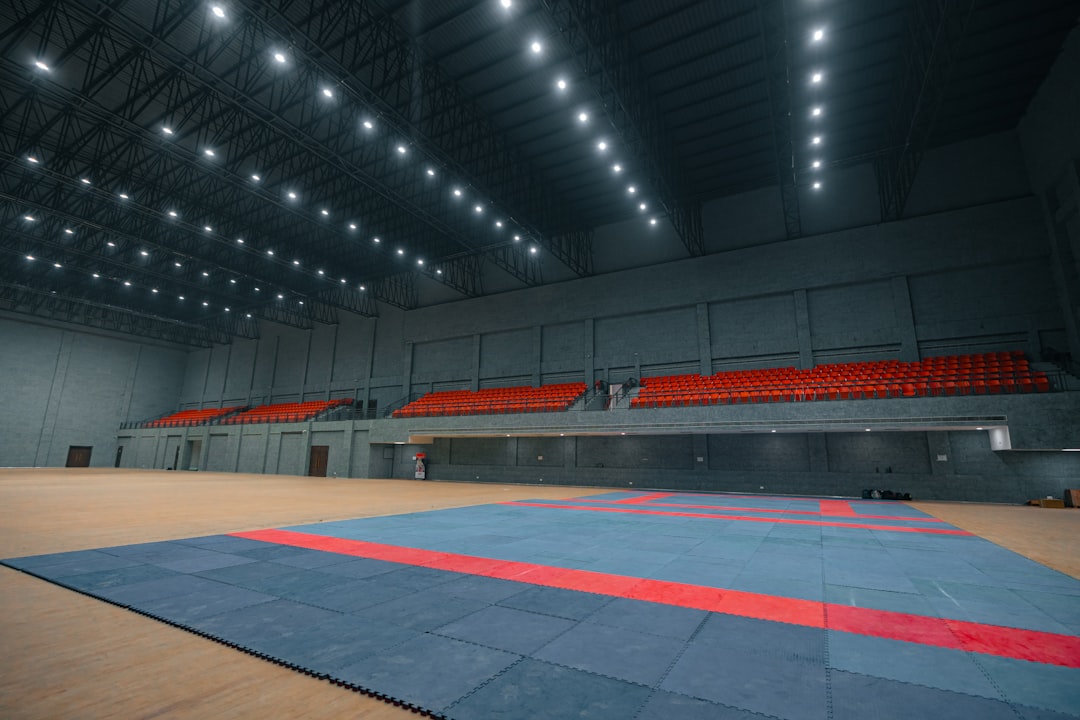
Most high school sports share facilities. Football players practice on the same field where track athletes run their intervals. Basketball and volleyball split the gym. Wrestlers get a room: one specific, dedicated, usually windowless room at the top of a staircase or down a hallway that the rest of the school barely knows exists.
That room is the whole world for about five months of the year.
The temperature in a wrestling room runs hot deliberately. Coaches keep it that way to replicate match conditions and — let's be honest — to accelerate the sweat. The mats are marked with circles and boundary lines worn faintly from years of use. There's almost always a pull-up bar mounted somewhere along the wall. The walls might have a motivational quote or two, a state qualifier plaque, maybe a hand-lettered record of every wrestler who ever went undefeated in dual meets.


The room has a hierarchy that is immediately apparent and never formally announced. Seniors on one end of the mat. Freshmen on the other, watching without watching, learning the unspoken rules in real time.
Practice structure varies by program, but most days look roughly like this:
- Warm-up and drilling: 30–45 minutes of footwork, stance work, and technique repetition. The same shots, the same sprawls, the same sit-outs, drilled until they happen without thought.
- Live wrestling: The part everyone both wants and dreads. You go with a partner, then rotate. The senior who outweighs you by fifteen pounds in your weight class. The sophomore who's been wrestling since he was seven. The kid who is somehow in worse shape than you but impossible to take down.
- Conditioning: Whatever is left of your legs after live wrestling gets found and broken down further. Sprints, bear crawls, rope climbs. The kind of conditioning that doesn't build endurance so much as it builds the knowledge that you can keep going past where you thought you'd stop.
Talk to wrestlers from different programs and eras and the specifics change — different coaches run different rooms — but the essential quality does not: the wrestling room asks you to show up fully every single day, and it knows when you're faking it.
The Weight Classes, and Everything That Comes With Them
High school wrestling is organized by weight, which means your relationship with your own body becomes a central character in your season.
The NFHS weight classes run from 106 pounds up through heavyweight (285 lbs), with twelve classes in between. You compete at a specific number — 113, 120, 126, 132, 138, 144, 150, 157, 165, 175, 190, 215 — and the team needs a body in every slot it can fill.
What this produces is a constant, season-long negotiation between where you naturally walk around and where you compete.
Some wrestlers are lucky. They walk in at 151 and slide into the 152 slot without thinking about it again. Most are not that lucky. Most are managing their weight in some direction for the entire season: either trying to stay below a threshold without losing strength, or making the decision to bump up a class and face bigger competition.
The cutting culture in high school wrestling has gotten more regulated over the years. Most states now require a pre-season weigh-in to establish a minimum weight certification, and there are hard rules about how much a wrestler can lose week to week. But even within those guardrails, the relationship wrestlers develop with food, hydration, and their own bodyweight is unlike anything else in adolescent athletics.
You learn things in a wrestling season that most people don't learn until much later:
- How your body responds to different kinds of food at different times of day
- What dehydration feels like at various gradations, from mild to the kind that makes the room tilt slightly
- The difference between being hungry and being depleted: they feel different, and wrestlers learn to tell them apart
It's not glamorous. It's also not trivial. The discipline required to manage weight across a five-month season while also training hard enough to compete is genuinely formative.
You're not thinking about your knees at seventeen; you're thinking about Friday. But the wear this sport puts on a body has a way of making itself known twenty years later.
What a Dual Meet Actually Feels Like From the Mat
The competition format of high school wrestling is almost theatrical, even if the athletes rarely think of it that way.
A dual meet — your team against another school's team — runs through the weight classes in order, one match at a time, with the full gym watching each one. There's no hiding in a wrestling match. No substitution, no rotation, no play to your strengths and away from your weaknesses. Two people, one mat, six minutes.
The match itself is divided into periods. You start on your feet in the first period, both wrestlers in their stance, waiting for the whistle. Then there are choices about position in the subsequent periods — top, bottom, or neutral — and those choices become strategy.
Takedowns are two points. An escape is one. A reversal is two. A near-fall is two or three depending on duration. A pin ends it immediately. The scoring is simple enough to follow but complex enough in context that wrestlers are doing real-time math and strategic adjustment throughout a match.
The loneliest part — and this is something nearly every wrestler mentions when they talk about the sport years later — is the walk from the bench to the center circle.
In football, you have ten other people in the huddle. In basketball, you have four teammates on the floor. Wrestling gives you a coach in your corner and that's it. Everything that happens once the whistle blows is yours. The preparation, the execution, the decision-making in the third period when you're down two points and your legs are gone — all of it is completely on you.
That particular loneliness is the thing wrestlers describe most often when they say the sport changed them.
The Grind Nobody Tells You About
Marcus T., 28, wrestled 145 pounds his junior and senior year at a mid-size school in Ohio. He describes the season this way: "I was never a state guy. I went to regionals once and got knocked out in the first round. But the thing I remember most is that I showed up every single day for two years, and I never once wanted to. I just did it anyway. I don't know how to explain what that teaches you, but it teaches you something."
That's the part nobody puts in the recruiting pitch.
The wins are memorable. The state appearances, the tournament plaques, the varsity letters: those are the easy parts to point to. The harder part is the daily discipline required to be a high school wrestler at any level. Five-thirty morning practices for some programs. Voluntary open mat sessions on weekends. Film. Weight management throughout the week. The specific Friday night exhaustion of a dual meet where you went six minutes at full intensity and your team still lost.
The attrition rate in wrestling programs is real. Freshmen show up in October, and by January the room is noticeably smaller. Not because of injury, mostly, but because the daily cost of participation is higher than a lot of 14-year-olds anticipated when they signed up.
The ones who stay — even the ones who never become dominant — tend to exit with something. A threshold for discomfort. A different internal voice when things get hard. A specific knowledge of what they can actually do when they decide not to quit. Most carry it out of the room with them: a daily discipline that never really leaves you.
The Teammates Who Become Something Else
Ask any former wrestler what they miss most, and after a short pause, most of them say the same thing: the people in the room.
The relationship between wrestling teammates is different from most team sports, and it's because of the specific vulnerability the sport demands. You're working with people at your weight every day. They know every weakness in your game. They've held you down on the mat when you were exhausted. You've done the same to them. There's an intimacy to that: not sentimental, exactly, but real.
The coaches, too, tend to leave a lasting mark. Wrestling coaches occupy a specific cultural niche in high school athletics: usually someone who wrestled themselves, usually running a program with fewer resources and less attention than football or basketball, usually deeply committed anyway.
The good ones — and there are a lot of good ones — model something specific about what it means to care about something difficult. They show up at 5:30am. They watch film of their kids' matches. They make weight management calls that are genuinely hard. The relationship between a high school wrestler and a good coach is one of the more underappreciated dynamics in youth sports.
Twenty years on, those are still the people who call on your birthday. The friendships that outlast the sport are the part you don't see coming when you're fifteen and just trying to make weight.
The Weigh-In, and the Skin Check Nobody Warns You About
Nobody warns you about weigh-in day. There's the 7am line outside the gym, guys in hoodies and trash bags trying to sweat off the last half-pound, the scale looking back at you like it already knows. You step up. You hold your breath. The official reads the number out loud, and in that half-second you learn whether the last two days of discipline were enough or whether you're about to spend an hour in a stairwell in a plastic suit. The relief when the number is good is its own kind of high. The panic when it isn't hits your stomach before your brain catches up.
Then there's the table beside the scale, where a referee or trainer runs the skin check. Shirt off, arms out, elbows and knees and scalp. Everyone gets checked, every tournament, because the sport learned the hard way what happens when it doesn't. Ringworm, mat herpes, staph: the mats get wiped down between rounds for a reason, and headgear protects more than your ears. You wear clean gear to every session and wash it after every practice, and you don't share headgear or towels if you can help it. It sounds paranoid until you watch a teammate sit out two weeks with an infection from a mat nobody cleaned properly.
Then, if you made weight, there's the eating. That first real meal after a cut tastes like something you'd never bother describing to someone who hasn't done it. Two hours later you're on the mat. That's the whole rhythm of the sport, compressed into a single Saturday morning.
The Girls Were in the Room All Along
Girls have been wrestling in high school the whole time — long before the sport had a place to put them. For years, most of them practiced on the boys' team because there was no other option: often the only girl in the room, drilling with whoever was closest to her weight, proving she belonged before anyone handed her a spot.
That is changing quickly. A growing number of states now sanction girls' wrestling as its own varsity sport, with its own division, its own weight classes, and its own state tournament. It is one of the fastest-growing segments of high school athletics.
What was different for them is the part that gets said least. Before girls' divisions existed, a girl wrestling in high school carried an extra load the boys never did. She had to be good enough to practice with the team and patient enough to earn respect from coaches who had never coached a girl and opponents who had never wrestled one. The scrutiny came from more directions too — parents, opponents' parents, referees still figuring out what they were watching.
The grind was the same. Same room, same heat, same weight management, same walk to the center circle where everything is on you and no one else. Same loneliness. A woman who wrestled in high school carries the same "I was an athlete" identity as any man who did.
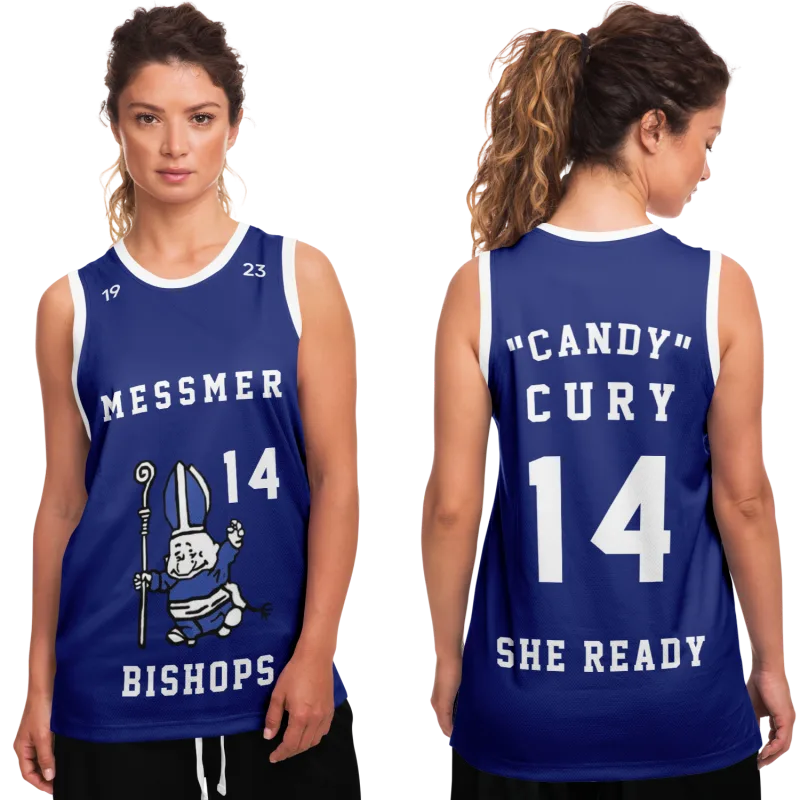
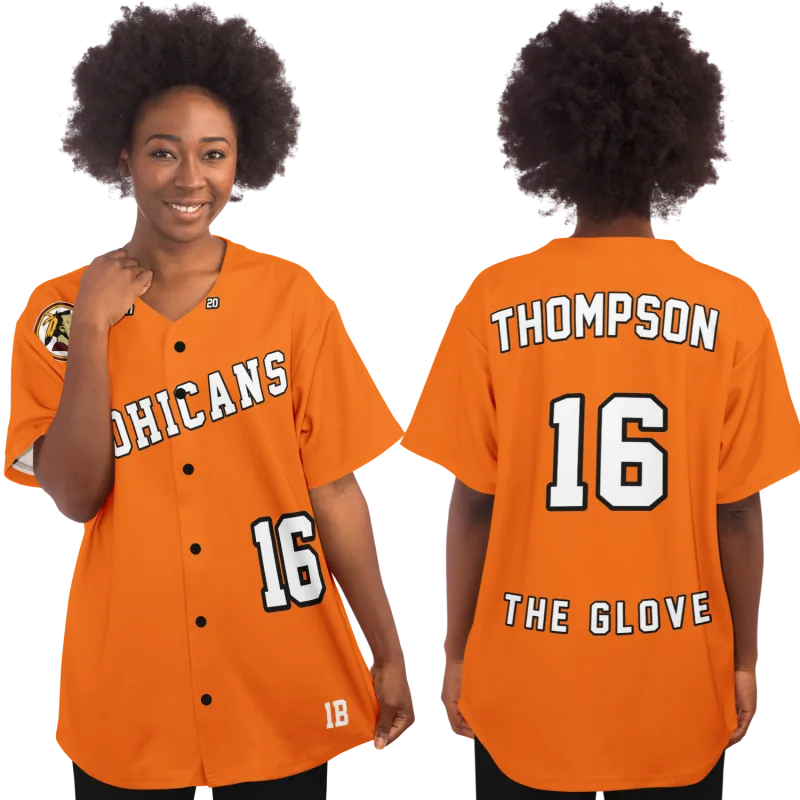
But she has even less to hold onto. If she wrestled on a boys' team, there may not have been a girls' jersey to keep at all. The sport ends, and what's left is memory with almost no object attached to it. Commemorative apparel for a woman who wrestled barely exists — even jerseys honoring the sports that never had a traditional jersey are hard to find.
What Stays With You
The sport ends, for almost everyone, in high school or college. There's no recreational wrestling league for 35-year-olds the way there are softball leagues and basketball pickup games. What wrestlers carry with them isn't a skill they'll use on weekends.
It's the other things.
The comfort with contact — not aggression, but the specific physical confidence of someone who has spent hundreds of hours grappling with other human beings and knows how to handle their own body under pressure. The tolerance for discomfort developed across five months of weight management and conditioning. The understanding that preparation and execution are different things, and that the gap between them is where character lives.
There's also the more direct, physical record of having done it: the calluses, the cauliflower ear that some wrestlers develop from mat friction, the particular way wrestlers tend to move — low center of gravity, balanced, aware of space.
And the jersey.
For most wrestlers, the jersey is the most tangible artifact of those years. The school name across the chest. The weight class sewn into the hem in some programs. The specific colors that meant you were on the mat representing something.
Your jersey is still out there waiting.
Design yours in minutes and see your name and number exactly the way you remember it.
Frequently Asked Questions
Is high school wrestling dangerous compared to other contact sports?
Wrestling carries real injury risk, particularly to shoulders, knees, and ears. Cauliflower ear — thickening of the outer ear from repeated friction — is the sport's most iconic cosmetic injury and is largely preventable with consistent headgear use. According to data collected across high school sports programs, wrestling's injury rate is comparable to football and lacrosse per athlete-exposure, with most injuries being sprains and strains rather than acute trauma. Rule changes and required weight certification programs have made the sport meaningfully safer over the past two decades.
Do you have to cut weight to wrestle in high school?
Not necessarily, but weight management is a real part of the sport for most wrestlers. High school athletic associations now require pre-season body composition testing to establish a minimum weight — you cannot compete below a certified floor determined by your hydration and body fat percentage. Some wrestlers walk in right at their competitive weight and need no management. Most deal with some degree of weight awareness across the season, and coaches and athletic trainers are required to monitor the process.
What does it take to make varsity as a high school wrestler?
It depends entirely on the depth of the program. At smaller schools, showing up and working hard may be enough to earn a varsity spot because the lineup simply needs bodies. At larger programs with deep rosters, the freshman-to-varsity path can take two or three years. The most direct route in every program is the same: show up consistently, drill until the fundamentals are automatic, and be willing to go hard in live wrestling every day. Coaches notice who competes even when it's inconvenient.
What's the difference between folkstyle and freestyle wrestling?
High school wrestling in the United States uses folkstyle (also called collegiate) rules, which emphasize control — holding an opponent down in a control position earns riding time and can factor into the final score. Freestyle and Greco-Roman, used in international and Olympic competition, emphasize exposure — turning an opponent's shoulders toward the mat scores directly. Many high school wrestlers compete in freestyle during the offseason to develop their standing and exposure skills, which translate back to folkstyle in useful ways.
Is wrestling a good sport for athletes who didn't make a team sport?
Wrestling is one of the most genuinely accessible sports in high school athletics because it doesn't require prior experience, there are weight classes for nearly every body type, and every athlete who shows up consistently gets mat time. Athletes who didn't find their fit in basketball or baseball or soccer often discover in wrestling a sport where individual effort has an unusually direct relationship with individual outcome. The bar to entry is willingness, not prior skill.
See also: what high school sports really teach you that nothing else could | the grief that hits when your athletic career ends at 18 | how your athletic identity doesn't just disappear after high school | why high school sports experiences still matter so deeply to adults | the bus ride home after a tough loss is something every wrestler knows