

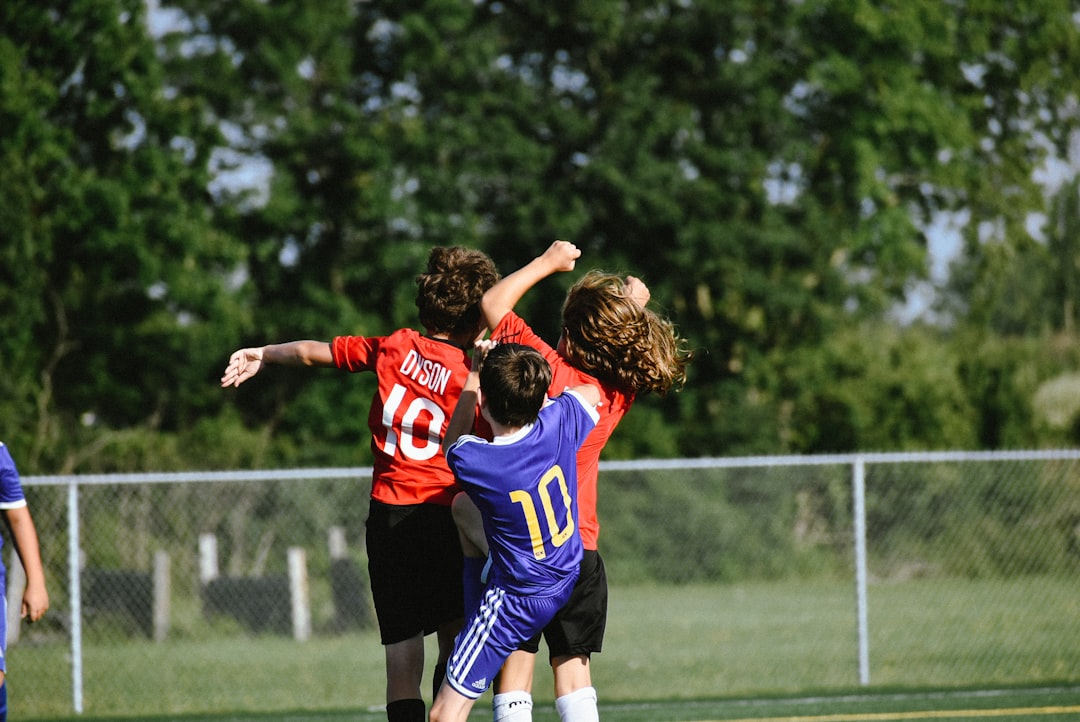



There's a specific moment every high school soccer player carries around for the rest of their life.
It's not the goal. It's not the championship. It's the Tuesday afternoon in October when practice ran long, the sky turned that particular bruised purple, your legs were completely gone, and somehow your team was still laughing about something nobody outside that circle would ever understand.
That's what playing high school soccer is like. Not the version in the recruiting highlight reel. The version that lives in your chest twenty years later when you smell cut grass or hear cleats on a gym floor.
This is that story — told the way it actually happened.
The Season Starts Before You Think It Does
Most people think high school soccer begins with the first game. Players know better. It begins in July, sometimes in a heat index that has no business sharing a calendar with a sport played in shorts.
Preseason is its own category of suffering. Two-a-days in August, if your program ran them, meant an early morning session on dew-soaked grass that felt almost pleasant — and then an afternoon session that felt like running through warm soup. The school year hadn't started. The excitement of the season hadn't arrived. It was just you, your teammates, and the slow process of figuring out who among you was going to quit and who wasn't.
Nobody said that out loud. But everyone knew it was happening.
What preseason actually built wasn't fitness, though it built that too. It built a specific kind of shorthand. The players who survived two weeks of double sessions together knew things about each other that their classroom friends never would. Who pushed through cramps without mentioning it. Who rallied a group when energy dropped. Who went quiet before competition and who got louder.
The conditioning runs were a sorting mechanism, and not for the reasons coaches told you. They sorted for character, not speed. The fastest players didn't always make the team. The ones who refused to walk when everyone else was walking — they made the team.


In my experience as a former player, the people who look back most fondly on high school soccer don't lead with winning. They lead with preseason. That's where the actual team was built.
Earning Your Place Came First
Before the locker room had its culture, before the rivalry games, there was the list.
Tryout week is a specific kind of anxious. You show up in your best cleats and a shirt you've worn to every tryout since eighth grade, and you run until your legs go while a clipboard on the sideline decides whether the season belongs to you. Everyone scans the gym door the morning the roster posts. Everyone pretends not to be scanning.
Most players who got cut had been playing for years. That's the part that doesn't fit the tidy story. Getting cut didn't feel like a verdict on one bad week. It felt like a verdict on everything that came before it. The ride home — your mom not quite knowing what to say — was worse than any loss you'd ever had.
For the ones who saw their name, the relief lasted about ten minutes. Then came the climb. Freshman year on JV meant watching the varsity from across the field, close enough to hear them, far enough to know you weren't there yet. The jump to varsity wasn't a promotion. It was a wall. The game was faster, the players stronger, the space you'd always had suddenly gone. You'd spent a year thinking you understood the speed of high school soccer, and then your first varsity scrimmage told you otherwise.
Earning the spot was one thing. Your first varsity start: the nerves, the moment, the proof that you belonged was the next test, and it asked a question the tryout list never could.
And the season was short enough that every game after it counted. High school soccer runs from August to October, and one bad week could end the whole thing before you'd finished figuring out what the team was. That's why those games felt the way they did. Not because anyone told you to treat them as urgent. Because the calendar made them urgent.
The ones who never made the jump remember the climb anyway. Because trying, and almost, and trying again was the actual sport.
Why Club Soccer and High School Soccer Aren't the Same Thing
Players who grew up in club programs hear this comparison a lot, and almost all of them land in the same place.
Club soccer is where the technical work happens. It's where you're developed — the touches, the tactical education, the year-round training that gets a player ready for the next level. The badge you wear belongs to an organization, and for the most ambitious players, the goal is a pipeline: college, maybe beyond.
High school is where something else happens. The players are more physical than the level below, the game comes at you faster, and the stakes feel different because they are different. You're not playing for a club's reputation. You're playing for your school, your town, and a group of people who will sit across from you in the same cafeteria Monday no matter what the scoreboard said Friday night.
That's the distinction that shows up in almost every conversation with former players. Ask someone who was a club standout what high school soccer meant to them, and they rarely reach for the word development. They talk about representing something bigger than themselves — the jersey with the school's name on it, the younger players who watched them, the neighbors who came to the game. Club soccer built their game. High school soccer is what they remember.
The two were never in competition. One made them better. The other made the sport matter.
The Locker Room Had Its Own Culture
You could tell a lot about a soccer program by its locker room before a game.
Some programs were all business — coaches walking through, music cut off ten minutes before kickoff, pre-game routines executed with the kind of quiet focus you only see when a group has done something so many times it has become ritual. Other programs were loud, loose, purposefully electric — captains who understood that nervous energy needed somewhere to go before it could be redirected into the game.
Neither approach was wrong. Both produced the same result if the culture was real: players who stepped onto the field believing they were about to do something that mattered.
The locker room before a rivalry game had a different atmosphere than any other night. Everyone who's played high school soccer knows the specific feeling of sitting in front of your locker, dressed and ready, with twenty-five minutes still to go before warmups. You're not nervous exactly. You're suspended — somewhere between the ordinary person who went to third period that day and the player who is about to run through a tunnel with their name on the back of a jersey.
That jersey, specifically, deserves a moment here.
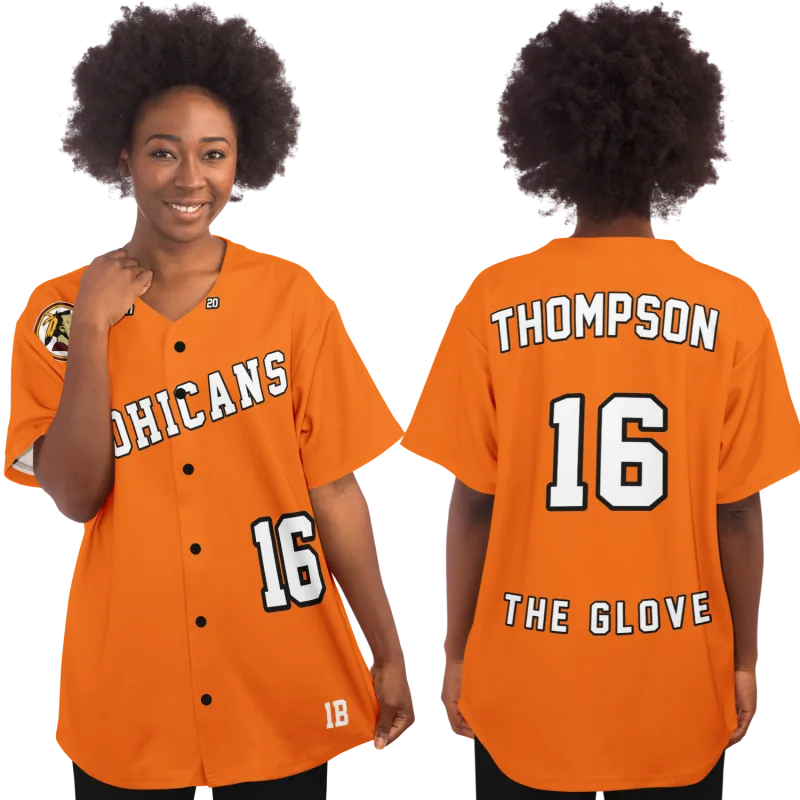
There's something about putting on a uniform with your school's name on the chest and your number on the back that doesn't have an easy equivalent in adult life. It's not ego. It's more like belonging — the physical sensation of being part of something that was there before you and will be there after you. First-year players figured this out the first time they wore it in a real game. Veterans wore theirs like a second skin.
What the Games Actually Felt Like From the Inside
From the stands, a high school soccer game looks like a series of events. From the field, it feels like five-minute blocks of controlled chaos separated by brief moments of impossible clarity.
The clarity is what players remember. The corner kick at the right moment. The through ball you knew was coming before it left your teammate's foot. The save that seemed to happen before you consciously decided to dive.
Sports psychologists call this state "flow." Players just call it being in the game.
Getting there required the right conditions — a level of fitness that meant the physical demands of the game weren't consuming all your attention, a level of trust in your teammates that meant you didn't have to think about covering for them, and a level of confidence in your read of the game that let instinct run the play before your brain caught up.
Not every game felt like that. Most games felt like work, in the best possible way. You ran your routes. You tracked your assignments. You executed the things you'd practiced a hundred times. And on the nights when everything synchronized, when the team moved like a single organism and the scoreboard confirmed what you'd felt for eighty minutes — those nights became the standard against which every other sporting experience in your life was measured.
The losses were instructive in ways the wins weren't. A team that had never lost together didn't really know what it was made of. The bus ride home after a defeat — silent, everyone staring out a different window — was where you learned who your team actually was. Did the group come back to practice Monday angrier and more focused? Did the seniors set the tone? Did anyone blame anyone, or did everyone quietly absorb the loss and come back ready to work?
Those answers told you everything about a program.
The Teammates You Still Think About
Mia R., 34, played center midfielder for her high school team in suburban Ohio for three seasons. She didn't play competitively after graduation, but she still has her junior-year jersey folded in a box in her closet. "I couldn't tell you the final score of most of our games," she says, "but I could tell you exactly who was on the field with me and what each of them would do in a tough moment. I knew those people better than anyone I've worked with since."
That's the part that surprises former players the most when they look back. The intensity of those relationships — formed in preseason, tested across a season, sealed by the games that went wrong as much as the ones that went right — had a quality that's genuinely hard to replicate in adult life.
Adult friendships build slowly. High school soccer friendships built under pressure, which is an entirely different process. By October of your first season, you had spent more hours with your teammates than with most people you would know for a decade. You had seen each other exhausted, frustrated, exhilarated, and disappointed. You had communicated nonverbally across a field in conditions that didn't allow for conversation. You had relied on each other in ways that felt, at the time, like sport — and that turned out to be something more durable than that.
Some of those teammates are still in your life. Some disappeared after graduation in the way that high school relationships often do. But ask any former player to describe their team, and they'll give you a specific answer. Not "we were close." They'll give you names, positions, personalities, the specific things each person did that made the team what it was.
That specificity is the evidence. Those bonds were real. And it's why the friendships that outlast the season are usually the ones forged in the worst of it — the rain games, the losing streak, the year that asked more than it gave.
The Unglamorous Details Nobody Talks About
Here's the part that the highlight-reel version of high school sports leaves out.
The equipment room that smelled like decades of athletic effort. The practice pinnies that were technically washed but somehow always seemed to retain a particular character. The referee calls that were wrong and everyone on both sides knew it and the game continued anyway because that's how sports work.
The week you played through a minor injury you didn't report because the playoff schedule didn't have room for it and you trusted your body to hold together for four more days. The weather games — the ones played in October rain when the field turned into something closer to a bog and the ball moved in ways that the coaches' tactics could not have anticipated. The away games at programs that had facilities your school could not match, and the specific pride of winning there anyway.
For a lot of former players, though, the field you grew up playing on is where all of it really lives — not the highlights, but the dirt patches, the crooked goalmouth, the corner you defended a thousand times.
And the bus rides. Always the bus rides.
There is a legitimate argument that the most honest conversations high school athletes ever had with each other happened on bus rides. Something about the specific combination of low light, forward motion, and the insulation of being between a game that just ended and a world that hadn't started yet made people say things they wouldn't say anywhere else. Team dynamics clarified on buses. Seniors gave advice on buses. Players who didn't talk much during the week said the things that needed to be said on the way home.
A high school soccer season, fully experienced, was made of exactly as many unglamorous moments as it was made of the ones worth posting. Maybe more. And the unglamorous ones were where the actual character of a player — and a team — was formed.
The Season-Ending Feeling That Never Quite Leaves
Every player's career ends the same way: with a loss.
Unless you're on the team that wins the final game of the state tournament, your high school soccer career ends with a game you didn't win. You walk off a field knowing that was the last time — either because the season ended, or because senior year just closed, or because your body gave you the specific signal that it was time.
That ending has a texture that's difficult to describe to someone who hasn't experienced it. It's not simply sadness. It's closer to the feeling of a chapter completing — the awareness that something that was central to your daily life for months, or years, has reached its natural boundary. The last game you ever played doesn't fade the way other losses do — decades later you can still feel exactly where you were standing when it ended.
Former players describe this in different ways. Some talk about the drive home after the final game with their parents, the particular quiet in the car. Some talk about returning equipment and the specific weight of handing back the jersey — the thing they'd worn that felt so much like their own and technically belonged to the school. Some talk about the first Monday of their life in years that didn't include practice, and the strange absence of that structure.
According to research on athletic identity and transition, athletes who have a strong identification with their sport often experience a genuine adjustment period after competitive play ends — not a crisis, but a recalibration. For high school players, that recalibration was often the first time they had to define themselves outside of a sport that had been part of their identity since middle school.
Most of them figured it out. And most of them, years later, describe the soccer years with a warmth that suggests the figuring-out was worth it.
What You Take With You
The skills don't evaporate. The spatial awareness that came from years of reading a field translates — sometimes literally — into how former players navigate crowded rooms, manage teams at work, or read a situation before others have registered that something is happening.
The tolerance for discomfort built in preseason and maintained through a full season of training doesn't disappear either. Players who ran two-a-days in August humidity have a calibrated sense of what "hard" actually means that's difficult to acquire any other way.
But the thing most former high school soccer players carry is subtler than skills or toughness. It's the memory of what it felt like to be completely invested in something — to care about a game, a team, and a season with the kind of full-spectrum intensity that adult life tends to distribute across more things and therefore gives less completely to any one of them.
That investment — the Tuesday practices, the bus rides, the locker rooms, the unglamorous and the transcendent moments in equal measure — is what playing high school soccer was actually like.
And if you played, you already knew every word of this before you read it.
Your jersey is still out there waiting.
Design yours in minutes and see your name and number just the way you remember it.
Frequently Asked Questions
What is it really like to play high school soccer for the first time?
First-year players typically describe the experience as more intense and more team-oriented than anything they encountered in club or recreational soccer. The pace of preseason, the weight of representing a school, and the immediate social immersion of being on a squad with upperclassmen all create a learning curve that has as much to do with team culture as with technical skill. Most players say by mid-season, it feels completely natural — and by the end of the season, they can't imagine not having done it.
How important is the social side of high school soccer compared to the competitive side?
Most former players say the two are inseparable. The competitive demands of a high school season are what create the conditions for the social bonds — the shared pressure, the shared sacrifice, and the shared wins and losses are what make the relationships meaningful. Players who approach it as purely competitive tend to miss half the experience. Players who show up for both tend to describe it as one of the defining periods of their lives.
Do you need to have played club soccer to make a high school team?
It varies significantly by program and region. Competitive suburban programs in soccer-dense areas often draw heavily from club pipelines. Smaller schools or programs in areas without strong club infrastructure may have rosters made up primarily of players who developed through recreational leagues or school-only environments. The honest answer is that athleticism, coachability, and genuine effort at tryouts matter in every program — and players who demonstrate those things have made rosters at the high school level without extensive club backgrounds.
What do players miss most about high school soccer after it ends?
When former players are asked this question directly, the most common answers aren't about competition or accomplishment — they're about the daily structure, the teammates, and the feeling of belonging to something with clear purpose. Practices, bus rides, and pre-game locker rooms come up repeatedly. The jersey comes up a lot too — that specific physical object that made the experience tangible and official in a way that's hard to replicate later.
See also: what high school sports actually teach you that no classroom ever could | why high school sports still matter so much to adults | the grief that hits when your playing days are suddenly over | how your athletic identity gets wrapped up in the sport you played | why senior night hits differently than any other game