



You remember the smell before you remember anything else.
Floor wax. Old leather. The particular warmth of a gym that's been packed with people since 6:30 on a Friday night. If you ever played, you know the smell. It hits you at a random moment decades later (walking past a rec center, stepping into your kid's school gym), and suddenly you're seventeen again, heart rate climbing before the opening tip.
That's what playing high school basketball is like, really. Not the highlight-reel version. The full version — the exhaustion and the joy and the specific weight of running out of that locker room tunnel to a crowd that actually knows your name. This article is for everyone who lived it, everyone who's about to, and everyone who just wants to understand why the people who played still talk about it the way they do.
The Gym Was Its Own World
There's a reason high school basketball players talk about "their gym" the way other people talk about their hometown. The gym wasn't just a facility. It was a territory with its own rules, its own atmosphere, its own particular kind of pressure.
On a Tuesday afternoon in October, before the season started, the gym belonged to you and your teammates in a way that almost nothing else in a teenager's life does. Practice ran long. Coach ran it longer. The squeaking of sneakers on hardwood became the background noise of your entire fall and winter. You knew exactly which floorboards creaked near the three-point line on the left side. You knew where the lighting went slightly dim in the corner by the far baseline. You knew the gym.
Game nights were something else entirely.
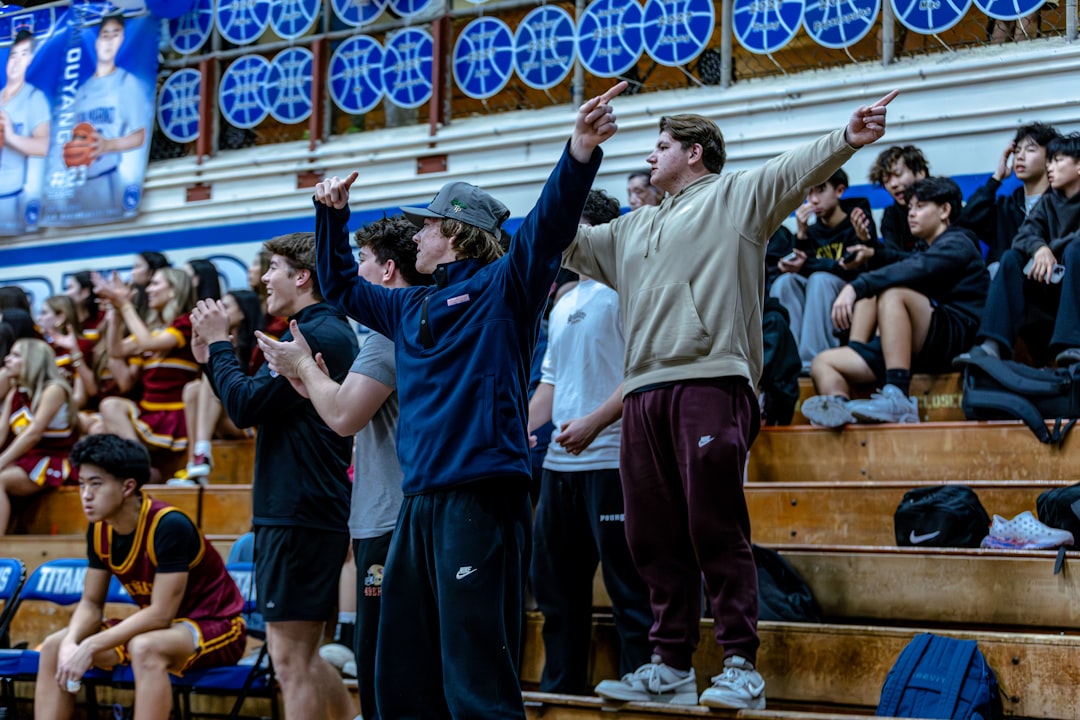
The bleachers filled up an hour before tip-off. The student section brought noise that was completely out of proportion to the size of the building — a thousand students in a gym built for six hundred, and the sound bouncing off every wall and the low ceiling until it became something physical, something you felt in your chest as much as heard with your ears. The opposing team walked in and looked at the crowd and you could see them recalibrate.


That was home court. That was yours.
The gym is almost always the first thing players who've been out of the game for years describe. Not a specific play. Not a stat. The gym: the way it looked under the lights on a game night, the way the noise changed when the home team went on a run, the way it went quiet for an opposing free throw and then absolutely exploded when the shot rimmed out.
The Grind Nobody Puts on the Highlight Reel
Here's what the highlight reel skips: the 6:15am Saturday morning conditioning sessions in November when the season hasn't technically started yet but coach has somehow scheduled "optional" workouts that are emphatically not optional.
The grind of high school basketball is the part that actually shapes you. The part that, looking back, you realize you're more proud of than any single game you won.
The early mornings. Before school, before the sun, before any of your non-athlete friends were awake. Dribbling drills in a gym that hadn't warmed up yet. Your hands still cold at the start of the first drill. Nobody filming it. Nobody watching.
The late nights. The road games that didn't tip off until 7:30pm on a Tuesday, forty-five minutes from home. The bus ride back after a loss — the specific quiet of a team that hasn't processed yet what just happened. Getting home after 11pm and still having homework due tomorrow.
The repetition. Shooting the same mid-range jumper 200 times in a row until the form stopped feeling like something you were thinking about and started feeling like something your body just did. Box-outs until your coach was satisfied. Free throws until they were automatic. The stuff that doesn't make a clip but makes a player.
The trade-offs. Nobody who did it would call it a fair trade, but it was a trade all the same. You gave up the ordinary version of being a teenager. Homecoming weekend meant a road game two hours from home. Your friends were making plans for Friday night while you were taping an ankle in a locker room. There were essays finished at eleven-thirty at night on a bus seat, problem sets done on the drive back from an away game you lost. You missed birthday parties and school plays and a friend's graduation party because there was practice, and practice wasn't optional. Some friendships just quietly thinned out, not because anyone did anything wrong, but because you were never around when the group was. The trade-off wasn't only time. It was the version of your life where you were always available. There were Friday nights you only heard about on Monday, jokes you laughed at without having been there. There were friends who stopped asking whether you could come, because the answer was almost always no. Almost everyone who made that trade says they'd make it again, because what it bought in return were the lessons that outlast the season: patience, discipline, and the ability to show up when it's hard.
The grind taught something that nothing else in a teenager's life quite managed to teach: showing up on the days when you don't feel like it is actually the whole thing. The showing up is the whole thing.
The Teammates You Played With
Kyla M., 29, played two years of varsity basketball at her high school in suburban Ohio. She still has the photo from her junior year team — twelve girls in white home uniforms, the gym behind them, one of them making a ridiculous face in the back row. She's described that team as the closest friendships she formed before college, not because they were all similar but because they spent more raw time together in a single year than most friends accumulate in a decade.
That's the thing about high school basketball teammates. The relationship is forged by shared suffering in a way that most relationships aren't. You ran the same sprints. You sat next to each other on the same bus. You were in the film room at 7am the morning after a loss, watching the same mistakes on a projector screen, every one of them yours to own.
Teammates became something specific. Not just friends — something more particular than that. The person who knew exactly what you needed to hear at halftime down eight points. The person who could tell by the way you were shooting warmups whether you were going to have a good night or a rough one. The person who ran next to you in conditioning and somehow, without saying anything, made it slightly more possible to finish.
A lot of those relationships outlasted the sport. Some of them didn't (graduation scatters people), but the ones that did have a particular texture. You can pick up with a high school teammate after years apart and immediately find the specific rhythm you had with them on the court. It doesn't go away.
What Game Night Actually Felt Like
Let's be specific about game night, because the memory of it tends to blur into a general warm feeling that doesn't quite do justice to how strange and specific it actually was.
The locker room before tip-off had a particular energy that varied by team and coach and moment — sometimes quiet and focused, sometimes loud and loose, sometimes a mix that you couldn't quite classify. What it always had was weight. The weight of the thing that was about to happen. You'd been preparing for this specific opponent for a week. You knew their tendencies. You'd run their sets in practice. Now in about thirty minutes you were actually going to play them.
Warmups were their own ritual. Layup lines, then shooting, then the stretch before you re-entered the locker room for final instructions. The opposing team was on the other end of the court running the same routines. You weren't looking at them (at least you were pretending not to), but you were absolutely looking at them. Sizing up the matchup you'd drawn. Getting a read on who looked comfortable and who looked nervous. The whole thing unfolded to a particular soundtrack — the sound of the gym at tip-off, that layered noise of bouncing balls and early-arriving crowds that every basketball player knows in their bones.
The introductions — for a home game, when the PA system called your name and number and you ran out through the tunnel or the line of teammates and the crowd made noise specifically for you — that's a feeling that has no real adult equivalent. It just doesn't. Thirty seconds of being announced to a crowd of people who showed up specifically to watch you play, and the sound they made when your name came out of the speakers.
Halftime adjustments were where you found out what you were actually made of. Up twelve and coasting? Coach was in your ear about getting comfortable. Down eight and rattled? Coach was either building you back up or getting direct about what wasn't working. The locker room at halftime after a bad first half is a specific kind of pressure. You had eight minutes to figure out which version of you was going to come back out on the floor.
The final buzzer, win or loss, had a specific quality that nothing else in the season matched. After forty minutes of accumulating pressure, the moment it released, either into celebration or into the particular quiet of a loss, felt like an atmospheric shift. Win and the gym became something extraordinary. Lose and the gym became somewhere you wanted to get out of, fast.
The bus ride home after a win was genuinely one of the great social experiences available to a teenager. You know what we're talking about.
The Coach Who Made It What It Was
Every player who looks back on their high school basketball career with clarity eventually arrives at their coach.
Not always with uncomplicated feelings. Some coaches were technically brilliant and personally difficult. Some were deeply motivating and strategically limited. Some were both the best and most frustrating authority figure you encountered before adulthood. Almost all of them, from this distance, deserve more credit than you gave them at the time.
The coach was the person who decided you were good enough to start, or decided you weren't yet. Who pulled you from a game when you were gambling on defense and got burned twice in a row. Who kept you in when you were struggling from the field because they trusted your other contributions. Who said something after a loss that stayed with you — not as a basketball insight but as something that reached past the game.
High school basketball coaches operate at an intersection that most jobs don't. They're teaching the sport, managing adolescent egos and anxieties, trying to win games their program gets evaluated on, and simultaneously, whether they frame it this way or not, doing something closer to character formation than coaching.
The good ones knew it. The great ones made sure you felt it without making it sentimental.
The coaches players remember with the most respect weren't the ones who were easiest to play for. They were the ones who held the standard high enough that meeting it actually meant something.
What You Carried Out of the Building
When it was over — when the season ended, or when your last game ended, or when you graduated — you carried something out of that building that didn't have a clean name.
And for a lot of players it came bundled with the strange letdown that follows the final buzzer, the part of walking away from the game that nobody really prepares you for.
It wasn't just the memories, though the memories are real and specific and they come back in the strangest moments. It was something more like a revised understanding of what you were capable of.
You found out you could run when you wanted to stop. That you could take a poor first half and come back out and compete in the second. That losing badly to a better team and then showing up to practice Monday morning was not only survivable but instructive. That playing in front of a crowd when the pressure was real was something you could do — not perfectly, not without fear, but you could do it.
Research on high school sport participation consistently shows that athletes who play team sports develop higher rates of goal persistence, which is the tendency to maintain effort toward a goal after encountering obstacles — a trait that shows up measurably in adult outcomes. That's the formal version of what every player who made it through a hard season already knows from the inside.
You carried the teammates. You carried the gym on a Friday night. You carried the thing coach said after the game you lost when you deserved to win. You carried the specific pride of having been part of something that required more of you than you knew you had.
That's what playing high school basketball is like. Not just while it's happening — but after, when you realize what it left in you.
You Played for the Name on Your Jersey
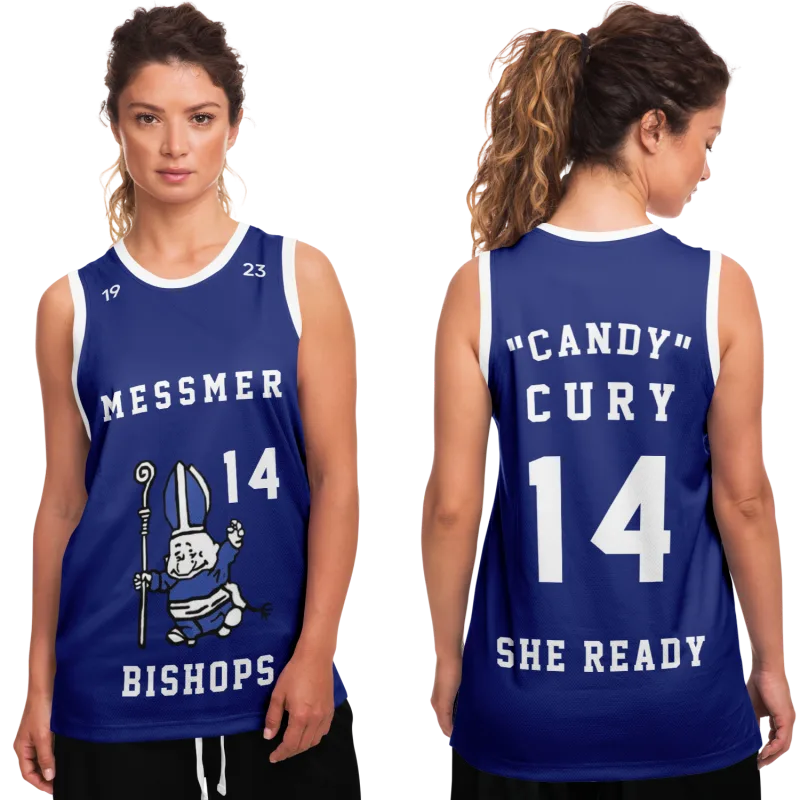
High school basketball was never about the money, because there wasn't any. Nobody was paying you to play. Nobody was building a highlight reel to shop around — or if somebody was, that wasn't why you were there. You played for the name across your chest and the name on your back, and for the people in the stands who cared about both.
That's the purity of the high school game, and it's the part that's easiest to forget once the years pile up. Club and AAU seasons came with their own incentives — exposure, rankings, the low hum of every game being an audition. High school was different. It was built around a system and a season and a room full of people who showed up for reasons that had nothing to do with what you might become. They were there because you were one of theirs.
The set plays, the ball movement, the months it took to earn your coach's trust — that was high school ball. It rewarded the kid who played the right way, not just the one who could go one-on-one and score. You learned to pass when the crowd wanted a shot, and to take the shot when the moment demanded it. You played for each other.
Nobody got a check. Nobody got famous. But on a Friday night, when your name echoed through the gym and the student section lost its mind, you got something most people never get — a whole building telling you, without any ambiguity, that what you were doing mattered.
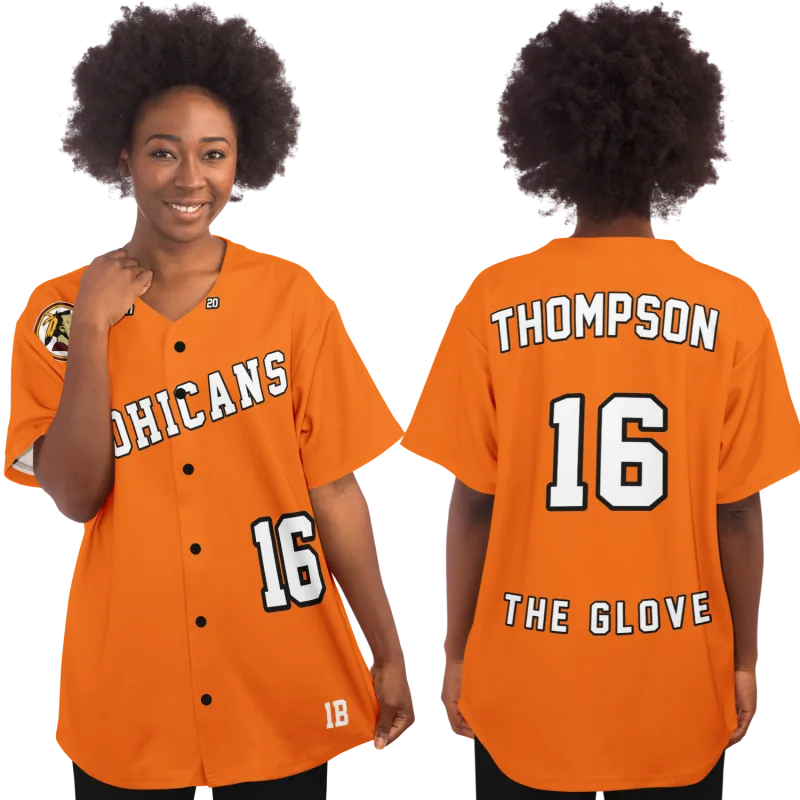
That's the thing the jersey still holds. If you've been meaning to bring yours back, recreating your high school basketball jersey is easier than most former players expect.
Your jersey is still out there waiting.
Design yours in minutes and see your name and number exactly the way you remember it.
Frequently Asked Questions
What do most people miss about what playing high school basketball is actually like?
Most people focus on the games, but the players who look back most fondly almost always describe the practices — the daily grind, the early mornings, the repetition. The games were the reward. The work that happened between them was the actual experience. The relationship with teammates built across a hundred routine practices is often more vivid in memory than any single game night.
How hard is it to make a high school basketball team if you've played club ball?
It varies enormously by school size and program level, but club experience is genuinely useful — both for skill development and for the mental adjustment to high-pressure tryout environments. What many club players underestimate is how much high school coaches value coachability and team fit alongside individual skill. Players who've played structured club ball often arrive with good habits, but players who've only played structured ball sometimes struggle with the adjustment to a coach whose system is different from what they've trained in. The physical preparation transfers. The adaptability has to be demonstrated fresh.
Do high school basketball jerseys mean something after your playing career ends?
More than most players expect at the time. The jersey is the physical object that carries the whole thing — the number you were assigned or requested, the school name, the season. Players who held onto their jerseys consistently describe them as among the few objects from their teenage years they'd genuinely be upset to lose. They're not memorabilia in the collector sense — they're personal artifacts that hold a specific chapter of life in a way that photographs alone don't quite match. The weight and feel of the actual fabric carries memory in a way that's hard to explain until you hold one again years later.
What's the biggest adjustment for players moving from middle school to high school basketball?
The speed of the game is the most common answer, but what actually takes most players longer to adjust to is the pressure structure. Middle school basketball, even competitive middle school basketball, doesn't carry the social weight of high school. High school games have real crowds, real stakes for roster spots, real consequences for being pulled from a game in front of your classmates. Players who were dominant in middle school sometimes find the adjustment harder than players who weren't — because they've never had to compete from a position of uncertainty before. Learning to compete when the outcome isn't assumed is the real adjustment.
See also: why high school sports still matter to adults long after the final buzzer | the grief that hits when your athletic career ends at 18 | the shared silence of the bus ride home after a loss | why your senior season memories are so much sharper than everything else | what the experience of playing under the lights actually felt like