

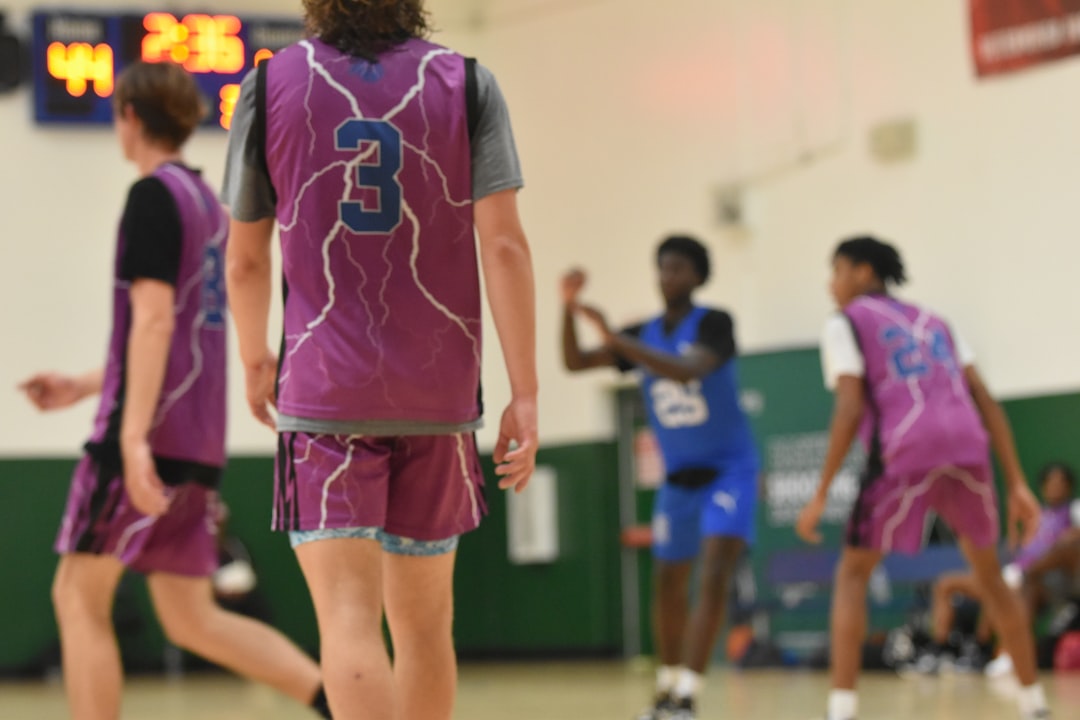




There's a moment every former athlete carries somewhere in the back of their chest — not quite a memory, more like a physical sensation that surfaces without warning. You're folding laundry, or watching your kid's first practice, or driving past the old school on the way to somewhere else entirely, and suddenly it's there again.
The weight of the jersey. The smell of the locker room. The sound of cleats or sneakers on a gymnasium floor. The way your hands felt slightly unsteady as you pulled on those colors for the very first time.
That moment is the high school athlete experience distilled to its purest form. Not the wins. Not the stats. Not the scholarship offers that came for some and didn't come for others. The moment you became someone who wore the uniform, before you'd played a single minute in it, before you'd proven anything to anyone. That is the moment most former athletes, given enough quiet and honesty, name as the one they'd go back to if they could.
This is about that moment. What it felt like. What it actually meant. And why, years or decades later, it still does.
The Locker Room Before the First Time
There's a specific kind of silence in a locker room before a team receives their uniforms for the first time. It's not quite the silence of nervousness, though that's present too. It's closer to the silence of anticipation — the held breath before something you've been imagining for years finally becomes real.
Most of us had been watching the older athletes wear those colors for years before we earned the right ourselves. We sat in the bleachers and watched the jerseys move under the lights. We knew the numbers of the players we admired. We ran those numbers in our heads during backyard games, pretending we already belonged to something we hadn't yet been accepted into.


And then came the day when a coach or equipment manager handed you a folded piece of fabric and said, essentially: you're one of us now.
Every former athlete remembers the specific texture of that first jersey, whether it was scratchy or smooth, whether it fit the way you'd hoped or ran a size too large in a way that made you feel simultaneously like a kid wearing an adult's clothes and like the athlete you'd always imagined yourself becoming. Some jerseys were heavy and stiff with newness. Others were worn soft from seasons before you, carrying the invisible history of every player who'd sweated in them before your name was written on the roster.
And layered through it all, the sensory memories anchored in that first uniform moment, the smell of the locker room on distribution day, a particular blend of clean fabric, old equipment, and the electric charge of something about to begin.
None of that mattered. It was yours. And for the first time, you were theirs.
And then you walked out of that locker room and into the gymnasium itself — the same space where, on game day, the sound of the gym at tip-off would become a sensory anchor for everything that followed.
What the Colors Actually Meant
Here's what nobody explains to you when you're sixteen years old, pulling on a jersey for the first time: the colors aren't just colors.
They are an entire geography. They are every Friday night game you attended as a kid, pressing against the chain-link fence. They are the alumni you passed in the hallways who carried themselves differently because they had once worn what you were now holding. They are your town, your neighborhood, your particular piece of the map — compressed into a specific shade of blue or red or gold that no other school owns in quite the same way.
When you put on those colors for the first time, you were not just joining a team. You were joining a lineage.
That is not a small thing, even if you didn't have the words for it at the time. Even if what you said to your teammate was something like "finally, man" and went back to tying your laces. The feeling underneath those words was something closer to belonging: real belonging, the kind that comes with responsibility and consequence, not just inclusion.
There's a reason athletes from different generations of the same school feel an immediate kinship when they meet years later. They wore the same colors. They stood in that same locker room. They felt the same thing when they first pulled on that same jersey, even if the years between them span decades and the game they played looks nothing alike. They each wore those school colors with the same pride — not as a costume, but as a declaration of who they were and where they came from.
The colors are a handshake across time.
The Mirror Moment
If you played, you know the one.
You found a mirror (in the locker room, in a bathroom, sometimes just a reflection in a dark window) and you looked at yourself in the uniform. Maybe you did it privately, making sure no one saw you doing something that felt too earnest, too much like admitting how much this meant to you. Maybe you did it with a teammate who was doing the same thing, both of you pretending you weren't doing what you were doing.
You looked at yourself and you looked different.
Not physically different, though the uniform did something to your posture, a straightening of the spine that happened without you deciding to do it. You looked different because you were seeing yourself for the first time as the person you had been working toward being. The gap between who you were and who you wanted to become had narrowed, visibly, in a piece of fabric with a number on the back.
That number mattered more than it had any rational right to. Some athletes had requested a specific number — a parent's old number, a hero's number, a number that felt like it belonged to them for reasons they couldn't fully articulate. Others were assigned a number at random and then spent the season making it feel inevitable, making it feel like the only number that could ever have been theirs. Either way, by the time the season ended, that number was you. People in the bleachers knew you by it. Your teammates called it across the field or the court without thinking. It became part of your name.
The Weight of What You Were Carrying
Mariana V., 34, was a goalkeeper for her high school soccer team in a small Texas town where the program had been winning district championships for eleven consecutive years before she arrived. She remembers the first time she put on the goalkeeper jersey (a different color from her teammates, as goalkeepers always wear) and realized she was now the person responsible for the thing everyone cared most about protecting.
"It wasn't pressure," she said. "It was more like... I finally understood what I'd signed up for. The jersey made it real. I could picture every goalkeeper who'd worn that color before me, and I just thought: okay. I have to be worthy of this."
That feeling, the desire to be worthy of something larger than yourself, is one of the defining emotional experiences of the high school athlete experience, and it arrives most completely in the moment of first wearing the uniform. Before that moment, the aspiration is abstract. After it, the aspiration has a shape and a number and a name.
You were carrying the expectations of coaches who'd invested their evenings and weekends in building something. You were carrying the pride of classmates who would fill those bleachers and make noise for you. You were carrying, whether you knew it or not, the legacy of every athlete who had worn those colors before you, and the responsibility to the ones who would wear them after.
That is a heavy thing to put on a teenager. It is also, for many former athletes, the first time they ever felt trusted with something genuinely important. The uniform was the moment someone looked at them and said: we're counting on you.
And they rose to meet it.
After the First Game, Everything Changed
The first time you wore the uniform in competition, something settled.
The weeks or months of practice, the conditioning runs, the drills, the scrimmages where the uniform was still new enough that you were half-aware of wearing it, all of that resolved into something quieter and more permanent. You had played. You had represented. Whatever happened in that first game, good or difficult or somewhere in the complicated middle, you had done the thing the uniform asked of you.
After that, the jersey stopped feeling like a costume and started feeling like a second skin.
The best former athletes describe this transition in strikingly similar ways across completely different sports. A wrestler remembers the singlet starting to feel like armor rather than clothing. A basketball player remembers the moment the away jersey stopped feeling foreign and started feeling like the home jersey transported to a different gym. A volleyball player remembers the way the uniform's colors started appearing in her peripheral vision during warmups and feeling, without thinking about it, that she was where she was supposed to be.
What changed was not the fabric. What changed was the relationship between the athlete and what the fabric represented. The colors had moved from outside to inside. They were no longer something you wore — they were something you were.
What You Took With You When It Was Over
For most high school athletes, there is no clean ending. There is a last game that, at the time, you may not have known was the last game. There is a final practice that felt like any other practice. There is a moment when the uniform is handed back, or retired to a drawer at home, or lost in a move years later — and with it goes a particular version of yourself that you will spend years learning to carry differently.
The high school athlete experience doesn't end when the career ends. It relocates.
It lives in the way former athletes approach difficulty, with the muscle memory of having pushed through when stopping seemed reasonable. It lives in the way they understand accountability, because the jersey made it visible and communal in a way that almost nothing else in a young person's life does. It lives in the way they watch sports for the rest of their lives, seeing not just the game but the version of themselves that once stood on a similar field or floor, wearing their own colors, feeling the weight of something larger than themselves.
The jersey is never really gone. It just changes address.
And sometimes the pull becomes physical: returning to where it all happened, walking into the old gym or standing on the sideline of that same field, decades older but instantly transported to the version of yourself that first pulled on those colors.
Some former athletes frame the jersey. Some have it folded in a box in a closet, wrapped in a way that preserves the number facing out, a quiet monument to a specific chapter of their lives. Some have long since lost track of where it ended up and feel a small, private grief about that — not for the fabric but for what the fabric held.
What every former athlete knows, regardless of what became of the actual jersey, is this: the first time you put it on changed something in you that did not change back.
That is not nostalgia. That is not sentimentality. That is the accurate description of a formative threshold — a moment when the world offered you an identity and you stepped into it and found that it fit better than almost anything has fit since.
And that is where the balance lives. You can carry the colors forward as a source of grounding without being anchored to them. The memory of pulling on that jersey for the first time was never meant to be a ceiling you keep standing under — a high-water mark you measure every later year against and quietly find wanting. It was meant to be a foundation, the thing you stand on while you build the rest of your life on top of it. The point was never to stay in that moment. The point was to become someone strong enough to leave it.
There is a real temptation, and most former athletes have brushed against it more than once, to linger in that version of yourself — the one who was fast, or strong, or relied upon, who had a locker and a number and a clear, shared purpose waiting every single day. Some people stay there too long. They keep the past at the front of the mind instead of the back of the chest, and what once felt like comfort starts to feel like a weight that keeps them from fully arriving anywhere new. The caution is worth naming, because the colors were never supposed to hold you in place; they were supposed to help you become someone who could keep moving.
The way through it is gratitude, not comparison. Gratitude for what that identity built in you (the discipline, the resilience, the capacity to belong to something larger than yourself) rather than comparison to whatever came after, which will always come up short when it is measured against one perfect season. Former athletes who thrive are the ones who let the jersey represent who they were without requiring it to be who they are today. It can be both. It was real, and it is behind you, and neither of those truths cancels the other out.
Your jersey is still out there waiting.
Design yours in minutes and see your name and number the way you remember it.
Frequently Asked Questions
What makes the first time wearing a school jersey feel so significant?
The first time wearing a school jersey marks the visible transition from aspiring athlete to team member, from watching to belonging. For most young athletes, the uniform is the first tangible symbol of earned identity: it represents selection, trust, and inclusion in something larger than themselves. The physical experience of wearing it for the first time anchors a cluster of emotions (pride, responsibility, belonging) to a specific sensory memory that tends to persist far longer than most memories from the same period of life.
Why do former athletes remember their jersey number so clearly decades later?
Jersey numbers become identity markers through repetition and social reinforcement. Teammates call them across fields. Announcers use them. Parents shout them from bleachers. The number becomes a name, and names stick. There is also a psychological dimension: the number is the specific, individual piece of a collective identity. It is the point where "the team" and "me" meet. Former athletes who struggle to remember their GPA or locker combination often remember their jersey number instantly because it was tied to their most activated emotional states during those years.
Is it normal to feel emotional about a high school jersey years after graduating?
Completely normal, and well-documented in sports psychology research on athletic identity, including work published by organizations like the Association for Applied Sport Psychology and the American College of Sports Medicine. For many people, the high school athlete experience represents their first sustained encounter with a demanding identity: one that required daily sacrifice, offered genuine community, and produced real consequences for their choices. The jersey is the artifact of that identity. Emotional responses to it, whether pride, grief, longing, or simply warmth, are proportionate to how central that identity was to who you understood yourself to be at the time you wore it. Those feelings don't indicate immaturity; they indicate that the experience mattered.
What do athletes from different sports have in common about this experience?
More than most would expect. Research in sports psychology (including work by sport identity researchers at institutions like the American College of Sports Medicine) consistently shows that athletic identity functions similarly across sports at the high school level, regardless of the specific game being played. The themes that appear across sports when former athletes describe their first uniform experience are strikingly consistent: the sense of earned belonging, the weight of representing something beyond themselves, the physical memory of the fabric and fit, and the mirror moment of seeing themselves differently once the jersey was on. The sport changes the context. The emotional architecture is nearly universal.
How can former athletes reconnect with what the jersey represented?
The most direct path is the physical one: recreating or reacquiring the jersey itself, whether as a custom commemorative jersey or a design that captures the number and colors. Many former athletes report that the act of designing or wearing a jersey in their adult lives reconnects them not just to nostalgia but to the qualities the jersey originally represented: discipline, team identity, the capacity for commitment. Others reconnect through coaching, watching their children play, or simply telling the story, which is why the first-jersey story comes up so reliably and so specifically whenever former athletes get together. The story is the uniform, carried forward.
See also: why high school sports still matter so deeply to adults | how that identity shaped you long after the final whistle | why those early memories of playing under the lights stayed with you | what high school sports taught you that nothing else could