




There's a moment from high school sports that almost every former athlete carries without realizing they're still carrying it.
It's not a championship. It's not the highlight play. It's something quieter — a practice nobody wanted to show up to, a bus ride home after a loss where nobody spoke, a moment in the locker room before a game when everything felt too big and somehow you went out anyway.
What high school sports teach you lives in those specific, unremarkable moments. Not in the trophies. Not in the stats. The lessons that stayed with you were never announced. They were just forged: in repetition, in failure, in the presence of teammates who were going through the same thing at the same time.
This isn't written for parents weighing whether to sign their kid up. It's written for you — the one who already lived it. The one who still remembers the weight of a full equipment bag, the smell of a gymnasium on a Tuesday in February, the specific sound of a coach's voice when they meant what they said. And you know, without anyone having to explain it, that the difference between a sports fan and someone who actually played runs deeper than anyone on the outside could articulate.
Some of what sports gave you, you've already put to work. Some of it you've been using so long you stopped calling it "something sports taught me." You just call it who you are.
Let's name it.
The Discipline You Built Before You Knew What Discipline Was
Nobody handed you discipline. You built it in 90-minute increments, five days a week, sometimes six, across four years of being somewhere you were required to be, doing something that was often uncomfortable, for a goal that felt both urgent and impossibly far away.
The discipline from high school sports is different from the kind adults try to manufacture later in life through habit trackers and morning routines. Yours was structural. The schedule existed. The coach expected you. Your teammates were counting on you. You didn't have to generate the motivation from scratch every day. The system generated it for you, and you showed up inside it long enough that showing up became automatic.


That automaticity is what stayed. And here's something worth recognizing: your high school sports built your work ethic before you ever clocked in for a paycheck, before anyone told you what professionalism was supposed to look like.
In my experience as a former player, the ones who describe themselves as "disciplined adults" almost always trace it to a specific season, not a specific win, but the grind of a specific season. The daily practice. The repetition of drills they'd already done a thousand times. The mental decision, made repeatedly, to be present when presence was hard.
Here's what that built in you that a classroom never could:
- The ability to perform when you're not motivated. Motivation is a feeling. Discipline is the behavior you execute regardless of the feeling. High school athletics put you in that situation constantly: early mornings, late-season fatigue, games on school nights when you had a test the next morning. You did it anyway. That becomes a muscle.
- Comfort with repetition. Most valuable skills (in work, in relationships, in any craft) are built through unglamorous repetition. Sports normalized that. You hit the same cut, ran the same route, executed the same footwork pattern until it was reflex. You stopped needing it to feel interesting.
- Recovery. Not just from physical setbacks, but from the bad practice, the bad game, the week where nothing clicked. You showed up the next day. You showed up the day after that. That is not a small thing.
The interesting footnote: research from the American College of Sports Medicine consistently identifies structured youth sport participation as one of the primary early-life environments where self-regulatory behavior develops, the same self-regulation that predicts academic and professional performance well into adulthood. You weren't just playing a sport. You were rehearsing how to function.
What the Bus Ride Home After a Loss Actually Taught You
Nobody talks about the bus ride home.
Not the championship game. Not the big win. The ride home after the loss that knocked you out. The one where the bus was quiet and the windows were dark and everyone was in their own version of the same grief.
You sat with that. There was nowhere to go. You couldn't scroll your phone to make the feeling stop. You couldn't leave early. You were on a bus, in a uniform that still smelled like the game, surrounded by people who understood precisely what you were feeling because they felt it too.
That experience — sitting inside a loss without an exit — is one of the most formative things high school sports did for your emotional life. It taught you that losing doesn't end you. It taught you that the feeling passes, even when it doesn't feel like it will. And it taught you, quietly, that the people beside you in hard moments are a different category of relationship than the people who appear in good ones.
The lessons from being a high school athlete are never louder than they are in defeat. The wins feel like confirmation. The losses are where the real curriculum is. What losing taught you in those quiet hours after a loss (how to sit with disappointment without being consumed by it, how to separate your worth from your performance) is something no classroom could ever teach.
What the hard moments specifically installed in you:
- The ability to be present with disappointment without collapsing into it or fleeing from it.
- The understanding that a team can lose together and still be a team: that shared failure doesn't break bonds, it sometimes deepens them.
- The knowledge that performance and identity are not the same thing. You lost. You were not a loser. That distinction, made viscerally at 16, becomes the foundation of resilience for decades.
The Teammate Who Made You Better — And Why That's Irreplaceable
There was someone on your team who pushed you.
Maybe they were your competition for a starting position. Maybe they practiced next to you every day and made you pick up your pace just to keep up. Maybe they said one specific thing during one specific moment that you still hear sometimes when something is hard.
The life skills from high school athletics don't come only from coaches and games. They come from the person in the lane beside you. The teammate who was just a little better, a little faster, a little more committed, and who, by being those things, made it impossible for you to stay at your current level and call it enough.
No classroom comes close to this. No job training simulates it. The competitive intimacy of a team (people who want the same thing you want, in the same space, working toward a shared outcome) is a specific developmental environment that most people encounter precisely once, during their athletic years, and then spend the rest of their professional lives wishing they could recreate.
Here's what that relationship installed:
- Standards set by proximity, not instruction. You didn't need a coach to tell you to work harder. You had eyes. You watched what your teammate did in the extra 20 minutes after practice. You matched it or you fell behind. The standard was visible and personal and non-negotiable.
- The experience of being made better by someone else's excellence. This is not a common feeling. Most of the world operates in environments of comparison that feel diminishing. A good team environment flips that: your teammate's excellence makes your excellence possible. You learned what it felt like to be elevated.
Marcus T., 34, played varsity volleyball for three years in suburban Ohio and has spent the last decade in project management. "I didn't understand what I'd taken from sports until I watched a new hire burn out trying to do everything alone," he says. "I kept thinking: she needs a team. She doesn't know what a team is supposed to do for you yet. I knew because I'd had one."
How Sports Shaped Your Character When Nobody Was Watching
The most important character work in high school athletics happened in moments with no audience.
The rep you ran correctly in an empty gym. The decision to tell a coach you missed a team meeting even though they might not have noticed. The choice to encourage a teammate who was competing for your spot, not because anyone was watching, but because it was the right thing and you knew it.
How sports shaped my character (and how they shaped yours) has almost nothing to do with the public moments. The public moments tested what was already there. The private moments built it.
This is the part of athlete development that's almost impossible to teach abstractly. You can tell a kid to have integrity. You can assign essays about it. But the specific experience of making the right choice in a moment of competitive pressure, with real stakes, when no one would know the difference — that's forged, not taught.
The sport doesn't matter for this one. Ask a former swimmer about the training session they pushed through alone in an early-morning pool. Ask a former cross-country runner about the mile they ran at full effort when the coach had already gone back inside. Ask a former second-string player about the genuine effort they brought to every practice despite knowing they might never start.
Those moments are where the person you became was assembled. Not the games. Not the wins. The Wednesday practices. The early buses. The Tuesday in November when it was cold and you were tired and you did it anyway.
The Version of Yourself Sports Required You to Become
You had to grow into your sport.
Not just physically. Mentally. Emotionally. The sport had requirements (of focus, of composure, of capacity to absorb criticism, of willingness to subordinate individual preference to team need) that exceeded who you were when you started. And so you had to become someone different to meet them.
This is the deepest layer of how sports shaped your character: it didn't just build skills on top of who you already were. It required a different version of you to emerge.
The discipline from high school sports is part of that. But so is this:
- The ability to take direct, sometimes harsh feedback without it becoming personal. Coaches don't always deliver criticism gently. Athletes learn (sometimes painfully) to extract the information from the delivery and use it. That skill, developed at 15, becomes one of the most professionally valuable things you own at 35.
- Coachability. The willingness to change something you're doing because someone with more perspective can see what you can't. Most adults never develop this. Athletes have it baked in.
- Physical and mental toughness that aren't separate things. Sports showed you that the mental and the physical are the same system. That when the body wants to stop, the decision to continue is a mental one. That what you experience as willpower is actually practiced skill. You know this in your body, not just as a concept.
The version of you who walked out of four years of high school athletics was not the same as the one who walked in. The sport put pressure on the raw material and something harder emerged.
You know this. You've used it. And there's something worth naming in that — something worth remembering on the days when you need to call on it again.
The Calendar You Didn't Choose — And the Leader It Made You
There was a version of you at sixteen who had no free time and didn't miss it. Practice ended at six. Homework started at seven. Whatever social life existed got squeezed into car rides and the ten minutes after the bus dropped you off. Nobody taught you time management in a classroom. You learned it the way you learned everything else in high school sports: by having no choice.
That forced schedule is why adulthood feels the way it does. You already know how to look at a week with too much in it and find the seams, because you spent four years doing homework on the bus, eating dinner at nine, and still showing up early for the morning lift. The priority stack you use now (the deadline that matters, the meeting you skip, the thing you push to next week) got built at fifteen, when the season was non-negotiable and everything else had to arrange itself around it. Most adults learn work/life balance as a concept. You learned it as a survival skill, before you had a job or a family to balance.
And somewhere in that same stretch, you learned to lead.
Maybe you wore the C on your jersey. Maybe you didn't. The title barely mattered. Leadership in a locker room was never about status: it was about who stayed late to help a freshman figure out a drill, who kept quiet while the team spiraled and said one right thing instead, who ran the extra rep so the person behind them had to match it. You learned, before anyone called you a leader, that leading by example is the only kind that works, because teenagers can smell a lecture, and they'll follow the person doing it over the person talking about it every time.
Mentoring the younger players (the ones who looked at you the way you once looked at the upperclassmen) is where you found out leadership is service. You got nothing from it except the team getting better. That was the whole point. And that part transferred hardest: a leader's job is to make the people around them bigger, not to look bigger than them.
What Your Specific Sport Taught You (And Why It Matters Right Now)
Every sport has a specific emotional and behavioral curriculum. Team-sport athletes learn to subordinate their ego to the group outcome. In football, basketball, soccer, and volleyball, you learn that your personal stat line means nothing if the team loses. That translates directly to project management, team leadership, and any role where the success of the whole depends on individuals setting aside personal credit. Research consistently shows that former team-sport athletes score higher on collaborative problem-solving and are more likely to share credit for success.
Individual-sport athletes (wrestlers, runners, swimmers, gymnasts) develop a different muscle. There is no teammate to pick you up when you fall behind. The accountability is absolute. This becomes entrepreneurial resilience: the ability to wake up every day and hold yourself accountable when nobody is watching. Studies of former collegiate athletes who became startup founders show a disproportionate number came from individual sports.
Each sport also teaches a specific pattern transfer to adult life:
-
Baseball teaches patience under failure. You fail seven out of ten times and you are an all-star. Adults who played baseball tend to have higher tolerance for iterative failure in careers like sales, software development, and research.
-
Basketball teaches rapid decision-making under pressure. The game changes in seconds. There is no timeout for real life. Former basketball players often excel in fast-paced environments like emergency medicine, trading, and crisis management.
-
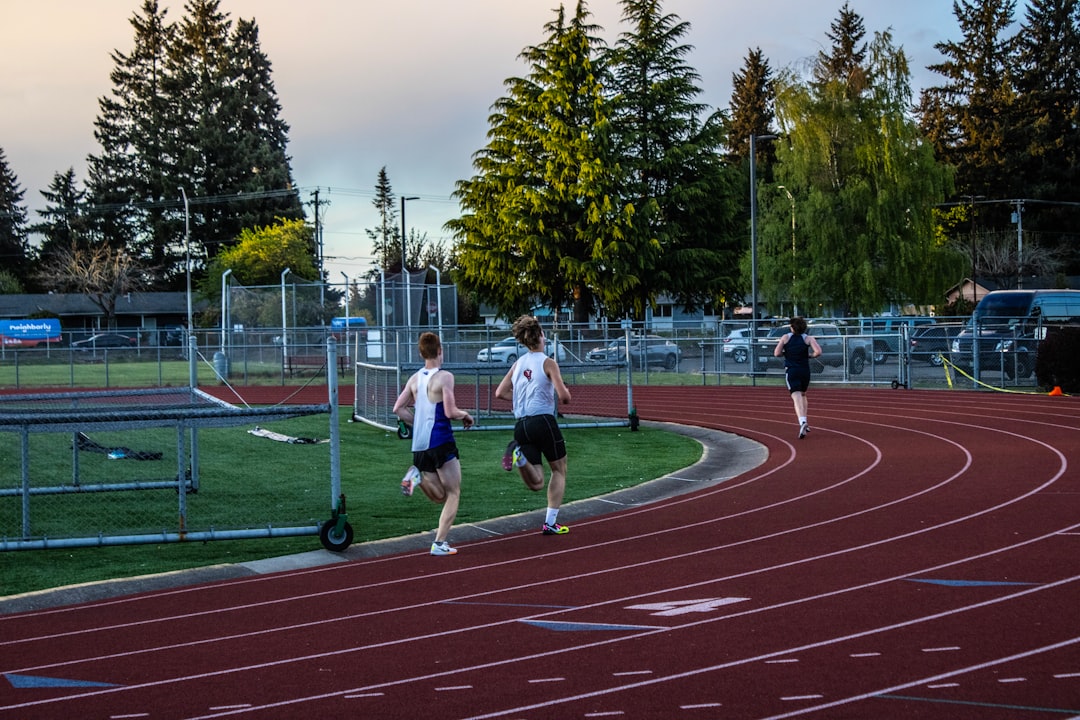
Cross-country and track teaches sustained discomfort tolerance. There is no substitute for the knowledge that you can keep going when everything in you wants to stop. This maps to endurance professions like military service, long-cycle entrepreneurship, and any pursuit where grit matters more than talent.
-
Football teaches controlled violence within rules and framework discipline. The playbook is the law. Former football players often thrive in structured, hierarchical environments where precision and following procedure matter: law enforcement, engineering, operations management.
-
Soccer teaches spatial awareness and systems thinking. The field is too big to control alone. You learn to read the whole system and position yourself accordingly. This transfers to careers requiring strategic thinking, logistics, and organizational design.
-
Wrestling teaches one-on-one accountability. There is no bench, no substitution, no one to share the blame. Former wrestlers often excel in direct-sales, litigation, and any field where personal accountability is the primary driver of outcomes.
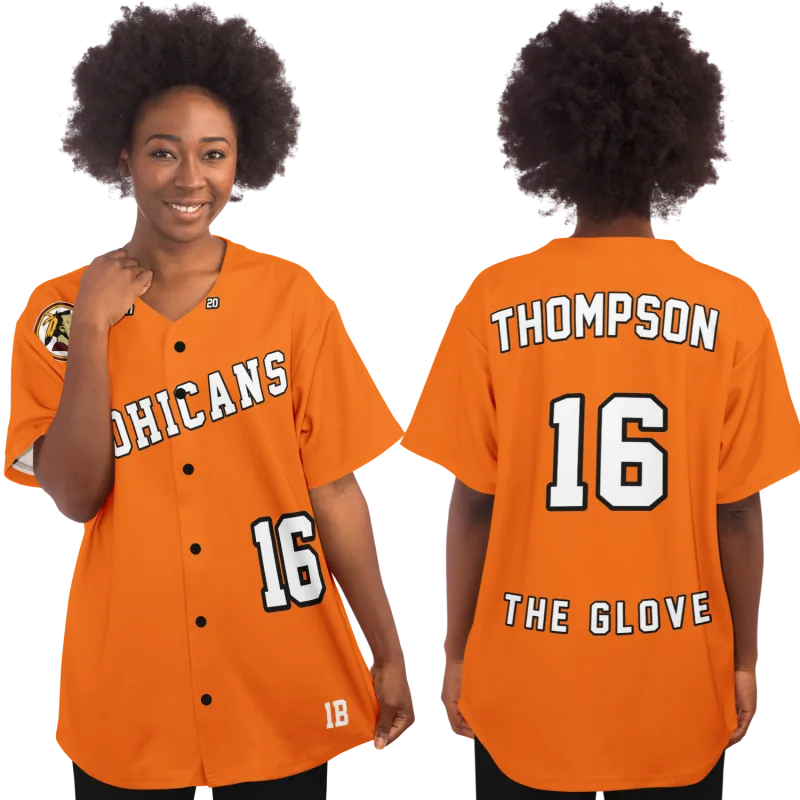
The sport shaped you. The jersey honors who you became.
Read more about the loss of athletic identity after high school and why your high school sports memories are still so vivid.
Your Jersey Is Still Out There Waiting
Your jersey is still out there waiting.
Design yours in minutes and see your name and number just as you remember it.
Frequently Asked Questions
What do high school sports teach you that academics don't?
High school sports teach specific behavioral skills that formal academics rarely develop: working inside a team structure toward a shared goal, performing under pressure with real stakes, receiving direct criticism and adjusting quickly, and showing up consistently when motivation is absent. These are context-dependent skills. They develop through experience in an environment that has them, not through instruction about them. Academic environments provide knowledge and analytical training. Athletic environments provide the practice of execution under pressure. Both matter; they build different things.
Can the lessons from high school sports stay with you as an adult?
Yes, and the research on this is fairly consistent. The self-regulatory skills, work ethic patterns, and resilience behaviors developed during structured youth sport participation tend to persist into adulthood, particularly when the athletic experience involved genuine challenge and team accountability. The athletes who carry lessons most durably are typically those whose sports required them to work through real adversity, not just participate, but struggle and adapt. The lesson isn't in the participation. It's in the difficulty.
Why do former athletes often feel a deep connection to their sport years later?
Because the sport was present during a specific developmental window (adolescence) when identity is being formed rather than confirmed. The experiences from that period become part of the foundational narrative a person carries about who they are and how they operate. Former athletes often describe their sport not as something they "used to do" but as something that is part of them, because during those years, the sport was part of the process of becoming them. The relationships, the challenges, the specific moments of growth: they happened during a period when everything was formative.
Is it possible to develop the same character traits without playing sports?
Some of them, through some environments: sustained artistic or musical training, certain kinds of service, demanding academic programs. But the specific combination of physical challenge, team accountability, real competition, and regular performance under pressure is genuinely rare outside of athletic contexts. It's not impossible to develop discipline, coachability, and resilience without sports. It's just that sports create a structured, repeated, high-stakes environment where those traits are constantly tested and strengthened in ways that few other adolescent experiences match it with the same consistency.
See also: why high school sports still matter to adults long after the final whistle | the quiet grief that comes when your athletic career ends at 18 | how athletic identity shaped who you became after the sport was gone