

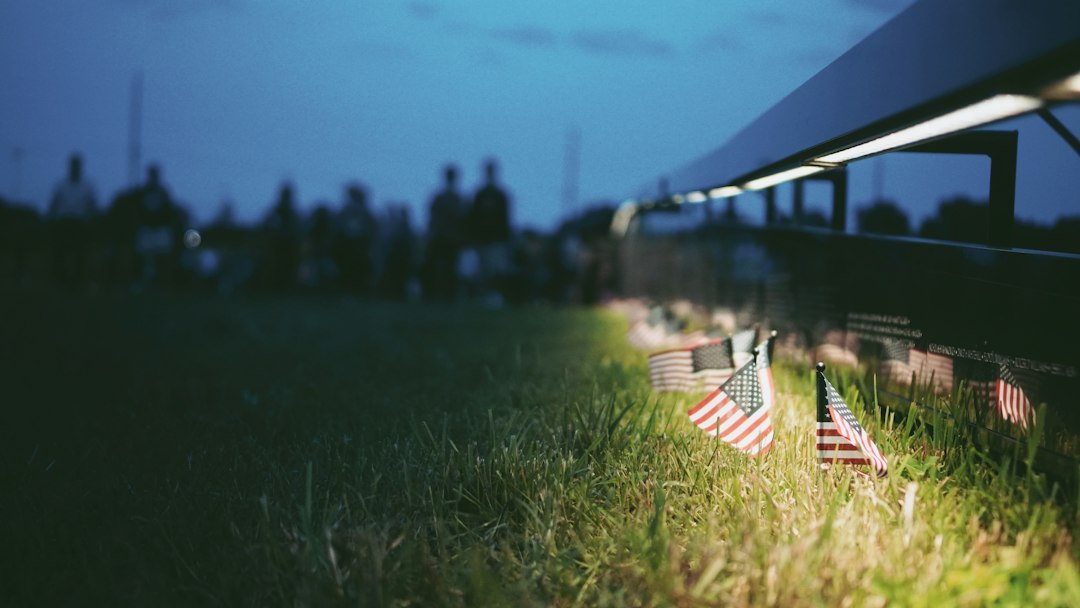




Every November, there's a moment — maybe driving to work, maybe catching a morning broadcast — when veterans day sports tributes surface and something in you pauses. Not the reflexive kind of pause. The slower kind. The kind where you realize that the athletes you once watched, the ones whose numbers you might have worn on your own back, made a choice you never fully reckoned with.
They left.
Not to another team. Not to a bigger contract in a different city. They left the game entirely — and walked toward something that asked far more of them than any fourth quarter ever could.
This piece is for that pause. It's for the devoted fans, the former players, the people who still remember the number on the back of their jersey and understand, at least in part, what it meant to wear one. Because on Veterans Day, the intersection of sport and service is worth more than a graphic on social media. It's worth slowing down and actually looking at who these people were — and what they gave up.
When the Game Wasn't Enough: Athletes Who Chose Service
The modern sports world moves fast. Contracts are signed, jerseys are retired, and legacies are managed with remarkable precision. Which is exactly why the athletes who stopped — who stepped away from all of it voluntarily — stand out with such clarity against that backdrop.
The most well-known name in this conversation is Pat Tillman. In 2002, Tillman walked away from a three-year, $3.6 million contract with the Arizona Cardinals to enlist in the United States Army with his brother Kevin. He was 25. He had just completed a season in which he'd recorded 224 tackles — the most in Cardinals history at the time. He was, by every measure, in the middle of something that most athletes spend their entire careers trying to build.


He enlisted anyway. He was killed in action in Afghanistan in April 2004.
Tillman's story is the one most people know because it arrived in the modern media era, with the contrast between athletic celebrity and military service rendered in sharp relief. But Tillman was not an anomaly. He was the continuation of a tradition that runs through American sports history like a spine.
The Long Line: From World War II to Vietnam and Beyond
The generation that played in the 1940s didn't agonize over the decision the way a modern news cycle might frame it. For many of them, service was simply the next thing. The country needed them, and they went.
Ted Williams is the most statistically staggering example. Williams missed nearly five full seasons of Major League Baseball — three during World War II and portions of two more during the Korean War — as a combat pilot in both conflicts. When you look at his career numbers (521 home runs, a .482 on-base percentage, the last player to hit .400 in a single season) and understand that those numbers exist despite years of absence, the imagination stalls. What would the complete ledger have looked like?
But Williams himself never framed it that way. He flew 39 combat missions in Korea. He once had a mechanical failure that forced him to land a burning jet — he walked away. The point isn't the baseball he missed. The point is that he never once positioned the military service as a detour from his real life. For him, the two identities weren't in conflict.
Bob Feller, the Cleveland Indians pitcher who some historians argue was on pace for 350+ career wins, enlisted in the Navy the day after Pearl Harbor. He was 22. He served on the USS Alabama and saw combat in multiple theaters. He came back and pitched until he was 38, ultimately winning 266 games and earning Hall of Fame induction in 1962. He was asked about what he gave up often throughout his life. His answer was always some version of: I didn't give anything up. I did what needed doing.
The Vietnam era brought a different kind of complexity. Roger Staubach, the Hall of Fame quarterback who led the Dallas Cowboys to two Super Bowl victories, fulfilled his Naval Academy commitment before his NFL career began — serving four years, including a year in Vietnam, before he ever played a regular-season game in the league. He was 27 years old by the time he started playing professional football full-time. He made the Pro Bowl four times. He won Super Bowl VI and Super Bowl XII. And he has consistently credited his military experience — the discipline, the leadership under pressure, the perspective on what actually constitutes high stakes — as foundational to everything that followed.
The Numbers Behind the Names
It's easy to let this conversation live at the level of famous names. But the reality is that the famous names represent thousands of athletes whose stories were smaller in public profile but no less significant in what they required.
During World War II alone, an estimated 4,000 professional baseball players served — including approximately 500 who were playing in the major leagues at the time of their enlistment. The NFL suspended operations entirely for the 1943 season in part because so many players had enlisted. College athletics programs across the country were gutted.
Consider what that means on a personal level: these were young men who had worked their entire lives — through youth leagues, high school seasons, college programs — to reach the level of professional competition. And they walked away from it. Some came back. Many didn't. Those who came back often found that the game had moved past them, or that their bodies had been changed by what they'd experienced, or simply that the version of themselves who had played wasn't quite the same person who returned.
That is the cost that never appears in the statistics.
What the Jersey Represented — And What They Left Behind
There's something specific about wearing a number. If you played organized sports at any level — youth league, high school, college — you know this. The number becomes an identity. You answer to it on the field. Your teammates yell it. Your parents point to it in the stands. It's yours in a way that feels almost physical, like the jersey itself carries some portion of what you were capable of in the time you wore it.
Marcus, 44, played four years of college lacrosse at a Division II program in the mid-Atlantic. He tells the story the same way every time: "My jersey number was 22. I still think of certain plays that way — I was number 22 when that happened. It's how I organize the memory." After graduation, Marcus enlisted in the Marines. He was deployed twice. When he came home, someone had framed the jersey from his senior season and hung it in his parents' living room. He says he couldn't look at it for a year. Not because it made him sad — but because the gap between who wore it and who came back felt too large to bridge with a piece of fabric.
The athletes who left their sports for military service carried that same weight, at scale. For some of them, the jersey had meant professional identity, income, public recognition — the scaffolding of a life. Leaving it was an act with real, concrete consequences.
For others, the identity the jersey represented was simply who they had been before. And who they became in service changed the geometry of everything that came after.
Service-Athlete Crossover: The Modern Generation
The tradition hasn't ended. It has evolved, but it continues.
Alejandro Villanueva played college football at West Point and served three tours in Afghanistan as a U.S. Army Ranger before making the Pittsburgh Steelers' roster as an undrafted free agent in 2014. He went on to earn two Pro Bowl selections as an offensive tackle. In 2017, when his teammates remained in the tunnel during the national anthem as a form of protest, Villanueva stood alone at the entrance to the field, hand over heart. He had his reasons. His teammates had theirs. The image became one of the most widely circulated in that entire era of sports-and-politics conversation — not because it resolved anything, but because it made the stakes visible in a way that abstractions couldn't.
Nate Boyer, a former Green Beret who walked onto the University of Texas football team in his 30s and later had a brief NFL stint with the Seattle Seahawks, is perhaps best known for the conversation he had with Colin Kaepernick in 2016. Boyer suggested that kneeling, rather than sitting, would be a more respectful gesture while still communicating protest. The exchange between a combat veteran and an NFL quarterback became a clarifying moment about the complexity of these conversations — that veterans themselves are not monolithic in their responses to the symbols and rituals of American sports, any more than athletes are monolithic in their relationship to service.
Shawna, 31, who played college softball at a Big Ten school and later joined the Air Force, puts it plainly: "The sports experience and the service experience are not the same. But they're not opposites either. Both of them asked me to be part of something bigger than my individual performance. The jersey is just a different kind of uniform."
What Veterans Day Sports Tributes Get Right (And What They Miss)
The flyovers are real. The moments of silence are real. The camouflage uniforms that NFL teams wear during November are — debated.
In our experience covering the intersection of athletic identity and nostalgia, the most meaningful Veterans Day sports tributes are the ones that skip the spectacle and go direct to the person. The local high school that invites a veteran who played on that field decades ago to walk out at halftime. The minor league team that tracks down the family of a player who served and never came back, and gives them a night in the stadium named after someone they loved.
The large-scale tributes do something important — they create a shared moment of acknowledgment in spaces where millions of people are paying attention. That's not nothing. The danger is when the tribute becomes more about the spectacle than the story. When the flyover replaces the name. When the camo jersey sells merchandise without the program behind it having any real connection to veteran support.
The athletes in this piece didn't seek tributes. Most of them were uncomfortable with the attention when it came. Ted Williams used to deflect questions about his service with characteristic bluntness. Pat Tillman specifically requested that his enlistment not be used as a recruitment or PR tool. Roger Staubach has spent decades redirecting conversations about his service toward the men he served alongside.
What they'd probably want, if anything, is for the people in the stands — the ones who grew up wearing jerseys, who remember their own numbers, who understand what it meant to compete in something that mattered — to actually think about it. Not just feel it for the duration of a national anthem. Think about it.
Your jersey is still out there waiting.
The athletes in this piece left theirs behind for something larger. Yours is still part of your story — the number you wore, the team you played for, the version of you that showed up every game.
Design yours in minutes and see your name and number exactly the way you remember it.
Frequently Asked Questions
Which professional athletes served in the military during World War II?
The list is extensive. Notable examples include Ted Williams (Boston Red Sox, served as a Marine and Navy pilot in both WWII and Korea), Bob Feller (Cleveland Indians, enlisted the day after Pearl Harbor), Hank Greenberg (Detroit Tigers, served four years in the Army Air Forces), and Joe DiMaggio (New York Yankees, served three years in the Army Air Forces). Across professional baseball alone, an estimated 500 active major leaguers served during the war.
Did any athletes serve in both the military and professional sports simultaneously or sequentially?
Roger Staubach is perhaps the most prominent sequential example — he served four years in the Navy, including a year in Vietnam, before playing his first regular-season NFL game at age 27. Alejandro Villanueva is a modern example who completed three tours in Afghanistan as an Army Ranger before making an NFL roster. Nate Boyer served as a Green Beret and later walked onto a college football team in his 30s, eventually earning a brief NFL contract.
How does Veterans Day connect to the sports world beyond tribute ceremonies?
Beyond flyovers and moments of silence, the connection runs through the athletes themselves — thousands of whom interrupted or ended their careers to serve. Many college and professional programs have direct ties to military academies (Army, Navy, Air Force), which have produced NFL and MLB players. Veterans Day also prompts reflection among former athletes at every level who served after their playing days ended, often describing the two experiences — competitive sport and military service — as parallel in the demands they make on team cohesion, discipline, and performing under pressure.
What happened to Pat Tillman's legacy in the years after his death?
Pat Tillman was initially the subject of a military cover-up that mischaracterized the circumstances of his death as enemy fire when he was actually killed by friendly fire. His family fought for years to establish the truth. The Pat Tillman Foundation, established in his memory, has since awarded more than $20 million in scholarships to veterans, active-duty service members, and their dependents. His story remains one of the most discussed examples of the intersection of athletic celebrity and military sacrifice in modern American history.
See also: the athletic identity that doesn't disappear after the final game | the grief that comes with leaving a sport behind | lessons that only come from competing at a high level