

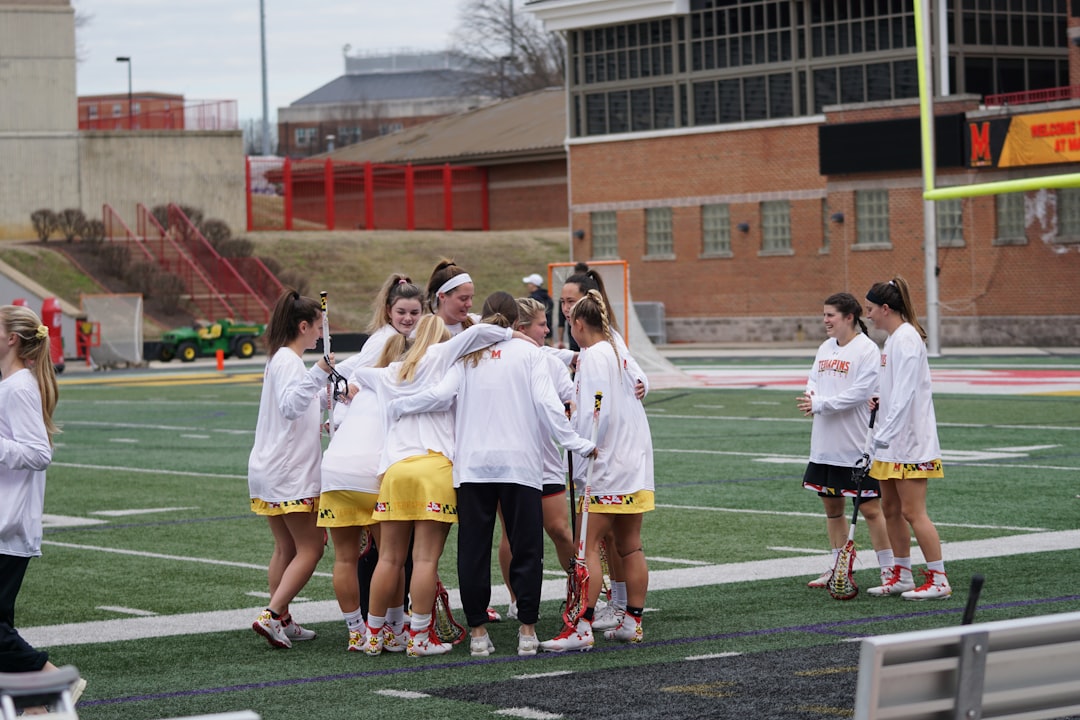



The mental health benefits of high school sports are more durable than almost anyone tells you when you're living them — and every fall, homecoming season has a way of making that truth impossible to ignore.
You're driving past a lit stadium on a Friday night, or you get a text from someone you haven't spoken to since graduation, or you catch the smell of cut grass on a cold evening, and something moves in you that wasn't there a moment before. That's not weakness. That's not sentimentality. That's the brain accurately recognizing something that genuinely shaped it.
This article is for the person who already suspects their athletic years meant more than the wins and the losses — and wants to understand, with some precision, why that's true.
What the Research Actually Says About Athletes and Mental Health
The popular conversation about high school sports tends to orbit the physical: the conditioning, the injury risk, the scholarship possibilities. The psychological dimension gets less attention, which is strange given that the mental health data is arguably more lasting than anything a strength coach ever measured.
A 2019 study published in the Journal of Adolescent Health tracked more than 9,000 adolescents and found that sport participation was associated with significantly lower rates of depression and anxiety — not only during the playing years, but with measurable protective effects extending into early adulthood. The researchers were clear about the mechanism: it wasn't exercise volume alone. It was the specific combination of structured routine, social belonging, goal-directed effort, and repeated performance under genuine pressure.
That combination matters because it isn't replicated by most other adolescent activities. Joining a club that never puts anything on the line doesn't produce the same psychological environment. Going to the gym alone doesn't either. High school sports, at their functional best, create four conditions simultaneously:
- Structured accountability — you show up every day regardless of motivation, weather, or mood
- Team belonging — your presence is required by people who are counting on you specifically
- Managed adversity — you lose, get benched, fail publicly, and discover that the world continues
- Earned identity — you become an athlete through accumulated effort, not by declaring it
Each of these conditions leaves a mark on the developing brain. The mark doesn't wash off when the season ends.


The newer research confirms the mark persists, and deepens what's at stake. A 2025 analysis published in the Annals of Epidemiology spanning more than 800,000 U.S. middle and high school students found that students who participate in sports are significantly less likely to report suicidal thoughts or behaviors. The lead researcher described organized sports as an important protective factor — a framing that moves the conversation past conditioning and character and toward something more urgent: for some young people, being part of a team is one of the things standing between them and their worst days.
The aggregate evidence points the same direction, and at a scale that's hard to dismiss. A 2025 systematic review and meta-analysis led by Bengtsson and colleagues, published in the International Journal of Behavioral Nutrition and Physical Activity, reviewed 46 longitudinal studies — follow-ups spanning one year to more than five decades, with some samples exceeding 50,000 people. It found youth sport participation carried a positive low-to-medium effect on health and well-being (d = 0.23), and a small-to-medium reduction in anxiety, depression, and stress symptoms (d = −0.25). The detail worth noticing is that these were longitudinal studies: the same people tracked across years, not a single-season snapshot. The psychological carryover held.
The Resilience Architecture You Built Without Knowing It
Here is what almost every retrospective account of high school athletics gets wrong: the psychological development wasn't intentional. Nobody handed you a curriculum in distress tolerance. You were just devastated after the loss. You were just exhausted after the Tuesday practice nobody would ever see. You were just trying to hold your starting spot.
That's precisely how resilience is constructed — not through conscious effort toward psychological growth, but through repeated exposure to high-demand conditions that required continued functioning anyway.
Distress tolerance is the clinical term for the ability to remain functional inside a high-stress emotional state rather than shutting down or fleeing. High school athletes build it involuntarily. Every game where the score was wrong at halftime and the coach expected you to adjust, every public failure in front of people who cared about the outcome — each of these was a low-grade, unscheduled training session in staying operational under pressure.
Emotional regulation develops through the social demands of team environments. You cannot take your frustration out on a teammate without immediate social consequence. You learn — because the cost of not learning is paid in real time — to manage what you're feeling while simultaneously performing. That's a sophisticated psychological capacity. Many adults without athletic backgrounds spend significant time and money trying to develop it later in life.
Self-efficacy may be the most transferable gift the playing years produce. Not confidence in the motivational-poster sense, but something more specific and more useful: the lived, embodied understanding that sustained effort changes what you're capable of. Athletes don't read about this relationship between work and result. They experience it directly, repeatedly, under conditions that were real enough to matter.
In our experience, when former athletes describe what their playing years gave them, the phrase that recurs most consistently isn't about championships. It's some version of: "I already knew how to outwork most people." That knowledge didn't arrive abstractly. It came from a practice in October when nobody was watching and they showed up anyway.
The Social Dimension: A Template for Belonging
The loneliness epidemic among American adults is well-documented across demographic groups. What receives less attention is the specific way former athletes describe their relationship to it — not an immunity, but a heightened recognition. They know what deep belonging feels like, which makes its absence identifiable rather than ambient.
High school team sports created, for most participants, the most structurally dense social environment they had ever inhabited:
- Daily physical proximity to the same group of people over an extended season
- Shared adversity that produces emotional bonds unavailable through ordinary social interaction
- Defined roles within a system that exists beyond any individual contributor
- Collective investment in outcomes that no single person could produce alone
That structure is genuinely rare in adult life. Most adult social contexts don't ask anything of you the way a team does. The result for many former athletes is an internalized standard — a reference point for what real community feels like — that makes superficial connection recognizable as insufficient.
The research suggests this is more gift than burden. Former athletes demonstrate measurably stronger social competency in professional and relational contexts: the ability to operate within a team structure, to subordinate individual preference for collective outcome, to extend and receive trust under pressure. These aren't soft skills. They're specific psychological capacities built in a specific environment, and they transfer.
One Athlete's Story: What Stayed
Mia T., 34, played varsity soccer for three seasons at a mid-sized high school in the Midwest. She wasn't the standout on the roster, and she knew it. What she remembers most clearly isn't the goals or the tournament finishes — it's a specific practice in her junior year when the coach ran the same defensive drill for forty-five minutes until the whole unit got it right, and nobody quit, and something changed in the room. She carried that into a career in emergency medicine. "I already knew what it felt like to stay calm when everything was going sideways," she says. "That wasn't a new experience."
Identity After the Final Whistle
Homecoming surfaces something that rarely gets named directly: the question of who you are now in relation to who you were then.
Athletic identity — the psychological self-concept organized around being an athlete — is powerful during the playing years. For many former athletes, its absence after graduation creates a gap that takes longer to navigate than anyone warned them about. Research on athletic identity transition documents elevated rates of depression and identity confusion in the years immediately following the end of competitive sport participation, including at the high school level.
But the same research identifies what protects against that outcome: integration. Former athletes who carry their athletic identity forward — who incorporate what those years built into their adult self-concept rather than either clinging to the past or severing from it entirely — demonstrate significantly stronger psychological outcomes across adulthood.
What integration looks like in practice:
- You're not still the athlete in the sense of living inside those specific years
- You carry the psychological architecture those years produced
- The discipline, the team orientation, the comfort with managed failure, the understanding that showing up matters — these become structural features of your adult character, not relics of a former self
That's not nostalgia dressed up in clinical language. That's identity — the kind that doesn't require a scoreboard to remain valid.
The Specific Psychological Skills High School Sports Actually Develop
"Sports build character" is the kind of claim that floats free of specifics and therefore convinces no one. Here are the precise, nameable psychological competencies that high school sport participation develops — each with a mechanism:
Cognitive reframing — Coaches deliver corrective feedback in real time, in front of teammates. Athletes learn to interpret a failure not as a permanent verdict but as correctable information. That interpretive habit transfers directly to how a person processes setbacks in professional and personal contexts.
Structured goal-setting — Seasonal objectives, game-by-game targets, individual performance benchmarks. Athletes develop working fluency with the mechanics of goal pursuit — the cycle of setting, pursuing, adjusting, and resetting — that most of their non-athletic peers don't encounter systematically until well into their careers.
Tolerating evaluation — Being assessed, ranked, and publicly measured is uncomfortable. Athletes develop a functional relationship with external performance review early, which reduces the psychological weight those experiences carry in professional life.
Recovery after public failure — Missing the shot in front of people who came specifically to watch. Losing when the margin was one play, one point, one moment. Former athletes have already navigated this experience and survived it intact. That survival is its own form of durable confidence.
Attention regulation under pressure — The capacity to narrow focus when the stakes are high is trainable. Athletes train it every time they compete when something real is on the line. That capacity doesn't dissolve when the sport ends.
What Homecoming Reactivates — And Why It's Worth Paying Attention To
Homecoming affects former athletes differently than it does other alumni, and the reason isn't sentimentality. It's sensory reactivation.
The smell of the stadium, the weight of a jersey, the sound of a crowd organizing itself around a shared outcome — these are sensory anchors tied to one of the most psychologically formative environments most people will ever inhabit. The emotional response that surfaces isn't a sign of being stuck in the past. It's the brain accurately recognizing something that shaped it.
What's worth doing with that recognition is neither dwelling in it nor dismissing it. It's understanding it. The person who showed up every day in conditions that weren't comfortable, who learned to stay functional under pressure, who belonged to something larger than their own performance — that person didn't disappear when the season ended. They became the structural foundation of the adult you are now.
Homecoming just makes that foundation briefly, vividly visible again. That's worth something. Not as a reason to live backward, but as a reminder of what you're actually built from.
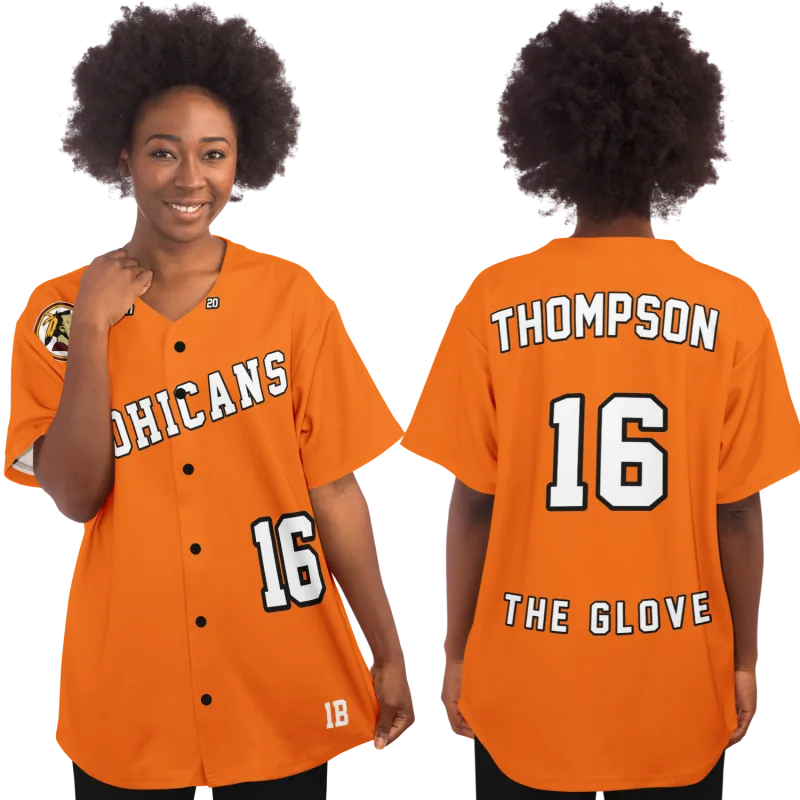
Your jersey is still out there waiting.
Design yours in minutes and see your name and number exactly the way you remember it.
Frequently Asked Questions
Do the mental health benefits of high school sports apply even if you weren't a starter or standout player?
Yes — and the research is consistent on this point. The psychological benefits of sport participation are not significantly correlated with individual performance level or playing time. The mechanisms that produce resilience, belonging, and self-efficacy — structured routine, team membership, managed adversity, repeated goal pursuit — are available to every participant regardless of where they fell on the depth chart. Research suggests that athletes who navigated role-player status or limited playing time sometimes develop stronger psychological flexibility than those for whom early athletic success came easily, precisely because they had to find motivation and meaning independent of external validation.
Is it possible to experience negative mental health effects from high school sports?
It is, and this deserves an honest answer. Sport environments characterized by toxic coaching culture, excessive pressure to win at the expense of athlete development, or chronic overtraining can produce anxiety, burnout, and distorted relationships with failure and self-worth. The protective psychological outcomes documented in the research are associated with developmentally appropriate sport environments. Former athletes who came through damaging team cultures often carry a more complicated relationship with their athletic past — though many also report eventually recognizing resilience tools they developed from navigating those conditions, even when that development was unintentional and painful.
Why does homecoming tend to feel more emotionally significant for former athletes than for other alumni?
Because homecoming is a sensory reactivation of one of the most psychologically dense environments most people will ever inhabit. The convergence of sensory anchors — stadium lights, crowd sounds, the specific physical weight and smell of an athletic environment — with the emotional memory of team belonging and peak-effort competition creates a recognition response that is neurologically meaningful, not merely sentimental. Former athletes aren't being passive or nostalgic. They're briefly re-inhabiting a version of themselves that was formed under conditions of genuine psychological intensity. That version doesn't fully disappear. Homecoming makes it temporarily visible again.
How long do the psychological benefits of playing high school sports last into adult life?
Longitudinal research indicates the protective effects are measurable well into adulthood — not passively or automatically, but as a foundation of psychological competency that supports better outcomes across personal and professional domains. Former athletes who actively integrate their athletic identity demonstrate the strongest long-term outcomes. The specific skills built during athletic participation — distress tolerance, self-efficacy, team orientation, recovery from failure — are not capacities that atrophy from disuse. They are structural features of how a person learned to relate to challenge. That relationship persists across contexts long after the playing years end.
See also: athletic identity after high school | what high school sports teach you that nothing else could | why high school sports still matter to adults | grieving the end of your athletic career