






There's a voice you can still hear.
Not a generic memory — the specific voice. The precise cadence of it. The way it cut through noise on a sideline, or dropped low and quiet in a gym when something real was being said. You didn't know it then, but that voice was doing more than calling plays or correcting your form. It was telling you who you were allowed to become.
If you've ever typed "high school coach who changed your life" into a search bar, you already know you're not looking for an article about coaching philosophy. You're looking for permission to sit with a memory that still matters. You're looking for someone to confirm that what you felt was real — that one person, in one gymnasium or on one field, genuinely redirected the story of your life.
This article is for that. For the coach. For the memory. And for the part of your identity that was forged during those years and has never fully left.
What a Coach Actually Gives You (It's Not What the Trophy Case Suggests)
Walk into any high school and the athletic wing will show you the official record: championship banners, all-conference photos, framed jerseys. The things that lasted. But none of that is what former athletes carry.
What they carry is something the trophy case can't hold.
They carry the specific practice where something clicked — where a coach said one sentence and suddenly the whole game reorganized itself in their mind. They carry the bus ride home after a loss where a coach sat next to them instead of up front. They carry the moment a coach said, in some form or another: I see something in you that you don't see yet.
The research on this is straightforward. A 2023 study from the Journal of Sport and Exercise Psychology found that athlete-coach relationships rank among the most formative non-parental relationships in adolescent development — influencing not just athletic performance but self-concept, resilience, and long-term identity formation. But most of us didn't need a study to tell us that. We felt it.

The influential high school coach in your memory wasn't just teaching technique. They were teaching you how to occupy your own body under pressure. How to fail in front of people and come back. How to be part of something larger than your own performance. Those aren't sports skills. Those are life skills with a sports delivery mechanism.
The Specific Things They Did That You Still Remember
Here's what's interesting about the way we remember great coaches: we don't remember their systems. We don't remember their practice plans or their offensive schemes. We remember specific moments.
A phrase. A look. A decision they made about you.
These are the categories of memory that come up most often when former athletes talk about the coach who believed in them:
The moment they saw you differently than you saw yourself. This is the most commonly cited memory. Not general encouragement — the specific instance where a coach evaluated you against a higher standard than you had set for yourself, and communicated that standard clearly. You're playing scared. You're better than scared. Or its opposite: You think your ceiling is here. I think it's somewhere you haven't looked yet.
The correction that didn't feel like criticism. Great coaches have a way of delivering hard information that leaves the athlete feeling capable rather than diminished. The correction lands as investment, not judgment. Because the subtext is always: I'm telling you this because I believe you can do something with it.
The thing they said at the worst possible moment — that turned out to be just right. After the bad game. After the season-ending injury. After the tournament loss that felt unsurvivable. Every athlete who had a great coach can locate this moment precisely. And they can tell you, word for word, what was said.
The way they talked about the sport itself. The coaches who change lives don't treat the game as a means to a win. They treat it as a language — a way of understanding work, and precision, and what it means to be part of something with other people who are all trying. When a coach transmits that reverence, it sticks.
The Jersey You Were Wearing When It Happened
Marcus T., 34, still remembers the specific game where his varsity basketball coach pulled him from the starting lineup — not as punishment, but as a reset. His coach told him: You're playing for the scoreboard. Start playing for the floor. He went back in twelve minutes later and had the best half of his season. He still has his number 23 jersey in a box in his closet. He told us he's been meaning to do something with it for years.
Most of us have a version of that story. A uniform that was present for the moment that mattered. A number that was yours — that a coach gave you, or confirmed for you, or stood behind when you weren't sure you'd earned it yet.
The jersey is the artifact. The coach is the memory inside it.
How Coach Impact on Athlete Identity Actually Works
The coach-athlete relationship is one of the few relationships in a young person's life where authority and belief operate simultaneously. A coach has power over you — playing time, position, inclusion in the starting lineup. And yet the coaches who leave permanent marks are the ones who wielded that power in service of the athlete's development, not their own record.
That's a rare thing. And athletes know it, even if they couldn't articulate it at sixteen. The question of why the relationship with your high school coach still affects you isn't just nostalgic — it's rooted in how identity forms during adolescence.
What the great ones understood — the coaches whose names still come up decades later — is that identity is built in practice, not in games. Games are the test. Practice is where the person gets made. The coach who changed your life was probably someone you saw every day, in an unglamorous room, doing unglamorous work. And somehow, in that repetition, they saw who you could be.
The best high school coach memories tend to share a specific architecture:
- A coach who held a higher standard than the athlete held for themselves
- A coach who communicated belief in the athlete's capacity to meet that standard
- A specific moment of difficulty — a loss, an injury, a failure — where the coach responded in a way that reframed the difficulty as information rather than verdict
- A long-term outcome that the athlete can trace back to that relationship
That's the pattern. Four elements. And when all four are present, the relationship doesn't end at graduation. It becomes part of how the athlete understands themselves for the rest of their life.
The Coaches Who Don't Know What They Did
Here is the part that most former athletes carry quietly: the coach who changed your life probably doesn't know they changed your life.
Think about that. The person whose words you can still hear, whose belief in you still functions as interior scaffolding when things get hard — that person went home after practice and did it all again the next day with a different group of kids. They may not remember the specific conversation you remember. They may have retired, or moved, or passed on, never knowing that one sentence they said in a gym in 1998 is still doing work in you.
This asymmetry is one of the more profound things about great coaching. The investment is enormous on the athlete's side. The coach may have experienced it as just another Tuesday.
Some former athletes find their coaches. They write the letter, make the call, show up at the reunion. They say: I want you to know what you did. And without exception, those coaches are surprised. They remember the athlete differently — not as the finished person standing in front of them, but as the raw material they were working with at fifteen. The gap between those two versions is the measure of what good coaching does.
If you still have the ability to reach that coach — consider reaching out. Not because they need it. Because you have been carrying something that belongs, in part, to them.
What to Say When You Reach Out
You know you should reach out. The part that stops most people is the first sentence. Here's the shape that works: name yourself, name the time, then give them one specific memory. Not "you meant a lot to me." The one moment only you two would remember.
Some ways to start:
"I was number 12 on the '02 team. After the district final, you pulled me into the locker room and told me I'd make a better man than I'd ever make a player. I've leaned on that line through everything since."
"You probably won't remember this. Sophomore year, after practice, you stayed late and rebounded for me until my shot stopped shaking. Nobody else ever did that. I've never forgotten it."
"I tell my kids about you — not the wins, the way you never let me quit on myself. That's your real record with me."
Then close with one honest sentence. You don't need a paragraph. Something like:
"I just wanted you to know what you did is still doing work in me."
The medium doesn't matter as much as you think. A text. An email. A card. A call. Pick the one you'll actually send. And don't wait for a better occasion. The only wrong time to say it is after you can't.
What You Do With a Memory Like That
The best high school coach memories are not museum pieces. They're not meant to stay in a box.
The athletes who honor those memories tend to do it in one of a few ways:
- They coach. They find themselves, sometimes unexpectedly, on the other side of that relationship — running drills, calling plays, noticing something in a young athlete that the athlete hasn't noticed yet. And they hear their own coach's voice come out of their mouth.
- They return to the game. Not to compete, but to reconnect. A recreational league, a pickup game, an alumni tournament. The sport was the container for the relationship. Getting back inside the container brings something back.
- They preserve the artifact. The jersey. The photograph. The program from the championship game. Not as nostalgia — as testimony. This was real. This happened. I was part of something.
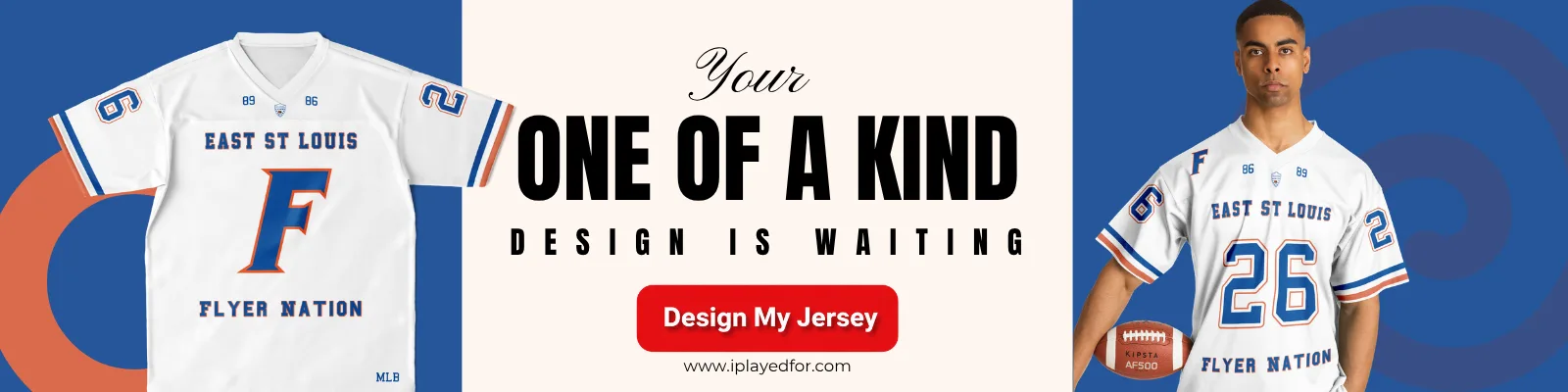
The third category is the one we understand most deeply here. Because the jersey is the physical evidence of the story — whether it's a jersey for the coach who gave everything or your own. It carries the number. It carries the name. It carries the specific team and the specific season and everything that happened inside it.
Your jersey is still out there waiting.
Design yours in minutes and see your name and number just the way you remember it — the team colors, the font, the number you wore when your coach believed in you before you believed in yourself.
Frequently Asked Questions
How do I find a high school coach I've lost touch with?
Start with the school's athletic department — many keep alumni records or can forward messages to retired coaches. Social media has also made this significantly easier; searching the coach's full name along with the school name and sport often surfaces a current profile or a tagged photo that leads somewhere. If the coach has passed away, consider reaching out to their family through the school or local community. Many families welcome hearing the impact their loved one had.
Is it too late to tell a former coach they changed your life?
It is almost never too late. Former athletes have reunited with coaches decades after graduation — at retirement parties, at funerals where they finally said what they should have said sooner, through letters that arrived out of nowhere and were kept for years. Coaches who spent years investing in young athletes rarely feel that enough time has passed to make gratitude unwelcome. If the coach has died, consider writing the letter anyway, or sharing the story with someone who knew them.
What makes a high school coach memorable versus one who is simply good at their sport?
The coaches who change lives tend to be distinguished not by technical expertise but by their orientation toward the athlete as a whole person. They see beyond current performance to potential. They respond to failure as information rather than evidence of limitation. They hold standards that feel demanding and supportive at the same time — the belief that the athlete can meet the bar is implicit in the decision to raise it. Technical mastery matters, but the coaches who stay in athletes' memories for decades are the ones who taught something larger than the game.
How do you honor a coach who has passed away?
Many former athletes find that honoring a deceased coach through action — coaching youth sports, making a donation to the school's athletic program, preserving and sharing stories from that era — carries more meaning than any single gesture. Wearing or displaying the jersey from that era is another form of tribute: keeping the physical record of the team and the season alive. Some athletes organize informal reunions of former teammates to share memories collectively, which honors both the coach and the community they built.
See also: athletic identity after high school | what high school sports taught you that nothing else could | why high school sports still matter to adults | grief that comes with the end of your athletic career