

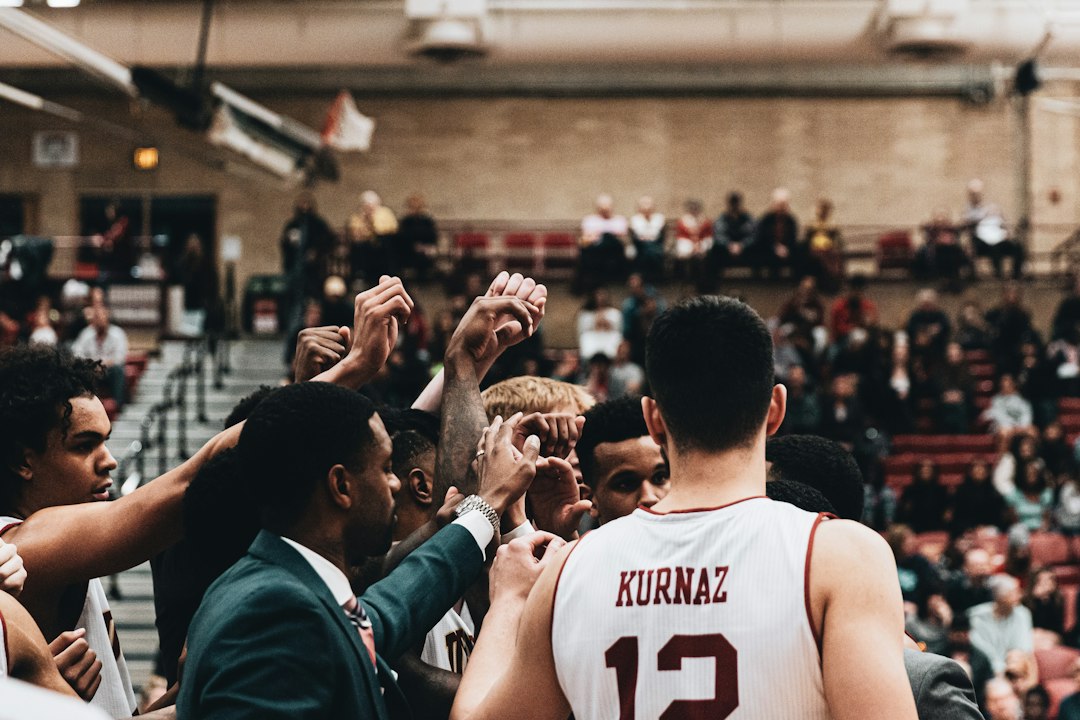




There is a specific moment you probably still remember.
The starting lineup gets called. Five names — not yours. You stand up anyway, applaud with everyone else, and take your seat at the end of the bench. You pull your warm-up jacket a little tighter. The whistle blows. The game begins.
That moment — that particular, unremarkable, quietly gutting moment — is the benchwarmer high school perspective that nobody has ever written a tribute to. Every article about riding the bench is addressed to someone still in it, still fighting for playing time, still trying to change their situation. This article is not that.
This is for the woman who lived it, graduated, and carried it forward in ways she might not have fully named yet. The woman who showed up in a uniform she was proud of, to games she memorized from the sideline, for teammates she genuinely loved cheering. This is the retrospective she was never given.
You were more than a placeholder at the end of a row. And this is the story that proves it.
What "Not Being a Starting Player" Actually Cost You — and What It Quietly Gave You
Let's be honest about the cost first, because anything else would be condescending.
Not being a starting player in high school hurt. It hurt in the specific way that things hurt when you are sixteen and your identity is still taking shape and you wanted something and it didn't happen on the schedule you imagined. There is no reframing that erases that. The question is never whether the bench was hard — it was. The question is what was happening on that bench that no one was paying attention to.
Here is what was happening.
You watched more basketball — or volleyball, or soccer, or softball — than almost anyone in that gym. Not from the stands, where the game is abstract and distant, but from twelve feet away, at floor level, inside the rotation. You saw the defensive breakdowns form before they happened. You tracked the player your team couldn't stop. You counted the number of times your point guard hesitated before driving left. You were doing live film study with your eyes, involuntarily, every single minute you sat there.


No one handed you that skill. No one assigned it. You developed it because you were paying attention — really paying attention — in a way that people with guaranteed minutes rarely do.
The riding the bench memory that most women carry from high school is weighted with what they missed. What is rarer, and worth naming plainly, is everything they absorbed.
The Specific Education That Happened at the End of the Bench
There is a kind of learning that only becomes available when you are not the one performing. Athletes who start every game develop a particular relationship with their sport: reactive, instinctive, embodied. They feel the game in their muscles. That is real and valuable. But the athlete who watches the game from two feet off the floor, week after week, develops something different: a structural understanding of how the game works at a level most players never access.
Coaches develop this. Scouts develop this. The benchwarmer develops this — quietly, without anyone acknowledging it, because the value isn't visible in box scores.
The value of being a substitute includes things that resist quantification. You knew your team's tendencies better than the starters did, because you weren't inside the action — you were watching the action. You could tell when the energy was shifting before the score changed. You understood substitution patterns. You read the opposing coach's adjustments in real time.
None of this showed up in the program. None of it got announced. But it was real, and it was yours, and it shaped how you think about teams, effort, and contribution in ways that have nothing to do with how many minutes you logged.
Priya M., 29, a former JV volleyball player who sat the bench for two full seasons in high school, told us something that stuck: "I became the person my work teams came to when they needed someone who could actually read the room. I never connected it to volleyball until my manager called it out. She said I was always the first person to notice when the group dynamic was off. I think I just never stopped watching from the bench."
That is not a consolation prize. That is a developed skill.
Cheering From the Bench: The Part Everyone Undervalues
Here is the aspect of the benchwarmer's story that gets the least credit, partly because it looks like the least important thing and partly because the culture of individual athletic achievement has no good language for it.
You cheered. Loudly. Genuinely. For other people.
That is not nothing. That is, in fact, one of the harder things a competitive person can do. The teammate who suited up with the same ambitions you had, who wanted the starting position you wanted, who got it — and you cheered for her. Every basket. Every good defensive stop. Every time the coach called her name in the clutch.
Cheering from the bench when you aren't playing is not passive. It requires a specific kind of discipline that most fourteen-to-eighteen-year-olds are not naturally wired for. It requires separating your personal frustration from your investment in the team's outcome. It requires choosing generosity over ego, repeatedly, in public, in a uniform, under the lights.
The teammate who does that — who becomes the team's loudest voice from the bench, who greets every sub coming off the floor, who knows exactly what to say when the starter is struggling — that teammate is doing something that cannot be faked for a full season. The coaches who were paying attention knew it. The players who were paying attention knew it. And the team culture it created was real.
Cheering from the bench is not what you did instead of contributing. It was a form of contribution. One that required more from you, not less.
The Uniform Was Real. The Season Was Real. So Was You.
There is a specific grief that former benchwarmers sometimes carry — the feeling that their athletic identity is somehow provisional, that they don't quite have the standing to call themselves a basketball player or a soccer player because they didn't play enough. The mental asterisk.
That asterisk is wrong, and it is worth saying directly.
You practiced every day those athletes practiced. You ran the same sprints, ran the same drills, showed up to the same 6 AM conditioning sessions in January. You sat through the same film sessions. You traveled to the same away games. You wore the same uniform. You were on the same team.
The fact that your name wasn't called in the starting lineup does not revoke any of that. It does not make the season less yours. It does not make the jersey less real.
In our experience covering the stories of former athletes across dozens of sports, the women who most readily dismiss their own athletic histories are not the ones who didn't work hard — they are the ones who worked hard and didn't get the external validation they were hoping for. They trade a real experience for a diminished self-story, and they do it quietly, without anyone challenging them on it.
This article is the challenge.
You suited up. You competed for your spot. You showed up for two or three or four years for a team you believed in. That is an athletic career. It does not require a starting role to be legitimate.
What the Starting Players Didn't See That You Did
Here is a thing that is true about starting players that they rarely know about themselves: the game looks different from inside it.
When you are the one making decisions in real time — where to pass, when to cut, how to position your body — your attention is consumed by execution. The mental bandwidth available for observation is narrow. That is not a criticism; it is the nature of performance. It is why elite athletes talk about being "in the zone" — the reduction of conscious processing is part of what makes peak performance possible.
The benchwarmer's vantage point is different. The game is fully visible. The whole picture is available. The patterns that develop over a quarter of play — the ones that determine whether the team wins or loses — are legible in a way they aren't from the floor.
The woman who sat the bench in high school developed a view of team dynamics, effort, and collective performance that most of her starting teammates will only develop decades later, if at all. She was doing systems thinking before anyone called it that. She was learning how teams actually work — not how talented individuals perform, but how a group of people with different roles, different abilities, and different levels of satisfaction function as a unit.
That is a rare education. And it happened on a bench in a gymnasium that smelled like floor wax and old sneakers, under lights that buzzed slightly on the left side of the court, while the clock ran and your name stayed in the coach's pocket.
The Team's Biggest Fan Had a Uniform
The team's biggest fan — the one who knew the roster cold, who tracked the score from the first possession, who felt every momentum shift in her chest — was sitting on the bench.
Not in the stands. On the bench.
That matters because it names something the culture of athletic achievement consistently fails to name: the athlete who is fully inside the team, fully invested in the outcome, and not receiving the visible reward for that investment is doing something genuinely difficult and genuinely valuable. She is practicing devotion to something larger than her individual performance. She is learning, possibly for the first time, what it means to care about an outcome you don't personally control.
That lesson follows people. It shows up in how they work in teams, how they parent, how they lead. The woman who learned at seventeen that she could pour herself into something and cheer for someone else's success without it diminishing her own is carrying a capability that many adults spend decades trying to develop.
The bench was not where your story paused. It was where part of your story — a specific, essential part — was written.
Your jersey is still out there waiting.
Design yours in minutes and see your name and number exactly the way you remember it.
Frequently Asked Questions
Does the benchwarmer high school perspective count as a "real" athletic experience?
Absolutely — and the question itself reveals how much the culture of athletic achievement has narrowed what we're allowed to claim. If you practiced, competed for a roster spot, traveled with the team, wore the uniform, and showed up for the full season, you had a real athletic experience. The number of minutes you played is one data point in that story, not the whole story. The skills developed from riding the bench — reading team dynamics, supporting teammates, maintaining composure without external reward — are real, durable, and worth claiming.
Is it common to feel like your time on the bench wasn't worth celebrating?
More common than most people admit. The value of being a substitute is structurally invisible in the way sports are measured and remembered — statistics, highlights, and starting lineups capture what starters did, not what bench players contributed to the team's culture and function. Many women who sat the bench in high school carry a quiet ambivalence about that period: proud of the work, uncertain whether the work counts. It counts. The ambivalence is a product of the measurement system, not the reality of what you contributed.
What do you say to someone who still feels regret about not getting more playing time?
The regret is real and it deserves to be honored, not argued away. What is worth adding to it — not replacing it — is the full picture of what that time actually produced. The riding the bench memory is not only the memory of watching someone else play. It is also the memory of a team you belonged to, a game you understood more deeply than most people around you, and a version of yourself that showed up and competed anyway. Those things coexist with the regret. They don't erase it. They make the story more complete.
Did cheering from the bench actually matter to the team?
More than most players realize until years later. Team culture — the thing that determines whether a group of athletes plays hard for each other when it's difficult — is built in the small, daily moments that happen on the bench as much as on the floor. The player who greets teammates with genuine encouragement, who stays engaged during the fourth quarter of a blowout, who keeps the energy on the bench alive: that player is doing real work for the team. Research on group cohesion in sport teams consistently identifies social support and team morale as significant predictors of collective performance. The benchwarmer who provided that wasn't performing a lesser role. She was performing a different and necessary one.
How do I talk about my bench experience without feeling like I'm making excuses?
You don't need to frame it as an excuse, because it isn't one. The benchwarmer high school perspective is a legitimate athletic identity — not a consolation version of a starter's story, but its own story with its own specific value. Lead with what you did: you practiced at a competitive level, you contributed to a team culture, you developed a view of team dynamics that most people never get. That is a true account, stated plainly, with nothing to apologize for.
See also: why high school sports still matter to adults long after the final whistle | the athletic identity you carried even when your name was never called | what high school sports teach you that no classroom ever could | the grief that comes when your playing days end before you felt ready