

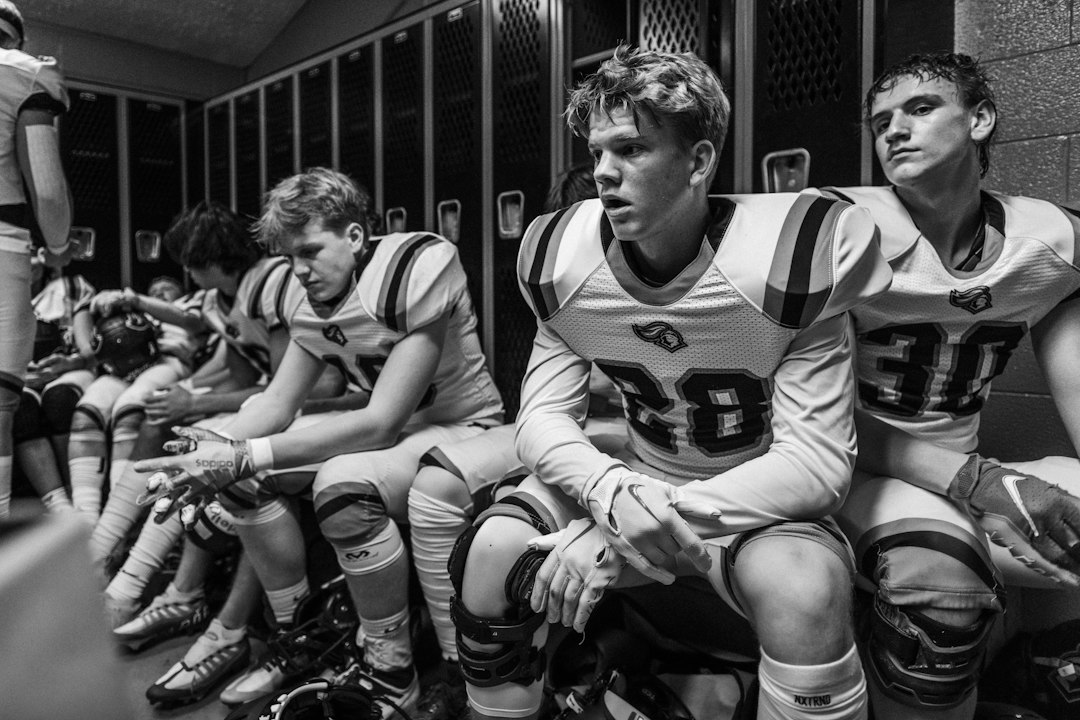




You still know exactly how it felt. The jersey hung past your belt line, the sleeves swallowed your biceps, and the mesh was heavy enough that you could feel it on your shoulders before kickoff. Then you went looking for classic football jerseys online and everything you found looked like it had been shrunk in the wash.
That's not your imagination. The jersey you wore in 1997 was built differently from what teams wear now, and most "retro" options skip the details that made it look and feel the way it did. This guide walks through what the 90s high school football jersey actually was, why the silhouette mattered, and how to recreate yours with modern custom makers without losing it.
This article is informational. If you do end up ordering a custom jersey after reading, some links may earn us a commission at no cost to you.
What Made the 1990s Football Jersey Look Like Nothing Else
Open any high school yearbook from 1995 to 1999 and the first thing you'll notice isn't the colors. It's the shape. Players look wider through the chest and shorter in the torso than a modern team does. The jersey sits on the body like a tent over a frame.
Three construction choices created that look, and each one is worth understanding before you try to rebuild it.
The Cut: Big Because It Had to Be
The 90s jersey was cut generously for a practical reason: shoulder pads. Pads of that era, the kind most high school programs issued, were bulkier and sat higher and wider than today's lower-profile designs. A jersey had to fit over them with room to spare, and fabric manufacturers solved that by cutting everything large and letting the mesh drape.
The result was a sleeve opening you could fit a fist through and a body length that stopped just below the waist when worn untucked, with the hem often cinched under the pants belt line on game day. If you remember tugging your jersey down from your hips before a snap, that's the cut at work.
The Fabric: Heavy Mesh With a Dull Finish
Most programs ran a durable porthole or knit mesh in a matte finish, not the glossy, stretch-heavy performance fabrics common now. Matte matters visually. Under stadium lights, a matte jersey absorbs the glare and makes numbers read as flat, saturated color blocks. Modern glossy fabrics bounce light and make the same design look busier.
The Sleeve Patterns: NFL Borrowed, Locally Adapted
This is the detail that most recreation attempts miss. High school programs in the 90s copied what they saw on Sunday. Stripes wrapped around the sleeve between the shoulder and the bicep. Two- and three-color bands ran in a set of two or three. Shoulder yokes sometimes contrasted with the body color.


Those patterns were borrowed from professional teams, then simplified for budget. A pro jersey might use a tackle twill stripe with a precise gap. A high school version might use the same idea with a single stitched stripe and a slightly different spacing, because the local sporting goods supplier cut it by hand.
That's why your jersey and your rival's jersey could look nearly identical at ten yards and completely different up close.
How the 90s Silhouette Compares to Today
If you've held a current jersey from a major maker, you already feel the gap. Here's what changed, in the places that count when you're recreating the old look.
| Feature | 1990s High School Jersey | Typical Modern Jersey |
|---|---|---|
| Body fit | Loose, boxy, wide through the chest | Tapered, athletic, closer to the body |
| Sleeve opening | Wide, often hit mid-bicep | Narrow, sometimes sleeveless-adjacent |
| Fabric finish | Matte heavy mesh | Glossy performance knit, often stretch |
| Number style | Block numerals, solid fill | Often outlined or with drop shadow |
| Sleeve design | Stripes, bands, or solid | Frequently sublimated graphics |
| Hem length | Past the waist, untucked or half-tucked | Shorter, sometimes cropped |
The takeaway: if you order a standard athletic-fit jersey and just match your old team colors, it will look like a modern jersey in your colors. To get your old one back, you have to ask for the cut, not just the color.
Reading Your Own Memory: Building a Spec Sheet
Before you open any design tool, spend twenty minutes pulling together what you actually have. Most people who wore a jersey in the 90s remember the feeling clearly and the details unevenly, which is why a quick evidence-gathering pass pays off.
Start with these sources, roughly in order of reliability:
- Your yearbook team photo. Look at the sleeve stripes first, then the numeral style, then the collar.
- Old game photos from a parent or local paper. A single sideline shot often shows the jersey's back, which your team photo doesn't.
- A former teammate's memory. Two people recalling the same jersey correct each other's errors.
- Your school's athletic department or booster club. Many keep old uniform catalogs or team photos in a binder somewhere.
Then write down the six details that define the look:
- Primary body color and the exact shade (maroon vs. burgundy matters)
- Number font and whether the numerals had an outline
- Sleeve stripe count, colors, and placement
- Collar style (V-neck, round, or a contrast trim)
- Whether the name appeared on the back, and if so in what arch
- Your number and whether the front carried one
A Story From Our Reader Mailbag
Dwayne K., 44, played right guard for a 3A team in central Alabama and reached out after trying three different retro jersey sites. He remembered his number, 64, and his colors, but kept ordering jerseys that looked "too clean." The fix was a photo from his mother's hallway: in it, the sleeve stripes sat higher on the arm than he'd recalled, and the numerals had a thin white outline he'd forgotten completely. Once he added those two details to his order, he said it was the first jersey that looked like the one he'd actually worn.
The College and NFL Influences Hiding in Your Jersey
Part of why 90s high school jerseys feel so familiar is that they were echoing the biggest programs on television. If your team's sleeve stripes reminded you of someone else's, they probably did.
NFL Sleeve Patterns You Probably Copied Without Knowing
Professional teams in the early and mid 90s set the visual vocabulary. Vintage NFL football jerseys from that era used wide, high-contrast shoulder bands, bold numerals with clean edges, and sleeve striping that told you the team's color story at a glance. High school equipment managers working off sales catalogs leaned on those looks, which is why so many local jerseys echo a specific pro franchise's striping logic even when the colors were different.
College Programs Set the Tone Too
College football influenced the mood of the era as much as the NFL did. Fans of programs like Auburn will recognize the bold, simple block-number look that defined their jerseys then: clean numerals, minimal ornamentation, strong color contrast. The same was true across the NCAA football jerseys of the period. A Texas Tech football jersey from the mid 90s used the same restrained, graphic approach, and plenty of high school programs in those states borrowed that restraint.
That's not a coincidence. When the biggest local team looks a certain way, the high school team three miles down the road tends to follow.
The International Crossover Collectors Notice
If you collect or just browse vintage jerseys, you'll see the same era shaping other sports and countries. A vintage England football jersey from the mid-90s or a vintage German football jersey from the same decade shares the era's generous cut and bold collar designs, even though it's a different sport entirely. It's worth a look if you want a reference point for how that whole generation of sportswear was shaped, but for an American football recreation, stick to American football sources for the details that matter.
Recreating Your Jersey With Modern Custom Makers
Now the practical part. Several big names make custom football jerseys, and each has strengths and limits when your goal is a faithful 90s look.
What the Major Brands Offer
Nike football uniforms and Nike's custom ecosystem are the most familiar option. Nike's online builder lets you pick colors, numerals, and a handful of sleeve templates, and the custom football jerseys Nike sells are well made with reliable color matching. The tradeoff is that the templates lean modern: tapered cuts, performance fabrics, and sleeve graphics designed for today's look. If you search for a Nike football uniform builder expecting to dial in a 1997 silhouette, you'll get close on color and number, but you may have to size up to approximate the drape.
Under Armour football jerseys follow a similar pattern: excellent performance, strong team-order infrastructure, and a modern fit philosophy. Both brands are built to serve current teams, not nostalgia recreation, and that shapes their default options. To be clear, we're not affiliated with these companies. We're pointing out how their typical products compare to what you wore.
Three Moves That Get You Closer
If you're working with a modern builder, these adjustments close most of the gap:
- Size up one or two sizes. This is the fastest way to recover the boxy drape. Check the sleeve opening in the size chart, since it should be wide.
- Choose a solid or lightly textured mesh finish instead of a glossy sublimated one, if the option exists.
- Specify block numerals in a solid fill, and add an outline only if your photos show one.
- Add the sleeve stripes manually using the design tool's stripe or trim feature, matching the placement from your old photo.
Two of those are about shape, and two are about detail. All four come from the evidence you collected in your spec sheet.
Mapping Your Details Onto a Builder
When you open a custom design tool, work in this order, because early choices constrain later ones:
- Pick the base style closest to boxy and traditional, not the "pro fit" option.
- Set body and sleeve colors first, matching your photo's shades as closely as the palette allows.
- Add the sleeve stripes next, since placement depends on the final sleeve length.
- Place the numerals and name last, so you can see how everything fits together.
Preview from the back first. In 1997, most people saw you from behind, and that's the view your memory is likely built on.
A Second Story: When the Details Surprised Her
Marcus T., 47, and his daughter Imani, 19, did this recreation together as a surprise for his fortieth reunion weekend, a year ahead. Imani built the design from a team photo her grandmother had kept, and she noticed something Marcus had forgotten: his jersey had a number on the front shoulder, a small detail unique to his school's equipment supplier that year. Adding it made him laugh out loud when he opened the box.
Common Mistakes When Recreating a Classic Jersey
Even with good source photos, a few errors come up again and again. Here are the ones that matter most.
Matching the Logo Instead of the Silhouette
Most people start with the emblem or team name. It's the easiest thing to recall and the first thing a builder asks for. But a jersey with the right logo and the wrong shape reads as a costume. Start with fit and fabric, and the logo will look right almost automatically.
Trusting One Photo
A single photo can mislead you. Lighting changes color, and a camera angle can hide stripe placement. Cross-check against at least two sources if you can.
Over-Modernizing the Numerals
Modern builders default to numerals with drop shadows, gradients, or dual outlines. Unless your photo shows one, choose a plain, solid block style. Simple numerals are a signature of the era.
Ignoring the Collar
The collar frames the whole jersey in a photo. A small trim in the wrong color or a V-neck where a round neck belongs changes the feel instantly.
Wearing It: What to Do With the Finished Jersey
Once it arrives, you have a few good options. Some people frame it for a den or office. Others wear it to a reunion game or a Friday night in the old stadium. Some give it a place on the wall next to the yearbook photo that started the whole project.
If you plan to wear it, wash it inside out on cold and hang it to dry, since heat can warp numerals over time. For display, a wide hanger keeps the shoulders from sagging into the exact shape the original never had.
The Quick Recap
The jersey you wore wasn't just a color scheme. It was a loose, matte-finished, stripe-sleeved piece of equipment shaped by the pads underneath it and the pro teams on Sunday television. Rebuild it by gathering evidence first, choosing the cut before the colors, and treating the small details, sleeve stripes, numeral style, and collar, as the real signature of the era.
Your jersey is still out there waiting.
Design yours in minutes and see your name and number exactly the way you remember it.
Frequently Asked Questions
Why were 90s football jerseys so baggy?
Shoulder pads of that era were bulkier and sat higher than many modern designs, so jerseys were cut large to fit over them. Fabric makers also favored loose, durable mesh that could handle rough play without tearing at the seams. The drape you remember was a functional choice, not just a fashion one.
How do I find out exactly what my high school jersey looked like?
Start with your yearbook team photo and any game photos from family or local newspapers. Then ask former teammates, and contact your school's athletic department or booster club, since some keep old uniform records. Cross-check at least two sources, because a single photo can distort color and stripe placement.
Can I get a true baggy fit from a modern custom maker?
You can get close. Most major custom builders default to athletic, tapered cuts, so sizing up one or two sizes and checking the sleeve opening measurements helps recover the boxy drape. Choosing a matte or lightly textured mesh over a glossy performance fabric also brings the look closer to the original.
Should I match my old team's colors exactly?
Yes, but match them from your photos rather than memory, since colors shift in recollection. A maroon can drift toward burgundy in your mind. If your design tool's palette doesn't include your exact shade, pick the nearest option and prioritize getting the stripe pattern and silhouette right, since those read more strongly than a small shade difference.
What if my school's jersey design no longer exists in any records?
Reconstruct it from whatever you have: team photos, game footage, or a teammate's memory. Even a partial recreation, with the right colors, number, and general sleeve pattern, will feel authentic. Many people find that building the design from a few reliable details is more satisfying than chasing a perfect archival match.
Is it worth adding a name on the back if I didn't have one?
Only if you want it. Many 90s high school jerseys carried just a number, with names reserved for college and pro teams. If your original was number-only, leaving the name off is the more accurate recreation. If you want a personal touch, a name placed in a simple arch above the numerals is a tasteful choice.
See also: jersey size chart | personalized sports gifts | what playing under the lights actually felt like | sports shadow box | why high school sports gifts mean more than you think