

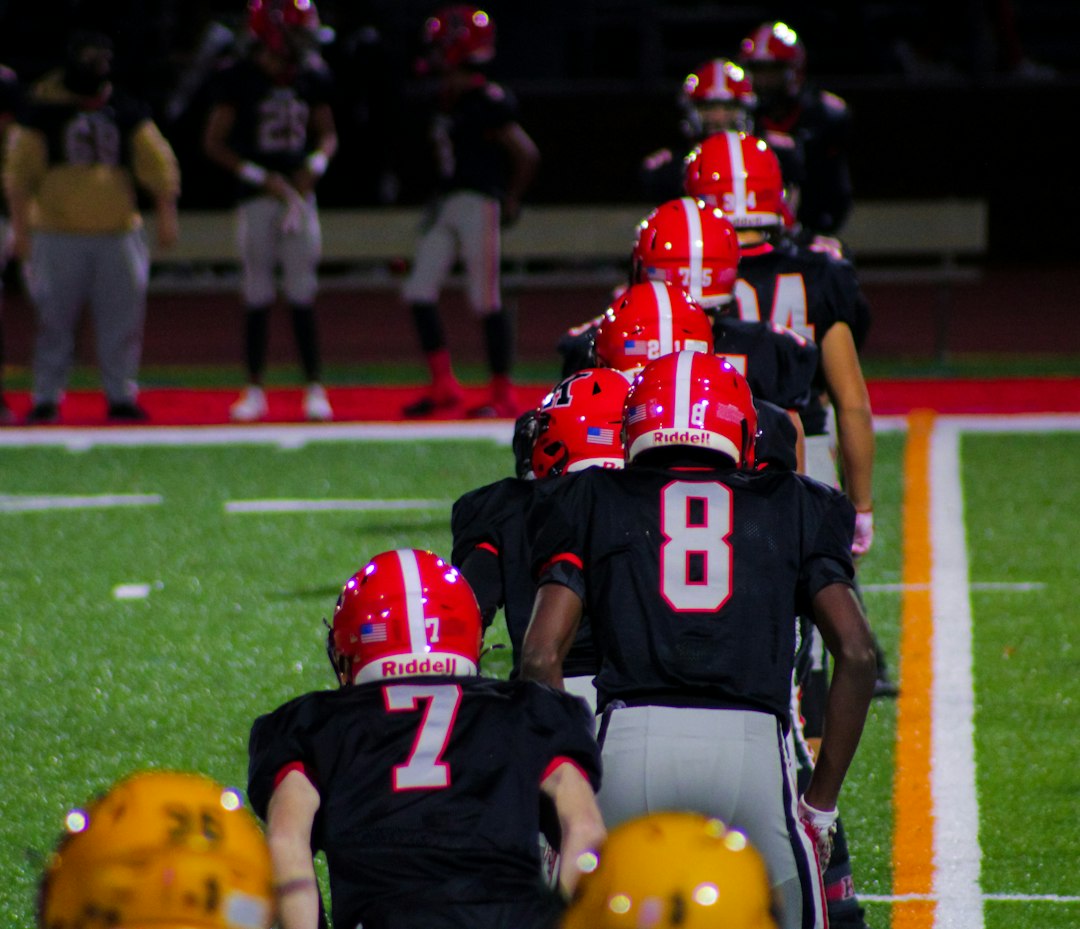




That Bennett County miracle lateral play just unlocked every former player's best memory — and if you've watched it more than once, you already know why.
Here's what happened: in the final seconds of a South Dakota high school playoff game, Bennett County trailed Kimball/White Lake 44-38. The defense stopped what looked like the last play of the season and started celebrating. Hands went up. Helmets came off. The game appeared to be over. Except Bennett County kept playing — executing three laterals, finding the end zone, and walking off the field with a 45-44 win and a trip to the state championship game. You can watch the full sequence in the original SI report.
If you played — at any level, any position, any sport — you didn't just watch that highlight. You felt it somewhere behind your sternum, in the exact place where your playing days still live.
This piece isn't a game recap. It's a reflection on what a play like that actually means to someone who once laced up and ran out under those lights. Because for former players, the Bennett County lateral isn't just a great high school football moment. It's a trigger. It pulls something forward from wherever you've been keeping it.
The Play Every Former Player Wishes They Were Part Of
What makes the Bennett County play so hard to look away from isn't the design of it. It's the mindset behind it.
The Kimball/White Lake defense didn't make a technical mistake. They made a human one. They believed the game was finished before the officials said it was. Players embraced. Someone pumped a fist. And in that exact window — the three-second gap between assumption and confirmation — Bennett County was still competing.
Three laterals. A touchdown. A one-point margin. A state final berth.
The lateral play has deep roots in football lore — the hook-and-lateral, the flea flicker, the desperation heave-and-pitch that most coaches draw up once and hope they never need. These plays survive in highlight reels for decades because they require something that routine football doesn't: the absolute refusal to concede a moment before the clock demands it.


What those Bennett County players did wasn't execute a trick play. They executed a posture. Eleven kids looked at a celebration happening thirty yards away and collectively decided — in real time, in chaos, with the season on the line — not yet.
For anyone who ever ran out of a locker room into Friday night lights, that posture is the whole reason you played. Not the wins. Not the stats. The specific, irreplaceable feeling of competing when stopping would have been easier and nobody would have blamed you for it.
Remember When the Play Was Still Alive and Nobody Else Knew It
Every former player has a version of this story.
Maybe it wasn't a lateral touchdown. Maybe it was a loose ball you scooped while both benches were already on their feet. Maybe it was a pass that somehow stayed inbounds, that somehow wasn't incomplete, that somehow ended up in your hands when the world had already turned to look at the scoreboard. Maybe it was just a play where you kept running when everyone else stopped — and something actually happened because you did.
Remember the feeling of being the only person on the field who understood the game wasn't over?
There's no feeling in sport quite like it. It isn't pure adrenaline — adrenaline belongs to the moments before the snap, before the whistle. This is something quieter and stranger: a kind of crystalline clarity where the crowd noise drops away and you're operating on instinct, on training, on the stubbornness that practice builds slowly over years. The world is celebrating around you and you are still playing.
That's the Bennett County play in its simplest human form. Those players — kids competing in a South Dakota high school playoff — found that frequency for exactly as long as they needed it.
They will remember it for the rest of their lives. And so will everyone in that stadium who saw it.
What Coaches Spend Years Trying to Build
Marcos V., 34, played linebacker for three seasons at a small high school in central Texas. His coach ran a Thursday practice drill called "Live Ball" — a scramble drill where the whistle never blew until a coach physically raised a red flag. The rule was always the same: the play is never dead until I tell you it's dead. Marcos thought it was a conditioning exercise. Then his team had a game where the opponent spiked the ball too early after what they thought was a fumble recovery, and his team ran it back. The coach didn't say a word afterward. Just pointed.
That drill wasn't about conditioning. It wasn't even really about football. It was about cultivating the specific refusal to surrender a moment before the game itself takes it from you.
That's what every coach building a "Live Ball" drill, every coordinator who makes defenders stay low until the whistle, every special teams coach who runs the lateral package in August heat — that's what they're after. Not the trick play. The posture that makes the trick play possible.
Kimball/White Lake almost certainly ran the same drills. That's the brutal irony the highlight carries with it. Both teams were probably coached the identical lesson about staying in until the horn. One team forgot it for three seconds.
Three seconds is all it costs.
The Two Seconds That Make a Career
One of the stranger gifts of competitive sport is the way time works differently on the field. A single play can feel longer than an entire half. A two-minute drill can feel like an afternoon. And two seconds — the kind Bennett County had to work with — can hold an entire story inside them.
Think about the last big play of your playing career. Not the last game. The last play. The specific moment that ended it. Some former players know exactly what it was — a catch, a stop, a swing of a bat. Others don't realize it was their last play until the season is finished and they're sitting somewhere quiet, trying to reconstruct it.
The plays that stick longest, though, aren't always the final ones. They're the ones where something impossible almost happened — or did happen. The ones where the margin between ordinary and unforgettable was about three seconds and one decision.
The Bennett County lateral touchdown lives in that category now for every player who touched the ball — and for everyone who was in that stadium, on both sidelines, watching. That's the thing about miracle plays: they don't belong only to the team that scored. They belong to everyone present. Everyone who, twenty years from now, will start a sentence with "I was at the game where..."
If you played, you have a sentence that starts that way. Maybe it's yours. Maybe it belongs to a game you watched from the bleachers, still wearing your own team's jacket. Either way, you understand why a three-lateral touchdown in a South Dakota playoff can make a grown adult stop scrolling and replay a highlight four times on a Tuesday afternoon.
It isn't about football. It's about the specific, irreplaceable way some moments refuse to be ordinary.
The State Championship Stage — and What It Means to Have Played For It
Bennett County is going to the state championship game.
That sentence means something different to every person who reads it. To someone in that community, it means Friday nights and bus rides and the whole weight of a small town's attention focused on a group of teenagers who are, somehow, still standing when most everyone else has gone home for the season.
To a former player reading from wherever they are now, the sentence pulls at something specific. Because almost no one makes it to a state championship. The bracket is unforgiving. One bad night and the season ends. One lapse in a final play — on either sideline — and a different story gets written entirely.
The teams that survive long enough to play in November under those stadium lights carry something with them onto the field. It isn't just preparation. It's the accumulated weight of every close call, every game they nearly lost, every play they kept running when stopping would have felt reasonable. That weight is an asset. It's confidence built from evidence, not assumption.
Bennett County is carrying a three-lateral touchdown into the state final. That's the kind of confidence that can't be installed in a practice or drawn on a whiteboard. It has to be earned inside a moment exactly as chaotic and unforgiving as the one they just came through.
For former players, that's the whole story of competitive sport. Not the trophies or the records or the rankings. The moments where you found out what you were made of — usually when you were two seconds from finding out the hard way that you weren't ready.
Bennett County was ready. For three seconds that the other team gave away, they were the only ones on the field who knew it.
Your jersey is still out there waiting.
Design yours in minutes and see your name and number exactly the way you remember it.
Frequently Asked Questions
What exactly happened on the Bennett County final play?
With time expiring, Bennett County executed a sequence involving three lateral passes — backward or sideways passes, which are legal at any point during a live play — to keep the ball alive after the Kimball/White Lake defense stopped competing and began celebrating. Because the defense had disengaged before the officials signaled the play dead, Bennett County was able to advance the ball into the end zone for a touchdown, winning the game 45-44 and earning a berth in the South Dakota state championship.
Why are lateral passes legal when the defense has stopped playing?
Football rules permit any number of lateral passes (thrown parallel to or behind the line of scrimmage) during a live play. The play remains live until an official signals it dead — not until a team stops competing. This means defenders are required to continue playing until that official signal, regardless of what they believe has happened. The Bennett County play worked precisely because the defense treated their own assumption as official confirmation. It wasn't. The game was still in progress.
How rare are successful multi-lateral touchdowns in high school football?
Genuinely successful multi-lateral touchdown plays are rare enough that they go viral when they happen, which tells you everything about the odds. Coaches do occasionally install these sequences as end-of-game contingency plays — sometimes called "hook and lateral" variations or desperation packages — but executing one successfully requires a defense that has mentally left the field before the horn. That combination of preparation and opportunity almost never aligns. When it does, the result tends to end up in highlight reels for decades.
What does a state championship appearance mean for a small-town program?
In most state playoff structures, schools compete within enrollment-based classifications, so small schools play for their own state title rather than against large-enrollment programs. For a small-town team, a state championship appearance represents something the community carries collectively — it isn't just a school achievement but a shared story that gets told for generations. For the players themselves, it's often the largest athletic stage they'll ever compete on. The significance of arriving there on a three-lateral miracle touchdown only amplifies what that stage means.
Why does a play like this hit former players so differently than other highlights?
Because competitive sport doesn't just teach skills — it encodes physical memories. Former players don't observe a play like the Bennett County lateral from a distance. They re-inhabit it. The smell of a November field, the specific weight of shoulder pads in the fourth quarter, the sound a sideline makes in the final seconds of a close game — those sensory memories are stored somewhere that highlights can reach directly. A play this improbable doesn't just show former players a great moment. For a few seconds, it gives them back the feeling of being inside one.
See also: why high school sports still matter so deeply to adults | why your senior season memories are so remarkably vivid | you still dream about moments exactly like this one | Friday night lights were more than just a game