

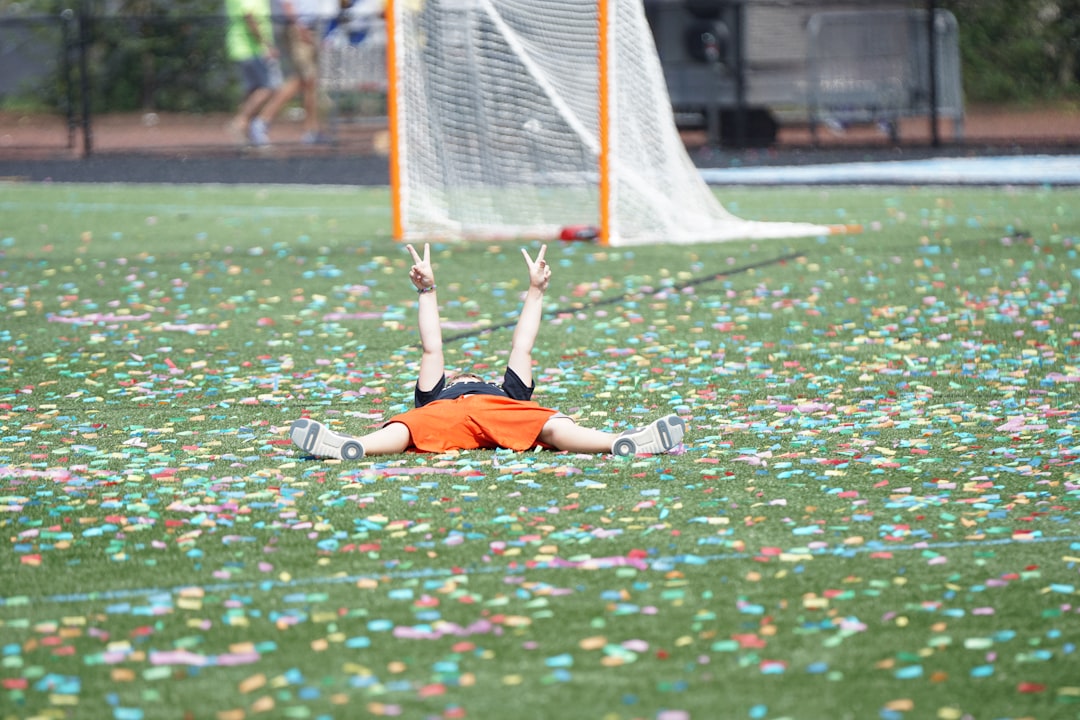




There is a specific smell to championship weekend. Freshly cut grass, cold air, the faint trace of analgesic spray in the locker room. You have been in hundreds of locker rooms. You know the moment when this one feels different.
The state championship game has that quality — the one that separates it from every other game on the schedule. Not just in stakes, but in texture. The silence before the tunnel walk. The way your teammates look at each other and don't need to say anything. The sound of a stadium filling with people who drove two hours to watch you play.
If you have been there — as a player, a coach, a parent in the bleachers — you already know what we mean. This article is for you. For the ones who lived it. For the ones chasing it right now. And for the ones who still replay it on the commute home, years later, wondering what it meant.
Because here is the thing about the state championship game: it keeps meaning something long after the trophy has a permanent home.
What State Championship Weekend Actually Feels Like From the Inside
Ask anyone who has played in a state championship and they will not start with the score. They will start with a Thursday.
The week leading into championship weekend has its own rhythm. Practice is shorter — the coaching staff knows you are ready or you are not — but the silence in the gymnasium or on the practice field carries more weight than any film session. You are running through assignments you have run a thousand times, but your mind is somewhere else. It is on Friday night. On Saturday afternoon. On the specific moment the referee blows the opening whistle and the thing you have been building toward since August is finally, irreversibly, happening.


In our experience writing about athletes at every level, the consistent thread is this: state championship weekend is not remembered as a game. It is remembered as a collection of small, specific moments. The pre-game meal. The bus ride where someone played a song that became the unofficial anthem of the season. The warmup drill where you looked across the field at the other team and felt something shift in your chest — not fear exactly, but recognition. This is real. This is it.
The score gets blurry over time. The moments stay sharp.
The Journey That Earns the Weekend
No team arrives at a state championship game by accident. The path is too long, too specific, too demanding for luck to explain it.
There is a particular kind of team identity that forms across a full season — something that cannot be manufactured in a single week of preparation. It comes from the August two-a-days when two players who were strangers in June figured out how to read each other without words. It comes from the loss in October that felt devastating at the time and turned out to be the moment the season changed direction. It comes from the bus rides, the shared meals, the inside jokes that make no sense to anyone outside the program.
By the time a team reaches state championship weekend, the bond between players is structural. It holds up under pressure because it was built under pressure.
This is something outsiders underestimate when they analyze championship programs. They look at talent levels, at coaching schemes, at the historical advantages certain programs carry. Those factors are real. But the teams that win state titles at every level — from 1A to 6A, from small-town single-sport programs to large suburban athletics factories — share a quality that does not show up in recruiting rankings.
They trust each other at the exact moment when trust is hardest to maintain.
The Field Where Legends Are Made — and What That Phrase Actually Means
"Legends" is an overused word in sports. Every week, somewhere, someone describes a perfectly competent athletic performance as legendary. The inflation has done damage to the word.
But state championship venues carry a specific kind of weight that earns the language back.
There is a reason championship games are held in neutral sites, in larger stadiums, on fields that neither team calls home. It strips away the familiar. It removes the comfort of the home crowd, the known bounce of the home turf, the psychological advantage of playing somewhere you have played a hundred times. Championship weekend puts every team in an unfamiliar environment and asks: who are you when nothing is familiar?
The teams that answer that question well tend to be the ones whose identity was never located in a place. Their identity lives in the relationships between the people wearing the same jersey.
Maya R., 17, a point guard from a mid-sized school in the Pacific Northwest, described it this way after her team won a state basketball championship on a neutral court three hundred miles from home: "We walked into that gym and it didn't feel like anyone's gym. And then we looked at each other, and it felt like ours." Two sentences. Every coach who has ever been part of a championship run will recognize what she meant immediately. That same ritual — walking into an unfamiliar venue and claiming it as your own — replays across every sport's biggest stage, whether it is a World Cup match, a College World Series opener, or a state title game. The venue changes. The test does not.
The field where legends are made is not a specific address. It is a specific kind of presence — the presence of a group of people who have decided, somewhere in the final weeks of a long season, that they are going to leave nothing behind.
The Weight of the Jersey on Championship Day
There is a practical dimension to this conversation that deserves its own space, because it is one of the things players mention consistently when they talk about what they remember from championship weekend.
The jersey.
Not the abstract idea of it — the physical object. The specific weight of the fabric on your shoulders when you pull it over your head in the locker room. The number on the back that you have been identified by all season. The name of your school across the chest that suddenly carries a different gravity when you are in a state championship locker room preparing to take the field.
Championship-level athletes describe a ritualistic quality to the pre-game jersey moment. Some players have superstitions around it — same side first, specific fold before it goes on, a moment of stillness after it is on and before they move to the next part of the routine. What they are doing, whether they would describe it this way or not, is marking the transition between the person who exists in ordinary time and the athlete who is about to compete at the highest level of their career.
The jersey is the physical object that crosses that threshold with them.
This is why the custom jersey tradition in high school and youth sports carries such weight. It is not merely a uniform. It is a wearable piece of the story — the specific season, the specific number, the specific colors of the specific program that made it to the specific stage where everything was decided.
And it is why, years later, finding that jersey — or recreating it — unlocks something that photographs and trophies cannot quite reach. For the same reason, giving a custom jersey to a former athlete is one of the few gifts that lands with that same emotional weight — it says you remember the season that mattered to them.
After the Final Whistle: What Championship Weekend Leaves Behind
The game ends. The scoreboard freezes on a number that will be repeated in yearbooks and trophy cases and Wikipedia entries and retirement speeches for decades. Someone wins. Someone loses. The crowd files out.
And then there is the after.
For the winners: the specific quality of exhaustion that coexists with the specific quality of elation. The way the celebratory pile feels both physical and unreal. The locker room afterward, which is the loudest small space any of them have ever been in, and then, an hour later, the quietest. The bus ride home through dark roads while most of the team sleeps and a few people stare out the window and understand that something is over.
For the ones who came close and fell short: the silence in the locker room that is different from any other silence. The specific way a coach finds words in those moments, or cannot find words but does not leave. The bus ride that is harder but that, strangely, carries its own form of closeness — the knowledge that they went to the end together.
Both outcomes leave something permanent behind. Both outcomes become part of the story the players tell for the rest of their lives.
In our experience, the athletes who carry championship weekend most fully — win or lose — are the ones who understood, even in the moment, that they were in the middle of something they would spend the rest of their life thinking about. They were present for it. They did not rush past it. They looked at their teammates, at the field, at the scoreboard, at the sky, and they allowed it to be what it was.
That is a skill. And it is one of the few athletic skills that only gets better with age.
How to Honor the Season — Before and After It Ends
Championship weekend is a peak, but the story of a season does not belong only to its final game. The story belongs to every practice rep, every film session, every pre-dawn conditioning run, every bus ride, every moment a player chose the team over the easier option.
Here are four specific ways athletes and teams honor that full story — before the season ends and long after:
- Document more than you think you need to. Practice footage. Group photos from ordinary Tuesdays. The specific playlist from the bus. You cannot predict which details will matter most in fifteen years. Document everything.
- Name what made this team this team. Championship programs often have a defining quality that is specific to that group — a phrase, a value, a way of responding to adversity. Name it before the season ends. Say it out loud in the locker room. It will outlast the trophy.
- Keep the jersey. Not in a box in the attic. In a place where you can find it. Or, if the original is gone, rebuild it. The specific number, the specific colors, the specific name across the chest. The object carries more than fabric.
- Come back to the moment. Years from now, reconnect with a teammate and let yourselves talk about it. Not the score — the moments inside the score. Championship weekend was built by relationships. Those relationships are the part worth maintaining.
Your jersey is still out there waiting.
Design yours in minutes and see your name and number the way you remember it.
Frequently Asked Questions
What makes a state championship game different from other playoff games?
The state championship game is the final game in a state's high school or youth athletics postseason — the one contest where every program in a classification competes toward a single winner. What separates it from earlier playoff rounds is not just the stakes but the environment: neutral sites, larger venues, and the psychological weight of finality. For many athletes, it is the last competitive game of their high school career in that sport. That context produces a specific kind of intensity and memory that earlier rounds, even intense ones, cannot match.
How long do players typically remember specific details from a state championship?
Based on the accounts of former athletes across sports, the sensory and relational details of championship weekend remain unusually vivid across decades. Former players in their 30s, 40s, and 50s consistently describe specific pre-game moments, specific interactions with teammates, and specific in-game decisions with a clarity that ordinary games do not produce. Sports psychology research on peak performance memory suggests that emotionally significant events are encoded with heightened detail, which explains why championship weekend memories often feel more accessible than memories of games played more recently.
Is it worth recreating a championship jersey from years ago?
For most former athletes, yes — and the reason is more practical than sentimental. The original jersey from a high school or youth sports career is frequently lost, damaged, or too worn to display. A recreation built to the original specifications — same number, same colors, same name — serves as a functional artifact of the season in a way that photographs cannot. It is a wearable object that connects the present to a specific, meaningful past. Athletes who recreate their jerseys consistently describe the experience of wearing it again, or displaying it, as an immediate emotional anchor to the season it represents.
What should athletes do during championship week to make the most of the experience?
The most useful thing is also the simplest: be present. Championship week moves fast. The preparation, the travel, the team meals, the warmup — every part of it is part of the story. Athletes who document the week (photos, notes, saved messages from coaches) and who allow themselves to acknowledge the significance of where they are tend to carry the experience more fully afterward. Specifically: photograph the locker room before the game, not just the celebration after it. Those before images — the jerseys hanging, the shoes lined up, the whiteboard with the game plan — are the ones that carry the most weight years later.
See also: why high school sports still matter so deeply to adults | why your senior season memories are burned into your mind so clearly | playing under the lights for the biggest game of your life | the grief that follows when that final season ends