

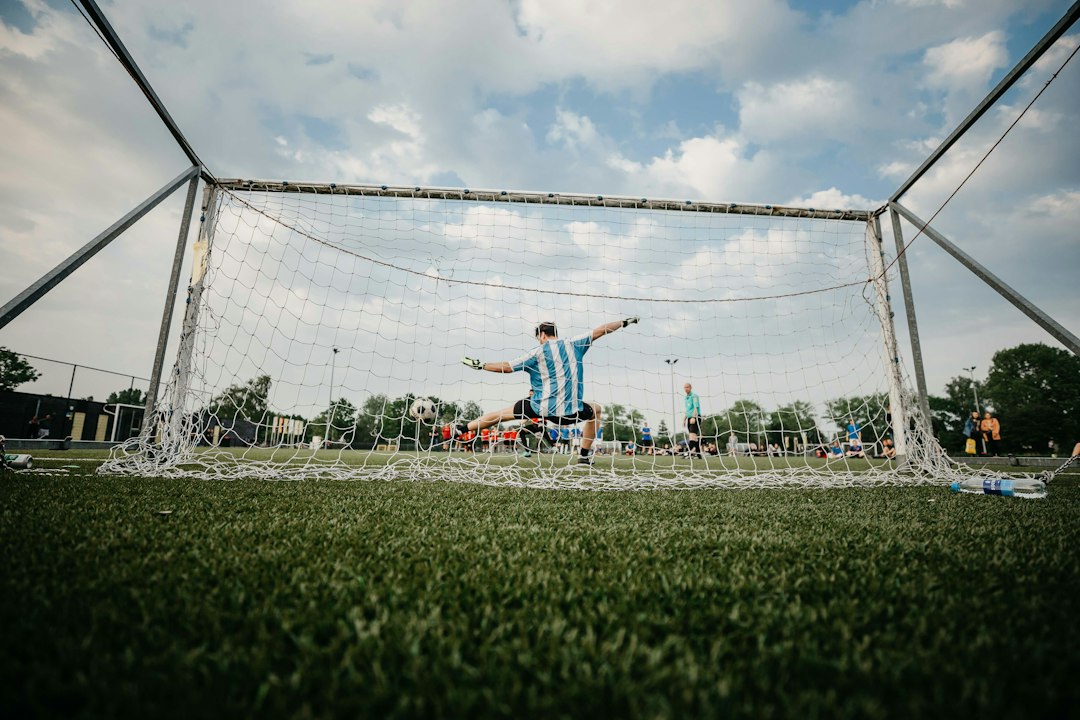




There's a moment — it usually lasts less than three seconds — where you stop seeing your child and start seeing yourself.
Maybe it's the way they plant their left foot before cutting. Maybe it's the motion of their shooting arm, or the particular angle they take to a ground ball that you never coached them on, never even consciously modeled. It just appeared one day, fully formed, as if it traveled through blood rather than memory.
Seeing yourself in your child playing your sport is one of the most disorienting and quietly overwhelming experiences parenthood produces. It doesn't announce itself. It arrives sideways, in the middle of an ordinary Tuesday practice, and it leaves you standing on a sideline with a lump in your throat and no good way to explain to the person next to you why you suddenly can't speak.
This article isn't about coaching tips or how to avoid sports parenting pitfalls. It's about that moment. What it actually is. What it means. And why it hits the way it does — even when you thought you were fully prepared for it.
The Mirror on the Field
You were twelve, maybe fourteen. The game was different then — the field smelled different, the cleats were heavier, the jerseys were nothing like what kids wear now. But the feeling of moving through that sport was completely your own. That relationship between you and the game: the specific way you read the play before it developed, the muscle patterns you built through ten thousand repetitions, the private language the sport gave you for understanding your body in space.
You thought that was yours. Finished. Archived.
Then your kid steps onto a field, and something you filed away decades ago walks out in front of you with a number on its back.
The emotional experience of watching your child play your sport is not simple nostalgia. Nostalgia is about longing for the past. What happens on that sideline is something stranger — it's the past becoming present tense again, unexpectedly inhabited by someone you love completely. Psychologists who study family identity formation describe this as a form of "narrative continuity," the sensation that your personal story has not ended but extended into someone else's chapters. It's disorienting precisely because it's real. You're not imagining the resemblance. You're witnessing something that actually transferred — through genetics, through environment, through all those years of watching you love a game — now expressed in a body that is not yours.


That's not a small thing. And it deserves more than a parenting tip about staying quiet in the stands.
What Actually Transferred — And What Didn't
Here's what surprises most former athletes when their child picks up their sport: the parts that transferred are almost never the parts they tried to pass on.
You might have spent years gently introducing the sport, buying the right equipment, signing them up at the right age. And then what shows up on the field is something you never taught — the competitive face they make when they're down by one, the specific way they shake off a mistake and immediately refocus, the instinct to position themselves two steps ahead of the play.
Those things came from watching you live a life shaped by that sport. Not from drills. From dinner table stories and the way you carried a loss versus a win. From seeing you at forty still talk about a game you played at seventeen with a kind of love that never fully normalized.
Your child carries your athletic legacy not through technique you transferred deliberately, but through relationship. They absorbed your relationship with the game — your particular brand of competitive care — and made it their own.
What didn't transfer is equally worth noticing. Their game is not your game. Their reason for playing is not your reason. The sport gave you something specific at a specific time in your life. It will give them something completely different. The player you're watching is not a continuation of your athletic story — they are the beginning of their own. That distinction matters, because it's the difference between a parent who watches and a parent who projects.
You can hold both truths at the same time: this is mine, this is theirs. The mirror moment is real. And they are still someone entirely new.
The Feelings Nobody Warns You About
The emotional experience when your child plays your sport doesn't arrive as one clean thing. It's layered in a way that catches former athletes off guard, because they expect to feel proud and they do — but they don't expect the other things underneath it.
Grief, briefly. Watching your child run toward something you once ran toward surfaces the awareness that your running days in that sport are behind you. It's not devastating, but it's real. The game has moved on. It lives in them now, not in you. There's a moment of that, and it's worth acknowledging instead of swallowing.
Recognition. Not pride exactly — something more precise. The feeling of seeing something true about yourself reflected back. When your daughter takes the same high-angle approach to a loose ball that you always took, and you realize she never saw film of you doing it, there's a recognition that lands somewhere deeper than pride. Something in you was real, and it persists.
The specific fear that comes with investment. When you watch a child play a sport you don't know personally, you can stay relationally close to their experience without fully inhabiting it. When you watch your kid play your sport, you inhabit every play. You feel the missed read before they do. You know what that positioning error costs. You are inside the game in a way that makes their disappointments land harder and their successes feel more vivid. That's a beautiful burden — but it is a burden, and it requires real self-management.
The quiet privilege of shared language. Eventually, once the initial emotional vertigo settles, there's something extraordinary available to you that parents of non-athlete children simply don't have: a sport as a shared dialect. You can talk about the game together in fluent, specific terms. You have the same reference points. The sport becomes a room you both live in, and that room can hold a relationship through years of adolescence when other rooms get harder to inhabit together.
One Moment That Says Everything
Marcus T., 44, coached his daughter's travel volleyball team for two seasons before she outgrew his coaching and moved to a club program. He'd played college volleyball — libero — and spent those two seasons trying not to be the dad who over-coached. Then one tournament, watching from the stands for the first time, he saw her read a quick set before the setter had even made the decision. She was already moving. His jaw dropped. "I never taught her that," he said later. "That was just mine. I don't even know when she learned it." He didn't go down to the court afterward. He just sat there for a few extra minutes in the empty gym, processing something he couldn't name. He still can't, fully. But he says he thinks about that moment more than almost anything from his own playing days.
How to Be a Witness Without Becoming a Ghost
The specific challenge of watching your kid play your sport is staying present to their experience without overwriting it with yours.
Former athletes tend toward one of two failure modes on the sideline. The first is the takeover: the parent who can't stop coaching, who treats their child's game as an extension of their own athletic ego, who ties their own emotional state too tightly to the scoreboard. This is the well-documented problem. Youth sports literature is full of it.
The second failure mode gets less attention: the disappearing act. The parent who is so determined not to become the first type that they disconnect entirely, who withholds their actual knowledge and passion in a kind of overcorrection, who watches their child's sport like a stranger. This isn't humility — it's absence. And kids can tell the difference between a parent who is consciously restrained and a parent who doesn't actually care.
The goal is neither. It's witnessing — being fully present, emotionally engaged, and genuinely invested, while keeping the boundary between your story and theirs clear.
A few specific practices that help:
- Ask questions, not evaluations. After a game, lead with "What did you think of the second half?" rather than "Here's what I noticed." Let them tell you their story first. Their analysis matters. Yours can follow if they want it.
- Name the feeling without hijacking it. It's entirely appropriate to tell your child, once, that watching them play makes you feel something specific and wonderful. That's not projection — that's honest connection. What to avoid is making their game about managing your emotional state.
- Let them see your love for the sport, not just your love for their performance. Talk about the game the way you talked about it before they were playing it — with genuine enthusiasm, specific observations, real knowledge. They need to see that the sport itself is worth loving, independent of results.
- Know when your knowledge is a gift and when it's a weight. Your experience is genuinely useful. There are moments when what you know can spare them months of confusion. Offer it lightly, when asked or when it clearly matters. Don't hoard it out of false modesty, but don't deploy it constantly either.
The Athletic Legacy That Lives Beyond the Field
Here's something worth sitting with: your child's athletic legacy from you is not contingent on them becoming a great player. It's not even contingent on them continuing the sport.
Your child carries your athletic legacy in how they understand effort. In their relationship with failure — whether they treat a mistake as information or as indictment. In whether they know, from watching you, that loving something and being frustrated by it can coexist. In whether they've absorbed, without being told, that the work is worth doing even when the results are uncertain.
Those things transfer regardless of talent level, regardless of sport, regardless of whether they play through high school or quit after one season. The game you loved gave you something — a set of values, a relationship with discipline and competition and teamwork — and that something lives in your household whether or not it ever shows up in a box score.
The mirror moment on the field is real and meaningful. But the deeper legacy is harder to see and far more lasting. It's in how they carry themselves when the game isn't going their way. It's in whether they shake hands after a loss. It's in whether they come back to practice after a hard week.
That's the part you actually passed on. The footwork was just the evidence.
The Night It All Comes Together
For many parents, the emotional experience of watching their child play their sport reaches its peak not at a championship — but at Senior Night.
That ceremony, usually held at the last regular-season home game, is the official acknowledgment that this chapter is closing. If you played the same sport, Senior Night carries double weight: you remember your own, and now you're watching theirs. The same walk across the same type of field. A different number, the same significance.
What hits hardest in that moment is usually the jersey. The name on the back — which is their name, which is also your name, depending on your family — worn the way you once wore one. The ritual of it. The fact that sport preserves this particular form of ceremony across generations, so that the moment your child lives is structurally identical to the moment you lived, even if everything else has changed.
In our experience talking with parents who played the same sport as their child, the Senior Night jersey is almost always the artifact they want to hold onto. Not just their child's jersey — their own, too. Both of them, side by side, in the same house. The visual evidence of the thread that ran through.
That's not sentimentality. That's exactly what it should mean.
Your jersey is still out there waiting.
Design yours in minutes and see your name and number exactly the way you remember it.
Frequently Asked Questions
Is it normal to feel emotional watching your child play the sport you used to play?
Completely normal — and more specific than general sports parenting emotion. Former athletes watching their child play their sport describe a layered experience that includes nostalgia, recognition, and a particular kind of grief for the playing days that have passed. Research on identity and narrative continuity suggests this response is tied to the way we construct our personal stories: when someone we love inhabits a chapter of our story, the emotional response is more complex than simple pride. If you find yourself unexpectedly undone on a Tuesday afternoon sideline, you're in good company.
How do I avoid projecting my athletic experience onto my child?
The clearest dividing line is the question "whose story is this?" Your child's game is not a sequel to yours — it's an original. The projection problem arises when a parent's emotional investment is primarily about their own athletic identity rather than their child's actual experience. Practically: ask more questions than you offer opinions. Let them define success in the sport for themselves. Notice when your emotional reaction after a game is primarily about your feelings versus theirs. The goal is to bring your love for the sport into the relationship without bringing your ego.
What if my child doesn't love the sport the way I did?
This is one of the most common and least-discussed challenges for parent-athletes. If your child plays your sport out of obligation rather than genuine interest, the mirror moment becomes complicated — you see yourself, but the reflection is off. The honest answer: the sport is not theirs to love on your behalf. Your job is to make the sport available, to let them see your genuine love for it, and then to follow their lead entirely. Some children find their way into the sport's inner life late. Others never do, and their legacy from you will come through something else entirely. Both outcomes are legitimate.
Does it matter if my child plays at a lower level than I did?
Not in the way most parent-athletes fear. The level of play affects the competitive experience but has no bearing on the depth of the emotional transfer or the quality of the relationship the sport can build between you. Some of the most meaningful athlete-to-child experiences happen in recreational leagues and middle school programs, where the stakes are lower and the shared enjoyment is higher. Play level is a measure of one thing. What you're watching on that sideline is something else entirely.
See also: the athletic identity you carried long after the final whistle | why high school sports still matter so much to adults | the grief that comes with the end of your playing days