You still know the score.
Not approximately. Not "we won by a couple touchdowns." The exact score. The margin. The quarter it changed. Maybe even the name of the kid on the other side who made it close when it shouldn't have been.
High school rivalry game memories don't work the way other memories work. You've forgotten the scores of games you won easily. You've forgotten entire seasons. But that game — the one against them — is stored somewhere different. Somewhere that doesn't fade.
This isn't sentiment. This isn't you being dramatic about high school. There's a specific psychological reason the rivalry game occupies a permanent room in your memory while hundreds of other experiences have dissolved. And once you understand it, you'll stop wondering why you still care and start recognizing what that game actually was: the night your athletic identity got its sharpest, clearest definition.
The Rivalry Wasn't About Them. It Was About You.
Here's the thing that takes most former athletes a while to see clearly: the rival school was never really the point.
They were the instrument. They were the whetstone. The reason the rivalry game produced the kind of intensity that ordinary games couldn't touch wasn't because the other team was particularly special. It was because of what their presence forced out of you.
In standard competition, you're performing. In a rivalry game, you're proving. Those are different psychological states, and your nervous system knew the difference before the opening whistle.
The rival wasn't a stranger — they were a mirror. Across town, same county, same Friday nights, same weight rooms and early morning practices. They were close enough to your world that beating them meant something specific: that your version of the story was better. That your coaches built something worth building. That your teammates — the ones you'd spent three years with — deserved the credit they'd been accumulating in silence.
Losing to a program from a different state, a different conference, a different world entirely — that lands differently. Losing to the school across town is a verdict. And everyone in both towns knows the verdict.
That's why you remember the score.
What In-Group/Out-Group Psychology Actually Does to an Athlete
Social psychologists have a precise term for what happens inside a rivalry: in-group/out-group differentiation. Henri Tajfel's social identity theory — developed through decades of research — establishes that human beings derive a meaningful portion of their self-concept from the groups they belong to. Not just professionally or socially. Biologically. At the level of threat response.
When your in-group (your team, your school, your town) is tested against a defined out-group (the rival), your identity isn't just affiliated with the outcome — it's constituted by it. The game isn't a proxy for who you are. In that moment, it literally is who you are.
This is why rivalry games feel different in the body before they even start. The elevated cortisol, the sleeplessness the night before, the way warm-ups felt charged rather than routine — those weren't nerves about performance. They were your nervous system responding to an identity-level event.
And here's what that means for the memory:
The brain encodes identity-level events with a fidelity it doesn't apply to ordinary experience. When something shapes who you are — not what you did, but who you are — the hippocampus and amygdala collaborate to preserve it in unusually high resolution. The emotional intensity of the rivalry game isn't just why it mattered then. It's the exact mechanism by which it stayed.
You remember the score because your brain classified that game as self-defining. It treated the memory the way it treats the memory of a first kiss, or a parent's voice, or the moment you knew something had changed permanently. Those memories get locked in.
And here's where the research gets even more specific — and, for anyone who lost their rivalry game, a little uncomfortable.
Flashbulb memory researchers studying the Lafayette-Lehigh college football rivalry — one of the oldest continuous rivalries in American sports — discovered something that upends the simple "high emotion equals vivid memory" story. It's not just that rivalry games produce detailed memories. Which memories survive, and how accurately they survive, depends on who won.
The researchers found that winning fans have objectively better, more consistent autobiographical recall of game events. They remember the sequence. They agree with each other on what happened and when. Their memories are sharp because they rehearsed them — retelling the story, re-watching highlights, re-living the decisive moments in conversation with other fans who shared the victory. The win gave them a reason to keep the memory alive.
Losing fans don't get that rehearsal. Instead, they get what psychologists call positivity bias — a quiet, automatic process of reinterpretation that happens whether you want it to or not. Details blur. Events get misattributed. The refs get blamed. You don't decide to rewrite the memory; your brain does it for you, the same way it smooths over other experiences that threatened your sense of self. The memory doesn't disappear — it's too emotionally charged for that — but it gets reorganized around a narrative that protects the self rather than preserves the scoreboard.
This is the deeper layer of what in-group/out-group psychology does to memory — and it helps explain why you can have two former athletes from the same rivalry game, sitting across from each other at a reunion twenty years later, telling fundamentally different versions of what happened. Neither is lying. Their brains just followed different editing instructions. The rivalry game doesn't just create a high-fidelity recording. The final score determines whether that recording gets played back and reinforced across decades, or whether it gets gently rewritten into something easier to live with. Your brain isn't just a camera. It's an editor — and the editing begins the moment the clock hits zero.
The Specific Moments That Get Crystallized
Not everything from the rivalry game survived equally. Ask any former athlete to describe their rivalry game and notice what comes through in full detail versus what blurs.
The high-resolution fragments tend to follow a pattern:
- The moment the momentum shifted — whether it went your way or against you, the exact sequence that changed the shape of the game. The interception. The missed free throw. The turnover on your own 30-yard line. These live in cinematic detail.
- What a teammate's face looked like at a specific moment — not a general impression of "everyone was locked in," but one specific face at one specific moment. The look in someone's eyes in the huddle. The way your setter looked at you before a crucial serve.
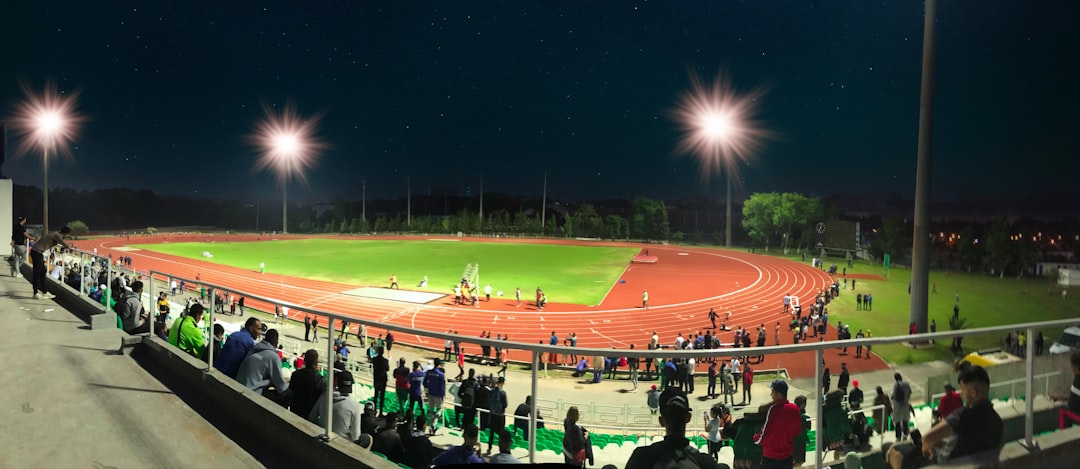
- Something sensory and specific — the cold, the mud, the specific angle of the stadium lights, the sound of the crowd when something went right or catastrophically wrong. The body was fully activated, and it recorded accordingly.
- The final moment — the buzzer, the last out, the clock hitting zero. Not just what happened, but what you did with your body in that exact second.
What tends to blur, interestingly, is the middle game — the periods of ordinary execution. Your brain conserved its high-resolution encoding for the moments where the identity stakes were highest. We've explored why certain athletic moments stay with you forever — rivalry games just happen to produce those moments with a density that ordinary competition can't approach.
Maria C., 34, Was a Setter. She Still Gets Messages About One Play.
Maria C., 34, played volleyball at a mid-sized high school in central Ohio where the rivalry with the school two towns over had been running longer than any current student could remember. Her senior year, her team lost the rivalry match in five sets — the tiebreaker came down to the final rally of the final game.
She still gets a message every October from her old libero, on the anniversary of the match. Not about the loss. About the five-set fight. About who they were in those two hours. "We didn't win," she told us, "but I have never felt more like myself on a court than I did that night."
That's the line that appears, in different forms, in almost every rivalry story we've heard — and in Senior Night stories too, where the same clarity surfaces in a different emotional register. Not "I've never been prouder of a win." I've never felt more like myself. The rivalry game didn't just test the athlete. It clarified her.
Why the Other School's Colors Still Do Something to You
You're at a sporting goods store. You see their colors — navy and gold, or red and black, or whatever combination it was — on a rack of hats. Something happens.
It's small. Maybe it's just a flicker of recognition. Maybe it's a little sharper than that. But something moves.
This isn't irrational. It isn't you being stuck in the past. It's a learned associative response that your brain formed during a period of genuinely high emotional and identity significance, and it has never been unlearned because there's been no reason to unlearn it.
The rival's colors became a conditioned stimulus during one of the most intense experiences of your athletic life. Every time you see them, your brain runs a fast, automatic cross-reference: rivalry, stakes, identity, that game. It happens before your conscious mind processes anything. The flicker arrives first.
This is also why former athletes who move away, who haven't thought about their high school in years, who have built entirely new identities in entirely new places — still feel something when they happen to check the score of their old school's rivalry game on a Friday night in November.
The stimulus still carries its original charge. Distance doesn't discharge it. Time doesn't discharge it. Only deliberate re-association does, and almost nobody bothers, because why would you? It's one of the few places the past is still fully alive.
What the Rivalry Game Actually Gave You (Beyond the Record)
If you won, you know what winning gave you. But the gift of the rivalry game isn't conditional on the final score.
What the rivalry game gave every athlete who showed up and competed — regardless of outcome — was this: a precise, high-stakes answer to the question that underlies all athletic competition.
Who are you when it genuinely matters?
Not in practice. Not in a blowout win or an easy loss. In the specific crucible where the opponent was real, the stakes were real, the crowd was real, and the thing being tested was the sum of everything you'd built across a season or a career.
The answer you got that night — whether it was the answer you wanted or a harder answer you had to sit with — was true. Every two-a-day and summer training session had been preparation for a question you didn't yet know would be asked — and when the rivalry game finally asked it, you answered with everything you had. It was the realest data point you had about your competitive self. And that's not nothing. That's rare. Most adults go years without getting a clear, unambiguous answer to that question.
The rivalry game gave you clarity. And clarity, even when it's painful, is something the mind holds onto.
Remembering Rivalry Games the Right Way
There's a version of rivalry memory that curdles over time — the former athlete who is still genuinely angry about the loss, who brings it up at every reunion with fresh grievance, who has turned the memory into a wound rather than a stone.
That version doesn't honor what the rivalry was. It reduces a defining experience to a grudge.
The version worth preserving is the one Maria described: the recognition that the rivalry game was the night you were most fully yourself as an athlete. Whatever happened — victory, defeat, heartbreak, triumph — the experience was complete. It was the real thing. You were in it.
In our experience, the former athletes who carry their rivalry memories most cleanly are the ones who have found a way to honor them concretely — not just in conversation but in the objects that surround them. A photograph. A game program. Something tangible that says: this was real, and I was there, and it mattered.
The rivalry game deserves better than a fading mental image. It deserves to be treated like what it was.
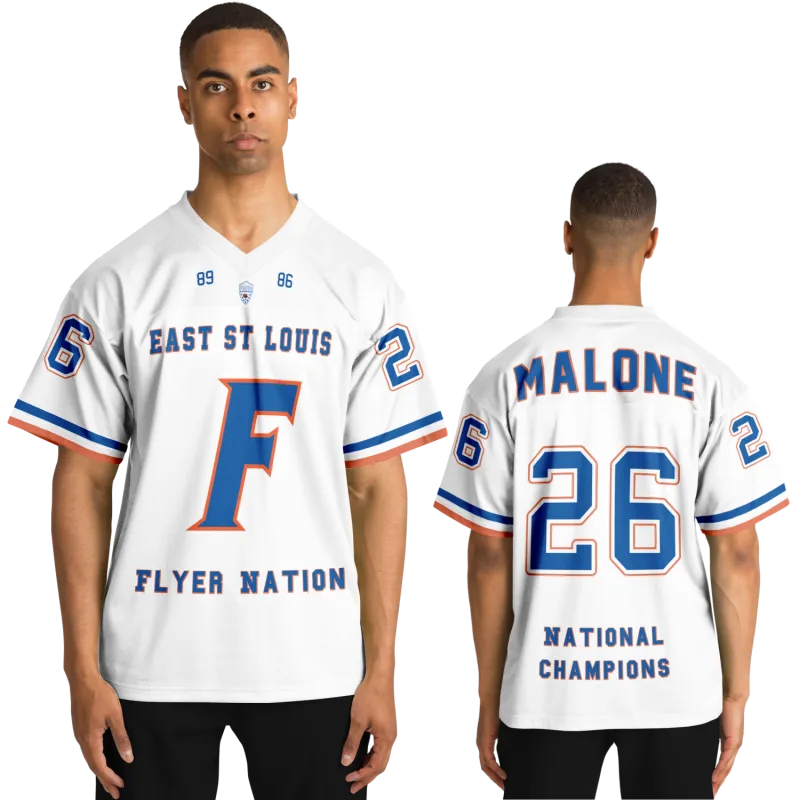
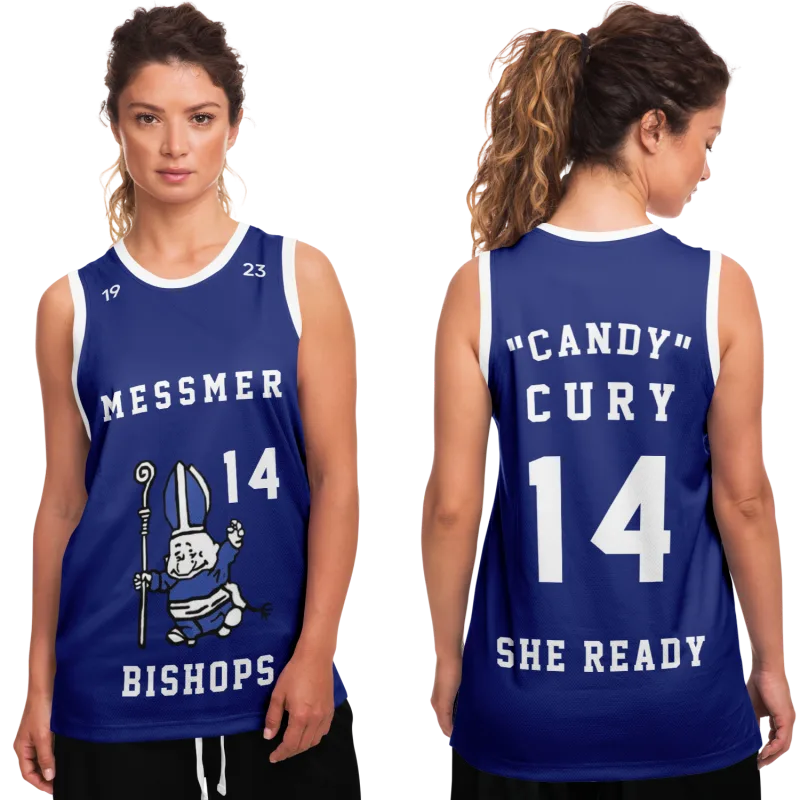
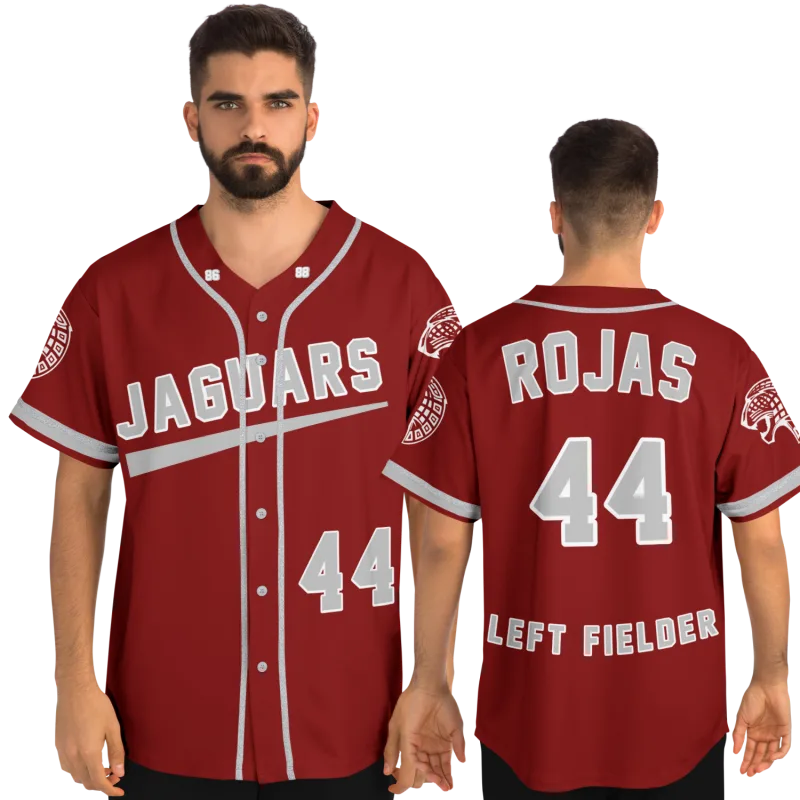
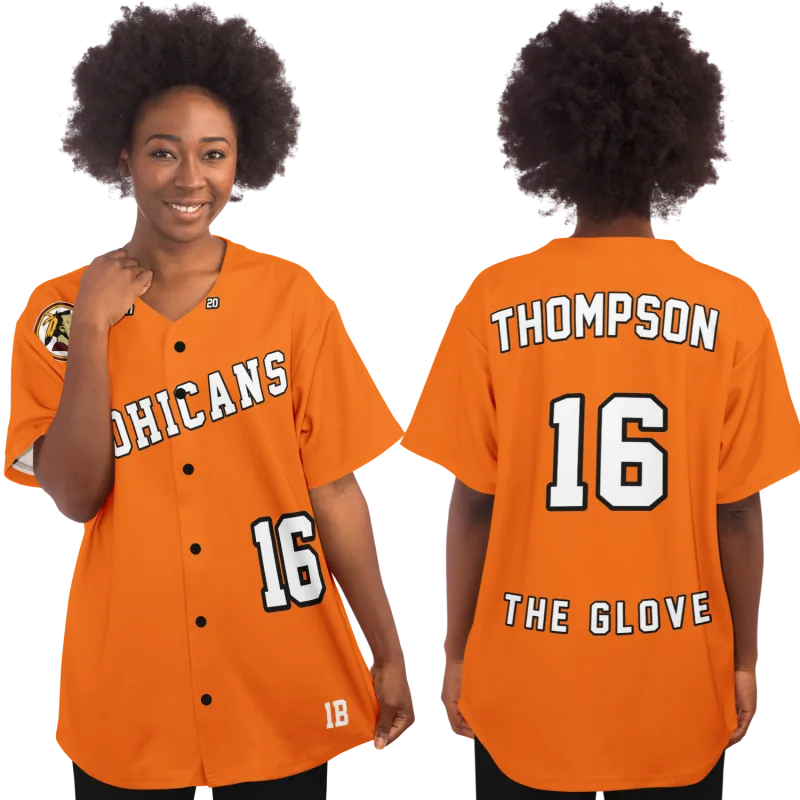
Your jersey is still out there waiting.
Design yours in minutes and see your name and number the way you remember it.
Frequently Asked Questions
Why do high school rivalry game memories feel more vivid than other sports memories?
Rivalry games activate what psychologists call identity-level processing — the brain's response to experiences that don't just happen to you but actively define who you are. Because your self-concept was directly implicated in the rivalry outcome, the hippocampus and amygdala encoded the experience with unusually high fidelity. High emotional and identity stakes produce high-resolution memories. This is the same mechanism that makes other self-defining moments — first achievements, significant losses, transformative experiences — feel permanently present even decades later.
Is it normal to still feel something when you see your rival school's colors or name?
Completely normal, and neurologically explainable. During the rivalry, your brain formed strong associative connections between those colors, that name, and the intense emotional and identity experience of the competition. Those associations don't dissolve on their own — they persist until deliberately replaced, and since there's typically no reason to replace them, the conditioned response remains. The flicker you feel is your brain accurately retrieving a significant stored experience. It's not nostalgia. It's accurate memory retrieval.
Does the outcome of the rivalry game change how it affects your identity long-term?
Less than most people expect. The research on athletic identity and memory consistently shows that the intensity of the experience — not the outcome — is the primary driver of long-term emotional salience. Former athletes who lost a rivalry game in heartbreaking fashion often describe it as a more identity-defining experience than an easy win, because the loss required them to confront something real about themselves. The question the rivalry game answers — who are you when it genuinely matters? — gets answered whether you win or lose. Both answers stay with you.
Why do high school rivalries feel more significant than college or adult league rivalries for many athletes?
High school was the period when your athletic identity was being formed, not maintained. The rivalries that occurred during identity formation carry a different psychological weight than rivalries that occur after the self-concept has stabilized. At 16 or 17, the rival wasn't just testing your team — they were testing a version of you that was still being decided. That's a higher-stakes test than the same competition would be at 30. The rivalry game happened at the exact right moment to matter the most.
How do you honor a rivalry game memory without letting it become a grudge?
The distinction is between honoring the experience and being consumed by the outcome. Former athletes who carry rivalry memories well tend to focus on who they were in that experience — the version of themselves that showed up fully, competed honestly, and left everything on the field or court — rather than relitigating the scoreboard. Concrete objects help: a photo, a jersey, a program. Tangible reminders that treat the game as a real and complete chapter rather than an unresolved grievance keep the memory in its proper register — as something that shaped you, not something that still owes you.
See also: why high school sports still matter to adults | the science behind why those memories are so vivid | why you still dream about those games years later | the grief that comes when that chapter closes at 18 | what it really means when you say 'I played'