





It's the first week of January, the holiday boxes are going back up to the attic, and you reach past them to move something and there it is. The jersey. Folded in a bag, or crumpled in a plastic tub, or still on the hanger from the last time you pulled it out for a reunion. You hold it for a second longer than you meant to.
That pull is new year nostalgia, and it hits athletes harder than most people. A new year makes everyone look back before they look forward. For someone who once wore a number and a name across their back, looking back has a specific shape and a specific smell, somewhere between old gym floors and cut grass.
Most people feel that tug, put the jersey back in the tub, and tell themselves they'll deal with it someday. This year, try a different resolution. Instead of promising yourself another thing you'll probably drop by February, finish something small and permanent: turn that jersey into a display piece you'll see every single day.
By the end of this guide you'll know how to choose the right display method for your jersey, where to hang it so it lasts, and how to finish the whole project in one weekend without damaging the fabric. You'll also see why January is the best month of the year to start.
Why New Year Nostalgia Hits Athletes Hardest in January
There's a reason this feeling arrives right now. The calendar flips, and your brain does what it always does at a threshold: it audits. What did I do? What did I leave unfinished? What do I want more of?
For athletes, those questions have an obvious tangible answer sitting in a closet.
The practical timing helps too. January is slow. The holiday rush is over, the weather keeps you indoors, and a weekend project feels more appealing than it does in June. Frame shops also tend to be less backed up in January than they are before graduation season, which means shorter turnaround if you decide to have a professional do the work.


And the emotional timing is hard to beat. Resolutions fail when they're abstract. "Be more present" or "reconnect with old friends" gives you nothing to hold. A jersey on a wall is the opposite: a finished object that reminds you every morning of the version of you who showed up, worked, and competed.
In our experience, the people who actually follow through on a display project are the ones who start it in the same week the feeling hits. Wait until March and the jersey goes back in the tub.
The Jersey Is Doing More Than Taking Up Space
Think about what's actually in that fabric. A number you chose or were handed. A name stitched to your back. Maybe a stain you never quite got out, from a game you still remember play by play.
Displaying it isn't vanity. It's the same instinct that puts a wedding photo on a mantel or a medal in a case. You're saying: this part of my life happened, and it counts.
Pick Your Display Method Before You Touch the Jersey
Here is where most people go wrong. They get excited, grab thumbtacks, and put a hole through the shoulder of their senior-year jersey. Decide on your method first, because each one demands different preparation.
Option 1: The Shadow Box Frame
A deep frame, typically 2 to 3 inches of depth, lets the jersey sit fully visible with the fabric's natural texture intact. This is the best choice if you want to include other items: a game ticket, a team photo, a medal, a pair of laces.
Best for: jerseys you want to preserve for decades, and anyone who wants a complete memory display rather than a single garment.
Watch for: non-archival backing boards. Cheap frames use acidic cardboard that yellows fabric over time. Ask specifically for acid-free matting and backing. Conservation guidance from the Library of Congress explains why acidic materials break down and discolor what they touch, which is exactly why archival board matters behind a jersey.
Option 2: The Flat Mount on Archival Board
The jersey is arranged flat against an acid-free board and secured with hidden stitching, then framed under glass. This produces the cleanest gallery look, and it's what professional framers do most often.
Best for: a single, standout jersey where the number and name are the entire point.
Option 3: The Hanger Display
A wide, padded wooden hanger on a wall hook, or on a display rod, lets the jersey hang as if it's waiting in a locker. This is the lowest-cost, most reversible option.
Best for: jerseys you might want to wear again, or anyone who isn't ready to commit to a permanent frame.
Watch for: shoulder stretching. Thin wire hangers will distort the fabric over months. Use a hanger at least two inches wide with contoured shoulders.
Option 4: The Open Rack or Shelf Lean
A narrow display shelf or a leaning ledge turns a jersey into one piece in a larger collection. This works well when you have several jerseys from different seasons and want them to read as a progression.
Best for: multi-sport athletes, multi-year careers, or anyone building a wall that tells a longer story.
Prepare the Jersey: The Part Everyone Skips
Before any display method, your jersey needs a gentle reset. Rushing this is the difference between a piece that looks sharp for twenty years and one that develops creases and yellow stains within two.
Step 1: Check the label and the fabric. Most older jerseys use polyester mesh or a polyester blend, which tolerates cleaning well. Older cotton or wool-blend jerseys, especially anything from before the 1990s, are more fragile and may need professional handling.
Step 2: Spot-treat before you wash. Mix a few drops of mild, dye-free detergent with cool water and dab stains gently. Never scrub, and never use bleach. Bleach weakens fibers and can discolor team colors permanently.
Step 3: Wash cold, air dry flat. If the care label allows machine washing, use the delicate cycle in a mesh bag, then lay the jersey flat on a clean towel. Never put an older jersey in a dryer. Heat can crack screen-printed or heat-pressed numbers and letters.
Then do the part nobody mentions: look at the numbers and lettering up close. Cracking, peeling, or lifting means you should photograph it first, then talk to a professional framer about stabilizing it before you mount it.
What to Do If Your Jersey Is Damaged or Missing Pieces
Maybe the name tape came loose in a move. Maybe a mouse found the tub. Maybe the jersey you wore was returned to the school years ago and all you have left is a photo.
That's more common than you'd think. Plenty of former athletes never kept the original, because it was team property, got lost, or simply didn't survive. If that's your situation, you aren't locked out of this project. A custom jersey built with your name, your number, and colors inspired by your old team can fill that wall space in a way a stock jersey never would. We'll come back to that option near the end.
Where You Hang It Matters More Than How
Display location is the biggest factor in how long your jersey stays vibrant. You can buy the best frame on the market and still ruin the fabric by putting it in the wrong spot.
The Three Things That Damage Jerseys on Walls
- Direct sunlight. UV light fades dyes and weakens fibers, and a jersey hung across from a south-facing window can visibly fade in a single year.
- Humidity swings. Bathrooms, basements, and unconditioned garages invite mildew. A stable indoor room is the safest environment.
- Heat sources. Walls above radiators, fireplaces, or heating vents dry out the fabric and can warp adhesives in the frame.
Lighting That Shows It Off Without Hurting It
Use warm LED picture lights or track lighting with UV-filtering covers. LEDs produce almost no heat and very little UV, so they make your jersey the focal point without aging it. Aim for angled light from above, which brings out the number's texture.
If you choose glazed framing, ask for UV-filtering glass or acrylic, which blocks the large majority of ultraviolet light. It's a small upcharge that protects the whole project.
The Rooms That Actually Work
Think about where you'll see it, not just where it looks good in photos.
- A home office or desk wall. You'll glance at it dozens of times a day, and it quietly changes the mood of a workday.
- A hallway or stairwell. High traffic, steady visibility, and usually protected from direct sun.
- A den or game room. The classic spot, and the one most likely to get guests asking about the story.
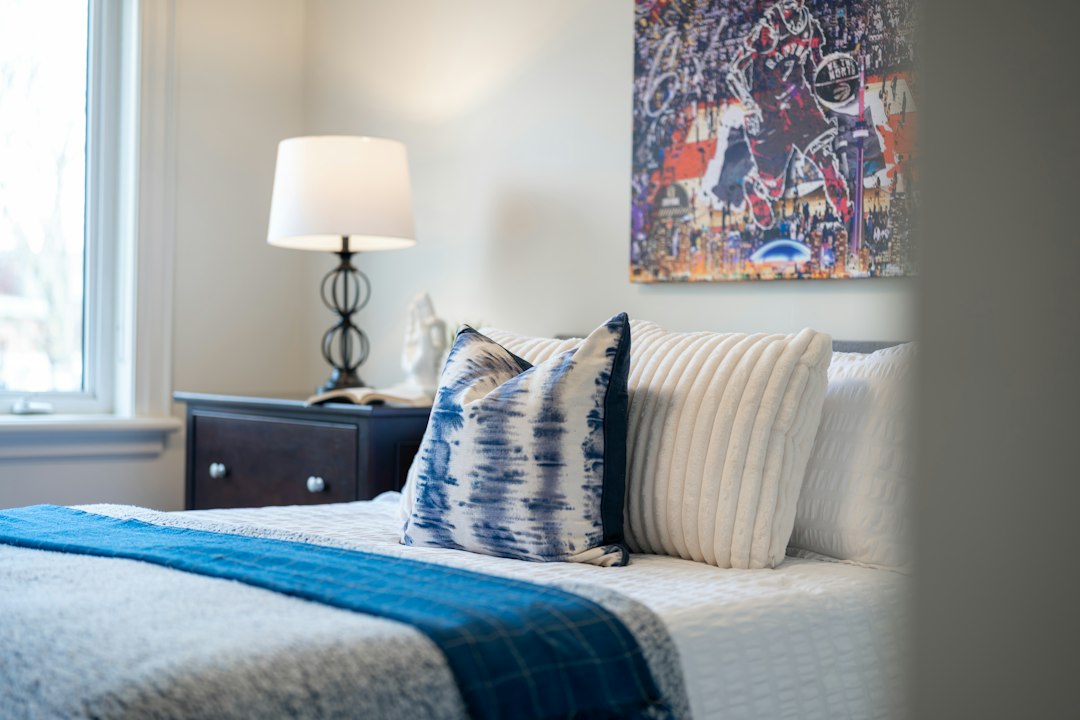
- The bedroom. Underrated. Waking up to your own number on the wall is a different kind of motivation than any app.
A Weekend, Start to Finish
Here's a simple plan that fits a Saturday and Sunday, designed so you don't have to take time off work or learn any specialized skills.
Saturday morning: Pull the jersey out, inspect it, and decide on your display method using the options above. Take photos of the front, back, and any damage, both for your own record and in case you hire a framer.
Saturday afternoon: Clean the jersey following the steps in the previous section. While it dries flat, measure the wall space where you plan to hang it. Mark the spot with painter's tape so you can live with the size for a day.
Sunday: If you're framing professionally, drop it off with your measurements and your preferences on matting and UV glass. If you're doing a hanger display, mount the wall hook, hang the jersey, and adjust the lighting. Step back and look at it from across the room.
That's the whole project. No spreadsheet, no six-week timeline.
Mark Your Own Milestone
One idea worth stealing: pick the date the jersey goes up and write it somewhere small on the back of the frame or on a note tucked behind the board. In ten years, that date becomes part of the story: the year you finally gave your playing days a wall.
A Story Worth Hearing: Tasha R.
Tasha R., 34, played point guard for her small-town high school in Indiana and never once thought to save her jersey. It stayed with the team, got passed to a younger player, and disappeared into a laundry bin sometime around 2009.
Last January, scrolling through old yearbook photos on New Year's Day, she realized she'd never owned a single piece of that season. She ordered a custom-designed jersey with her old number 11, her last name across the back, and maroon and gold in the style of her school colors, then had it framed in a shadow box with a printed team photo.
"It's hanging above my desk now," she told us. "Every time a Zoom call runs long, I look up and remember what it felt like to sprint down the court with nothing in my head but the next pass."
Make It a Wall, Not Just a Frame
Once your first jersey is up, something interesting happens: the empty space around it starts asking questions. You might notice a bare patch beside it and think of your younger brother's team, your dad's old league jersey, or the jersey you wore in a sport you gave up at sixteen.
You don't have to build it all at once. Many collectors start with one piece and let the wall grow over several years. A few principles help it feel intentional instead of cluttered:
- Keep the spacing consistent, usually 2 to 3 inches between frames.
- Anchor with the biggest or most meaningful piece, then build outward.
- Mix in small items like ticket stubs, game balls, or trophy plaques to break up the repetition.
- Leave room. The best walls always have one more space waiting.
When You No Longer Have the Original
Not everyone has the jersey. Maybe it was school property. Maybe you lived in six places since graduation. Maybe you played a rec league where uniforms were handed out and collected each season.
That doesn't end the project. It just changes the first step. A custom jersey built around your name, your number, and a color scheme inspired by your old team can serve as the centerpiece of the exact same display, and in many cases it looks cleaner than a thirty-year-old original because the fabric and lettering are fresh.
The same display rules apply: UV-safe location, acid-free materials, and a method that matches how you want to live with it.
Why This Beats Most Resolutions
Most resolutions fail for the same reason: they're about future behavior, and future behavior is hard to measure. A jersey on a wall is the opposite. You can finish it in a weekend, you can see it every day, and it gets better the longer it hangs there.
It also does something quietly valuable. It reminds you that you were once someone who trained, showed up, and competed with other people who were doing the same. On the days when this year's goals feel heavy, that reminder is worth more than another motivational quote.
Your jersey is still out there waiting.
Design yours in minutes and see your name and number exactly the way you remember it.
Frequently Asked Questions
How do I frame a jersey without damaging it?
Use acid-free matting and backing, and never let adhesives or tape touch the fabric directly. Professional framers secure the jersey with hidden stitches or mounting straps so nothing permanent is applied. If you're framing at home, choose a deep shadow box and a conservation-grade backing board, and avoid hot glue, staples, and thumbtacks.
How much does it cost to professionally frame a jersey?
Prices vary widely by region and materials, but a professionally framed jersey with UV-protective glazing and archival mounting commonly runs from roughly $150 to $400 or more, depending on size, frame style, and whether you add extras like a photo or nameplate. Getting quotes from two or three local frame shops is the quickest way to find the right price for your area.
Can I display a jersey I still want to wear?
Yes. A wide, padded hanger on a wall hook lets you display the jersey and take it down whenever you want. Choose a hanger at least two inches wide with contoured shoulders to prevent stretching, and keep it out of direct sunlight. Reserve framing for jerseys you've decided to retire from wearing.
What's the best way to clean an old jersey before displaying it?
Spot-treat stains with a few drops of mild, dye-free detergent in cool water, then wash cold on a delicate cycle in a mesh bag if the care label allows. Air dry flat on a towel and never use a dryer or bleach. For older cotton or wool-blend jerseys, or any jersey with cracking lettering, consult a professional framer or textile conservator before washing.
Is it worth getting a custom jersey if I don't have my original?
For many former athletes, yes. A custom jersey with your name, number, and a color scheme inspired by your team gives you a centerpiece for the same display you would have built with the original, and the fresh fabric is easier to frame and preserve. It also means the piece can be designed exactly the way you remember it, rather than the way the original aged.
Where is the worst place to hang a jersey?
Anywhere with direct sunlight, high humidity, or nearby heat. Bathrooms, basements, garages, and walls opposite south-facing windows are the most common problem spots, because UV light fades the fabric and moisture invites mildew. A stable, climate-controlled room away from windows keeps a jersey looking sharp for decades.
See also: create a custom sports shadow box | why athletic nostalgia hits so hard | what to do with your old varsity letter jacket | personalized sports keepsakes feel more meaningful