





You already know what color it is.
You haven't opened a design tool yet. You haven't scrolled a single product page. But somewhere between reading that headline and arriving here, a color came to you — the specific shade of red on that Tuesday-night travel team, or the forest green your high school wore the year you beat the crosstown rival in overtime. You've been carrying that color for a long time.
Choosing a red soccer jersey — or any color — for your custom kit isn't really a design decision. It's a retrieval exercise. The question isn't what looks good. The question is what you were. The colors you wore as a player aren't aesthetic preferences. They are the colors of specific people, specific games, specific weather, specific years.
This guide is for former players designing their own custom jerseys. It's about what each color carries — and how to know which one is yours.
Color Isn't Decoration. It's the Team You Were On.
Before there was a design tool, before there were templates and fonts and name arcs, there was a color. Your coach called it out at the first practice: we're going to be red this year. Or blue. Or that particular shade of green that looked like a forest and felt, somehow, like belonging.
Former players designing custom jerseys almost never choose a color they haven't worn before. That's not a coincidence — it's how color and memory work. The brain encodes emotionally significant experiences alongside sensory details, and the color of a uniform is one of the most reliable anchors to a specific sporting memory. You don't just remember the season. You remember the red. Research on autobiographical memory and sensory encoding consistently shows that emotionally charged moments — the kind that happen on a soccer field — bind tightly to the visual details present at the time.


In our experience with former players working through custom kit decisions, the color is almost always settled in the first ten seconds. The hours spent in design tools go toward fonts, number styles, and collar details — not color. Color was decided the moment this project began to feel real.
What's worth time is understanding why that color is the right one — and what to do when two colors are both genuinely yours.
What Each Color Actually Carries — From the Inside
This isn't a color psychology chart. This is what players who've worn these colors associate with them, based on what we hear and what we remember from the pitch ourselves.
The Red Soccer Jersey: The Color of Urgency and Belief
A red soccer jersey carries a specific energy that players describe almost identically across every level of the game: it feels like the other team has to deal with you. Red is aggressive without being loud. It's the color of teams that arrived at the field already believing they were going to win.
At the club level, red appears everywhere — and there's a reason it persists. It reads clearly from a distance, holds its intensity in photographs taken in natural light, and ages well on custom kits through repeated use and washing. If your team was red, you probably played with a particular baseline confidence. The color contributed to that in ways that are hard to articulate and easy to remember.
Red also carries the weight of some of the most iconic kits in world soccer. When players reference classic Manchester United soccer jerseys as a visual touchstone, what they're really naming is an association — red as the color of programs that expected to be in the conversation. That association operates even for players who never watched a Premier League match. Red carries that weight at the level of soccer culture, not just individual memory.
If your first instinct was red, it's almost certainly because you were red. Trust that.
The Blue Soccer Jersey: The Color of Steadiness
A blue soccer jersey is the color of composure. Players who wore blue tend to describe their teams as organized, disciplined, and present in the moments that counted. Blue doesn't spike — it sustains. It's the color of teams that weren't flashy but were still there, running hard, in the final ten minutes when other teams had already started making excuses.
There's a reason blue appears in more national team kits than any other single color. It reads authority without aggression. It reads consistency without boredom. And in custom jerseys, blue photographs cleanly — especially against natural turf in afternoon light, where royal blue and navy both hold their depth without washing out.
If you wore blue, you probably played on a team that valued structure over flair. Your custom jersey in blue will look exactly the way you remember it looking when it was clean at the start of a match.
The Green Soccer Jersey: The Color of Place
A green soccer jersey is specific in a way that red and blue simply aren't. Green is the color of a particular place — a particular field, a particular region, a particular period in a player's soccer life. It doesn't carry universal weight the way red and blue do. It carries your weight, specifically.
Players who wore green tend to remember it with unusual precision. The specific shade mattered more than with other colors. Forest green was different from lime green, which was different from that kelly green your U-14 team wore — the exact shade you've never quite seen reproduced anywhere since, in any other context.
If green is your color, it is very specifically your color. No one else has exactly that green. When you get it right on a custom kit, the recognition is immediate and total.
The Black Soccer Jersey: The Color of Quiet Confidence
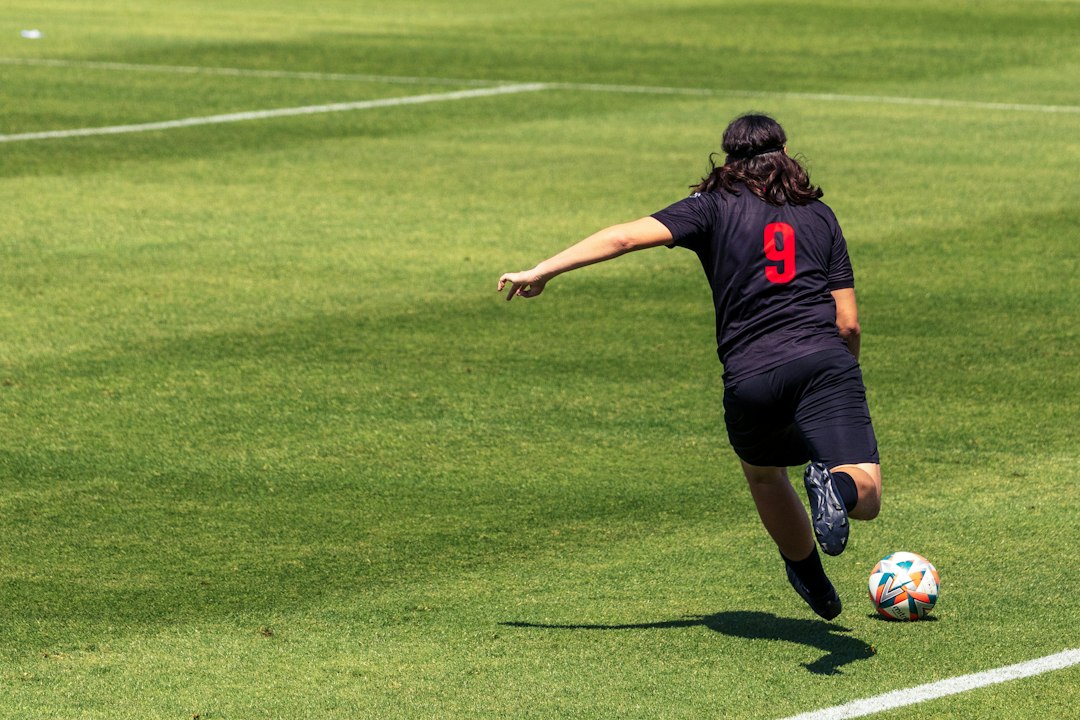
A black soccer jersey says nothing — and that's exactly the point. Black doesn't posture. It doesn't announce itself. It simply arrives, and the other team notices.
Players who wore black often describe their teams as the ones other programs didn't want to draw in bracket play. Not because of physical play, but because black conveys something understated and certain. It's the uniform equivalent of a player who doesn't celebrate goals — who just turns around and jogs back to the center circle.
Black custom jerseys are also among the most versatile for second-life use. They show less visible wear over time, photograph with strong contrast against nearly any background, and work cleanly with a wide range of name and number colors — white, gold, red, silver. If your team was black, you haven't forgotten it. That color doesn't fade in memory the way others sometimes do.
White Soccer Jersey: The Color of Clean Pressure
White is the most demanding jersey color to wear and among the most psychologically interesting to design for. It shows everything — the slide tackle in the third minute, a goal celebration in the mud, the full story of the second half played in rain. White says: I am not hiding anything. That takes a specific kind of team culture to maintain.
Players who wore white often wore it in programs where the organizational standards were high. White jerseys in youth and adult recreational soccer require laundering consistency that not every club maintained. If you remember your team's whites as actually white, that tells you something about the program you were part of.
In custom jersey design, white also photographs with remarkable clarity. A well-constructed custom white jersey — sharp nameplate, clean number, well-chosen trim color — occupies its own visual category in a way no other color quite matches.
Pink Soccer Jerseys: A Specific Cultural Memory
Pink deserves its own pause, because it's different from every other color on this list.
Pink soccer jerseys aren't a universal tradition — they belong to an era. If you played in the late 1990s through the mid-2000s, particularly in girls' youth leagues, there's a reasonable chance you have a pink jersey in your memory that carries a warmth no other color quite reaches. Those programs used pink deliberately — sometimes to identify the girls' division, sometimes as part of the breast cancer awareness fundraising campaigns that became woven into recreational soccer culture during exactly that window.
Marcus T., 38, ordered a custom jersey last spring as a birthday gift — not for himself, but as a tribute to a jersey his wife had described from her U-12 team. She'd mentioned it once, almost in passing: a pale rose kit with white numbers, her name on the back, paid for by a coach who didn't have to do that. Marcus had the color matched as closely as possible and ordered a custom kit in that spirit, with her name and her old number. She recognized exactly what it meant the moment she opened the box.
Pink isn't for everyone. But for players who wore it in that specific window of youth soccer culture, it carries something that red and blue simply don't reach.
When You Wore More Than One Color
Most players who spent real time in the game wore more than one color across different teams and seasons. A primary club and a school team. A fall season in blue and a spring season in red. A travel program you loved and a rec team you played on before that.
When two colors are both genuinely yours, the resolution is usually straightforward:
Start with the team, not the season. Which team do you want this jersey to represent? That question almost always resolves the color question immediately. The color follows the people, not the schedule.
Consider who you're designing this for. A jersey for yourself — to wear at a pickup game, to hang in your office, to pass to your kid to wear at practice — might call for a different answer than a jersey designed to give to a former teammate. If the jersey is for sharing, the shared color is the obvious answer.
When genuinely undecided: choose the color you'd wear if you could only wear one color of soccer uniform for the rest of your life. That's your color. Everything else is secondary.
The Specific Decision Points That Actually Matter
Once the color is settled, the design decisions that follow become much clearer. Here's what matters, in the order it matters:
-
Color accuracy first. The difference between forest green and kelly green, between royal blue and navy, between cardinal and tomato red is real and significant. A quality custom jersey builder will show you specific color swatches or hex values — not just a dropdown that says "red" and "dark red." Confirm the shade before anything else moves forward.
-
Number placement and font style. The number is the most visible element on the field. If you wore a specific number and want it honored — with a specific font weight and size — that's worth specifying exactly. Athletic numbering styles vary considerably, and the visual weight of the number is part of what makes the jersey feel right.
-
Name arc. The curve of the name across the upper back is a subtle but significant detail. A flat nameplate sits differently than a curved arc over the number. Players who remember their name displayed a specific way will notice when it's rendered differently. It's worth checking this carefully in the design preview before finalizing.
-
Fabric weight and hand feel. Modern performance fabrics are significantly lighter and more moisture-wicking than what most players wore in youth and recreational soccer. If you want the jersey to feel like playing, choose a performance mesh. If you want something closer to the weight of the kits from your playing days, ask your custom builder whether a heavier-weight option is available.
A Note on Iconic Colors and What They're Actually About
Players sometimes ask whether they should choose a color based on programs they admired — the deep green of a classic Mexico soccer jersey, or the specific colorways of a retro USA soccer jersey that players who grew up watching the national team in the 1990s remember with unusual vividness. The men's Mexico soccer jersey, in particular, carries a visual weight that extends well beyond the fan base — it's one of the most recognized color combinations in world soccer.
The honest answer: use those kits as reference points for shade and construction quality, not as the source of your color choice. What makes a men's Mexico soccer jersey meaningful is what it represents at the national level. What makes your custom jersey meaningful is what you represent — the team you were on, the players you were with, the games that counted.
Drawing on a famous program's color family as a shade reference is completely reasonable. But the most meaningful custom jerseys are built as a tribute to what you actually wore — your colors, your number, your name — not in the style of something you watched from the stands.
The same logic applies when referencing the construction quality of adidas soccer jerseys or soccer jerseys Nike produces for professional clubs. The fabric technology and fit engineering from those programs are worth studying as benchmarks. Custom adidas soccer uniforms and similar professional-tier builds set a standard that quality custom builders work toward. But the color choice should come from your history. It was always going to.
Your jersey is still out there waiting.
Design yours in minutes and see your name and number exactly the way you remember them.
Frequently Asked Questions
Can I match the exact shade of a color I remember from a jersey I no longer have?
In many cases, yes — with the right reference material. If you have photographs of your old jersey, a good custom builder can work from those images to approximate the shade closely. If you still have the jersey itself, a color-matching app can generate a hex code from a photograph taken in natural light. The more specific you can be in your description — "dark forest green, not kelly green" or "cardinal red, not fire engine red" — the closer the final result will be. Don't accept a generic color category when what you wore was a specific shade.
Does jersey color affect how the finished custom kit photographs?
Yes, meaningfully. High-contrast colors — particularly red, black, and royal blue — read clearly in both indoor and outdoor photography. White jerseys produce exceptionally clean images but require attention to background contrast so the kit doesn't disappear into the frame. Green and lighter blue shades photograph best in natural outdoor light, where their depth holds without washing out. If you're designing a jersey that will be photographed for a team gift, a wall display, or a social post, ask your custom builder whether they have sample photographs of that colorway so you can anticipate the finished result.
What's the right color for a custom jersey designed as a gift for a former teammate?
The correct answer is almost always the color of the team you shared together. If you played on multiple teams together across different colors, choose the team that mattered most — the one both of you would name first if someone asked. That team's color is the right choice. If you're genuinely uncertain, red is the most broadly recognized soccer color and tends to land well across recipients. But specific is almost always more meaningful than universal when the gift is for someone who played.
Should I choose a lighter or darker shade of my team's color for long-term durability?
Darker shades hold their intensity through repeated washing better than lighter shades across every color family. Deep navy holds better than light royal blue over time; forest green holds better than lime or mint. If the jersey will be worn and washed regularly — pickup games, coaching sessions, recreational play — choose the deeper end of your color family. If the jersey is primarily for display or occasional wear, choose the shade that most accurately reflects what you remember, regardless of depth.
See also: personalized vs. generic sports gifts | custom softball jerseys | jersey size chart | adult recreational leagues where former athletes relive their sport