

There's a specific moment that happens every Fourth of July.
Maybe it's the crack of a firework overhead — and for just a half-second, your body responds the way it used to when a starter's pistol fired or a referee's whistle blew. Maybe it's watching kids in a pickup game in a park and feeling something you can't quite name. Maybe it's just the heat, the competition, the crowd noise carried on a summer afternoon breeze — and suddenly you're not 34, or 47, or 61. You're lacing up again.
For former high school athletes, fourth of july sports aren't just background noise on a holiday. They are something personal. Something coded into how you experience summer, competition, and what it means to represent something bigger than yourself.
This is that story.
The Field Was Always America in Miniature
Think about where your games were played.
A Friday night under the lights in a town most maps barely showed. A gymnasium that smelled like floor wax and old banners. A track that ran around a football field where the same families sat in the same sections for thirty years. A pool where a local swim club had held summer championships since before your parents were born.
These weren't just venues. They were the physical center of a community's sense of itself.
That's not a romantic exaggeration — it's something sociologists and historians have documented about American small-town and suburban life for more than a century. The local athletic contest, at its best, is one of the few remaining places where a community watches itself perform. Where the mayor and the mechanic sit three rows apart and cheer for the same kid. Where the outcome genuinely matters to people who will never be on the field.
Sound familiar? It should. Because the Fourth of July is built from the same architecture.
Parades down main streets lined with the same families who watched your games. Local politicians who show up because local visibility still means something. Kids performing — marching bands, color guards, little league games — while their town watches. The whole civic mechanism of collective belonging, activated once a year by a shared calendar moment.
For former athletes, Independence Day doesn't just feel patriotic. It feels like game week.
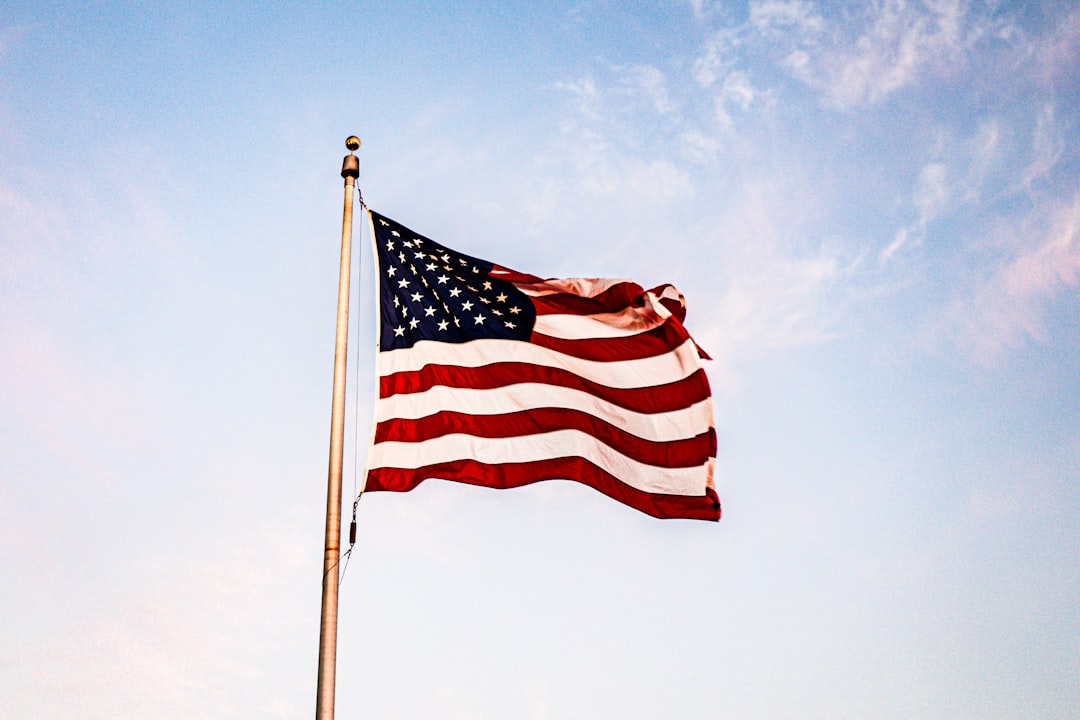
The flags. The crowd. The heat. The specific way competition organizes a summer afternoon. The sense that today, in this place, with these people, something worth showing up for is happening.
You trained for this feeling. You lived inside it for years. No wonder it still finds you every July.
What "Playing for Your Town" Actually Meant
Here's something most people don't say out loud: when you wore that jersey, you were representing something bigger than your team — what it means to play for your town, not just a team.
You were representing a zip code. A set of bleachers. A tradition that had been running, in some form, since long before you arrived and that would continue long after you graduated. You were a temporary steward of something permanent.
That is, in miniature, exactly what American citizenship asks of each generation.
The Declaration of Independence wasn't a finish line — it was a handoff. Each generation receives the experiment and is asked to run its leg as well as they can before passing it forward. The language of the founding documents is full of athletic metaphor without meaning to be: pursuit, defense, commitment, endurance.
Former athletes understand this language in their muscles, not just their minds.
Marcus T., 38, ran cross country and track at a small school in rural Ohio — a program so underfunded that the team sometimes drove themselves to meets. He still says the Fourth of July is the holiday that makes him feel most connected to what sport gave him. "It wasn't about the trophies," he said. "It was about showing up every single day for something that was bigger than any one of us. That's what the Fourth feels like to me now. Everyone showing up."
That's not nostalgia talking. That's the specific transferable knowledge that competitive athletics instills — and that doesn't expire just because the eligibility clock did.
The Rituals That Carried Over (And You Probably Don't Notice Them)
Ask a former athlete what they do on the Fourth of July and you'll get a list that, stripped of its holiday trappings, sounds a lot like competition preparation.
The early wake-up. The physical activity in the morning — a run, a pickup game, a swim — before the heat locks everything in. The preparation of food for a crowd. The equipment check: coolers packed, chairs positioned, sightlines established. The gathering of the group. The waiting. The main event. The debrief after.
In our experience talking to former players, coaches, and athletic alumni, one pattern comes up again and again: the holidays that feel most satisfying are the ones that carry some structural echo of team preparation. Not every holiday does. The Fourth of July reliably does.
There's something about a holiday centered on outdoor physical spectacle — the races, the games, the fireworks choreographed like a perfectly timed final drive — that activates the part of the former athlete's nervous system that was trained to find meaning in collective performance.
This isn't accidental. The Fourth of July, as it has been celebrated in America for more than two centuries, is genuinely built around the same values that organized sport instills: discipline, display, collective identity, earned spectacle.
Your body remembers this. Every summer, it reminds you.
The Sports That Own the Fourth (And Why)
Not every sport has the same relationship with Independence Day, and the differences are worth noticing.
Baseball has the deepest claim. The Fourth of July sits near the midpoint of the major league season — a natural pause for reflection that the sport has always used well. For former baseball and softball players, there's something almost liturgical about a summer doubleheader, the crack of a bat against the specific heat of a July afternoon, the way the game's pace matches the season's pace. MLB's historical scheduling of Independence Day games goes back to the sport's earliest professional decades, cementing an association that feels genetic now.
Track and field and swimming carry their own Independence Day gravity. Summer is the competitive season for both. The Fourth falls during peak training and competition windows for youth and masters athletes alike. For former runners and swimmers, the holiday weekend often means a local race — a 5K, a sprint triathlon, a masters swim meet — that provides an echo of structured competition the calendar rarely offers in adulthood.
Football and basketball relate to the Fourth differently — through camp season. July is the month when high school programs begin two-a-days, when AAU basketball tournaments run through three-day weekends, when the next season's architecture starts to take shape. For former players, July Fourth sits at a familiar threshold: the end of summer freedom and the beginning of something more purposeful. The holiday marks a turning point that athletes learn to feel before they're old enough to understand it.
Soccer, volleyball, lacrosse, wrestling — every sport carries its own Fourth of July texture, shaped by when the competitive season falls, when the traveling tournament circuit runs, what the holiday meant in the specific ecosystem of that sport's culture.
What they share: the body remembers where it was trained to be in July. And it's always on a field somewhere.
The Iconic Fourth of July Moments That Still Echo
The connection between sports and Independence Day isn't just about your personal memory. It's etched into the American story itself — and some of the most enduring moments in sports history unfolded on July 4th.
On July 4, 1939, Lou Gehrig stood at home plate at Yankee Stadium, his body already surrendering to the disease that would carry his name, and told 61,000 people he was the luckiest man on the face of the earth. He wasn't talking about his statistics. He was talking about what it meant to have worn a jersey for a city, to have shown up every day for a team and a town, to have been part of something bigger than any individual career could measure. The date wasn't an accident — the holiday gave the moment its gravity, and the moment gave the holiday its most enduring lesson: that representing something beyond yourself is the highest honor sport can offer.
Forty-five years later, on July 4, 1984, Richard Petty won his 200th NASCAR race at Daytona — with President Ronald Reagan in attendance, the first sitting president to visit a NASCAR event. The image endures: stock car racing's king, the American flag whipping above the grandstands, a president in the crowd. It wasn't just a race. It was a statement about who America understood itself to be — and athletics, in that moment, was the language the country used to say it.
These moments aren't just trivia for sports fans. They're proof that July 4th athletics carry weight that other calendar dates don't. When something historic happens on the Fourth, it doesn't just enter the sports record — it enters the American record. Former athletes understand this intuitively, because they lived inside a smaller version of the same truth: when you perform on a day that means something, the performance means more.
Friday Night Lights Were Always a Little Bit About This
Here is something worth sitting with.
The reason Friday nights under the lights became such a powerful cultural institution in America — and why it appears in literature, film, journalism, and political speeches with a frequency no other high school sport matches — is not purely about what happens between the whistles.
It's about what a Friday night game in a small American town represents at a structural level.
The whole community turns out. The local economy bends slightly around it. The institution of the school, funded by public tax dollars, performing publicly on a public field, for a public audience. The team wearing their town's name on their chest. The band playing the national anthem before the first snap.
It is, in the most literal sense, civic theater. Democratic spectacle. The American project made visible in a Friday night ritual.
Is it any wonder that the Fourth of July — the civic holiday, the national theater, the American project made annual — resonates so specifically with the people who lived inside that ritual for four years?
Former athletes aren't just patriotic because they're former athletes. They're patriotic in a specific way — rooted in the particular experience of having performed publicly for a community, of having worn a number that represented something beyond themselves, of having learned that showing up and competing hard is how you honor the people in the stands.
That's not something you learn from a textbook. It's something you carry in your legs.
How to Honor Both on the Fourth
If you're a former athlete reading this on or around the Fourth of July, here are two things worth doing — one physical, one reflective.
Do something competitive. It doesn't need to be organized or official. A pickup game. A neighborhood race. A swim. A round of golf where you're actually keeping score and actually trying. The body wants to perform on days like this. Let it. The holiday was built for this — outdoor competition, physical expression, the specific satisfaction of effort in summer heat.
Find the thing you represented. Your old school. Your team's record in whatever year you played. The name on the jersey. Look it up. Think about who was in those stands. Think about what it meant to run out of that tunnel, or step up to that line, or take the first serve, with your town watching. That specific memory — not the generic nostalgia of "I used to play," but the precise, particular memory of a specific game in a specific place — is worth returning to on a day that's about that same kind of belonging.
The Fourth of July is the one day a year when the whole country is doing publicly what you were trained to do locally: showing up, representing something, performing with everything you have for the people watching.
You already know how to do this. You've always known.
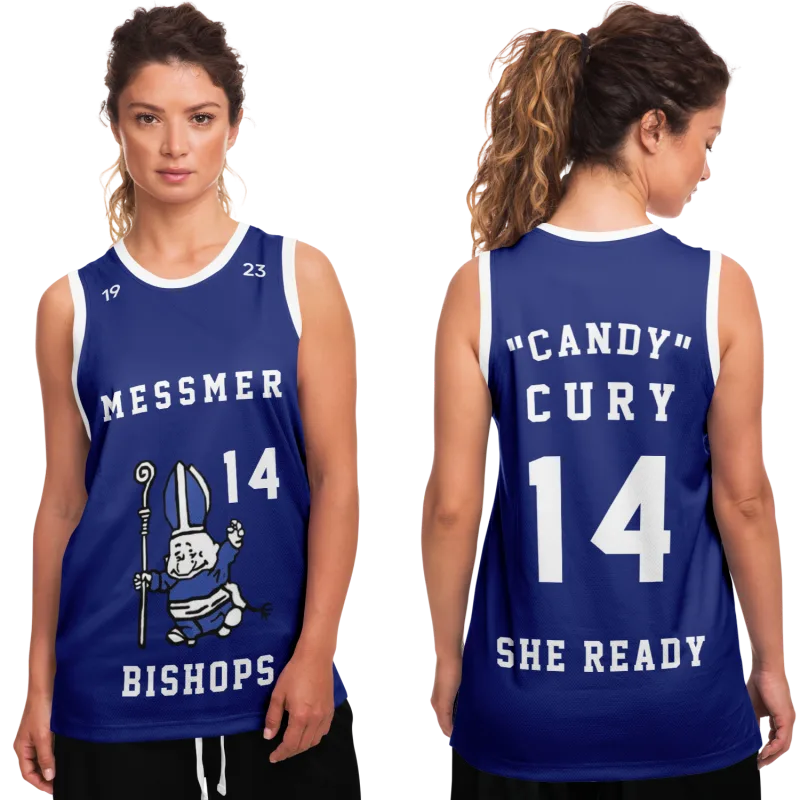
Your jersey is still out there waiting.
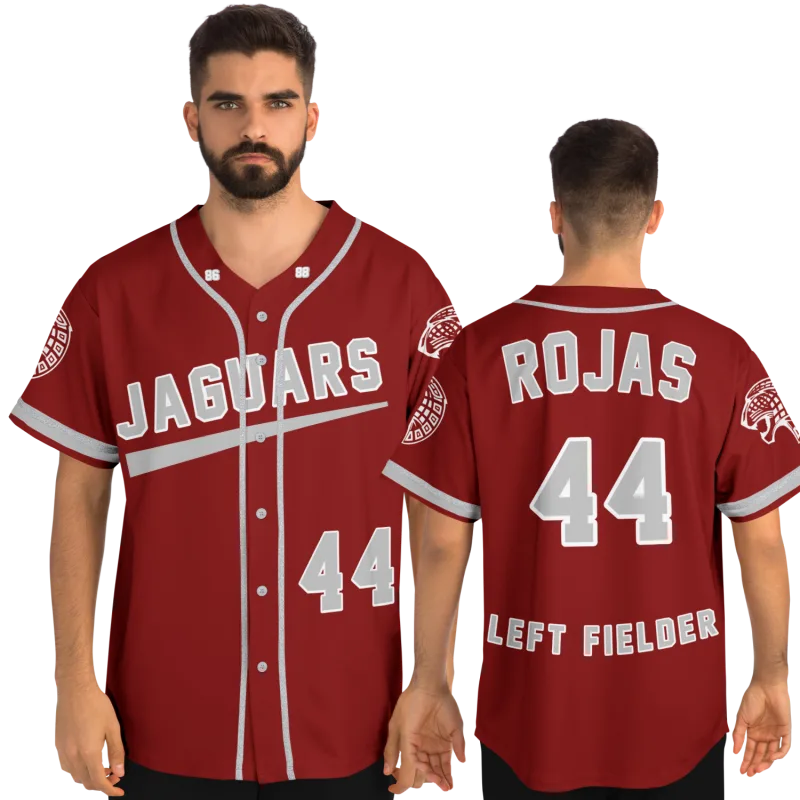
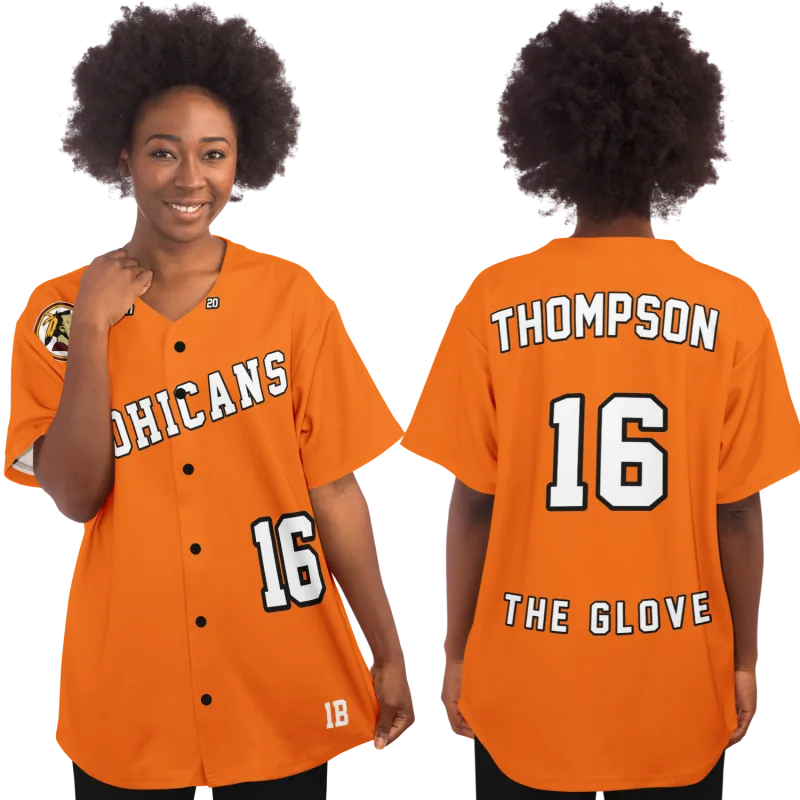
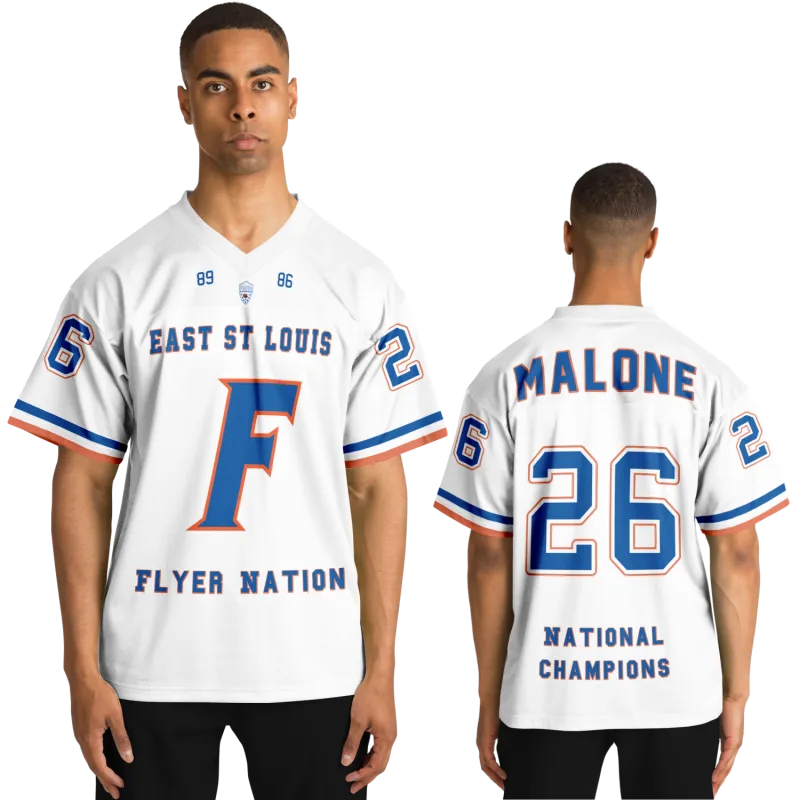
Design yours in minutes and see your name and number exactly the way you remember it.
Frequently Asked Questions
Why does the Fourth of July feel more meaningful to former athletes than to other people?
Former athletes spent years in environments that connected personal performance to community identity — wearing a town's name, performing publicly, competing within a shared civic ritual. The Fourth of July is built on those same structural elements: public performance, collective identity, civic belonging. Former athletes don't just observe Independence Day — their nervous systems recognize it. The holiday activates the same patterns of meaning that competitive sport established across years of Friday nights and Saturday mornings.
What sports have the strongest connection to Independence Day culture?
Baseball has the oldest and deepest association — the Fourth of July falls near the MLB season's midpoint, and the sport's summer rhythm has been intertwined with the holiday for well over a century. Track, swimming, and soccer also carry strong Fourth of July connections because summer is their primary competitive season. For football players specifically, July Fourth marks the beginning of camp season — a threshold athletes learn to feel before they can articulate it.
Is it common for former athletes to feel nostalgic on patriotic holidays?
It's more specific than general nostalgia. Former athletes often report that certain holidays — particularly the Fourth of July and Thanksgiving — activate a particular kind of memory tied to team identity, public performance, and representing something beyond themselves. This isn't accidental. Those are the two holidays most structurally similar to the athletic experience: one built around outdoor competition and collective gathering, one built around the specific ritual of a big game. The emotional resonance is a direct echo of what sport trained the nervous system to recognize as meaningful.
How can former athletes celebrate the Fourth in a way that honors their athletic background?
The most straightforward way is to do something physically competitive — even informally. A neighborhood race, a pickup game, a swim, a round of golf where the score actually matters. The second thing worth doing is the reflective one: finding the specific memory of a specific game or moment from your playing days and sitting with it. Not generic nostalgia, but the particular detail of a particular afternoon. That's the real Fourth of July for a former athlete — the specific belonging of having worn a number in a place that mattered.
What does "Friday Night Lights" actually represent in American culture?
At its most literal, Friday night high school football is civic theater — a public institution performing publicly for a public audience, funded by and representing a specific community. The term has come to stand for a broader category: the local athletic ritual that organizes a community's sense of itself, that brings together people across economic and social lines, that gives young people the experience of public performance and collective identity. It resonates so widely because those experiences — of belonging to something, of representing your town, of competing under lights while people watch — are universal to former athletes across every sport, not just football.
See also: what playing under the lights actually felt like | why high school sports still matter to adults | the athletic identity that stays with you long after the final whistle | the most football-crazy states in America