

Every year, it comes back like a smell you didn't know you missed.
The NFL season kickoff hits the calendar and suddenly the whole country realigns around a single thing: football is back. Bars fill up by noon on Sunday. Fantasy leagues erupt in the group chat. Highlights start appearing on your phone before you've finished your first cup of coffee. And somewhere in the middle of all of it — somewhere between the national anthem and the first snap — something shifts inside you.
You don't just watch football the way other people watch football.
You played.
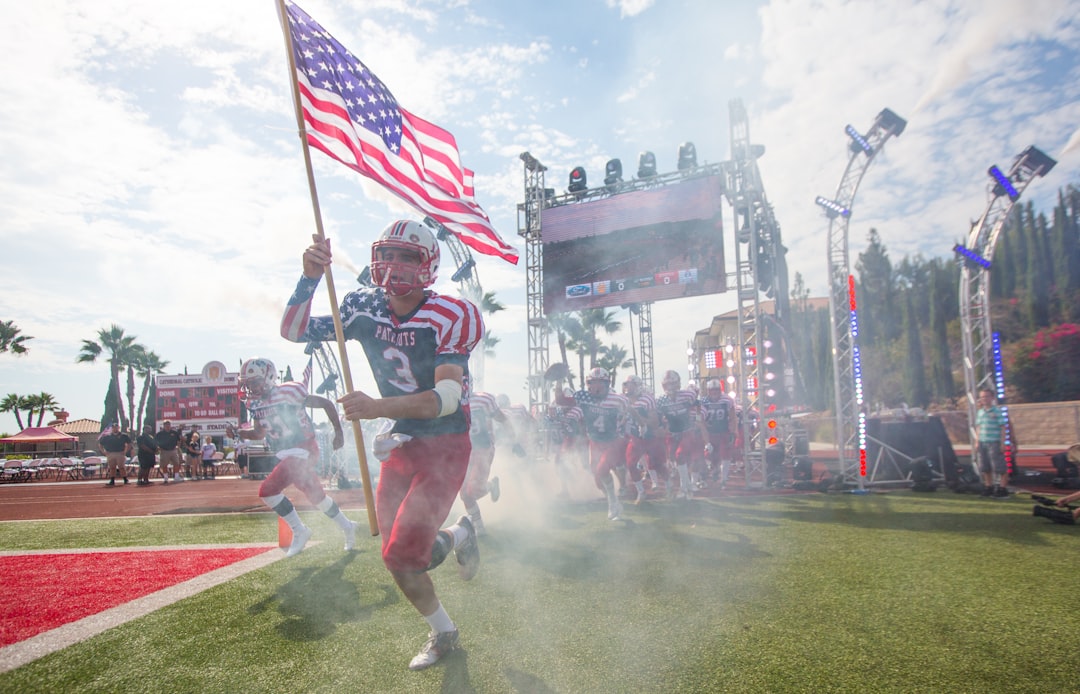
That's the thing about the NFL season kickoff that nobody talks about: what it does to the people who used to be on the other side of the camera. The ones who wore a number. Who had their name on a back. Who stood in a tunnel, or under Friday night lights, or on a college field on a cold October Saturday, and understood from the inside what it actually feels like when a crowd gets loud.
This article is for you. Not for the casual fan. For the person who sees a quarterback under center and remembers their own stance. Who watches a receiver run a route and thinks: I ran that. I know precisely what that timing feels like.
The NFL is back. And for people like you, that means more than just the season.
What the Kickoff Actually Triggers — And Why It's Different for Former Players
There's sports nostalgia, and then there's this.
General sports nostalgia is watching a team you love and feeling connected to something larger than yourself. That's real, and it matters. But what former players experience at NFL season kickoff is something more specific. More physical, even.
It starts with the sights — the field striping, the end zone paint, the way the stadium lights blow out the background in broadcast close-ups. Those visuals are associated with doing, not just watching. Your nervous system stores sensory memories differently when physical action is attached to them. Sports psychology has a name for this: embodied cognition, the idea that motor memories are woven together with emotional ones, and that certain triggers can bring both rushing back at once.
Which is the long way of saying: when the whistle blows on opening night, former players don't just feel excited. They feel something they can't quite name: a pull, a recognition, a specific kind of longing that has nothing to do with winning a fantasy matchup.
You remember what it was like to be in it.
The smell of the turf. The particular weight of shoulder pads. The way sound works differently when you're wearing a helmet — muffled in some ways, amplified in others. The moment before a snap when everything narrows to a single point of focus.
Watching the NFL kickoff on a screen is one experience. Having lived it at any level (Pop Warner, middle school, high school, college, semi-pro, recreational leagues) makes it another experience entirely. The screen becomes a kind of mirror.
And that's precisely why this time of year means something more to you than it does to someone who never played.
The Jersey Is the Object That Holds the Memory
There's a reason former players think about their jerseys differently than fans think about licensed NFL gear.
A fan's jersey is about affiliation — wearing the colors of something you love. That's genuinely meaningful. Tribal identity, shared community, years of loyalty stitched into cotton and polyester. There's nothing wrong with any of that.
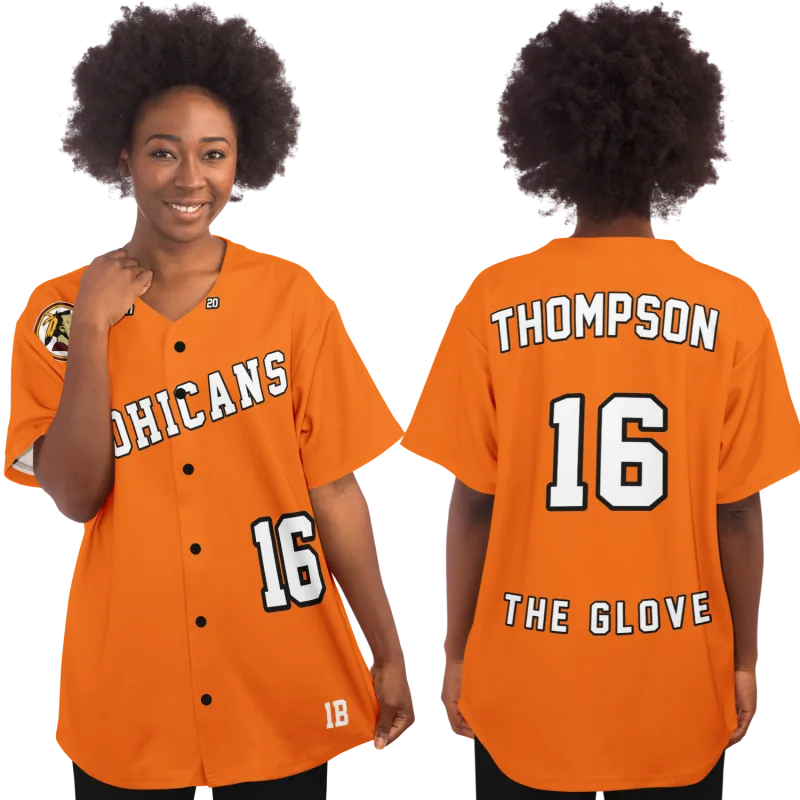
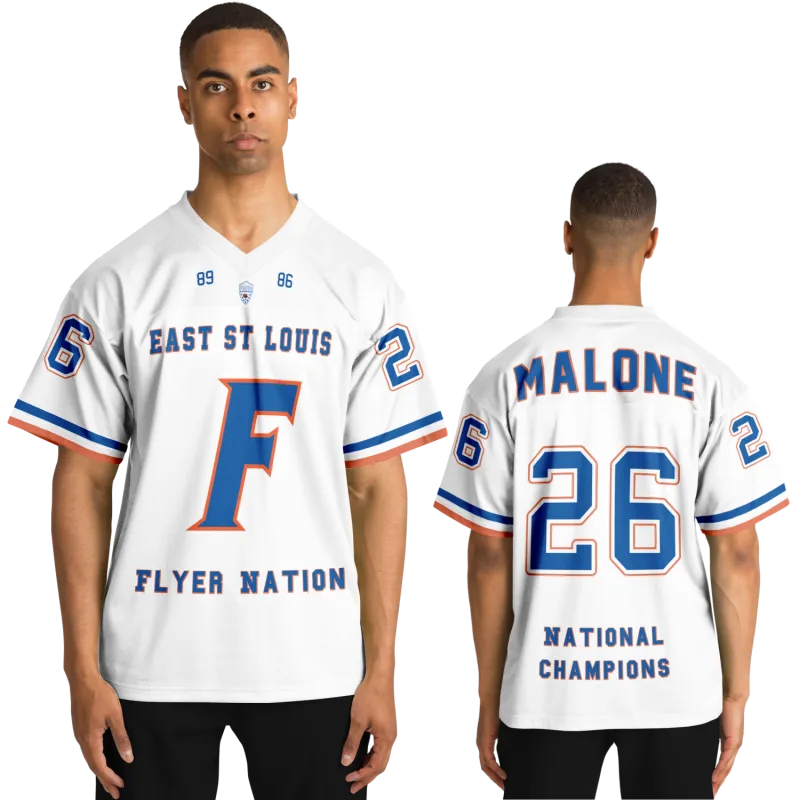
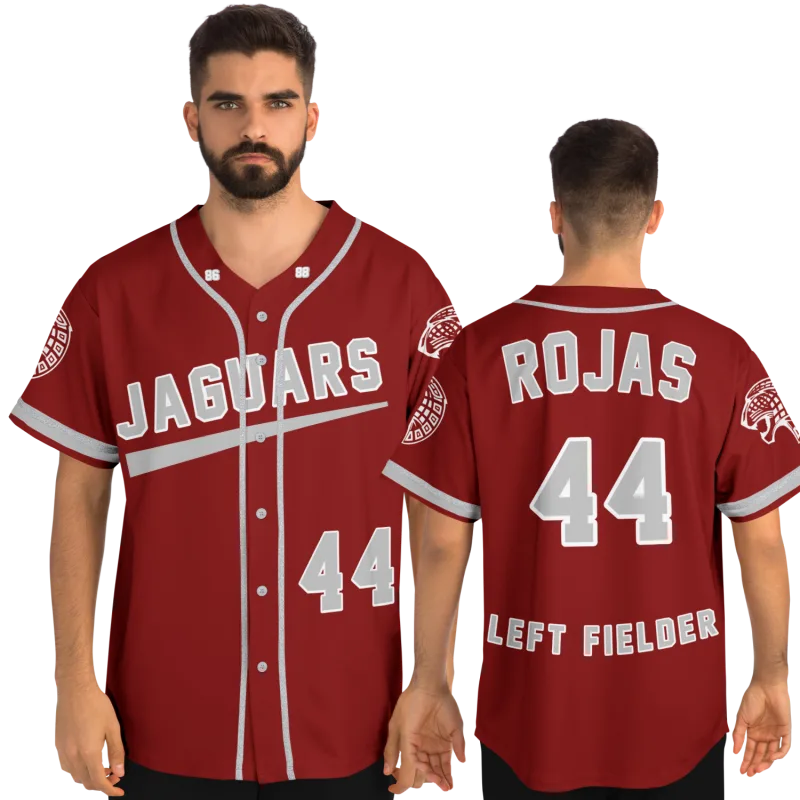
But a player's jersey was different. It had your name on it. Your number — the one assigned to you, chosen by you, or maybe fought for because some upperclassman already had the one you wanted. It represented a specific version of you that existed on a specific team, in a specific season, alongside specific people who knew precisely what you contributed.
That jersey wasn't merchandise. It was a record.
Marcus T., 34, played wide receiver for his high school in central Georgia — third-string mostly, but he was on the roster, traveled with the team, suited up every Friday. He told us that every NFL season kickoff he goes through the same thing: he watches the pregame warmups, sees the receivers running routes, and feels a specific pang that he describes as "proud and far away at the same time." Last year, he had a custom jersey made with his high school number. He said it was the first time in fifteen years he could put that feeling somewhere tangible rather than just carry it around.
"It's not about being famous," he said. "It's about the fact that I was actually there."
That distinction matters. The jersey isn't a consolation prize for not making the NFL. It's an accurate record of something that actually happened — something that formed you, built you, taught you things about effort and failure and teamwork that still operate in your daily life whether or not you think about them consciously.
NFL season kickoff is when all of that surfaces. The jersey is where you can put it.
Every Level You Played Matters — Here's Why That's Not Just a Nice Thing to Say
Pop Warner. Middle school rec league. JV. Varsity. Junior college. Division III. Division I. Semi-professional. Indoor leagues. Adult recreational leagues.
Every single one of those levels required something real from you.
This isn't sentiment — it's practical. The physical demands of football don't scale linearly with the level of competition. Every player at every level is training their body to operate under contact, learning to execute complex assignments under pressure, experiencing the specific social texture of a team that depends on its members showing up. The NFL is a phenomenon of extraordinary athletic gifts combined with extraordinary training combined with extraordinary circumstance. But the game itself, the experience of playing it, is available at every level, and what it teaches is transferable at every level.
The former Division I player and the former rec league participant have different athletic résumés. They share something more important: the memory of having been genuinely inside the sport. Of having worn the jersey that said they belonged to a team.
Here's what's also true: for most people who played organized football at any level, the relationships formed during that time are among the most durable of their lives. The people who blocked for you. The coaches who put you in or benched you. The opponent who hit you harder than you expected and made you better for it. These relationships have a specific texture that people who only watched the sport don't have access to.
The jersey represents all of that. Not just the game. The whole ecosystem of experience that the game contained.
Which is why, when the NFL season kickoff arrives, the pull goes beyond the television, toward a version of yourself that was active, present, and inside something that mattered.
What Former Players Actually Do With This Feeling
For former players, the NFL season kickoff produces one of a few different responses.
Some people lean hard into the fan experience — they pick a team (or return to the team they've always loved), set up their living room, get deep into the season as engaged viewers. Some channel that football IQ into fantasy leagues — actually having played the sport gives you an edge no draft guide can match. The sport is in them and watching it is a genuine form of participation.
Some people reconnect with former teammates. NFL season kickoff is reliably one of the highest-traffic periods for "hey, are you watching?" texts to people you played with fifteen years ago. The shared history comes back alive in a specific way. You're not just watching football — you're watching it with the same people who were on the field with you, even if you're now thousands of miles apart.
Some people get back into playing — adult recreational leagues, flag football, coaching youth sports. The kickoff is a recurring reminder that the sport is still out there, still available in some form, still able to deliver something that other activities don't.
And some people, more than you might think, go looking for their jersey.
Not a copy of some NFL player's jersey. Their own. The one with their name, their number, their colors. The specific physical object that represented their specific time inside the sport.
That impulse makes complete sense. The jersey is the most tangible artifact of something that existed in time and can't be fully recovered, but can be honored.
The men you watch on TV feel the same pull. Miami Dolphins linebacker Anthony Walker Jr. gifted teammates throwback versions of their own high school jerseys for Christmas — and to pull it off he had to research the alma maters and jersey numbers of more than 50 teammates, because nobody forgets where they started. Every NFL season kickoff tells the same story from a different angle: all 32 starting quarterbacks can be traced back to their high schools — California with 8, Texas with 6, Florida and Georgia with 3 apiece, names like Josh Allen, Patrick Mahomes, and Jalen Hurts among them. The men who reached the top never left their high school jerseys behind. They carried them forward. You can do the same.
The NFL Kickoff Moment That Stays With You Longest
Ask any former player to describe their most vivid football memory, and watch what happens to their face.
It almost never involves a scoreboard. The moments that stay aren't the wins (though those matter) or the losses (though those leave marks). The moments that stay are sensory and immediate: the specific quality of light on a particular afternoon, the smell of the field, the precise sound of pads on pads, a play that went perfectly for reasons you still can't entirely explain.
These are body memories. They live somewhere below language. Hearing your name called in the starting lineup is one of them — the sound still lives somewhere in your chest long after the stadium speakers have gone quiet.
NFL season kickoff reactivates them reliably every year because the sensory package of broadcast football (the crowd noise, the field visuals, the physical culture of the sport) overlaps enough with your own stored memories to serve as a key that opens a door you didn't know was still unlocked.
For most former players, this is one of the genuinely good things about being human. The fact that something you did when you were seventeen or twenty-two or thirty can still produce a felt sense of aliveness decades later. That the sport got into you in a way that doesn't wash out.
The NFL season kickoff is the annual reminder that it happened. That you were there. That it was real.
Your jersey is the object that says the same thing — quietly, permanently, specifically — in your closet or on your wall or in a frame in a hallway where people who didn't play might walk past it without fully understanding what they're looking at.
You know what it is.
Your jersey is still out there waiting.
Design yours in minutes and see your name and number the way you remember it.
Frequently Asked Questions
Can I design a jersey that matches my actual high school or college team colors?
Yes — custom jersey design tools let you select specific colors to match your team's palette, so you can recreate the color combination you wore. You'll be able to choose the primary color, secondary color, and accent colors. If you know your school colors by name or hex code, you can match them precisely.
What information do I need to have ready to design my custom jersey?
The basics are your name (as it appeared on your jersey, or as you want it now), your number, and your team colors. Some designers also let you select the jersey style — mesh vs. solid, collar type, sleeve design — so it helps to have a sense of what your original jersey looked like, or what you want this one to look like. A photo of your old jersey, if you have one, is genuinely useful as a reference. And if your frame has changed since your playing days, our guide to ordering a custom football jersey that fits you now is worth a read.
Is a custom jersey something you can actually wear, or is it more of a display piece?
Both. Custom jerseys built on quality materials are fully wearable — appropriate for recreational games, flag football, fan events, or just wearing around the house during NFL season. They're also display-quality if you want to frame one or hang it. The choice is entirely yours, and most people who order them end up doing at least a little of both. Today's materials are a long way from the mesh you wore in school, so it's worth knowing how jersey fabric technology has changed since you played before you order.
Does it matter what level I played at? Is this only for people who played varsity or college ball?
Not even slightly. Every level of organized football — Pop Warner, middle school, high school, college, recreational adult leagues, semi-pro — produced real games, real teammates, and a real jersey. The custom jersey honors what actually happened, regardless of what level it happened at. If you wore a number and suited up for a team, that number and that name belong on a jersey. Design your own — custom football jerseys.
See also: the grief that comes with watching others play the sport you used to own | why high school sports still carry so much emotional weight for adults | the identity you built around being an athlete doesn't just disappear | what it actually felt like to play under the Friday night lights | the difference between watching the game and having actually played it