

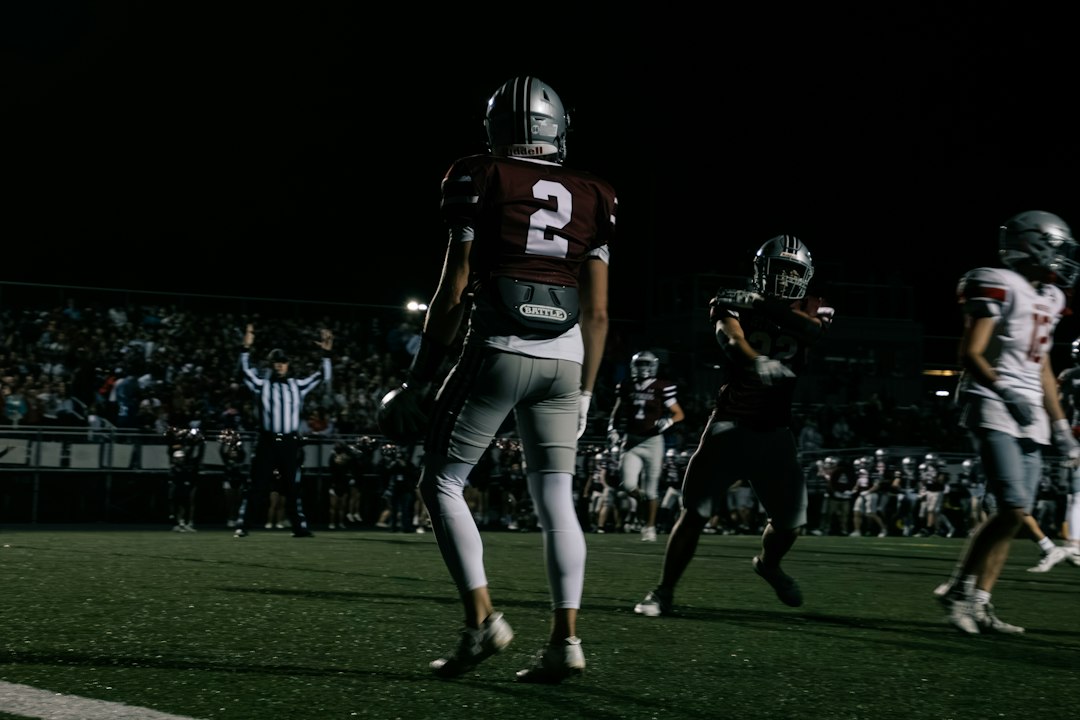




Mountain West High School Football Champions: what winning state still means to everyone who played is the story that surfaces every November — not in the box scores, but in the chest of every former player who checks their phone on a cold Friday night and sees a familiar name scroll past. Star Valley. Sioux Falls Jefferson. State champions. Something in you shifts without warning, even if you weren't there, even if you haven't suited up in fifteen years.
You didn't play in that game. But you know exactly what that locker room sounds like right now.
This past weekend, the Mountain West's high school football landscape rewrote itself for another season. Star Valley (Wyoming) and Sioux Falls Jefferson (South Dakota) claimed state championships, while Idaho powers Coeur d'Alene and Rigby — two programs that had every reason to believe this was their year — fell in the 6A semifinals. Four programs. Four completely different Novembers. And every single player who suited up for those schools played in a game they will never fully stop thinking about.
This isn't a recap. The scores are already out there. This is about what those scores mean to anyone who ever stood in a locker room with a number on their back.
When Your Name Gets Called in November, Nothing Else Exists
Star Valley. If you know Wyoming high school football, you know that name carries weight the way cold air carries sound — farther than you'd expect, sharper than the season should allow. A state championship for a program like that isn't just a trophy in a display case. It's a confirmation of something the entire community already believed. The only open question was whether November would agree.
For anyone who ever put on pads for a program with that kind of history, you understand a specific internal pressure that is almost impossible to explain to people who haven't felt it. It isn't external expectation. It's the weight of the players who wore that jersey before you — the coaches who stayed when they could have left, the Friday nights in previous years that ended one game too early. You carry all of it into warmups. You carry it onto the field. And when you finally win — when the last second clicks off and the scoreboard confirms what you've been building toward since August two-a-days — the first thing you feel isn't joy.


It's relief.
Then joy arrives. Then, later, something that takes years to name correctly: gratitude. Gratitude to the game, to your teammates, to the cold air, to the simple fact that you got to be one of the ones who was there. State championship programs aren't only about the players on the field that night. They're about every player who built the culture before those kids ever walked into a weight room.
Sioux Falls Jefferson, same story, different geography. South Dakota football runs deep and runs proud, and Jefferson's program knows how to win in ways that go beyond scheme and athleticism. They win because the standard is established before the season starts. For every player who has ever been part of a program like that — the kind where the expectation isn't "maybe this is our year" but "we have done the work, now let's finish" — you know what that final whistle sounds like from the inside. You know the pile. You know the specific weight of a teammate's arm around your shoulder pads when it's over. You know you are going to remember those faces for the rest of your life.
The Bus Ride Home Is the Part Nobody Films
Then there's Coeur d'Alene. And Rigby.
Two programs in Idaho's 6A bracket that went deep enough to make entire communities believe, then ran into the wall that every semifinal builds. Gone in the final four. Close enough to smell the championship but not close enough to touch it.
For anyone who ever played on a team that ended its season in that exact place — not in the final, not in the first round, but in the game right before everything — you know there is a specific silence that settles over a locker room after a semifinal loss. It is different from every other kind of quiet you've experienced in an athletic space. Not the silence of fatigue. Not quite the silence of disappointment. The silence of finality. The season is over. Right now, in this room, with your pads still on, the season is actually over.
Every former player knows the bus ride home after a game like that. The highway unspooling through the dark. Coaches at the front not saying much. No music. Some players with headphones in. Some staring at the seat back in front of them. The seniors on those buses know something they can't yet fully articulate — that they just played the last organized game of their lives, and they won't understand the full weight of that until sometime next spring, when they show up to watch a Friday night game as a spectator and reach instinctively for a helmet that isn't there.
Coeur d'Alene and Rigby didn't lose because they didn't belong in that semifinal. They lost because the bracket is brutal and November doesn't negotiate. That's the game. That's exactly the game. And the players on those rosters — particularly the seniors — will carry that semifinal with them longer than any regular-season win.
What Gets Handed Down
Here's what high school football at this level, in this region, in these programs, actually manufactures: not championships alone, but identity.
Marcus T., 34, grew up playing linebacker for a small Wyoming program that made the state quarterfinals twice during his four years. His teams never reached the semifinal. Never made a run at a championship. But he still talks about those quarterfinal games the way most people talk about the defining moments of their twenties — the cold, the specific way stadium lights made the grass look almost too green for November, his coaches' voices during the final timeout, the exact number on his jersey. Fifty-four. He still knows exactly where that jersey is, folded in a box in his parents' house three states away.
That is what Mountain West high school football produces that no other level of the game quite matches: not necessarily trophies, but a physical and emotional record of a specific time in a specific place with specific people. The number is yours. The name is yours. The colors belonged to everyone, but what you did while wearing them belongs only to you.
The players celebrating right now in Star Valley and Sioux Falls — and the players sitting in that specific post-semifinal silence in Coeur d'Alene and Rigby — are all in the middle of something they will spend the next two decades trying to fully describe.
Remember When the Season Became Real
Every former player knows the moment when a season stopped being about conditioning and reps and became about something larger than any single practice.
It isn't always the first game. Sometimes it's a mid-October night when you're trailing by seven at halftime and your head coach says something in that locker room that you have never forgotten — not because it was profound in some scripted way, but because it was true in a way that only made sense to seventeen-year-olds who had been working together since August. Sometimes it's a practice drill in September when you suddenly understand what your teammates are capable of and you feel, for the first time, like a team and not just a collection of players wearing the same color.
For the players in Star Valley and Sioux Falls Jefferson, that moment led somewhere. The arc of their season reached its destination. For Coeur d'Alene and Rigby, the arc is still complete — it just ended differently than they wanted. But every player on every one of those rosters had that moment. Every one of them knows what it felt like when the season became real.
That feeling does not fully go away. That is the reason a notification about state championship results on a November weekend can reach into your chest and find something that has been sitting there for years.
The Mountain West is a region built on those moments. Wyoming's wide-open spaces and iron-cold Friday nights. South Dakota's prairie-flat fields and communities that show up in full. Idaho's landscapes that make you feel, on a clear November evening under stadium lights, like football was invented specifically for this geography. These aren't just regional programs competing for hardware. They are communities enacting something that matters to them in ways that go well beyond wins and losses.
The Jersey Was Always More Than a Jersey
There is a reason former players hold onto those jerseys — not simply as memorabilia, not just as proof that it happened, but as a physical object that contains something that cannot be digitized or summarized or reduced to a box score.
A high school football jersey from a Mountain West program — from Star Valley, from Sioux Falls Jefferson, from Coeur d'Alene, from Rigby, from any of the dozens of programs scattered across Wyoming, South Dakota, and Idaho — is a document. It records a specific time, a specific place, specific people. The number is yours. The name on the back is yours. The colors belonged to the whole community, but what you did while wearing them belongs only to you.
The players celebrating championships this weekend will put those jerseys away eventually. The players who went home from semifinal losses will put theirs away too. And years from now, all of them will reach for that box — the way Marcus T. still knows exactly where his is — and understand something they couldn't quite articulate when they were seventeen.
The game gave them something the final score doesn't entirely capture. Getting a custom jersey made in the style of your old team's colors — your name, your number, the same look you remember from those Friday nights — is one way to hold onto the physical reality of that time. Not a copy of anyone else's jersey. A tribute to your own. The number you earned. The name you wore.
Your jersey is still out there waiting.
Design yours in minutes and see your name and number exactly the way you remember it.
Frequently Asked Questions
What made Star Valley's state championship significant in the Mountain West region?
Star Valley is one of Wyoming's historically prominent high school football programs, and a state title represents the culmination of a program-wide standard built over many seasons. For former players and community members across the Mountain West, a Star Valley championship resonates because it reflects a culture that generations of players shaped through years of small-town, high-expectation Friday night football. It is the kind of program that makes winning feel earned rather than surprising — and that distinction matters to everyone who ever wore the jersey.
What does a semifinal loss like Coeur d'Alene's or Rigby's mean for those programs going forward?
Deep playoff runs, including semifinal appearances, are program-builders even when they don't end with a trophy. Idaho's 6A bracket is competitive at the highest level, and reaching the final four establishes recruiting credibility, community investment, and a program identity that carries into the following season. For former players of those schools, a semifinal loss at the end of a strong season isn't the conclusion of a story — it's the chapter that makes the next run meaningful.
Why do high school sports championships feel more significant to former players than other levels of the game?
High school athletics — particularly football in regions like the Mountain West — exist at a unique intersection of community identity, personal development, and competitive stakes. Unlike college or professional sports, high school championships happen in front of the people who raised you, in a town that knows your name. The scale is intimate enough that every player matters and large enough that the whole community shows up. Former players consistently describe their high school years as producing memories and emotional connections that later levels of the game rarely match, because the experience was total: family, community, identity, and the irreplaceable reality of playing the last games of your life with those exact people.
How can former high school players from Mountain West programs reconnect with what those seasons meant?
The most direct way is to get back near the game — attend a home game for your old school when you can, reconnect with former teammates, revisit what those years actually produced in you. For many former players, ordering a custom jersey in the style of their old team's colors — with their own name and number — is a way of holding onto the physical reality of that time in a way that photographs alone don't quite capture. The jersey was always more than fabric. Getting one made as a tribute to your playing days is a way of honoring what those seasons actually meant, in something you can hold in your hands.
See also: why high school sports still matter so deeply to adults | the athletic identity that never fully leaves you after high school | why your senior season memories are burned into your mind so clearly | what it meant to play under the lights on a Friday night | the football-crazy culture that makes state titles mean everything in certain states