

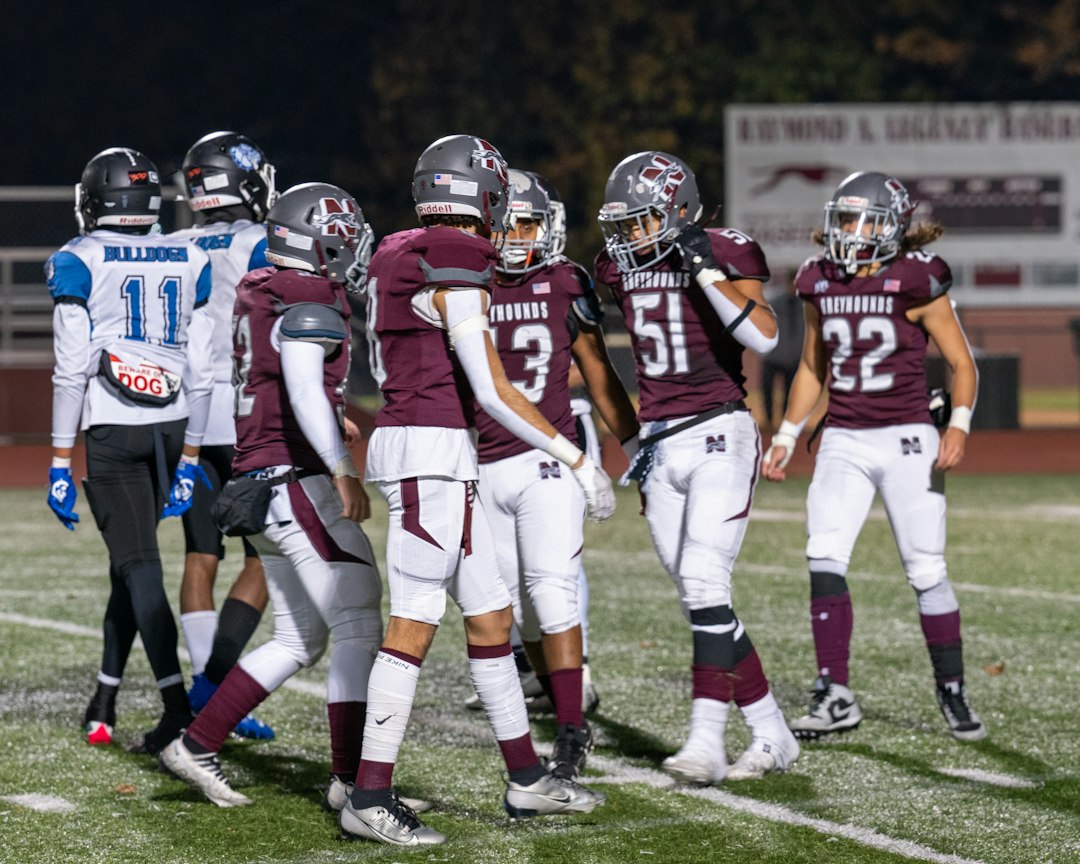




Louisiana high school football doesn't ask for your attention politely. It takes it. And every September, when the Top 25 state rankings drop from SI High School Sports, the state exhales together — Friday night faithful, coaches scrolling their phones at 6 AM, boosters in the parking lot of the Piggly Wiggly — all of them checking the same list at the same time, measuring something that goes deeper than wins and losses.
Before the first whistle of the season, those rankings already carry the weight of a thousand small-town scoreboards. For the players who lined up on both sides of the ball, seeing a school move up or fall back isn't just bulletin-board material — it's a kind of time travel. You don't remember the exact date of every game, but you remember the week your team jumped three spots and suddenly every hallway conversation felt different. That is the part of Louisiana football that never makes the stat sheet.
The September 14, 2026 edition of Louisiana's Top 25 is out, and the names at the top of that list carry the full weight of what Louisiana football means. Top programs. Familiar names. Towns where the Friday night scoreboard is the most important scoreboard there is.
But here's the thing. If you ever played in this state — if you ever pulled on a helmet in a south Louisiana heat wave or ran through a tunnel with a thousand people screaming your school's name — you don't read this list the same way everyone else does.
You feel it differently.
What the Rankings Mean to Everyone Who Played
For anyone who ever put on pads in Louisiana, a rankings list isn't just a rankings list. It's a mirror.
You don't need anyone to explain why a number next to your school's name still gets your pulse up. You already know. That number was never really about the ranking. It was about where you stood in the eyes of your town, your classmates, your coaches, and the seniors who passed the program down to you. A jump of two spots could make a Monday practice feel lighter. A drop of four could make the entire week feel like walking uphill in the August humidity. That is the kind of geography only former players can map.


You scan the Top 25 and you do the math immediately, automatically, the same way you did back then. You find your school — or you look for where it would have landed. You remember the years your team was in the conversation. You remember the years it wasn't. You remember exactly which team on that list was the one standing between you and a deep playoff run, the one you circled on the schedule in August, the one your coaches put on the whiteboard in September and left there until November.
Every name on a state rankings list is a chapter in somebody's story.
The schools near the top are the ones that kept entire communities awake on Thursday nights and drove a thousand cars down the highway on Friday. The schools further down the list are the ones grinding for position, the ones whose coaches are watching film at midnight, the ones whose players are about to have the kind of season they'll still be talking about at their twenty-year reunion.
That's Louisiana football. It doesn't have a B-side. Every game matters. Every position on that list represents something real.
Remember When This Was Your List to Watch
Every former player knows this feeling: September comes around, and something in you re-sets to Friday.
It doesn't matter how many years it's been. It doesn't matter if your playing days ended after high school or went further. When fall arrives and the rankings start moving, some part of you is seventeen again, watching the practice film and trying to figure out if your team has what it takes.
Remember when the rankings felt personal? Not abstract. Personal. When a team moving up the Top 25 in your district meant something specific about what was coming for your squad — about whether your season was going to define you or disappear quietly?
The Louisiana high school football landscape in 2026 still carries that same electricity. The programs that are consistently at the top of these rankings earned that position the hard way, the same way they've always earned it in this state — through summer two-a-days in brutal heat, through building depth at positions that most states take for granted, through the kind of program culture that transfers from senior class to senior class like a living document.
Marcus T., 34, a former linebacker from Shreveport who played in Class 4A, checks the Louisiana rankings every September the same way he checks the weather. "It's automatic," he said. "I see those names and I'm back in the locker room before the Bossier game. That feeling doesn't go away. I don't want it to."
For every Marcus checking the list on his phone before dawn, there is a teammate who still texts him the exact wording of the ranking change before the coffee is done. That group chat never fully goes quiet once September starts. Somebody screenshots the list. Somebody circles the district opponent now ranked two spots above you. Somebody says the same thing they used to say in the locker room: "Good. Let them get comfortable." It is not nostalgia as a passive ache; it is nostalgia with a pulse.
It doesn't go away for anyone. That's not a Louisiana thing — that's a football thing. But Louisiana puts a particular charge on it.
The Programs That Own September (And What That Actually Means)
The teams near the top of the September 14 rankings didn't get there by accident. They got there because they built something that outlasts any single player or coach.
That's the part that doesn't always make it into the coverage. The scoreboard tells you who won. The rankings tell you who's been winning. But neither one tells you what it cost — the six-thirty morning lifts in July, the film sessions after school when everyone else went home, the senior leadership that chose accountability when no one was watching.
If you played for a program that consistently shows up in these lists, you already know what that infrastructure feels like from the inside. The expectations don't feel like pressure because they've become culture. Losing isn't acceptable, not because someone told you it wasn't, but because the players before you built something you genuinely don't want to be the class that breaks.
That's what the top of a state rankings list actually represents. Not just talent — though Louisiana has never had a shortage of that. Infrastructure. Tradition. The invisible architecture of a football program that keeps rebuilding itself year after year.
If you were part of one of those programs, you also know that the real work didn't happen under the lights. It happened in the unglamorous hours — Sunday walkthroughs, Tuesday film sessions that ran long, Thursday nights with the whole team lying on the field doing wind sprints after a bad practice. That is the engine behind every name near the top of the September rankings. When a program is a fixture, it is not because one class got lucky. It is because a hundred small decisions were made right before you ever put your jersey on.
The programs that are new to the Top 25 conversation this season tell a different story — one that's arguably more exciting to watch. Those are the teams in the middle of building something. Those are the coaches who are two or three years into changing a program's identity, and September is when you first start to see whether it's working.
In our experience covering high school sports through the lens of former players, that mid-build moment — when a program first cracks the Top 25 or climbs into the top ten for the first time in years — is the one that produces the most intense alumni reaction. Because those players lived through the lean years. They know what the climb costs.
What September Rankings Don't Capture
Here's what the list doesn't tell you.
It doesn't tell you about the player who transferred in during the offseason and is about to have the breakout game that changes his trajectory. It doesn't tell you about the sophomore quarterback who looks ordinary in warmups and extraordinary when the moment gets big. It doesn't tell you about the team whose record looks mediocre but whose schedule has been punishing — the team that is, right now, in the third week of September, quietly becoming the most dangerous squad in their bracket.
Rankings are a photograph. Football is a film.
That distinction matters more in Louisiana than almost anywhere else. The September rankings cannot see the team that finally clicks after a closed-door meeting in the field house. They cannot measure the impact of a senior who stopped a fight in the huddle before it started. They cannot account for a running back who spent the whole summer working a job in the morning and lifting in the afternoon, then shows up in October twenty pounds stronger and two tenths faster. Those are the invisible engines of a season.
And every former player knows that the team ranked second or fifth or eighth in September has beaten ranked teams before. Has ended seasons. Has sent people home in November who had no business going home that early.
The Louisiana Top 25 on September 14 is a starting point, not a verdict. The best part of the season — the part where things get clarified, where pretenders get separated from the real thing, where Friday nights in October start to feel like something different — is still ahead.
That's the part worth watching. That's the part you remember.
The Friday Night Feeling That Never Actually Left
There's a specific thing that happens on Friday nights in Louisiana that doesn't happen the same way anywhere else in the country. The combination of weather, crowd, tradition, and stakes produces something that people who grew up inside it can't fully describe to people who didn't.
The smell of the grass after the field crew watered it in the afternoon heat. The way the stadium lights make everything look slightly more real than real life. The sound of cleats on the concrete tunnel before you run out. The moment right before kickoff when the crowd reaches a volume that you feel in your chest rather than hear with your ears.
If you played in Louisiana, you're nodding right now. Not metaphorically. Actually nodding.
There is another layer too: the feeling of walking into a store on Saturday morning in your town and having a stranger nod at you because they saw your number on Friday night. That quiet recognition is part of the same fabric as the rankings. The state list may be the loudest signal, but the small moments — the nod, the "good game," the old-timer at the gas station who says he remembered your dad's playing days — are the ones that really stitch the thing together.
Those moments don't go away. They just migrate. They become the standard against which everything else is measured, whether you know it or not. They're the reason former players still check the rankings in September. The reason you still know your old school's score by Sunday morning without looking for it. The reason this article, which is technically about a rankings list, is actually about something else entirely.
It's about the fact that you were part of this. And that part of it is still part of you.
Your Jersey Is Still Out There Waiting
Design yours in minutes and see your name and number exactly the way you remember it — the school, the colors, the number you wore every Friday night.
Frequently Asked Questions
Where can I find the full Louisiana high school football Top 25 rankings for September 14, 2026?
The full Top 25 rankings are published by SI High School Sports and can be found at the official SI Louisiana rankings page. Rankings are updated weekly throughout the season as results come in.
How are the Louisiana high school football state rankings determined?
Louisiana's state football rankings take into account win-loss records, strength of schedule, margin of victory in competitive games, and where each program sits relative to their classification (the LHSAA runs multiple divisions across classifications from 1A through 5A). Rankings reflect performance across the season to date, which means a team's position in September is a starting point — results in October and November are what determine playoff seeding and state championship contention.
What classifications are represented in the Louisiana Top 25?
The Top 25 typically pulls from across all LHSAA classifications — 1A through 5A — and reflects the strongest programs in the state regardless of school size. This means a dominant small-school program from a rural parish can appear alongside large-school powerhouses from the New Orleans metro or the Shreveport area. The rankings are a true cross-classification snapshot of who is playing the best football in Louisiana right now.
When do Louisiana high school football playoff brackets get determined?
LHSAA playoff brackets are typically set in late October or early November, following the completion of district play. Teams earn playoff berths through district records, and seeding is often influenced by regular-season performance against ranked opponents. The state championship games are traditionally held in the Caesars Superdome in New Orleans — which, if you played in Louisiana and made it that far, is the kind of stage that stays with you for the rest of your life.
See also: what playing under the Friday night lights actually felt like | why high school sports still matter so deeply to adults
See also: most football-crazy states in America
Here is the part nobody puts on the list. When you get a few years away from the game, you realize that the Friday night self you remember is never as far away as it seems. It is in the way you still fold your arms when you watch fourth-and-short. It is in the way you stand a little taller when someone asks what number you wore. It is in the way you still check the Louisiana rankings on a random Sunday, not because you need to know who won, but because you need to know that the world where you were an athlete is still alive.
A commemorative jersey does not replace the memory; it gives it a place to live. Your name across the back, your number on the front, your school colors exactly as you remember them. You do not need to wait for a reunion or a state championship anniversary. You can build it yourself in a few minutes with the same pride you felt walking into that stadium on a Friday night.