





There's a moment, somewhere in the middle of August, when you're flipping through channels — or more likely scrolling past someone's Instagram story — and you land on it.
Williamsport, Pennsylvania. A kid, maybe twelve years old, standing on a mound under stadium lights that seem way too bright for someone who probably still has a bedtime. The crowd is enormous. The cameras are real. And the kid is shaking — not from nerves alone, but from something bigger than nerves. From the specific weight of a moment that will never come again.
And then it happens. Little league world series nostalgia arrives, completely uninvited, like a smell from a house you used to live in. You weren't expecting it. You weren't trying to feel anything. But suddenly you're twelve years old again, and the dirt is real, and the jersey is too big, and someone in the bleachers is your dad.
That's what the Little League World Series does to adults who played. Every single August, without fail.
There's a reason that wave shows up before you can name it. Something more than television is at work. It's a sensory postcard from the last time your whole identity could fit across the shoulders of a mesh jersey. You may not think about your old number for eleven months out of the year, but Williamsport has a way of putting it right back in your chest, like an old friend who still remembers your nickname.
The Kid on the Mound Is You, Thirty Years Ago
The Little League World Series has been held in Williamsport since 1947. Twenty teams: ten U.S. regional champions and ten international champions. Twelve days of bracket play. A championship game that drew roughly 3.25 million viewers on ESPN in 2018 — per broadcast ratings, more than any regular-season MLB game that year except the All-Star Game. If you think about it for a moment, that's remarkable. These are twelve-year-olds. They haven't done anything yet. They have no professional contracts, no highlight reels, no agents. They're kids in matching polyester who still argue about which flavor of Gatorade is better. And every one of those teams had to win its way there — through state and regional brackets where a single loss ends the summer. For a storied program like Portsmouth's, the road back to that stage can take years.


Think about the last time you drove past an empty ballfield in late August. The bases are still out, the grass is a little too long, and the scoreboard is blank. For a lot of former players, that scene produces the same pang as Williamsport: the realization that the uniform wasn't just fabric. It was a membership card. When kids run out to those LLWS base paths, they're doing what we did before adulthood taught us to be self-conscious about caring.
And yet the ratings are real. The tears in the dugout are real. The parents in the stands, clutching programs and holding their breath. All of it is real.
What the LLWS has always understood, even before it had television deals and ESPN production trucks, is that youth sports are not a minor-league version of adult sports. They are their own thing entirely. The stakes at twelve are not smaller than the stakes at thirty. They are different stakes, felt more purely, without the protective layer of adult perspective that comes later.
In my experience as a former player, the adults who feel the most watching Williamsport are the ones who played at exactly that level — competitive enough to be proud of it, young enough that the memory has been preserved in amber. Not the pros. Not the kids who played casually. The ones who wore a real uniform, who had a number, who felt what it meant to represent something.
That's a very specific population. And every August, the LLWS finds them all.
What Williamsport Captures That Adult Sports Have Lost
There is something on the field at the Little League World Series that you don't see at a major league game, or a college game, or even a high school championship. Something that's harder to name than it is to recognize the moment you see it.
Call it unmediated emotion.
A major league player who hits a walk-off home run has done it before. He has a ritual for celebration. He knows where the camera is. He's been coached on what to say to the reporter afterward. His joy is real, but it has been processed through ten thousand repetitions of professional conditioning.
A twelve-year-old from Tennessee who hits a walk-off double in front of a packed stadium in Williamsport has never had this happen before. He has never had anything like this happen before. He doesn't know where the camera is. He doesn't have a ritual. He has only the feeling, full and unedited, written all over his face in a way that no adult athlete can fake.
That's what you're watching when you watch the LLWS and feel something move in you. You're watching pure feeling. You're watching what it felt like before you learned to manage it.
That rawness is exactly why some adults tear up watching a twelve-year-old pitch. It's not that the moment is bigger than a professional game. It's that the kid doesn't yet know how to hide how much it means. For a former athlete, that's like finding an old photo of yourself mid-play — not posed, not filtered, just fully in it.
The Uniform Remembers Everything
Ask any adult who played youth baseball, softball, soccer, football (any organized team sport with a uniform) and they will tell you the same thing about the jersey.
It mattered more than it should have.
There was something about having your name on the back, or your number on the front, that crossed a line between playing and belonging. Before the jersey, you were a kid who liked the sport. After the jersey, you were on the team. The distinction was enormous even if you couldn't have articulated it at the time.
Maria C., 41, played three seasons of youth softball in central Texas before her family moved. She told us she can still remember the specific kelly green of her team's jerseys — not the shade generically, but the exact way it looked under the Friday night lights at the complex near her school. "I don't remember my batting average," she said. "I remember the number seven, and I remember exactly how the jersey smelled after a double-header. Like sunscreen and red clay. I'd probably recognize that smell anywhere."
That's not sentiment. That's identity. The uniform was more than clothing. It was the first time many of us had a number that was ours, a name in block letters that declared we were part of something.
Vanderbilt coach Tim Corbin, who has spent more than a few Augusts watching Williamsport, put it plainly: there are no contracts at the Little League World Series, no endorsements, no scouts in the stands. So the kids play for the name on the front of the jersey — the team — and not the name on the back. That's the inversion most of us lost somewhere along the way. At twelve, the front still matters more than the back, and you can feel it from the bleachers.
The kids at Williamsport understand this without knowing they understand it. You can see it in how they wear those jerseys. They're not just wearing a shirt.
James D., 38, who wore number 22 for four seasons of youth baseball in suburban Ohio, said something similar. "I still have a pair of socks from my last travel-ball season. My uniform is long gone, but when I see that navy and red combination anywhere, I pause for a second. It's not just a color scheme. It's the whole feeling of being known as a ballplayer."
August and the Annual Return to Being Twelve
Every sport has its season. But the Little League World Series has something more specific than a season. It has a feeling that belongs to a particular week in August, when summer is starting to show its age and school is a threat on the horizon, and something in the air still smells like cut grass and possibility.
Adults who played as kids recognize that feeling immediately. It rises in the body, well before the mind catches up. The LLWS broadcasts in August because that's when the tournament happens, but it also broadcasts at exactly the right emotional moment: the last weekend of real summer, when nostalgia is already primed and waiting.
Here is what typically happens to an adult watching Williamsport for the first time in a given year:
- First few minutes: Mild interest, mild distraction. You're half-watching.
- The first close play, or the first visible emotion on a kid's face: Something shifts. You lean in.
- By the late innings: You're fully there. You've stopped scrolling. You might be explaining to whoever is next to you that you "used to play."
The LLWS is engineered, almost accidentally, to produce this exact sequence. It doesn't try to. It just does.
Here is the part the broadcasts never quite say out loud, and the part that lands hardest if you're old enough to know it: for almost every kid on that field, this is the end of something. Not the end of baseball — plenty of them will keep playing for years. The end of this. The version where the field is the whole world, where the uniform is the whole identity, where a Sunday in August with your parents in the stands is the biggest stage you will ever stand on, and you don't yet know it's the biggest.
Twelve is the last age at which Little League is the ceiling. After Williamsport come the bigger fields, the longer seasons, the travel teams, the quiet arithmetic of who keeps getting better and who stops. Some of those kids are playing the final Little League game of their lives on national television and have no idea. They'll find out the way all of us did — later, in some ordinary moment, when they realize the thing they were part of doesn't exist anymore.
That's the bittersweet weight of watching it, and the reason it sinks into adults deeper than it ever could into kids. A twelve-year-old on that mound is inside the moment. You're outside it, looking back — you already know how the story ends for most of them. The uniform goes in a box. The number fades out of daily memory. And then one August, flipping channels, they'll be the ones feeling this, watching some other kid stand exactly where they once stood.
Williamsport is a goodbye that nobody in the frame knows is happening. The kids are busy trying to win. You're the only one who can already see the ending.
The Things You Forgot You Remembered
Here is a partial list of what the Little League World Series will make you remember, usually without warning:
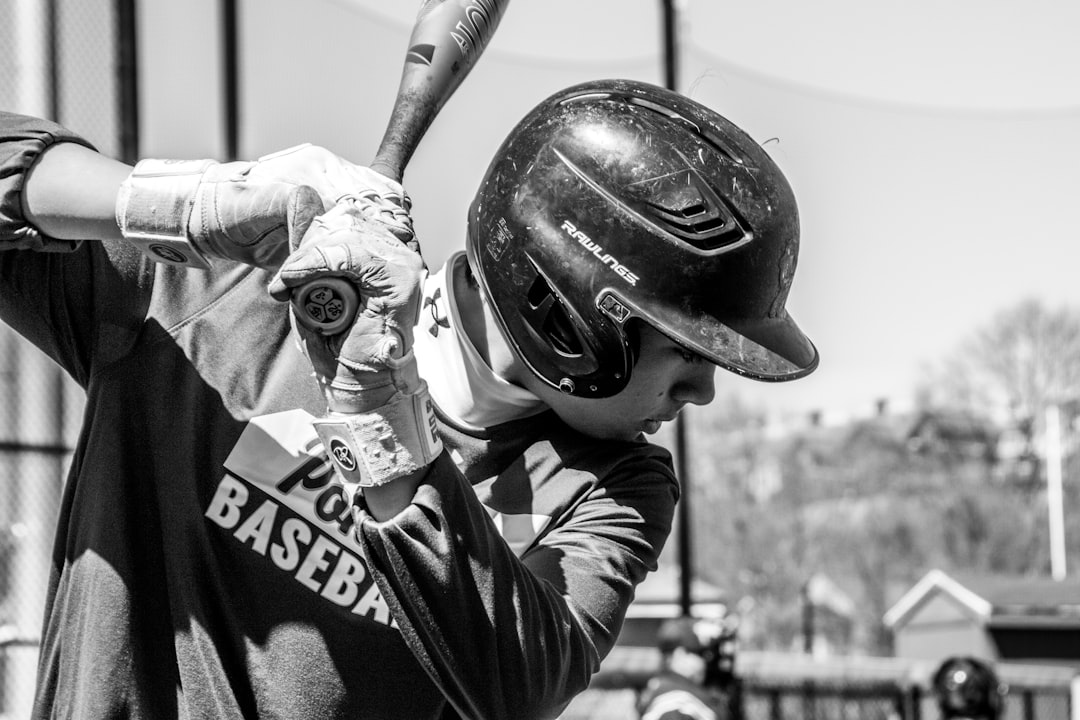
- The specific weight of the batting helmet: always too big, always sliding down over your eyes at exactly the wrong moment.
- The chalk lines on the batter's box and how they smelled like nothing but somehow smelled like everything about the game.
- The particular sound of a metal bat connecting with a fastball, which is not the same sound as wood and never will be.
- Your coach's voice — not what they said, specifically, but the register of it. Whether it was the kind of voice that made you feel capable or the kind that made you feel small.
- The way your parents looked in the bleachers, always slightly out of context there, as if you'd never expected them to exist in this specific world.
- The scoreboard, and whether you could read it without squinting, and what it felt like when your team's number was bigger.
- The specific combination of exhaustion and satisfaction after a doubleheader in July heat.
None of these are things you think about during the rest of the year. The LLWS retrieves them from wherever memories go when they're not being used.
One more thing Williamsport tends to resurface: the small rituals. The same tap of the cleats, the same adjustment of the batting gloves, the way you stepped over the chalk line rather than on it. Those tiny routines were how we made a big, uncontrollable moment feel manageable. Kids in Williamsport still do them, and if you watch closely, you'll recognize a few of your own.
Williamsport as a Mirror
What makes the Little League World Series different from watching professional sports retrospectives or highlight reels is that Williamsport is happening now, with children who are the same age you were when your own memory was being formed.
There's a specific psychological dynamic in watching twelve-year-olds perform at a high level when you are forty-something. You are not watching someone better than you. You are watching someone who is you, in the version of you that existed before the choices and the years and the drift. There is no professional gap to hide behind. These are kids. You were a kid. The distance between the you watching from a couch and the kid standing on that mound is entirely the passage of time, which is maybe the most disorienting distance there is.
The same disorientation shows up when it's your own kid on the field — watching your own kid play and seeing yourself at their age folds then and now into a single bleacher seat.
It's a strange thing to cheer for a kid and grieve a little for yourself at the same time. Watching your kids start playing does that — the old memories surface whether you invite them or not, and so does the pull to relive your own game through them. Supporting a kid's game without reliving your own is a skill most former athletes have to learn on the fly, and some never quite do.
The research from the American Psychological Association on nostalgia confirms what anyone who watches the LLWS already feels: nostalgia functions as a mood regulator, reconnecting people to a sense of belonging and meaning that everyday adult life tends to erode. The LLWS is nostalgia fuel delivered in real-time. It's not a memory — it's a live event that looks exactly like a memory.
That's the trick of it. That's why it works.
For many former athletes, that's exactly the feeling that leads them to pull an old team photo out of a box later that night. They look at the number, the school colors, the way their younger self stood with a mix of pride and awkwardness. The details are still there, even if the jersey isn't. Designing a custom commemorative jersey through a self-service wizard doesn't make it official, and it doesn't need to. It lets you gather those details (your name, your number, your school colors) into something you can hang on a wall or wear to a reunion. It's a personal tribute to the years that helped make you who you are.
Your jersey is still out there waiting.
The number you wore. The name across the back. The team color that you'd probably recognize in a crowd thirty years later.
Design yours in minutes and see your name and number exactly the way you remember it.
Frequently Asked Questions
Where is the Little League World Series held, and has it always been in Williamsport?
The Little League World Series is held in South Williamsport, Pennsylvania, at Howard J. Lamade Stadium — which is actually across the river from Williamsport proper. The tournament has been held in the Williamsport area continuously since 1947, two years after Little League Baseball was founded in 1939. The stadium has expanded significantly over the decades as the event grew from a small regional competition to an internationally broadcast tournament drawing teams from across the United States and dozens of countries.
Why do so many adults feel emotional watching the Little League World Series even if they haven't played in decades?
The emotional response is genuine and documented. Nostalgia research consistently shows that reconnecting with memories of belonging — particularly from adolescence — produces a measurable positive emotional response. The LLWS triggers this because it broadcasts, in real-time, an experience that is visually and emotionally identical to the one many adults lived at the same age. The uniforms, the field dimensions, the age of the players — it's all the same. The distance is only time, and time collapses when you're watching.
Does the Little League World Series include international teams?
Yes, and this is one of the elements that gives Williamsport its particular emotional texture. The tournament includes regional champions from across the United States as well as international representatives from regions including Latin America, Asia Pacific, Europe, Africa, and the Caribbean. The international presence means that the LLWS is genuinely a world series — not in the American-sports-marketing sense, but actually. Watching a team from Japan face a team from Georgia, both composed of twelve-year-olds who care desperately about winning, is one of the more quietly moving things broadcast television offers every August.
Is Little League only baseball, or does the organization run other sports?
Little League International oversees programs in baseball, softball, and Challenger Division (for players with physical or intellectual challenges), as well as divisions for different age ranges — Tee Ball, Minor League, Little League (the flagship division), and Intermediate and Junior divisions for older players. The brand name has become culturally synonymous with youth baseball broadly, but the organization is considerably larger than any single sport or age group. When most adults reference "little league" in conversation, they typically mean the 9–12 age range that plays under the core Little League rules and uses the standard Little League field dimensions.
Can I design a jersey from memory if I don't have photos of my old uniform?
Yes. The design wizard lets you choose from color palettes, number styles, and layout options, so you can work from what you remember. Start with what you know — the shade of red, the number, the way your name looked across the shoulders — and build from there. It's your memory made wearable, not a research project.
What if I played a sport other than baseball?
The same pull applies across team sports. Softball, soccer, football, hockey, lacrosse, cheer — the jersey represented membership. If the number and colors still mean something to you, that's enough. The process is built for former athletes from all kinds of locker rooms.
Is there a wrong way to use a commemorative jersey?
If it's yours — your name, your number, your school colors — then it's right. Some people hang it in a home office. Others wear it to a reunion, a game watch, or just around the house on an August afternoon when Williamsport comes back on. The point isn't to pretend. It's to remember.
See also: why high school sports still matter so deeply to adults | the science behind why those early playing days stay so vivid | how athletic identity shapes who you become long after the final out