





The news came down the way these things always do — a headline, a few paragraphs, and then a silence that the people who were actually there have to fill in themselves.
Jordan Lynch is the 2009 Mt. Carmel graduate and former Heisman Trophy finalist at Northern Illinois who has gone 89-12 across eight seasons as head coach with four consecutive Illinois state championships. He was suspended by the Illinois High School Association for two practices, Aug. 17 and Aug. 18, 2026, with the program placed on probation for the remainder of the 2026 season. The violation: Illinois football practice began Aug. 5, and IHSA rules bar full pads and full contact until the sixth day of practice. Mount Carmel practiced in full pads on Aug. 8, four days early. The school self-reported the violation, submitted a corrective action plan, and the IHSA accepted its self-imposed sanctions. The suspension never touched Lynch's status for the Aug. 22 opener against East St. Louis at Hancock Stadium. The dynasty is intact on the scoreboard. But right now, the sideline is a different place than it was last fall.
For anyone who ever pulled on a game jersey, taped their wrists under the Friday night lights, and ran out of a tunnel behind a coach they'd have done anything for — this moment lands somewhere specific. Not just in the sports news. In the chest.
When the Program Makes the News, Former Players Feel It Too
Here's something that doesn't get talked about enough when a high school program ends up in the headlines: it doesn't just affect the current players. It reaches back. It taps every former player on the shoulder and asks them to reckon with something they thought they'd already settled.
Mt. Carmel's football program isn't just a school team. It's a bloodline. A Chicago Catholic League institution with a history that stretches back decades, a program that has produced NFL talent, college contributors, and — more importantly — thousands of young men who walked through that program and carried something from it for the rest of their lives.

It's the same ache that travels through any program's hallway when the news turns hard, whether it's a coaching suspension like this one or an Illinois program announcing an early end to its 2026 season. The names change. The feeling doesn't.
When Jordan Lynch took over as head coach, he wasn't just running plays. He was the embodiment of what Mt. Carmel football is supposed to be — a former player himself, coming home to build something. Four state championships in four years isn't a coincidence. That's culture, discipline, and a coaching staff that outworks everyone around them.
And then a rules violation. Probation. A suspension.
If you played for a program like that — any program, anywhere — you know the specific feeling this produces. It's not grief, exactly. It's not anger. It's something closer to the sensation of hearing a familiar song played in a key you don't recognize. The bones of it are the same. But something has shifted.
What Every Former Player Knows About Program Discipline
There is a rule in high school athletics that every player learns eventually, usually the hard way: the program is always bigger than any one person, but every person inside the program shapes what it becomes.
You learned this the first time a teammate did something stupid during the offseason and you all ran extra sprints for it. You learned it the first time your coach sat a starter, a genuine difference-maker, because he missed a team meeting. You learned it the first time a rival program got hit with sanctions and half of your team celebrated until your coach shut the locker room down and made everyone think about glass houses.
Accountability is the architecture of every program worth being part of. Rules exist not because coaches enjoy enforcement, but because the alternative is a program that means nothing: one where commitment is optional and consequences are selective. And every former player knows the difference between standards that build and standards that break — some of us learned it the hard way, from a coach who hurt more than he helped, and spent years unlearning the wrong lesson.
Every former player knows this. Which is why when a program gets hit with sanctions, there's a part of you that understands the machinery, even when it stings.
The IHSA's role is to maintain the competitive integrity that makes high school athletics worth anything. It isn't in the business of destroying programs. When violations happen, and they happen at programs of every level in every state, the governing body has to act. That's not a betrayal of what sports are supposed to be. That's the system working the way it's supposed to work.
What's easy to miss in the shorthand, and easy for a former player to appreciate, is what this particular rule was actually protecting. This was a player-safety rule, not a recruiting scandal or a scheme to game an opponent. No full pads or full contact until the sixth day of practice, so bodies have time to get ready. Mount Carmel went in full pads four days early. And the response ran against the cartoon version of the story — the school self-reported, took responsibility, and the IHSA accepted its self-imposed sanctions rather than dropping a hammer. As IHSA Executive Director Craig Anderson said, "This policy exists to protect high school football athletes across Illinois while ensuring a competitive playing field for all of our teams. To their credit, the Mount Carmel coaches and administration recognized the violation, took responsibility, and acted quickly to address it."
That doesn't make it easier to watch. But understanding it helps.
Remember the Moment You First Understood What the Program Really Was
Every former player has a moment where the program stopped being a team and became something larger.
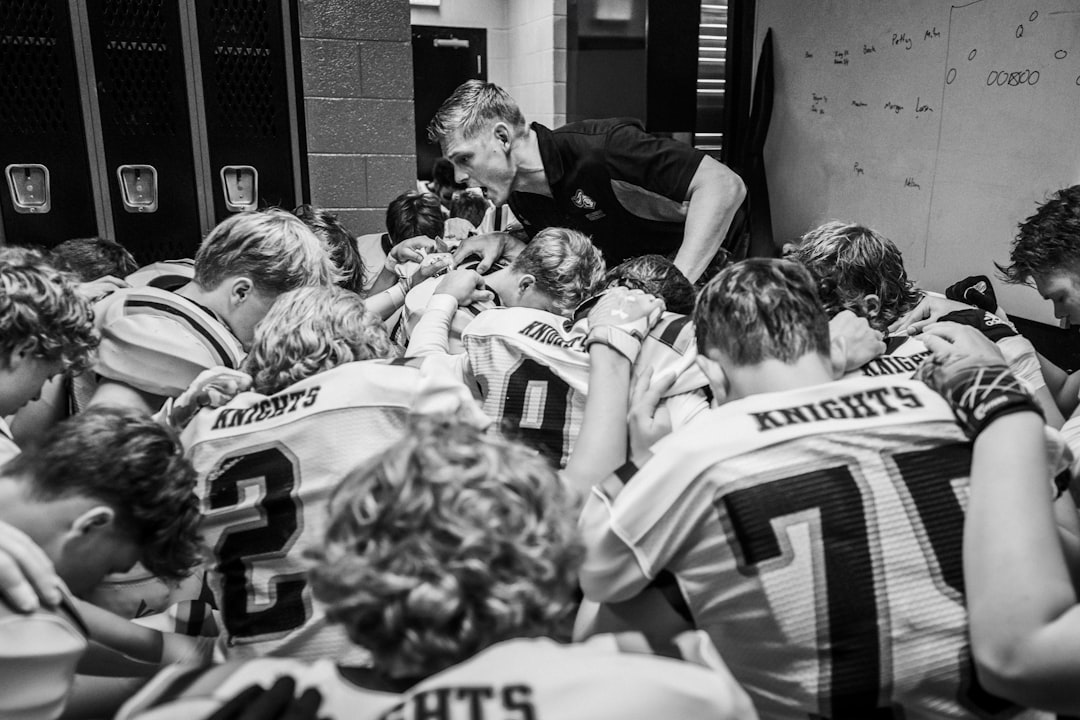
For some people, it was the first time they watched a senior class graduate and realized the jersey would be handed to someone else — that they were temporary custodians of something permanent. For others, it was standing in a locker room after a loss so hard it felt physical, and looking around at the faces of people who had poured everything they had into the same thing you had, and understanding that this — this exact feeling — was something money couldn't buy and time couldn't replicate.
For a lot of people, it was a moment with a coach.
Not a motivational speech moment. Not a championship celebration. The real moments are smaller. A hallway conversation. A correction delivered firmly enough that it landed but gently enough that it wasn't humiliating. The coach who pulled you aside not because they were angry but because they saw something in you worth the conversation.
That's what coaches like Jordan Lynch represent to the players who played for them. Not just a winning record. A relationship. A set of standards that, even when they were hard to meet, made you better.
It's the kind of relationship that matures long after the locker room clears: the coach you didn't appreciate until now, and why you should thank them.
Marcus D., 34, played defensive end at a Catholic high school program in the midwest and still has his game jersey framed above his home office desk. When he heard about a coaching suspension at a program like Mt. Carmel, his first thought wasn't about the standings. It was about the current players, the juniors who are suddenly doing their senior season preparations in a different environment than they expected. "When something shakes the program," he said, "the players who feel it most aren't the ones who already graduated. It's the ones in the middle of it right now. I feel for those kids."
Marcus is right. The players currently inside Mt. Carmel's program are navigating something that no game plan prepares you for. That takes a kind of resilience that, ultimately, is exactly what high school sports is supposed to build.
What Dynasties Reveal Under Pressure
Four consecutive Illinois state championships is not normal. In high school football, roster turnover is complete every four years, coaching staffs are paid fractions of what their college counterparts earn, and facilities and resources are always a battle. Sustaining that level of success across four seasons requires something beyond scheme and talent.
It requires a culture that reproduces itself.
That's the thing about genuinely great programs: the culture doesn't live in the head coach alone. It lives in the senior class, in the returning starters, in the JV players who watch how varsity players conduct themselves and internalize those standards years before they step on the field as upperclassmen. Great programs teach players how to be great players. They also teach players how to handle the moments that don't go the way you planned.
This is one of those moments.
How Mt. Carmel handles the next chapter will be as revealing as any of the four championship runs: how the players respond, how the staff navigates the transition, and how the program honors what it has built while addressing what needs to be addressed. Maybe more.
Because championships show what a program can do when everything goes right. Adversity shows what a program actually is.
Every former player who has been through a program-level challenge knows this truth. The teams that came through difficulty intact usually emerged stronger. Not because difficulty is good, in itself, but because the response to difficulty — the choice to hold the standards when holding them is hard — is the whole point.
The Legacy Question That Every Former Player Asks
When something like this happens to a program you were part of, or a program you respected from across the field, there's a question that eventually surfaces:
Does this change what we built?
The honest answer, the one that holds up over time: no. Not the real thing.
The championships that Mt. Carmel football has won over the past four years happened. Those players played those games. Those coaches prepared those teams. Those seniors gave four years of their lives to something and came away with rings. A probation period and a coaching suspension don't reach back through time and unmake those Friday nights.
What a moment like this does is test whether the program's identity is bigger than any one chapter of it. Whether the culture that produced four titles can hold together through a moment that didn't come with a trophy.
Programs that survive these moments, and most great ones do, tend to come out understanding themselves more clearly. The players who are part of that survival carry something with them that the championship cohorts didn't have to earn the same way.
There's a reason the teams you remember most aren't always the ones with the best record. Sometimes they're the ones that went through something together and didn't fold.
What the Mt. Carmel Story Means for Every Former Player's Own Legacy
If you played high school sports — not just football, any sport — you carry your program with you. Maybe it's a team photo somewhere in a box. Maybe it's a story you've told so many times it's become myth. Maybe it's a jersey.
The jersey matters in ways that are hard to explain to people who never wore one.
It's not just fabric. It's a timestamp. It says: I was part of this. This program, this team, this season — I was there, I played, I contributed something. Whatever happened before and whatever happens after, the years I wore this jersey were real.
When a program goes through a difficult moment, that jersey doesn't lose its meaning. It gains a new dimension. It becomes part of a longer story that includes peaks and valleys — the way any story worth telling does.
Mt. Carmel's current players will look back on this season as part of their story. Not the season everything was perfect. The season they played through something. The season they found out what the program actually meant when the headlines weren't celebrating them.
And someday, if they're lucky, they'll have a jersey to hold when they tell that story.
Your jersey is still out there waiting.
Design yours in minutes and see your name and number exactly the way you remember it.
Frequently Asked Questions
What happened with Jordan Lynch and Mt. Carmel football?
Jordan Lynch, the head football coach at Mt. Carmel High School in Chicago and a former Heisman Trophy finalist at Northern Illinois, was suspended by the Illinois High School Association for two practices on Aug. 17 and Aug. 18, 2026, after Mount Carmel practiced in full pads before IHSA rules allowed. The school self-reported the violation, and the football program was placed on probation for the remainder of the 2026 season. Lynch had led the Caravan to four consecutive Illinois state football championships before the suspension was announced.
Does the IHSA suspension affect Mt. Carmel's previous state championships?
No. The four consecutive state championships won under Jordan Lynch's coaching tenure are not affected by the current probation and suspension. Those seasons and titles stand on the record. The probation and suspension apply to the program's current and future status under IHSA rules, not retroactively to past seasons.
How do high school programs typically recover from IHSA probation?
High school programs placed on probation by their state athletic association typically serve the probationary period while demonstrating compliance with the rules that were violated. In most cases, programs that address the underlying issues and maintain clean records through probation emerge with their standing restored. The specific terms of Mt. Carmel's probation are governed by the IHSA's applicable bylaws and the specific nature of the violation.
What does a moment like this mean for current Mt. Carmel players?
For the players currently in the program, a situation like this is an unplanned test of the culture the coaching staff has built. How a team handles adversity off the field, with discipline, accountability, and continued commitment to their standards, is often as important to a player's development as anything that happens on it. Programs with strong cultures tend to hold together through moments like this.
Is this article affiliated with Mt. Carmel High School or the IHSA?
No. iPlayedFor is an independent sports content platform. This article is a reflection piece written from the perspective of former players and the broader high school sports community. We are not affiliated with Mt. Carmel High School, the IHSA, or any individual or organization mentioned in this article.
See also: what high school sports teach you about discipline and accountability | the emotional weight of losing your athletic standing at a critical moment | Friday night football culture and what it means to programs like Mt. Carmel