

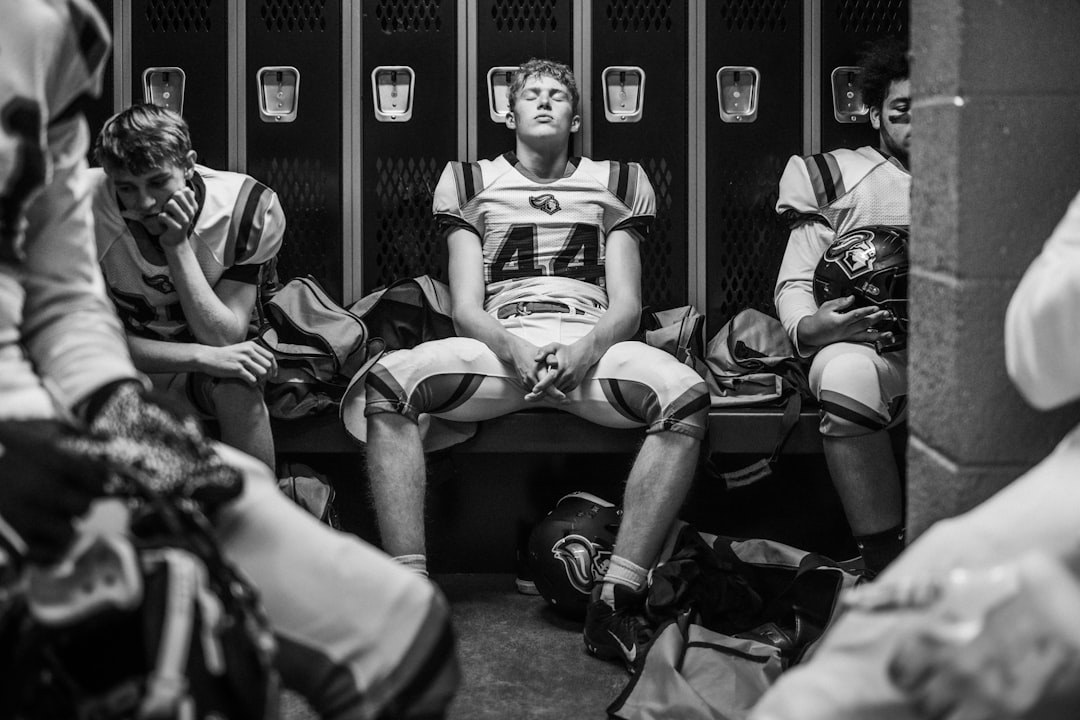




There's a specific moment every former athlete knows. You're watching a game (maybe it's your old sport, maybe it's your kid playing now) and something pulls at you. Not nostalgia exactly. Something more specific. You start thinking about your number. Your name on the back of a jersey. The way that felt.
And then the thought hits: Can I actually get that again?
If you've been searching for a single order custom sport jersey and wondering how the whole process works when you're not part of a team, you're not alone, and the answer is yes, you absolutely can. But the ordering process for one jersey is different enough from the team-order experience that it helps to understand exactly what you're walking into. This guide maps the whole thing out so you can go from "I want this" to "it's on its way" without second-guessing every step.
The Myth That Keeps Former Athletes From Ordering
Here's the thing most people assume without ever checking: that custom jerseys require a minimum order. Ten jerseys. Twenty-five jerseys. Some number that makes sense for a coach outfitting a full roster but makes zero sense for one person who played ball in high school or college and wants something that means something.
This assumption comes from a real place. For a long time, it was mostly true. The economics of custom screen printing and embroidery worked at scale — setup costs were divided across a large order, and producing a single jersey wasn't worth the setup time for most manufacturers.
That world has changed significantly. Sublimation printing, a process where dye is transferred directly into fabric under heat, changed the math entirely. The dye-sublimation process is now standard across industrial textile printing. There are no screens to set up, no minimum color runs, no reason the unit economics fall apart at a quantity of one. A manufacturer using sublimation can produce one jersey just as efficiently as they produce fifty. And that's exactly what the solo custom jersey market is built on today. If you want to see how sublimation stacks up against the older methods, we've compared sublimation, screen printing, and stitched lettering side by side.


So if you've been holding back because you assumed you'd need a team order: the barrier you were imagining isn't the one you'll actually face.
What "Single Order" Actually Means in the Custom Jersey World
Before you start the design process, it helps to understand what you're buying and what the terminology means. Custom jersey companies tend to use a few specific terms that shape your experience.
Cut-and-sew vs. sublimated: Cut-and-sew jerseys are constructed from separate fabric panels, different colors of fabric stitched together. This is how most authentic professional jerseys are made, and it creates a clean, polished look. The limitation: it's much harder to produce at a quantity of one because each colorway requires different fabric inventory. For a single order, sublimated jerseys are almost always the practical and available choice.
Sublimated jerseys are printed from edge to edge: the design, colors, numbers, and name are all part of the fabric itself, not applied on top of it. The result looks sharp, holds up through washing and wear, and can be produced in any design without minimum order requirements. This is what you're looking at when you order a single custom jersey through most modern platforms.
Stock templates vs. fully custom design: Some companies offer a library of pre-built jersey templates. You pick a style, add your name and number, and that's the extent of the customization. Other companies let you design from scratch: colors, patterns, trim, font style, name placement, number placement, everything. Know which type you're working with before you start, because the design experience is completely different. If you're planning to build yours from a blank slate, we've mapped out how to customize a sport jersey from scratch in a separate step-by-step guide.
"Custom" doesn't always mean unlimited: Even on platforms that call themselves custom, there are usually constraints. Font options may be limited to five or ten choices. Color palettes may be preset. Logos may be restricted to your own uploaded artwork or a set of licensed options. Understanding the actual scope of customization before you start saves you from building a design in your head that the platform can't produce.
How single-jersey pricing works: The one question solo buyers ask most (what does it actually cost) is the one most process guides skip. The honest answer is that single-jersey pricing follows a predictable shape. Per-unit cost is highest at a quantity of one, because there's no larger order to spread the fixed setup work across. As quantity rises, the price per jersey steps down: the same design costs less per piece at ten jerseys than it did at one, and less again at twenty-five. Some suppliers add a small-batch or setup fee to cover that fixed work; others fold it into the per-unit price so the number you see is the number you pay. Because that setup work varies from supplier to supplier, the only reliable way to know your actual price is to run a live quote on the platform. Some suppliers even position a single jersey as a sample: order one to judge the quality, then commit to a larger run for your reunion, alumni group, or gift order. If price is the deciding factor, our guide to affordable custom jerseys that don't sacrifice quality covers where the money actually goes.
The Step-by-Step Process for Ordering One Jersey
This is where most people get lost — not because the process is complicated, but because they've never done it outside the context of a team order where someone else handled the details. Here's exactly how a single custom jersey order works from start to finish.
Step 1: Decide what the jersey is for.
This sounds obvious, but it shapes every decision downstream. A jersey you're ordering to frame and hang on the wall has different requirements than one you're ordering to actually wear, whether that's for pickup games, a rec league, a sport-specific alumni event, or just because you want it. Display jerseys can prioritize aesthetics; wearable jerseys need to prioritize fabric weight, breathability, and fit. Know the end use before you start choosing options. If yours is for a reunion weekend, the choice gets a little more layered: our guide to an alumni reunion jersey walks through how to pick one that fits who you are now.
Step 2: Gather your specifics before you open the design tool.
Nothing stalls a custom jersey order more than realizing mid-design that you don't remember the exact font your high school used, or you're not sure whether your number was 22 or 42 at the level you want to represent. Before you start:
- Your name (exactly as you want it on the jersey — nickname, last name only, or full last name)
- Your number
- Your colors (if you're recreating a specific team's look, get the exact hex codes if you can)
- Any logo or crest you want to include — and whether you have that file in a usable format (PNG with transparent background, ideally)
- The sport the jersey is designed for (this affects cut, length, and available template styles)
Having these ready means your time in the design tool is spent designing, not hunting through old photos trying to remember details.
Step 3: Choose your platform and configure your jersey.
Once you're in the design tool, you'll typically move through a sequence: sport selection → base template → colors → name → number → logo placement → fit/size. Take each section seriously. The number you enter in the design preview is the number you'll receive — no one is going to call and confirm it.
One thing our team recommends paying specific attention to: font selection for the name and number. This is the detail that most affects whether the finished jersey looks like a real jersey or a novelty item. Block fonts and athletic-style fonts almost always look better than script fonts on actual jersey fabric. If the platform has a preview function, zoom in on the name and number before you finalize.
Step 4: Select your size with intention.
Custom jersey sizing can run differently than what you'd expect from your standard athletic gear. Most platforms include a size chart — use it. Measure across your chest and compare to the chart rather than defaulting to the size you wear in everything else. If the jersey is for display only, order your normal size. If you're going to wear it, consider whether you want an athletic fit or a looser game-day fit, and check whether the platform offers both.
Step 5: Review everything twice before you submit.
The most common source of frustration with custom jersey orders isn't production quality — it's ordering errors that can't be corrected after the fact. Most companies cannot modify a custom jersey order once it's in production. So before you hit submit:
- Read your name exactly as entered, character by character
- Confirm your number
- Check the front and back of the preview separately
- Verify the size
- Review the colors in the preview against what you actually want
Then review again. Seriously.
Step 6: Understand your production timeline.
Single custom jersey orders typically take longer than off-the-shelf gear. Production time ranges from five business days on the faster end to three weeks or more depending on the company's current volume and whether rush options are available. Shipping is on top of that. In my experience as a former player, ordering with at least three to four weeks of lead time before any date the jersey matters for is the safe approach. If there's a specific event coming up (a reunion game, an anniversary, a gift occasion), work backward from that date, not forward from your order date. For a birthday, the timing math matters even more, and we've laid out how to plan a custom jersey birthday gift so it arrives on the right day.
The Details That Separate a Jersey You Love From One You Tolerate
Marcus T., 34, played baseball through his freshman year of college before a shoulder injury ended his career. He ordered a custom jersey to commemorate his playing days and wore it to his ten-year reunion game. The one thing he said he wished he'd thought more carefully about: the fabric weight. "It looked exactly right," he said. "But I wore it to a summer event and it was way heavier than I expected. I should have asked about the fabric specs before I ordered." His jersey lives on the wall now — which honestly might have been the right choice all along.
The fabric weight detail Marcus ran into is one of a small number of specs that most buyers don't think to ask about, but that significantly affect the wearing experience:
- GSM (grams per square meter): Higher GSM = heavier, more substantial feel. Lower GSM = lighter, more breathable. GSM is a standard unit of textile measurement, so the number means the same thing across suppliers. Most athletic jerseys for wearability fall in the 130–160 GSM range. Display jerseys can go heavier without issue.
- Mesh panels: Some jerseys incorporate mesh panels in the sides or sleeves for breathability. If you're ordering for actual athletic use, this matters. For display, it's aesthetic.
- Collar and sleeve style: V-neck, crew neck, sleeveless, short-sleeve — these choices are sport-specific and platform-specific. Make sure the available options match the look you're going for.
If the platform you're ordering from doesn't list these specs, email their customer service and ask before you order. A company that produces quality jerseys will be able to answer these questions without hesitation. If fabric weight and fit are your sticking points, we go deeper in our guide to custom jersey fabric and fit for former athletes.
What to Expect After You Order
Once your order is submitted, here's what the typical single jersey order timeline looks like:
-
Order confirmation: You'll receive an email confirmation within minutes. Check it immediately and verify your name, number, and size are listed exactly as you entered them. This is your last real opportunity to catch an error before production begins.
-
Design approval (sometimes): Some companies send a digital proof for your approval before they begin production. If this is offered, take it seriously — this is the checkpoint. Others go directly into production without a proof step; in that case, your responsibility ended at the submission screen.
-
Production: Your jersey is printed and assembled. For sublimated jerseys, this process is fast — but it's typically done in batches, so "production time" includes time waiting for your order to reach the front of the queue.
-
Shipping notification: You'll receive a tracking number when your jersey ships. Delivery times vary by the shipping option you selected at checkout.
-
Inspection on arrival: When your jersey arrives, inspect it before you wash it or remove any tags. Check the name, number, colors, and size immediately. If anything is incorrect, contact customer service right away — the window for corrections is typically short.
Your jersey is still out there waiting.
Design yours in minutes and see your name and number exactly the way you remember it.
Frequently Asked Questions
Can I really order just one jersey, or is there a minimum?
It depends on the supplier. Platforms built for individual buyers usually have no minimum, but many established, team-oriented suppliers require five or ten pieces per design for a first order — then allow single-piece reorders once your design is on file. If you're ordering solo for the first time, choose a platform that's explicitly built for individual or small-group orders, where a quantity of one is standard.
How long does it take to get a single custom jersey?
Production plus shipping typically runs two to four weeks total for a standard order. Some platforms offer rush production for an additional fee, which can reduce production time to three to five business days — but shipping time is still on top of that. If you have a specific date the jersey needs to arrive by, work backward from that date and build in buffer time. Do not count on the minimum possible timeline.
What file format do I need for a logo or crest?
Most custom jersey platforms accept PNG files with a transparent background for uploaded logos. Vector files (AI, EPS, SVG) are even better if you have them, because they scale to any size without losing resolution. On the artwork itself, aim for a print-ready file of at least 300 DPI at the size the crest will actually appear on the jersey. Vector is the safer choice for exactly that reason: it carries no resolution ceiling, so the same file holds up whether the logo sits small on the chest or spans the back. JPEG files work in some cases but can cause quality issues if the background isn't clean. If you're trying to recreate a specific school or team logo and you don't have access to the original file, check whether the platform has licensed versions in their design library before assuming you need to provide your own.
What if my jersey arrives with an error?
Contact the company's customer service immediately — most have a correction or reorder policy for production errors (where the jersey doesn't match what you submitted). They will typically require photos of the error. The important distinction is between a production error (the company printed something different from what you submitted) and an ordering error (you submitted something incorrectly). Production errors are generally correctable at no cost. Ordering errors — a misspelled name, a wrong number — are much harder to resolve because the company produced exactly what you ordered. This is why reviewing every detail before submission matters.
Can I return a custom jersey if I change my mind?
Usually not, and it's worth knowing that before you order rather than after. Personalized and made-to-order goods are typically exempt from standard return policies, because a one-off jersey with your own name and number on it can't be resold or restocked. That is a different situation from a production error, which most companies correct at no cost. As a solo buyer you carry that risk on a single purchase, with no team order to spread it across, so handle three things before you commit: order a sample first if the platform allows single-piece orders, ask about the correction policy up front so you know exactly what happens if something is off, and confirm whether a proof step runs before production begins. Getting those answers in advance is the difference between a considered purchase and a gamble.
Does the sport I played affect what styles are available?
Yes. Most platforms organize their design tools by sport, and available templates, cuts, and features vary by sport. A baseball jersey has a different cut and collar style than a basketball jersey, and a football jersey has different panel configurations than a soccer jersey. Start by selecting your sport first — this filters your options to the styles that actually apply to your situation. If you played a sport that isn't prominently featured on a given platform, look for a "universal" or "custom athletics" option, or contact them to ask whether they can accommodate your specific sport.
See also: personalized sports gifts vs generic options | what your jersey size number actually means | custom football jersey sizing for adults | custom softball jerseys built around your name and number