

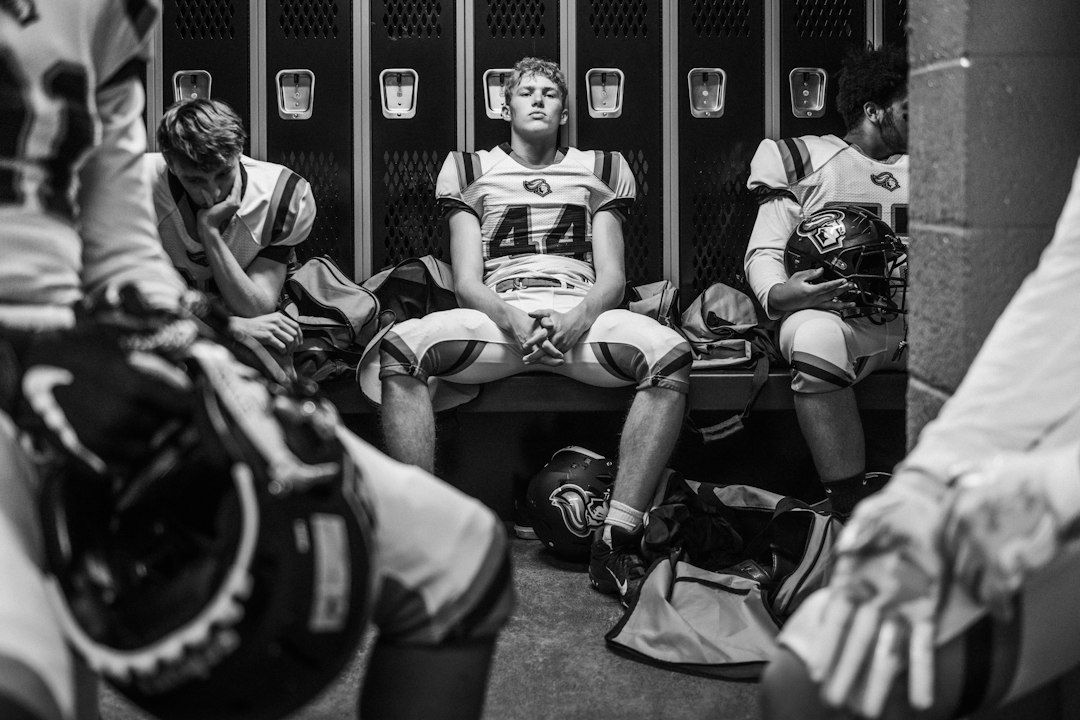




You still remember the number. The season, the team, the rink — probably the exact smell of that locker room. What nobody mentioned when you hung up your skates is that the hockey jersey for men you're about to order online is sized for the athlete you were at 17, not the person standing in front of the mirror this morning.
That's the specific gap every standard size chart leaves wide open. The vendor tables assume you're still on an active roster. They assume a 40-inch chest and the shoulder-to-torso ratio of a player who's been on the ice three times a week since September. They don't account for the decade-plus of physical development that happened after your last game — the chest that broadened, the shoulders that settled into something more substantial, the torso that filled out in ways no equipment manager ever planned for.
This guide addresses one problem: you're ordering a men's hockey jersey — maybe a custom recreation of your old number, maybe something inspired by a team you played for — and you want it to fit correctly, not pull across the chest or hang like a curtain at the waist. What follows is the actual size chart, the actual measurement method, and the specific conversion logic that bridges where you were to where you are now.
Why Standard Hockey Jersey Size Charts Fail Former Players
Pull up any size chart from a major jersey vendor. You'll find a table with chest measurements, a corresponding size running S through 4XL, and possibly a note about "athletic fit" versus "classic fit." That's the complete offering.
The problem isn't the table itself. The problem is the assumption embedded in every single row.
Active-roster sizing is engineered around players who are currently training — athletes still carrying the muscle distribution of someone in-season. The cuts assume a specific shoulder-to-chest ratio: broad at the shoulder, narrower through the torso. That's the shape a 20-year-old defenseman carries in October.


Former players often carry a different shape. The chest may have broadened more than the shoulders. The midsection changed. The shoulder width held steady while the chest measurement climbed two sizes. When that combination meets a standard chart, you get a size recommendation that fits one dimension and fails the other — and in a hockey sweater, that typically means the chest fits while the shoulders bind, or the shoulders fit while the body hangs loose like a hand-me-down.
The layering issue compounds everything. When you played, your jersey went over shoulder pads, a chest protector, and a base layer — 3 to 4 inches of additional circumference the original cut was built to accommodate. If you're ordering a custom men's hockey jersey to wear to a watch party, an alumni skate, or simply to frame on the wall, the layering equation is completely different. The fit that works over full gear doesn't translate to a t-shirt.
Here's the system that maps to both situations.
The Two-Measurement System: Current Body vs. Old Jersey
Before the chart, the measurements. This is the step most people skip, and it's precisely why most people order the wrong size.
Two numbers determine hockey jersey fit: chest circumference and shoulder width. Not weight. Not inseam. Not sleeve length. Those two measurements, taken correctly, are the entire equation.
Measuring Your Current Body
What you need: A flexible tape measure and either a mirror or a second person.
-
Chest: Wrap the tape around the fullest part of your chest — across the nipple line, arms hanging naturally at your sides. Don't flex. Don't adjust your posture. Record the number in inches.
-
Shoulder width: Measure from the bony point at the edge of one shoulder straight across your upper back to the same point on the other side. This is your flat shoulder span. Record it.
If those two measurements point to different sizes on a standard chart, your shoulder width takes priority. Hockey jersey cuts are architected from the shoulder seam outward. A jersey that binds at the shoulder will never be comfortable regardless of how the chest fits. A jersey with the correct shoulder span but a fuller body can be worn as-is or adjusted by a tailor if needed.
Measuring Against an Old Jersey
If you still have your game jersey — or even a practice sweater from that era — it can serve as a direct reference, but only with this one adjustment applied.
Lay the jersey flat on a hard surface. Measure:
- Chest: from armpit seam to armpit seam straight across. Double that number — you're measuring one side of a flat garment, so the full circumference is twice that figure.
- Shoulder span: from shoulder seam to shoulder seam straight across the back.
Now compare those numbers against your current body measurements. The gap between the old jersey's chest measurement and your current chest circumference tells you exactly how many sizes to move up — roughly 2 inches of chest circumference equals one size in most hockey jersey cuts.
If that old jersey was worn over full gear, subtract 3 to 4 inches from its chest measurement before comparing it to your current body. That adjustment accounts for the padding that was always inside it.
The Former-Player Size Chart (Current Body, No Pads)
This chart is built for a jersey worn over street clothes or a single base layer. It reflects the chest-to-shoulder proportions adult former players more commonly carry — not the in-season athlete proportions that standard tables assume.
| Size | Chest Circumference | Shoulder Width | Best For |
|---|---|---|---|
| M | 38–40 in | 17–17.5 in | Lean build, chest and shoulders stayed proportional since playing days |
| L | 40–42 in | 17.5–18 in | Moderate fill-out, development stayed roughly proportional |
| XL | 42–44 in | 18–18.5 in | Chest filled out more than shoulders — common former-player pattern |
| XXL | 44–46 in | 18.5–19 in | Broad chest and shoulders, athletic adult frame |
| XXXL | 46–49 in | 19–19.5 in | Full chest with broader midsection |
| 4XL | 49–52 in | 19.5–20+ in | Largest adult frames |
The shoulder conflict rule: If your chest puts you at XL but your shoulder span measures at 18.5 inches — which falls in the XXL range — order the XXL. The body of the jersey can always be adjusted by a tailor. The shoulder seam cannot be moved without compromising the entire silhouette of the garment.
Ordering to Wear Over Gear
Add one full size to whatever the chart above recommends. The traditional game-worn cut was sized 2 to 3 sizes beyond street wear to accommodate full protective equipment. If you're playing in an adult recreational league — the classic 10:30 PM Sunday ice time — your jersey needs that room back.
The Specific Shoulder Problem No Chart Addresses
Here's the detail that makes former-player fit genuinely different from general sizing confusion.
Between the ages of 18 and 30, male shoulder width increases. But chest circumference tends to increase at a faster rate — particularly for former athletes who've maintained some training, or who've simply accumulated the chest and midsection changes that come with adult life. The result is a body where the shoulder-to-chest ratio has shifted from what standard hockey jersey cuts expect.
Most cuts assume a roughly 1:2.3 ratio between shoulder width and chest circumference. A player with an 18-inch shoulder span, for example, is expected to carry a 41 to 42-inch chest. Many former players land at a 1:2.5 or 1:2.6 ratio — wider chest relative to shoulder span than the cut was designed for.
When you're in that group, sizing to your chest puts the shoulder seam too far down your arm, dragging the whole garment forward. Sizing to your shoulder leaves the chest pulling across the front with every movement.
The correct path is to size to shoulder width and treat the body of the jersey as the variable — adjusted either through a custom builder's separate torso input, or by a tailor after the fact.
According to USA Hockey's equipment standards documentation, protective equipment sizing for adult recreational players differs substantially from youth and junior standards — a distinction that carries directly into how jerseys fit over gear at different life stages.
The Persona: Mark T., 38, Former College Defenseman
Mark T. ordered a custom jersey inspired by his college sweater for his 20-year reunion — same colors, same number, font matched as closely as possible to the original. He measured his chest at 44 inches, found XL on the chart, and placed the order. The jersey arrived with the chest fitting correctly and the shoulder seams sitting two full inches down his arms, pulling the entire garment forward whenever he raised his hands.
The issue was his shoulder width: 19 inches flat, which is a XXL shoulder on a hockey cut. His chest had stayed closer to his college dimensions than his shoulders had. A second jersey ordered in XXL fit correctly off the rack. He kept the first one as a wall display.
That's not an unusual outcome. It's the specific error this chart is built to prevent.
Reading Tags on Licensed and Team-Inspired Jerseys
If you're buying something inspired by a team you played for — or a pro team jersey you want to wear to games — the options available from major retailers use different sizing conventions than custom jersey builders, and the differences are significant enough to matter.
Fanatics hockey jersey offerings — the most common retail format for licensed NHL and international team styles — run in standard US men's sizing but with a looser, more traditional cut than modern athletic fits. Their sizing tends to run approximately one size larger in the body than a "true-to-body" fit would suggest. If you measure at a 44-inch chest, a Fanatics L will likely fit closer to how an XL from a custom builder would.
For international team-inspired styles — sweaters in the tradition of Team Canada hockey jerseys, Team Canada Olympic hockey jerseys, Team Sweden hockey jerseys, and Team USA men's hockey jerseys — sizing conventions vary by manufacturer and collection year. Olympic-style cuts in particular have shifted toward slimmer, more contemporary silhouettes in recent years, meaning they run smaller in the torso than the traditional hockey cut you wore when you played.
The working rule for licensed team-style jerseys: Order based on your shoulder measurement, verify the return policy before confirming, and don't assume sizing carries across different team lines or manufacturers. A Colorado Avalanche hockey jersey and a USA Olympic-inspired hockey jersey from the same retailer may fit measurably differently even in the same labeled size.
Custom Hockey Jerseys: Where Former Players Get the Fit Right
The core advantage of ordering custom ice hockey jerseys — as opposed to licensed or team-inspired options — is that you're not constrained by a cut designed for someone else's body proportions. Custom builders typically accept chest, shoulder, and torso measurements as independent inputs, which means the shoulder-to-chest ratio problem that defeats standard sizing simply doesn't exist in the same way.
When ordering custom hockey jerseys, provide all three measurements: chest circumference, shoulder width, and torso length measured from the top of your shoulder to wherever you want the hem to fall. Most builders default to a torso length calibrated for the game-worn cut — which, again, was designed to cover pads. If you're wearing this jersey over street clothes, specify a shorter torso length. The difference is typically 2 to 3 inches, and it's the difference between a jersey that fits correctly and one that looks borrowed.
Custom men's hockey jerseys also let you match the specific numbers, nameplate font, and color combination of your actual team — a tribute to exactly what you wore, built to the body you have now. That's what makes custom the right choice for alumni orders, reunion gifts, and recreation league sweaters.
A Quick Measurement Reference Before You Order
Before you go find the tape measure, here's the condensed version of everything above:
Current body, no pads: - Chest at fullest point, arms relaxed at sides - Shoulder width from bony point to bony point across upper back - Compare chest to chart; shoulder wins any size conflict
Old jersey reference: - Flat chest measurement × 2 = circumference - Worn over pads: subtract 3–4 inches before comparing to current body
Ordering custom: - Provide chest, shoulder, and torso length - Specify street-wear length if you're not ordering a game jersey
Your jersey is still out there waiting.
Design yours in minutes and see your name and number exactly the way you remember it.
Frequently Asked Questions
What size hockey jersey should I order if my chest and shoulder measurements point to different sizes?
Order the larger of the two sizes — specifically whichever measurement places you higher on the chart. Shoulder seams on hockey jerseys cannot be repositioned without compromising the garment's entire structure. A jersey with the correct shoulder fit but a slightly fuller body can be worn as-is or adjusted by a tailor in the torso. A jersey with the correct chest measurement but a shoulder seam that sits too low will pull forward on every movement and cannot be corrected after the fact.
How much larger should I order if I'm wearing the jersey for adult recreational league play in full gear?
Order one full size beyond your street-wear measurement. The traditional game-worn cut assumed 3 to 4 inches of additional circumference from shoulder pads and chest protector. If you're playing in full equipment, that room needs to come back into the equation. If you're wearing it on the bench as a coach or in the stands as a spectator, your street-wear size is correct.
Do team-style or licensed hockey jerseys run the same as custom hockey jersey sizing?
No, and the gap is significant enough to cause ordering errors. Fanatics hockey jersey offerings generally run one size large in the body relative to custom builders — a 44-inch chest person may find that a Fanatics L fits similarly to a custom XL. International team-inspired cuts, particularly those styled after recent Olympic designs for teams like Team Canada, Team Sweden, and Team USA, have moved toward slimmer silhouettes and run smaller in the torso than the classic hockey cut most former players remember wearing. Order based on shoulder width, confirm the return policy, and don't carry size assumptions across different team lines.
I still have my old game jersey. Can I use it to figure out my current size?
Yes, with one essential adjustment. Lay it flat and measure the chest from seam to seam, then double that number to get the full circumference. If the jersey was worn over pads, subtract 3 to 4 inches from that figure before comparing it to your current chest measurement. The difference between the adjusted old jersey measurement and your current chest circumference tells you how many sizes to move up — roughly 2 inches of chest circumference equals one size in most hockey cuts.
See also: jersey size chart for numeric sizes like 44, 48, and 52 | getting back on the ice with adult recreational leagues | personalized sports gifts that actually make a former athlete feel seen