

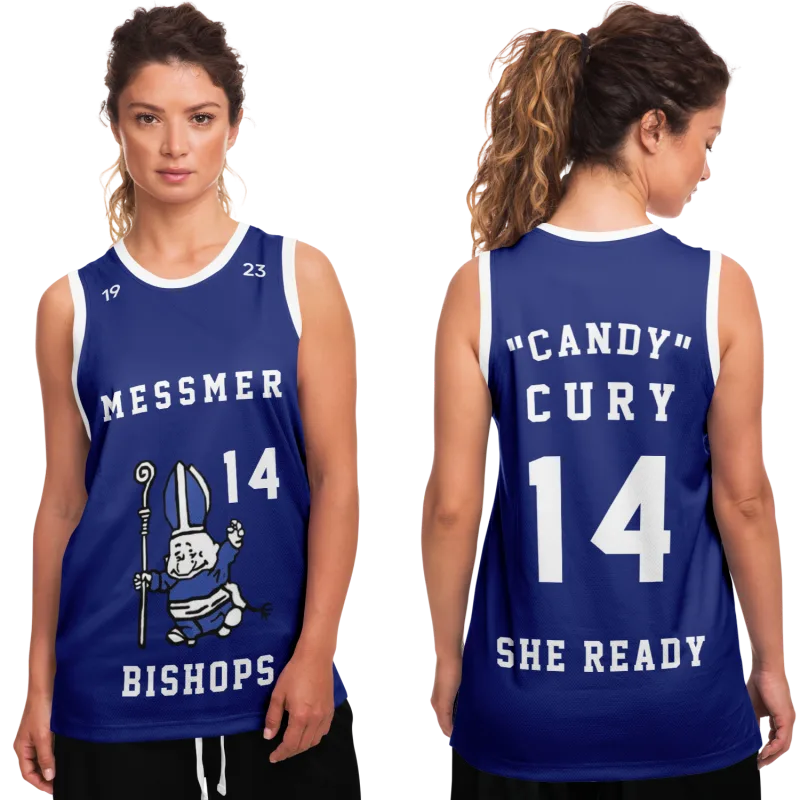
Hispanic Heritage Month sports culture is not built from trophies and highlight reels — it is built from the specific, unglamorous, irreplaceable moments that happened in community gyms, on cracked asphalt courts, and on baseball diamonds where the outfield fence was a chain-link afterthought held up by whatever posts the neighborhood could afford.
From September 15 through October 15 each year, the United States formally recognizes the contributions of Hispanic and Latino Americans to the nation's culture, history, and communities. In sports, those contributions run so deep and reach so far back that any honest accounting of American athletic culture has to begin with the people who built the foundations long before the television cameras arrived.
This is not a list of statistics. The numbers are real, the records are documented, but neither of those things explains what it felt like to sit in a folding metal chair in a municipal gymnasium and watch someone from your neighborhood, your block, your family's country of origin perform at a level that reorganized everything you thought was possible. That feeling (particular, electric, communal) is what this story is actually about.
The Athletes Who Carried More Than a Ball
Every athlete carries something onto the field: equipment, preparation, the specific pressure of competition. For many Latino athletes across American sports history, there was a fourth weight: an entire community's understanding of what was available to people like them.
Roberto Clemente understood this before anyone had language for it. The Puerto Rican outfielder who spent his career with the Pittsburgh Pirates was not simply one of the greatest right fielders in baseball history. He was a living argument: that a Black Latino man from Carolina, Puerto Rico could walk into any stadium in any American city and be the best player on the field. His 3,000th career hit came in the final game of the 1972 season. That number alone would have been enough. What followed — his death aboard a humanitarian supply flight to earthquake-devastated Nicaragua on New Year's Eve — transformed him into something that transcends athletic achievement entirely.

In communities across Puerto Rico and throughout the Latin diaspora in the United States, Clemente's number 21 is sacred, not merely retired.
That distinction is the one that matters most when we talk about what these athletes built. The statistics are verifiable. The records are in the books. But the meaning they generated — the specific way they shifted what a kid in East Los Angeles or the South Bronx or Humboldt Park believed was available to someone with their name, their face, their background — that is the thing no box score contains.
Baseball: The River That Runs in Both Directions
To understand how thoroughly Latino culture and American sport are intertwined, start with baseball, and start with the fact that the relationship flows both ways.
The Dominican Republic alone has produced more than 900 Major League players. A country of roughly 10 million people led the 2025 Opening Day tally: of the 954 major leaguers on those rosters, 265 (27.8 percent) were born outside the 50 U.S. states, and the Dominican Republic accounted for 100 of them, more than any other country or territory for the 31st consecutive year (the data series began in 1995). Venezuela, Puerto Rico, Cuba, Panama, Mexico: the baseball pipeline from Latin America into American professional sport is the river itself, not a tributary feeding a larger stream.
But the numbers, again, are only the surface of the thing. The real evidence was sensory: the smell of a freshly cut baseball diamond, the crack of a bat, the way a whole town stopped to listen to a game on the radio.
What the Dominican Summer League meant to families in San Pedro de Macorís was not access to American salaries. It was proof. Proof that a kid from a specific neighborhood, with a specific kind of talent, could build something the entire community would recognize as real achievement. When Juan Marichal stood on a major league mound and introduced the high-kick windup that made him simultaneously impossible to hit and impossible to forget, the people watching from the Dominican Republic did not see only a pitcher. They saw the village.
Marichal understood the weight of what he was carrying. He said more than once that every time he walked to the mound, he thought about what failure would mean to the people at home, and what success would mean. That internal accounting is not recorded in any statistical category. It was simply part of what those athletes brought onto the field with them, every start, every appearance, every inning.
Orlando Cepeda brought the same weight from Puerto Rico. Rod Carew carried it from Panama. And in each case, the communities those athletes came from did not passively receive the achievement. They claimed it. They organized around it. They used it as evidence in an ongoing argument about what their people were capable of when given the opportunity to compete.
Boxing, Soccer, and the Language of the Neighborhood
Not every community's relationship with Latino athletic achievement came through baseball.
In Mexican-American neighborhoods throughout California, Texas, and the broader Southwest, boxing was the sport that told the story of what was available to young men with discipline and heart and not much else. Those two qualities, discipline and heart, were not in short supply in communities that had every reason to develop them deeply.
Oscar De La Hoya grew up in East Los Angeles, the son of Cecilia and Joel De La Hoya, who came from a boxing family that understood the sport as both craft and culture. When Oscar won the gold medal at the 1992 Barcelona Olympics, he carried an American flag in one hand and Mexico in his mind. He later said directly that he wanted to honor both — the country that gave his family opportunity and the country his family came from. The reaction in East L.A. was immediate and physical. Car horns. People in the streets. The specific euphoria of watching someone from here do something on the largest stage in the world.
Soccer tells a parallel version of the same story, unfolding simultaneously in communities across the country. In neighborhoods where Latin American immigrants settled, fútbol was not primarily a spectator sport. It was a social institution. The local club was where fathers took sons on Saturday mornings, where generations overlapped on patches of public grass, where Spanish mixed with the sound of cleats on hard ground and something that felt unmistakably like home was constructed from scratch in a country that did not always feel that way.
The informal leagues became formal ones. The formal ones built infrastructure. That infrastructure now feeds American professional soccer with Latino talent at every level of the game, a supply chain built not by federation administrators but by families who simply kept showing up.
Viviana R., 44, grew up in Cicero, Illinois, a suburb just west of Chicago with deep Mexican-American roots. Her father played club soccer on weekends with men from Jalisco, Michoacán, and Guerrero — states she could locate on a map before she could find most U.S. states. When she was twelve, her father's team won the regional amateur championship. The trophy was a small plaque on a metal stand, nothing more. Her father kept it on the kitchen counter for the rest of his life. "It wasn't about the trophy," she told her own daughter years later. "It was about what it meant to win together. That we could do that here too."
The Women Who Are Finally Getting Their Full Due
For too long, the story of Latino athletic contribution to American sports culture was told almost exclusively through men's sports. The complete story is considerably larger than that.
Nancy Lopez changed the face of professional golf in a way that remains underappreciated by mainstream sports history. She joined the LPGA Tour in 1977 and in her rookie season won nine tournaments — including five in consecutive weeks, a record that has never been matched. She was 21 years old, the daughter of Domingo and Marina Lopez, raised in Roswell, New Mexico in a household where her father sacrificed his own game to fund hers. He gave up his golf club membership so she could have lessons. That transaction — the specific, quiet sacrifice of a parent investing in something larger than themselves — is the foundation beneath every one of those nine trophies.
What Lopez represented in communities where golf was seen as a sport for the wealthy and the white was not a subtle message. She played with elegance, power, and a warmth that made galleries follow her hole to hole across every round. She engaged with the people watching. She smiled in a way that was not performance but recognition — she knew what her presence argued, and she was comfortable making that argument publicly.
Lorena Ochoa continued that argument two decades later, becoming the world's number one ranked female golfer from 2007 through 2010 and demonstrating permanently that Lopez had not been an exception. She was a beginning.
In track and field, Ana Fidelia Quirot. In tennis, Gabriela Sabatini, who reached the 1988 U.S. Open final at 18 and won the 1990 U.S. Open at 20. In professional cycling, the Colombian climbers who turned the mountain stages of European grand tours into something that felt almost supernatural: Lucho Herrera ascending the Alpe d'Huez as crowds parted like water around a force of nature.
In every sport, in every era, the representation was present. The recognition was the thing that lagged behind.
What Community Sports Culture Actually Constructed
The athletes we name during Hispanic Heritage Month sports celebrations are the visible faces of something that operated at every level simultaneously — above ground and below it, on the field and in the parking lot afterward.
The Amateur Athletic Union boxing gyms in South Texas. The Little League programs in East Harlem that Puerto Rican community organizers built from scratch in the 1950s, securing fields and equipment through negotiation and persistence when neither was offered readily. The high school baseball programs in Southern California where coaches with surnames from Oaxaca and Sonora and the Dominican Republic taught a generation of players not only how to read a curveball but how to conduct themselves on and off a diamond.
The amateur soccer leagues that grew into the infrastructure that now produces professional players. The track programs that identified talent in kids who had never heard of a starting block and built them into athletes who competed at the national level.
This is the architecture beneath the achievement. Not one athlete. Not one moment. The accumulated weight of parents who drove their children to practice before school, of coaches who gave evenings they could not afford to spare, of communities that showed up to watch games no one was broadcasting because the act of showing up was itself a declaration. Those are the sports stories that never got told, the long road from the barrio to the big stage.
The detail that consistently stands out across these stories is this: Latino athletes who came up through these community structures almost universally credit not a single mentor but a network, an entire system of people who made the path possible. The coach, yes. But also the neighbor who provided transportation. The mother who worked the second job. The grandfather who taught the fundamentals in a language that wasn't English but contained everything essential.
That system is what Hispanic Heritage Month asks us to recognize alongside the individual names. The names are the visible part. The system is what made the names possible.
The Jersey as Evidence
There is one more dimension to this story that deserves direct attention, because it connects the historical to the personal in a way that nothing else quite does.
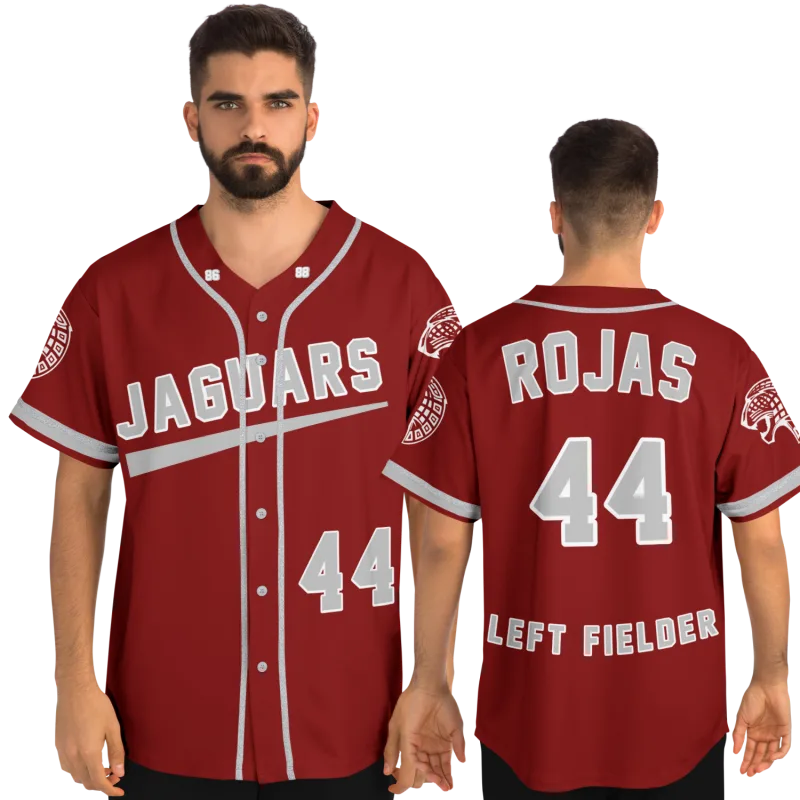
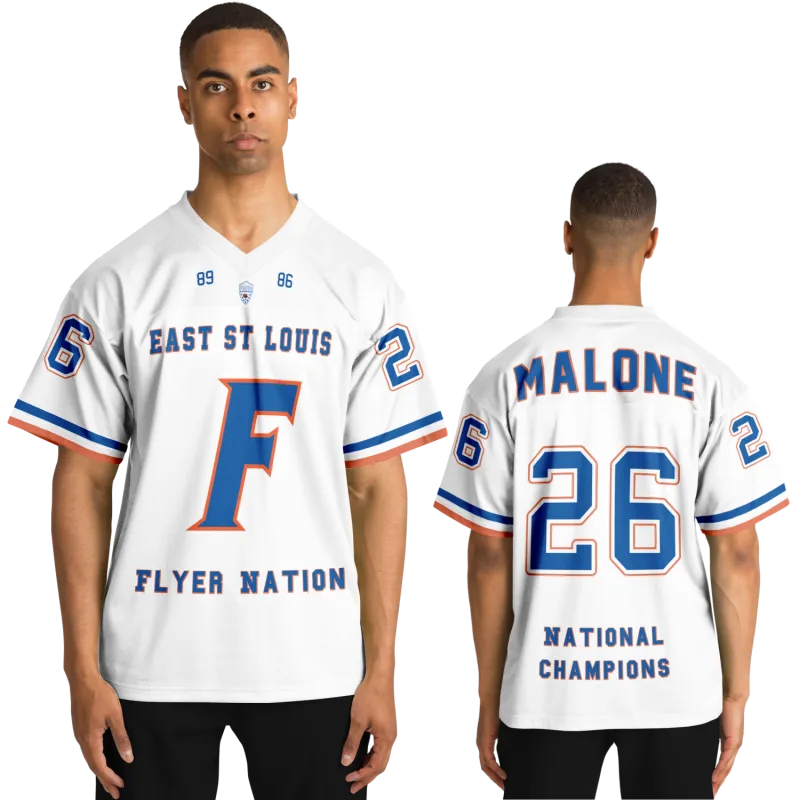
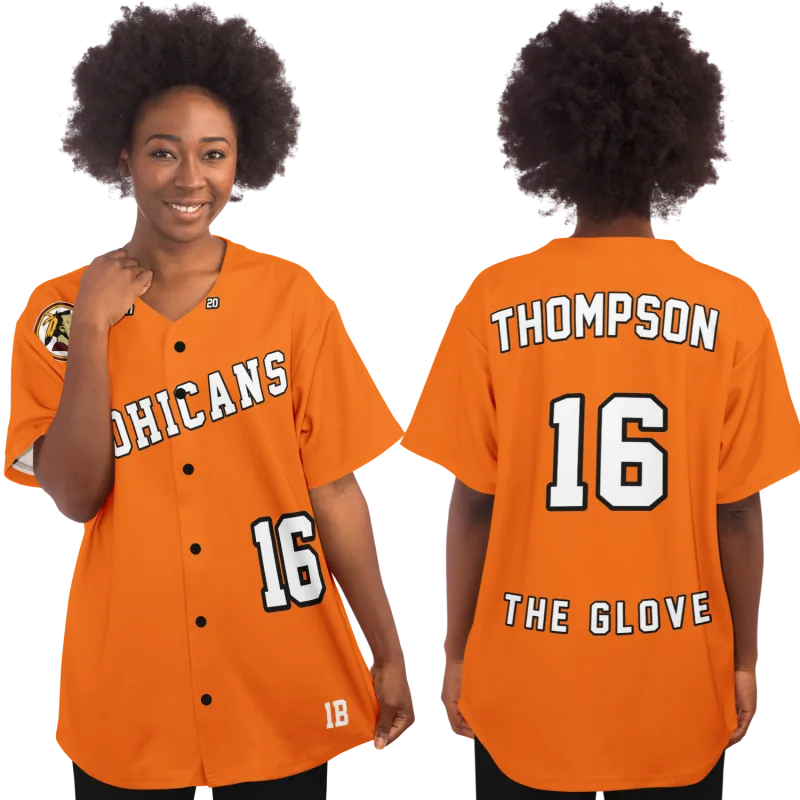
In communities where resources were limited, a jersey was not casual clothing. It was an identity marker. It said: I belong to this team, this neighborhood, this tradition, this ongoing argument about what we are capable of. When a community watched one of their own pull on a jersey that represented a school or a city or a country and perform at a level that could not be dismissed, the jersey became something more than fabric and stitching. It became evidence in that argument.
Roberto Clemente's 21. Oscar De La Hoya's USA across the chest at Barcelona. The number a grandfather wore in a municipal league in Guanajuato before emigrating and starting over in a new city, where he eventually coached the grandchildren of other immigrants on a public park field that the city maintained badly and the community maintained with everything else they had.
The athletes who built the culture of sport in Latino communities understood — implicitly, without requiring articulation — that what they were doing extended beyond their own careers. They were creating a visual record. A set of images that would persist in the memory of every person who watched them and shape what the next generation understood was available to someone who looked like them, came from where they came from, carried the same name into rooms where that name had not always been welcomed.
That is what a jersey carries. Not just a name and a number. The full weight of what it took to earn the right to wear it — and what it means to the people watching when you do. This month is a chance to honor the jerseys, the numbers, and the names that deserve to be remembered.
Your jersey is still out there waiting.
This Hispanic Heritage Month, give your name its visible record. Design yours in minutes and see your name and number exactly the way you remember it.
Frequently Asked Questions
When is Hispanic Heritage Month and why does it begin on September 15?
Hispanic Heritage Month runs from September 15 through October 15 each year. The September 15 start date marks the anniversary of independence for five Latin American nations: Costa Rica, El Salvador, Guatemala, Honduras, and Nicaragua. Mexico's independence day follows on September 16, and Chile's on September 18. The observance began as a one-week recognition under President Lyndon Johnson in 1968 and was expanded to a full month by President Ronald Reagan in 1988.
Which sport has the deepest connection to Latino community identity in the United States?
Baseball has the longest and most documented connection, particularly through the contributions of players from the Dominican Republic, Puerto Rico, Venezuela, Cuba, and Panama. On 2025 Opening Day rosters, players born outside the 50 U.S. states made up 27.8 percent of all active Major League rosters, more than a quarter. That said, boxing carries enormous cultural weight in Mexican-American communities throughout the Southwest, and soccer — at the amateur and community level especially — functions as a social institution in Latin American immigrant communities across the country. The honest answer is that the sport varies by community of origin and by generation, which is part of what makes the full picture so rich.
Were Latino athletes treated equally in American professional sports history?
No, and understanding that history is essential context for understanding the achievements. Many Latino players who came to the United States in the mid-twentieth century faced racial discrimination, language barriers, and treatment that would be recognized today as overtly hostile. Roberto Clemente, as a Black Latino man playing in the 1950s through early 1970s, faced discrimination on both racial and ethnic grounds — and was frequently misquoted and mocked in the American press for his accent. His dignity and consistency in the face of that treatment was understood immediately by the communities watching him, even when the mainstream sports press failed to recognize what they were witnessing.
How does the legacy of these athletes show up in youth sports today?
Primarily through the coaches. A large proportion of youth baseball, soccer, and boxing coaches in Latino communities throughout the United States are former players themselves, or the children and grandchildren of former players — people who received something from the community's athletic culture and chose to pass it forward. The amateur sports infrastructure in those communities was built deliberately, over generations, by people who understood that giving young athletes a structured place to develop was an act of community investment with compound returns. The kids competing in those programs today are the direct beneficiaries of athletes who played seventy years ago and of the communities that decided what those athletes represented was worth preserving and passing on.
See also: the athletic identity that forms in youth sports communities | lessons that only sport can teach | why high school sports still matter to the adults they shaped