

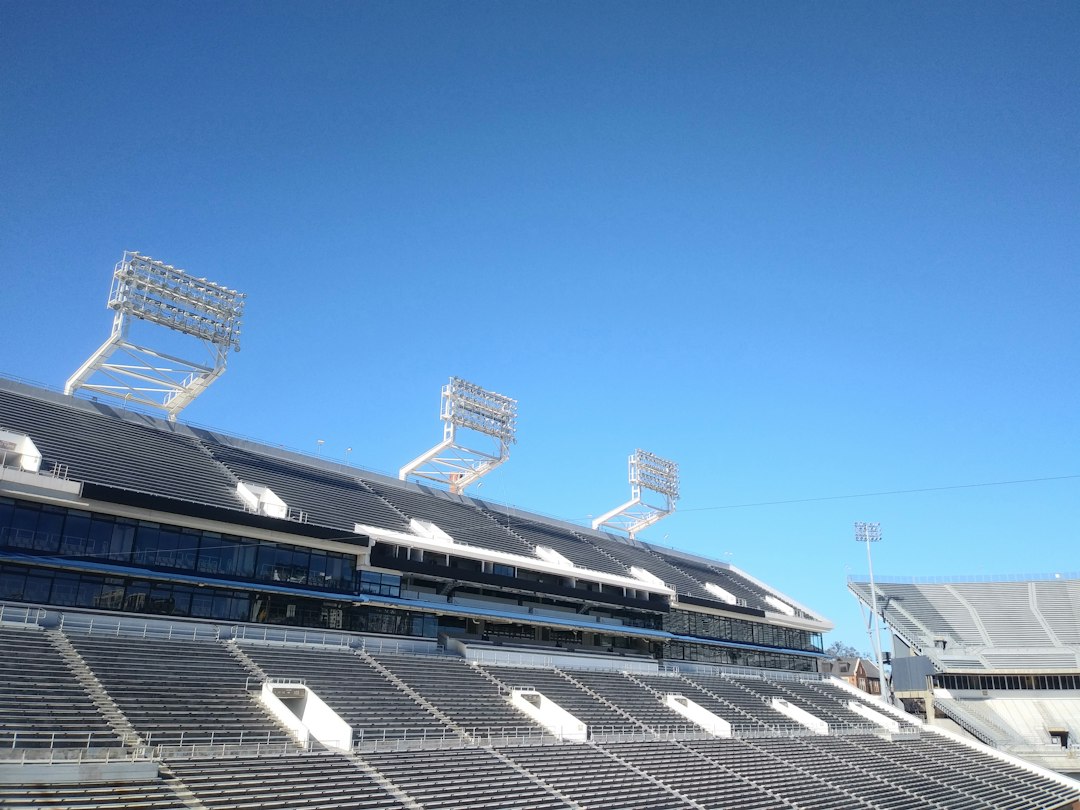

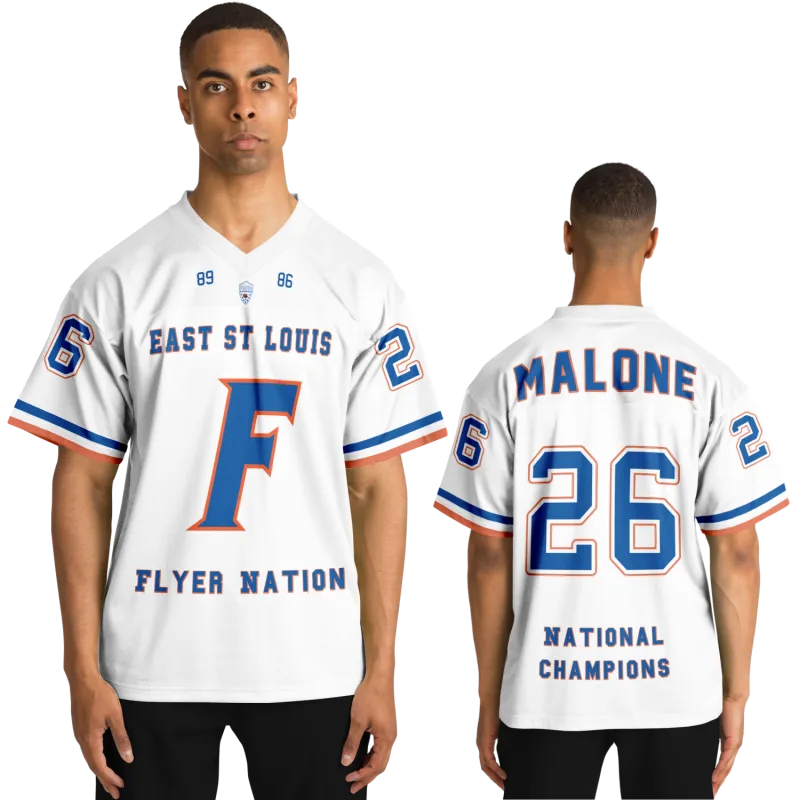


The line on Ohio State vs. Iowa doesn't tell you anything about what it feels like to jog through a tunnel at 11:58 AM on a Saturday in October.
CBS Sports analysts Brad Crawford and Chris Hummer have their final picks in for college football's Week 5 slate — Ohio State vs. Iowa and Alabama vs. Mississippi State headlining a card that has every serious fan's attention. The spreads are posted, the predictions are filed, and the takes are already moving across every feed you follow. You can read the full breakdown at CBS Sports.
But here's the thing about Week 5 that no odds screen captures: this is the stretch of the season when the games start meaning something. The cupcake schedule is behind everyone. Conferences are tightening. Standings matter. And for anyone who ever put on a uniform and played this game at any level — high school, junior college, small college, major program — this time of year carries a specific weight that the people watching from the stands can feel but never quite name.
Former players can name it.
What Week 5 Actually Feels Like When You Played
There is a particular quality to mid-October Saturdays in college football that has nothing to do with television windows or point spreads. It has to do with the fact that by Week 5, a team has already learned something about itself.
The first month is hypothesis. By Week 5, you have data.
Every former player knows the feeling of walking into a Tuesday film session after Week 4 — knowing that the record is real now, that the early-season optimism has been tested, and that whatever you are as a team, you are becoming it in real time. Ohio State walking into Iowa City carries that energy. Alabama hosting Mississippi State in a game that always seems to generate more drama than the oddsmakers expect — same thing.

The players on both sides of those matchups aren't thinking about the spread. They're thinking about the thing that all the prediction models can't quantify: which team, when the game gets strange — because Week 5 games always get strange — is going to find something extra.
Former players think about that. Fans who never played think about the score. It's a different kind of watching.
Ohio State at Iowa: The Game That Looks Lopsided Until It Isn't
Ohio State is favored. That's not a controversial statement. The Buckeyes have the talent, the depth, and the kind of national-stage experience that makes a road trip to Kinnick Stadium look manageable on paper.
But here's what anyone who has ever played in a hostile road environment understands that a spreadsheet doesn't: Kinnick is not a paper environment.
Iowa's crowd is different. The stadium's configuration — tight, loud, and designed by decades of fervent fandom into something that functions like a physical presence — creates a specific kind of psychological pressure that shows up in the third quarter, not the first. Road teams that aren't mentally ready for that experience make mistakes they would never make at home. Not because they're bad teams. Because atmosphere is a variable that never shows up in efficiency ratings.
Every former player who has walked into an away stadium and felt the wall of sound coming from people who genuinely want you to fail — they understand what Ohio State's offensive line is going to deal with on the first couple of series. The Buckeyes are talented enough to push through it. Iowa is experienced enough to try to make the first quarter count before that talent gap asserts itself.
That tension — the window Iowa needs to work in versus the moment Ohio State's roster simply takes over — is what makes this watchable. Not the spread.
Remember When the Crowd Changed Everything?
Every former player has a story about a game where the environment became the opponent.
The visiting locker room is quieter than you expect. The warmup feels normal. Then you come out of the tunnel and the sound hits you — not just the volume but the intention behind it, thousands of people who want you to fail, directed at you specifically.
Some players go inward when that happens. They get small. Their assignments suddenly feel harder to remember. The snap count they've heard a thousand times suddenly requires active concentration. That's the crowd working.
Other players — the ones who belong at this level — get wider. The noise doesn't compress them. It clarifies them. You can see it happen in real time if you know what to look for.
That's the read worth making on Ohio State vs. Iowa. Not the final score — which the Buckeyes are probably going to control. But: who gets wider, and when?
Alabama vs. Mississippi State: The Game That Proves Rivalries Don't Care About Rankings
Kayla M., 31, played four years of basketball at a mid-major program in the Southeast and has watched Alabama football her entire life. She describes Mississippi State games specifically as "the one where I always feel like I'm back in pregame warmups — something about the crowd energy reminds me of going into hostile gyms where you had to earn every call."
That's not a coincidence. It's geography and history and the specific gravity that certain regional rivalries generate regardless of what the records say going in.
Mississippi State-Alabama has produced moments that made no logical sense based on the talent differential. Upsets, near-misses, games that stayed competitive far longer than anyone's model suggested they should. That history is a real variable — not a sentimental one, but a competitive one. It changes how Alabama prepares. It changes what Mississippi State believes is possible.
The Bulldogs aren't walking into this game thinking about being an underdog story. They're walking in thinking about the specific things they can do to make Alabama uncomfortable. Former players understand that mindset. You don't prepare for a game you don't believe you can win. Mississippi State believes.
What that belief translates to on the scoreboard is the question. But it's a real factor — and it's the kind of factor that former players give more weight to than casual observers do.
What Former Players Notice That the Broadcast Never Shows
When you watch college football as someone who played, the camera becomes frustrating almost immediately.
The broadcast shows the ball. Former players want to watch everything else.
The left tackle's feet before the snap. Whether the linebacker's weight is on his heels or his toes. The way a receiver runs his route in the fourth quarter when he hasn't been targeted in eight plays — is he still running it clean, or has he started to drift? The defensive back who made a mistake two series ago and is now either overcompensating or has completely reset.
These are the things that determine outcomes in games like Ohio State-Iowa and Alabama-Mississippi State. Not the efficiency statistics. Not the recruiting rankings. The small, repeated, invisible decisions that accumulate across sixty minutes and produce a final score that then gets explained in hindsight as though it was inevitable.
Former players watch games differently because they know how much of the game is invisible.
It's one of the reasons that Week 5 college football — the stretch when real games are happening, when the performances have consequence — is so specifically satisfying if you played. You have the context. You have the vocabulary. You know what you're looking at.
The Homecoming Element: Why These Games Hit Different
Week 5 in college football often overlaps with homecoming weekend for programs across the country. And homecoming has a particular resonance for former players that goes beyond the game itself.
Homecoming is the one weekend where the program you played for explicitly acknowledges that you were there. The banners. The alumni events. The handshakes from coaches who may or may not remember your name but remember what you looked like in the uniform.
It is one of the few moments in adult life when the thing you were — a player, part of that team, wearing that number — gets acknowledged publicly. Every other week, you carry that experience privately. Homecoming makes it visible for a weekend.
That visibility matters more than most former players will admit. There is something about standing in a stadium where you once played, watching current players in the same uniform you wore, that produces an emotion that doesn't have a clean label. It's not quite nostalgia. It's not quite pride. It's something closer to the recognition that the thing you did was real, and it still exists, and it still means something.
The Ohio States and Alabamas of the world generate the biggest broadcasts and the most sophisticated prediction models. But every program running a homecoming game this Week 5 is giving former players the same thing: the reminder that they were part of something that lasted.
In Our Experience: What These Games Give Back to Former Players
In our experience covering the intersection of current sports events and the former-player community, the response to marquee college football weekends follows a consistent pattern.
Former players don't engage with the odds. They engage with the feeling — the specific emotional territory that these games occupy for people who know what it costs to prepare for a game like this, what the locker room sounds like at halftime of a close one, what it feels like to be on the sideline when your team needs a stop and everything you've worked on for months either shows up or it doesn't.
The Week 5 slate — Ohio State vs. Iowa, Alabama vs. Mississippi State, and every other game being played across every level of college football this Saturday — is not primarily an analytical event. It's an experiential one.
The picks and predictions give fans a framework for watching. Former players already have one. It was built across every practice, every game, every season they were part of a team.
What the game gives back, all these years later, is the chance to use that framework. To watch with the eyes of someone who knows. To feel, for three hours on a Saturday, like that person again.
Your Jersey Is Still Out There Waiting
Design yours in minutes and see your name and number exactly the way you remember it.
Frequently Asked Questions
What makes Ohio State vs. Iowa a compelling Week 5 matchup beyond the spread?
Kinnick Stadium is one of the most genuinely hostile environments in college football. For all of Ohio State's talent advantage, road performance in atmospherically intense venues tests mental preparation in ways that don't show up in efficiency metrics. Former players recognize that the crowd variable is real — it affects snap count communication, pre-snap reads, and the rhythm of an offense's first few possessions. That's the story within the story of this matchup.
Why do games like Alabama vs. Mississippi State tend to be closer than expected?
Regional rivalries carry historical weight that affects game preparation and competitive belief in ways that talent differentials don't fully cancel out. Mississippi State has a documented history of keeping Alabama games competitive past the point that recruiting rankings would suggest. Former players understand this dynamic intuitively — you don't prepare for a game you don't believe you can influence. That belief, at the team level, is a real competitive variable.
What does Week 5 mean in terms of where college football programs actually stand?
Week 5 typically marks the point where the schedule has produced enough data for a program to have a realistic self-assessment. Early-season games against easier competition create optimistic or pessimistic early narratives. By Week 5, those narratives have been tested against real conference opponents and the record reflects genuine performance. For players and coaches, this is when the season becomes real in a different way — the early hypotheses have been confirmed or corrected, and the path to the end of the season is now visible.
How do former players typically experience watching these big college football weekends?
The consistent pattern is that former players engage with games at a layer below the scoreboard — watching blocking assignments, defensive alignments, how players respond to adversity within a drive, and the small behavioral signals that indicate which team is mentally present and which is beginning to fracture under pressure. These are the reads that come from having played, and they make the watching experience fundamentally different from casual fandom.
Is there a connection between homecoming weekends and former-player engagement with college football?
Homecoming weekends — which frequently overlap with the Week 5 portion of the college football calendar — represent one of the few formal moments when programs acknowledge their former players publicly. For many former players, this produces a specific emotional response: the recognition that the experience they had as players is still visible, still meaningful, and still connected to something ongoing. It's one of the reasons this stretch of the season generates stronger engagement from alumni communities than any other.
See also: what watching college football does to someone who actually played | the emotional pull of watching big-game matchups when football shaped who you are | states where football isn't just a sport — it's a religion