

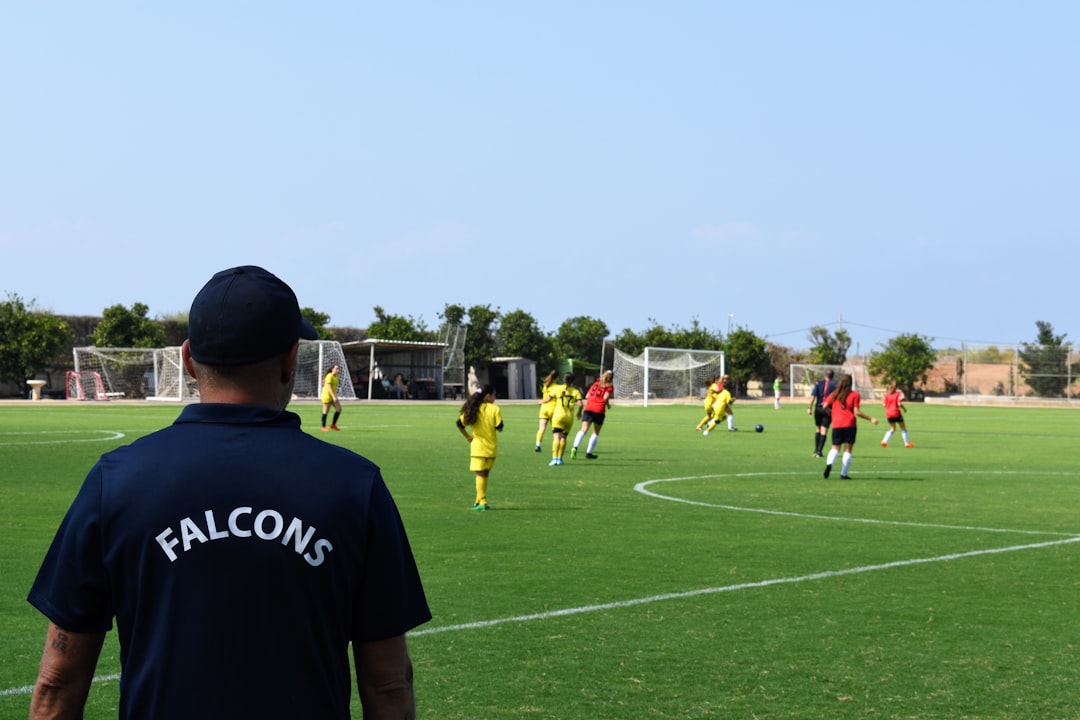




There's a moment — usually sometime in the second quarter, when the play breaks down and your kid makes the wrong read — where you feel it.
The former athlete in you knows exactly what should have happened. You could diagram it. You lived it. You ran that same route, took that same angle, made that same mistake on a Friday night twenty years ago with cleats on your own feet.
And right there, on the sideline or in the bleachers or behind the bench, you have a choice that defines the entire coaching relationship.
If you're coaching kids sports as a former athlete, that moment (and dozens of others like it) is where this whole thing either becomes something your child remembers with gratitude or something they spend years quietly resenting. The line between the two is thinner than most former athletes expect.
This is the guide that helps you walk it.
Your Athletic Background Is an Asset — Until It Isn't
Let's start with what's true: your experience matters. A parent who played at a high level has a native understanding of movement, pressure, team dynamics, and competitive stakes that no coaching certification can match. You can read a game in real time. You understand what your child's body is trying to do and why it isn't quite doing it yet. You know the difference between a mental mistake and a physical one, between a coachable moment and one that needs a night to breathe.
That knowledge is real, and your kids benefit from it.
But athletic experience is a double-edged tool. The same clarity that helps you spot the flaw in a defensive rotation can make you impatient when a nine-year-old can't process the same correction you'd have internalized at seventeen. The same competitive instinct that made you a useful teammate can make you a difficult parent when a referee makes a call against your kid's team.


The research backs this up. A study published in the Journal of Applied Sport Psychology found that parental pressure, even well-intentioned pressure from knowledgeable sports parents, is one of the primary predictors of early sport dropout. Kids who perceive their parents as evaluative rather than supportive disengage from athletic participation at significantly higher rates, regardless of the parent's level of expertise.
You know too much to fake ignorance. The work is learning when to use what you know, and when to put it in your back pocket.
The Traps That Former Athletes Fall Into
These aren't character flaws. They're predictable patterns that come directly from having been good at something. Understanding them is the first step to coaching around them.
Coaching the sport you played instead of the sport your kid is playing. The game has changed. Techniques have evolved. Approaches that were standard in your era may now be considered outdated or even counterproductive. This is especially common with former athletes who played before sports science became a core part of youth development. The training principles you internalized as fundamentals may need updating before you pass them on.
Using your ceiling as their floor. You made varsity. You got significant playing time. Maybe you went on to play at the collegiate level. If that's your baseline for what a capable young athlete looks like, you are setting a comparison point that will crush a child who has a completely different athletic identity than you did. Your kid isn't a younger version of you. They are the first version of themselves, and that's a more interesting story than a sequel.
Chasing the scholarship instead of the sport. If you played in college — or even if you got close — there's a particular trap waiting for you. It starts quietly: a travel team instead of the rec league, a training session added on top of practice, a specialization decision that feels like giving your kid an edge. The research is blunt about why this usually backfires. Positive Coaching Alliance has found, study after study, that kids play primarily to have fun, to be with their friends, and to get better, not to earn scholarships. And the odds make the math even harsher: only about two percent of high school athletes ever receive an NCAA athletic scholarship. A former athlete parent who reached the college level is the person most likely to build a year-round training agenda around that two percent outcome, and in doing so, distort the ninety-eight percent experience that is actually unfolding in front of you. The reframe isn't to stop believing in your kid. It's to make sure the dream you're chasing is theirs, not the one you carried onto the field. Your job is to help them love the game on their own terms — because a kid who plays for the joy of it is the one who keeps playing, scholarship or not.
Mistaking intensity for investment. Former competitors often express care through high expectations. That translation works with adult teammates who understand the code. It does not work with a ten-year-old who is trying to read whether the person they love most in the world is proud of them right now. Intensity without warmth reads as disapproval, even when that's the last thing you intend.
Over-coaching the ride home. This one is practically universal among former athlete parents. The drive home after a game or practice is one of the most psychologically loaded moments in youth sports. Your child has just finished performing under pressure, often in front of you. The car is a contained space with no exit. If you fill that space with analysis, correction, and replay, you're not coaching. You're interrogating someone who has already given everything they had. The research on this is unambiguous: kids consistently report they want silence, acknowledgment, or food after competition — not a film session.
What Your Experience Actually Gives You That Other Coaches Don't Have
This section exists because the traps are real, but so is the advantage. Knowing the traps doesn't mean your athletic background is a liability. It means you're now equipped to use it correctly.
You understand the feeling of getting something right. Most youth coaches can explain what correct technique looks like. You know what it feels like from the inside — the specific sensation in your hips when the footwork clicks, the way the ball feels different when you release it at the right moment, the almost involuntary rightness of a well-executed play. That embodied knowledge makes your coaching descriptions visceral and real in a way that video instruction and diagrams rarely are.
You know what mental toughness actually requires. Former athletes understand the specific internal experience of competing under pressure — what it takes to stay composed when a game is close, how to reset after a mistake, what separates productive nerves from paralyzing ones. This is difficult to teach theoretically and far easier to convey from lived experience. When you tell your kid "here's what I did when I felt that way," you're giving them something no coaching manual contains.
You can calibrate the real from the catastrophic. When another parent on the sideline is treating a youth league loss like a professional sports collapse, your experience gives you the perspective to model appropriate emotional proportion. Kids absorb the emotional register of the adults around them. A former athlete who has both won and lost at a meaningful level, and can demonstrate that both states are survivable, is modeling something genuinely valuable.
You know what coaches did that actually helped you. You remember the specific things your coaches said and did that stayed with you. You also remember what didn't help — what felt demeaning, reductive, or counterproductive. That institutional memory is one of the most useful coaching tools you own. Use it deliberately.
Marcus T., 41, Coached His Daughter's Travel Softball Team for Three Seasons
Marcus played college baseball — a middle infielder with enough range to earn consistent starts. When his daughter Emma started showing real promise as a shortstop at age eleven, he volunteered to coach her travel team.
The first season was rocky. "I kept coaching her like a college player," he said. "I'd give her six adjustments after a play and wonder why she looked defeated." The second season, Marcus made one rule for himself: one thing per practice, one thing per game. That was it. By the third season, Emma was making adjustments herself, mid-game, without needing to be told. She's now being recruited by two Division III programs. Marcus will tell you the best coaching decision he made was learning to give her room to find her own version of the game.
How to Separate Coach Mode From Parent Mode
This is the practical center of the whole conversation. Both roles are real, both are important, and they require different things from you. The problem isn't that you're a former athlete. The problem is when the roles bleed into each other without you noticing.
Here's the framework our team recommends for keeping them distinct:
Before the game or practice: You are the parent. Your job is logistics, encouragement, and presence. This is not the moment for technical preparation or competitive mental priming. Get them there, fed, hydrated, and feeling like you're on their side.
During the game or practice: If you're coaching, you are the coach. You address the team, not your child specifically. You hold the same standard for your kid that you hold for every other player on the team — not higher, not lower. The moment you single your child out more than any other player (either with more criticism or more praise), you've made them a target and yourself a liability.
Immediately after the game or practice: You are the parent again. The ride home is not a coaching session. "I love watching you play" is a complete sentence. It requires no amendment, no addendum, no "but next time."
24 hours later, if they want to talk: Now you can have the coaching conversation, if they invite it. "Can we talk about that play?" is a question that requires their answer before it proceeds.
The separation isn't always clean. But naming it makes it more intentional, and intention is most of the work.
When Your Kid Doesn't Want to Play Your Sport
This scenario belongs in this guide because it happens often, and it's one of the hardest identity moments former athletes face.
You played basketball at a level that still feels like a significant chapter of your life. Your kid shows zero interest in basketball and wants to play lacrosse, or dance competitively, or run cross country. The honest reaction for many former athletes is grief — a specific, surprising grief about a shared future they'd quietly imagined that isn't going to happen.
Acknowledge that internally. It's real. And then let it go completely before you interact with your child about it.
A child who senses their parent's disappointment about their sport choice carries that weight into every practice and competition. They are not responsible for the story you wrote about what this would look like. Your job, as the parent and as someone who understands athletic identity because you have one, is to become the most enthusiastic student of the sport they chose.
Learn the positions. Learn the terminology. Learn what a good performance looks like in their discipline so you can recognize and celebrate it specifically. "You played well" is generic. "The way you read that break in the defense in the third period was the right call" is something a kid carries with them.
Your athletic background gives you the capacity to understand performance at a level most parents can't. Apply that capacity to the sport they chose.
The Conversation Every Former-Athlete Coach Needs to Have With Their Kid
This one is simple, direct, and it changes the dynamic immediately when you do it.
Sit down with your child — not in the car, not before practice, but in a calm moment with no agenda — and say something like this:
"I played [sport] when I was in high school and it meant a lot to me. Sometimes that means I probably see your games through my own experience, and I might coach you in ways that feel like too much pressure. I don't want that. I want this to be something you love. So if I'm ever being too hard on you, or if coaching is getting in the way of us just being us, I want you to be able to tell me."
Then — and this is the part most former athletes find hardest — actually mean it.
Your kid will test it eventually. Someone has to go first in that trust exercise, and it's you. The former athlete in you may balk at this. You were trained in environments where showing vulnerability meant showing weakness. That training served you then. It does not serve the relationship you're trying to build now.
Your jersey is still out there waiting.
You wore a number that meant something. You played for a school whose name still sits in a specific place in your memory. That chapter of your story is worth honoring — and now your kid is writing their own version of it.
Design yours in minutes and see your name and number exactly the way you remember it.
Frequently Asked Questions
How do I stop myself from over-coaching my kid during a game?
Set a rule before you arrive: one piece of feedback per game, maximum. You can notice everything — you're a former athlete, that's not going away — but you only say one thing, and you say it between periods or quarters, not in the moment. The constraint forces you to identify what actually matters most, which is usually more useful than everything you'd say without the limit.
My kid is genuinely talented and I think my high-level coaching is helping them improve. How do I know if I'm pushing too hard?
Watch them at practice when they don't know you're watching. Pay attention to whether they look like they're playing or working. Ask them directly — and listen for hesitation, not just the content of the answer. The clearest sign that coaching has crossed into pressure is when a child stops taking risks during competition because they're afraid of your reaction. Risk-taking is how athletes develop. If your kid is playing safe to manage your response, that's the signal.
What do I do when my kid wants to quit a sport they seemed passionate about?
Don't negotiate with the request in the moment. Ask one question: "Is this about today, or is this about all of it?" Give them a week before making any decision. If the desire to quit is persistent and genuine, honor it. A kid who is no longer finding meaning in a sport will not find it because you applied pressure. The most useful thing a former athlete parent can do here is model what it looks like to let go of something gracefully — that's a life skill far more durable than any athletic one.
Is it a conflict of interest to coach the same team my child plays on?
It can be, and it's worth being transparent about it with other parents and with your child's coach if you're an assistant. The practical solution is to hold yourself to a visible standard of consistency: your kid gets the same corrections in front of the team, the same playing time decisions, and the same acknowledgment as every other player. When in doubt, be harder on yourself about favoritism than you would be on any other coach — because the perception of favoritism is as damaging as the reality.
See also: athletic identity after high school | what high school sports actually taught you | the psychology of why your high school sports memories still feel so real | getting back into competitive shape after years away from the game