
The word they never quite gave you was athlete.
They gave you cheerleader. They gave you spirit squad. Sometimes, if they were feeling generous, they gave you performer. But athlete — the word that belongs to the people who train until their bodies give out and then train some more — that one got withheld. Not because you hadn't earned it. You had earned it a thousand times over. It got withheld because the people handing out labels hadn't watched you work.
Cheerleading athlete identity is not a new concept. It is not a trend, a reclamation project, or a social movement that emerged from a cultural moment. It is simply the correct description of what cheerleading has always been — and what every person who ever trained in it has always known from the inside.
This is that acknowledgment. The one that should have come earlier. The one that was always true.
You Knew What It Was While Everyone Else Was Still Deciding
If you played — if you actually trained, competed, and performed at any serious level — you already understood something that took the rest of the world decades to catch up to. You understood it in your body before you could have articulated it in an argument.
You understood it the first time a basket toss went wrong and you felt what trust actually means — not as a value posted on a gym wall but as a physical fact negotiated between four people at high velocity. You understood it when you ran the same tumbling pass sixty times in a single practice session because sixty wasn't clean enough, and clean was the only thing that counted on the floor. You understood it when your hands cracked from bases and your shoulders carried the bruise geography of a season the way linemen carry theirs.
Every former athlete remembers the specific moment when the sport stopped being something they were doing and became something they were. For cheerleaders, that moment often arrived quietly — not at a championship, not at a highlight reel moment, but in an ordinary Tuesday practice when the exhaustion was extraordinary and you kept going anyway. That is the moment. That is what makes an athlete.
The argument about whether cheerleading "counts" was always a conversation happening outside the gym. Inside the gym, there was no debate. There was only the work.
What the Work Actually Was
It is worth being specific here, because specificity is the only thing that defeats the dismissal. Vague defenses of cheerleading's athleticism don't land. The specific truth does.
Competitive cheerleading requires elite tumbling — the same foundational skill set developed in gymnastics, applied under time pressure, in sequence, with other athletes moving around you simultaneously. A full-twisting layout does not negotiate with anyone who hasn't trained for it. It demands exactly what it demands, and the body either delivers or doesn't. There is no performance of that skill. There is only execution or failure.
Stunting adds a dimension that is nearly impossible to explain to someone who hasn't experienced it: the coordination of multiple athletes performing a single unified movement with a human being elevated above them. Bases develop a spatial awareness and physical sensitivity that has no real parallel in other sports. Flyers develop proprioception — the ability to know exactly where their body is in space without seeing it — to a degree that rivals trained gymnasts. The specific physical vocabulary of a stunt sequence is dense, technical, and hard-won.
Then there is the performance dimension — which is not the opposite of athleticism but an addition to it. Elite cheerleaders are asked to demonstrate all of the above skills while maintaining the visual presentation and spatial precision of a choreographed routine, under competitive scoring, in front of judges who have seen every possible error and forgiven none of them. This is not easier than pure athletic competition. In some specific ways, it is harder.
The conditioning required to do all of this consistently — practice after practice, season after season — is the same conditioning that produces any high-level athlete: structured strength work, cardiovascular development, flexibility training, skill repetition at volume, and the specific psychological discipline of performing under pressure when the body is already past comfortable.
None of this is a secret. It is simply what cheerleading is, described accurately.
The Dismissal Had a Shape
Understanding why the recognition took so long matters — not to assign blame, but because former cheerleaders carried the weight of that dismissal for years, and they deserve to understand what it actually was.
The dismissal had a specific shape. It was built from the confusion of visibility with purpose. Cheerleading, for much of its modern history, was visible at football games and basketball games — positioned at the sideline of other people's sports, cheering for other people's competitions. That positioning created an association in the cultural mind: cheerleading exists for something else. It is support staff. It is decoration.
This was always a category error. The sideline performance was one context in which cheerleaders appeared. It was not the definition of what cheerleaders were. The competitive cheerleading that happened in gyms, at tournaments, on floors scored by judges — that was the actual sport, the actual competition, the actual athletic arena. But it was less visible than the football field, and visibility shaped perception.
The athletes inside the sport knew the difference. They trained for competition, not for sideline appearances. Their season had a structure, a goal, a championship. Their performance was judged by objective criteria against other teams. That is, by any reasonable definition, a sport.
The world took a long time to align its categories with the reality. That lag was the world's failure of perception, not the sport's failure of substance.
The Identity That Competition Built
There is something that competitive athletes of all kinds share that non-athletes sometimes struggle to articulate but immediately recognize in each other. It is the specific identity that pressure-testing builds. The knowledge — not the belief, the knowledge — that you have been in a situation where everything was on the line and you performed anyway.
Tasha R., 34, trained and competed in all-star cheer for eight years before stepping away from the sport. She described it once not as something she used to do but as something that is still, years later, the reference point she uses to evaluate every difficult thing in her adult life. "When something hard comes up at work or in my relationships," she said, "I think about what it felt like to stand at the top of the pyramid with the entire routine ahead of me. Everything I know about staying calm under pressure, I learned in that gym."
In our experience, this is the most consistent thing former cheerleaders describe — the transfer of competitive identity into every other arena of their lives. The capacity to perform under pressure. The tolerance for physical discomfort. The understanding that excellence requires repetition at volumes most people aren't willing to sustain. These are not cheerleading skills. They are athlete skills. They happen to have been developed through cheerleading.
That is the mark of a sport: it builds something in its athletes that outlasts the competition itself. Cheerleading built that. It always did.
What "Athlete" Actually Means
The word athlete comes from the Greek athlētēs — one who competes for a prize. The definition has never been sport-specific. It has never required a particular type of movement, a particular type of field, or a particular cultural cachet. It requires competition. It requires trained physical skill applied under pressure. It requires the specific psychological relationship with performance that only sustained training produces.
Cheerleaders competed for prizes. They developed trained physical skills. They applied those skills under pressure. They developed the psychological relationship with performance.
The definition always fit. The label just lagged.
What the formal recognition of cheerleading as a competitive sport — which has grown substantially across athletic governing bodies and the broader sports landscape — actually changed is not the nature of the sport. It changed who was willing to use the right word for it. The sport didn't have to prove itself to earn that recognition. The recognition just had to catch up to what the sport already was.
For former cheerleaders who carried the weight of the dismissal through their training years — who had to argue for their own legitimacy in addition to doing all the actual work — this matters. Not because external validation is the source of the identity. The identity was already built in the gym. But because no one should have had to defend their own athleticism while they were busy being athletic.
The Things That Don't Need to Be Argued Anymore
If you played — if you competed, trained, stunted, tumbled, and performed at any level that required real sacrifice — there are things that are simply true about you that have nothing to do with whether anyone else recognized them at the time.
You know how to work inside a team in a way that individual sport athletes sometimes struggle to describe. Your success was never only yours. Every stunt, every routine, every score belonged to a group of people who had to function as a single unit. That is a specific kind of intelligence, and it translates.
You know what it is to train something until it becomes automatic — until the muscle memory is so deep that the pressure situation doesn't disrupt the execution because the execution no longer requires conscious direction. That is what elite training produces. That is what you have.
You know the specific relationship between perfection and performance — that perfection is the standard you train toward, knowing that performance is what actually happens under competition conditions, and that the gap between the two is managed, not eliminated. Managing that gap is a skill. You built it.
And you know — perhaps most specifically — what it is to be dismissed and keep training anyway. To have the legitimacy of your sport questioned and return to practice the next day regardless. That particular resilience is not incidental to your character. It was shaped by years of doing exactly that.
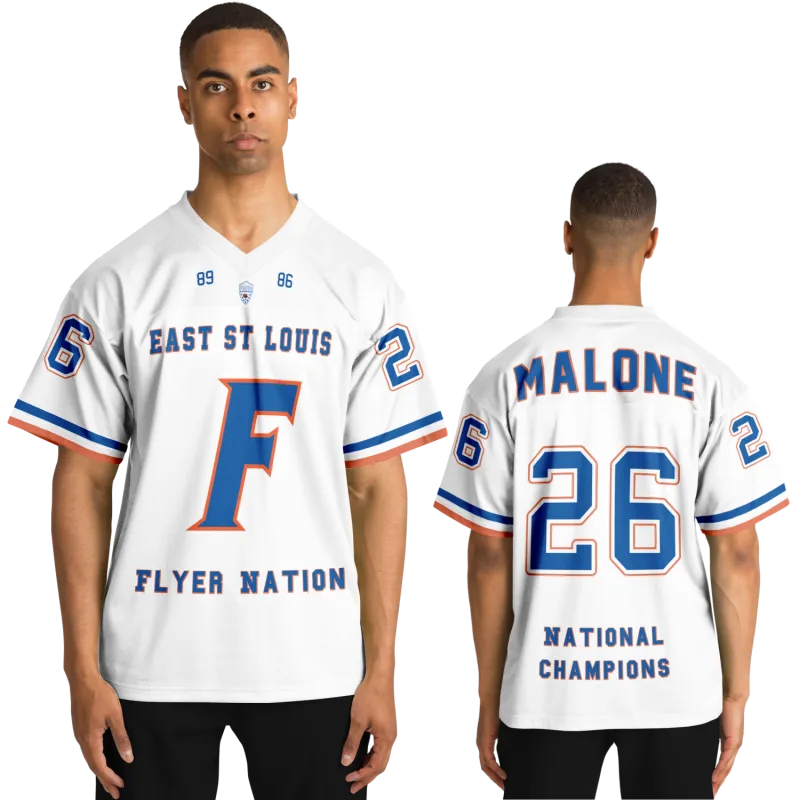
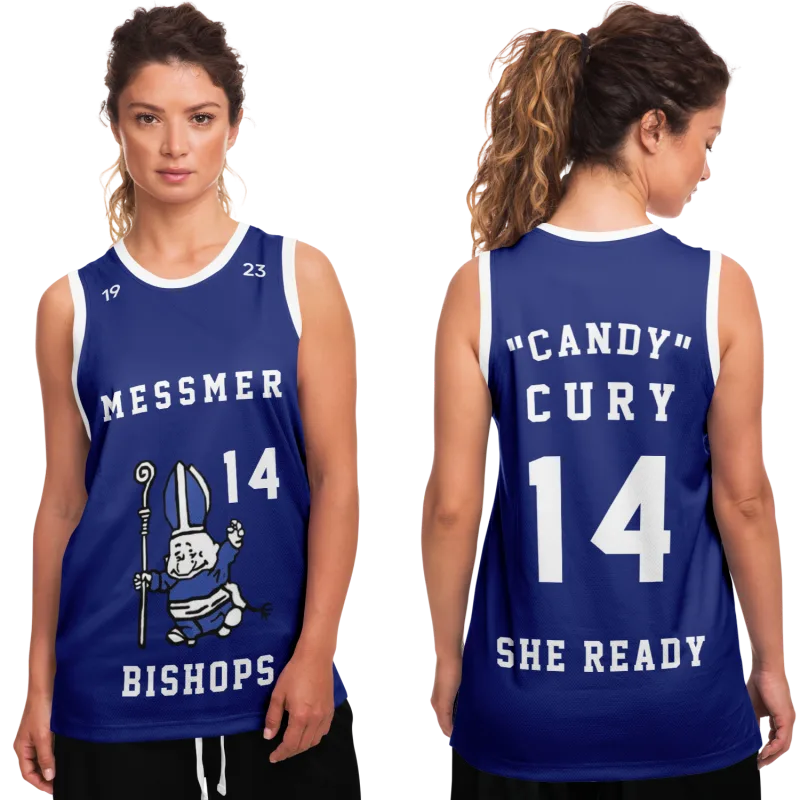
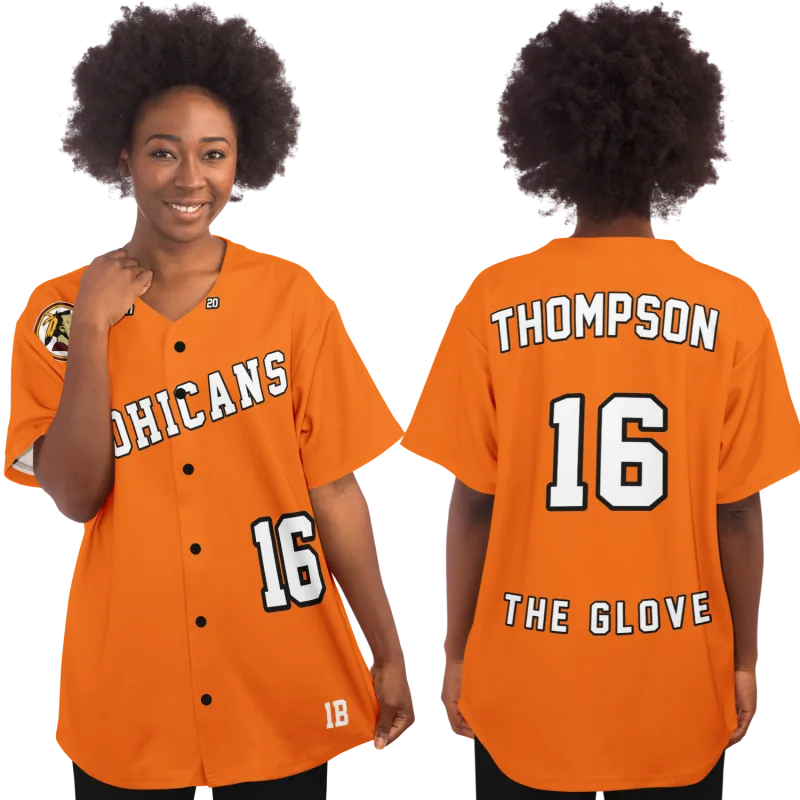
Your jersey is still out there waiting.
The number you wore, the name on the back, the colors of the program that shaped you — they belong to who you are, not just who you were. Design yours in minutes and see your name and number exactly the way you remember it.
Frequently Asked Questions
Is cheerleading officially recognized as a sport?
Recognition varies by governing body and region, but competitive cheerleading has gained formal athletic status across a growing number of scholastic, collegiate, and international athletic organizations. The International Olympic Committee recognized cheerleading as a sport in 2016, a landmark that reflected what athletes inside the sport had known for decades. The more relevant question — whether cheerleading meets the substantive definition of a sport through competition, trained physical skill, and structured performance evaluation — has always had a clear answer.
Why do so many former cheerleaders feel their athleticism was dismissed?
The sideline context in which cheerleading was most publicly visible created a persistent association between the sport and support roles rather than competition. When the public image of a sport is shaped by its most visible setting rather than its most competitive one, the athletes inside it carry a perception gap that requires constant correction. Former cheerleaders trained and competed in an athletic environment — but were seen, by the casual observer, in a social one. That gap produced the dismissal. It was a failure of context, not a failure of the sport.
What makes competitive cheerleading physically demanding at an elite level?
At the competitive level, cheerleading combines elite tumbling, structured stunting with human aerial elements, choreographed performance under timed competitive conditions, and judged execution against objective scoring criteria. Athletes develop strength, flexibility, proprioception, cardiovascular conditioning, and the specific psychological discipline of performing complex physical skills under competitive pressure. The combination of these demands across a full training season is comparable in physical requirement to other recognized athletic disciplines — and in some dimensions, including the coordination demands of multi-athlete stunting, is distinctly challenging.
How do former cheerleaders typically describe the long-term impact of their training?
Consistently, former competitive cheerleaders describe their training years as foundational to how they operate under pressure, function within teams, and approach standards of excellence in adult life. The specific capacities built through sustained athletic training — composure under pressure, tolerance for physical and mental difficulty, the discipline of repetition — transfer directly into professional and personal contexts. This transfer is not unique to cheerleading; it is what athletic training produces. That cheerleaders experience it in the same way as athletes in other sports is, itself, part of the evidence of what the sport always was.
See also: athletic identity after high school | what saying 'I played' really means | the grief that comes when your athletic career ends | why high school sports still matter to the adults who played them