

Cheerleading is a sport identity that millions of athletes earned on real competition floors, through real training, with real consequences — and the argument about whether it qualified was never actually about the evidence. The evidence was always there. It was about something else entirely, and most of the athletes who lived it understood that long before the rest of the world caught up.
This is for those athletes. And for anyone who is still not sure what the argument was really about, here is the case that should have closed it years ago.
What "Sport" Actually Requires — And What Competitive Cheer Delivered
The definition of athletic competition is not complicated. A sport requires a physical skill component, a defined competitive structure with rules and scored outcomes, training that develops that physical skill over time, and stakes — outcomes that matter to the participants in a way that drives sustained effort and sacrifice.
Check those boxes for any activity, and you have a sport.
Competitive cheerleading checked every one of them — with evidence that was never hard to find.
The physical skill component alone ends the conversation for anyone who has stood on the floor at a major All-Star competition. The tumbling sequences required to compete at Level 5 and Level 6 include back handsprings into full-twisting layouts, double-fulls, and combination passes that require years of progressive training, a precise command of aerial body mechanics, and a level of spatial orientation that takes most athletes an entire developmental cycle to acquire reliably. The stunting demands grip strength, dynamic timing, and coordinated trust between flyers and bases that can only come from thousands of repetitions — built in practice facilities that smelled like chalk and effort, at hours when most of the school was still asleep.
The competitive structure was not informal or improvised. The USASF established safety standards and scoring frameworks that govern All-Star competition at every level. The NCAA granted competitive cheer emerging sport status at the collegiate level. National competitions drew thousands of teams evaluated by trained judges on specific technical criteria: execution, difficulty, synchronization, and performance quality. These were not loose assessments. They were scored evaluations, with placements and championships and consequences.

But the institutional record was messier than a single line suggests — and it is worth stating plainly, because it is the strongest evidence that the argument was never about the athletes.
Quinnipiac University cut its women's volleyball team and, to stay in compliance with Title IX, tried to count competitive cheerleading as a varsity sport. A federal judge ruled in 2010 that competitive cheer was "too underdeveloped and disorganized" to count toward that obligation, and the Second Circuit Court of Appeals affirmed the ruling in 2012 — declining to count thirty competitive-cheer roster positions as varsity athletic opportunities. On its face, that looked like a court saying cheer was not a sport.
It was not. Read the reasoning and the objection was organizational, not athletic. At the time, teams competed under five different scoring systems, with no single governing body enforcing the rules. The courts were not questioning whether the athletes trained, or whether a stunt demanded real skill. They were pointing at the same name-and-structure confusion this whole piece has been tracing: the activity had outrun its own administrative maturity. The athleticism was never the problem. The structure was.
And that record has been catching up ever since — which is the point. The International Olympic Committee designated cheerleading as a sport in 2016, recognizing the International Cheer Union as its federation. By the 2021–22 school year, roughly thirty states recognized competitive spirit as a sport, with more than 100,000 high school participants. In 2011, USA Cheer created STUNT, a competitive format built specifically to be Title IX-compliant. The institutions lagged. The athletes never did.
And the stakes were unambiguous. You do not cry on a gym floor at midnight over something that does not count.
The Argument Was Never About the Athletes
Here is what most of the public debate missed: the skepticism was never really aimed at the athletes themselves. It was aimed at the name.
The word "cheerleading" carried the weight of sideline performance — the crowds, the school spirit functions, the halftime coordination — and that association made it easy for people who had never watched a competitive routine to assume they already understood what the activity was. They did not.
Sideline cheerleading and competitive cheerleading share a name and some foundational vocabulary. They are not the same activity. Competitive programs at the club and collegiate level were not supporting another team's game. They were competing — on scored floors, under time constraints, with routines built to maximize technical difficulty within defined safety parameters, against programs that had trained just as long and wanted the same outcome.
The confusion between those two things is where most of the doubt lived. And the athletes caught in that confusion paid a social price that had nothing to do with their actual performance.
Every former athlete remembers the specific moment a sport stops being just an activity and becomes part of the architecture of who you are. The moment training stops being about the skill and starts being about identity — the daily discipline, the team accountability, the particular shape that competition pressure gives to your character. That moment arrives for gymnasts and swimmers and point guards and distance runners. It arrived for competitive cheerleaders, too, on floors in convention centers and arenas and gymnasiums across the country.
The skeptics missed that moment. The athletes did not.
I remember talking to a former All-Star athlete who described that shift. She was thirteen, and her team had just finished a disastrous run-through two weeks before a national competition. The coach didn't yell. She just looked at them and said, "This is the moment you decide who you are. The skills aren't the question. Your willingness to push through when it's hard — that's the question." For that athlete, the sport stopped being about a trophy and started being about a promise she made to herself. That's not a sideline activity. That's a defining experience, and it belongs squarely in the conversation about what a sport truly asks of the people who commit to it.
The Body Kept Score — Whether Anyone Else Did
There is a theoretical version of this conversation — definitions, governing body classifications, official recognitions. That version is useful. But the most honest answer to "was it a sport?" was always physical, not philosophical.
Competitive cheerleaders trained with the conditioning demands of any high-output athletic program. Tumbling repetitions built into weekly training schedules the way mileage is built into a distance runner's log. Strength work designed around the specific demands of basing, bracing, and flying — hip flexors, shoulder stabilizers, core engagement under dynamic load. Flexibility training recognizable to any gymnast or martial artist who has put in the same hours.
The body also absorbed the consequences. Injury data tracked by the National Center for Catastrophic Sport Injury Research has documented concussion rates, ACL tears, and stress fractures in competitive cheer populations at levels consistent with contact and collision sports. Flyers fell. Bases caught, and sometimes didn't quite catch. The physical demands of the activity produced the physical consequences that every serious sport produces when athletes push the edges of what their training has prepared them for.
When a body pays a price for something over years of repetition, that something was real. The athletes knew it. The training rooms knew it. The orthopedic surgeons who worked with those athletes knew it.
The argument, for some reason, needed longer to catch up.
That physical toll also left a lasting resilience. Many former competitive cheerleaders carry a body awareness that surfaces in unexpected ways — the instinct to brace during a sudden movement, the capacity to shoulder unexpected loads, the quiet confidence that comes from knowing what your body can survive. Those aren't just echoes of old drills; they're permanent markers of a sport that demanded everything, and that shaped the body long after the competition floor went quiet.
Brianna's Story — Why the Validation Lands the Way It Does
Brianna F., 29, competed in All-Star cheer from age seven through her senior year of high school, reaching Level 5 and placing at three consecutive national competitions. She didn't continue at the collegiate level, but the athlete identity — the one built over twelve years in a competitive gym — went everywhere she went afterward.
"I played other sports," she said. "Track for two years in middle school. Nobody ever questioned whether track was real. But I spent twelve years training six days a week, and I still had to defend it to people who had never watched a full routine. The frustrating part wasn't the question itself. It was the look — like they were humoring me by even engaging."
What Brianna described is a specific kind of exhaustion: having to prove something you have already proven — to your coaches, your teammates, your own body — to someone who arrived at the conversation with the conclusion already written. The proof existed. It lived in competition footage, in injury records, in the physical development of athletes who started training before they lost their first tooth. The problem was never the evidence. The problem was the willingness to look at it.
When the validation finally arrives — when someone names the sport for what it was — it does not rewrite the past. But it lands in a way most former athletes do not quite expect. Not like vindication. More like being accurately seen, by someone who was actually paying attention.
What the Recognition Actually Does for a Former Athlete's Identity
Former athletes carry their sports differently than non-athletes carry hobbies. The sport is not something they did. It is something they became. Years of training shape the nervous system, the movement patterns, the way the body responds to pressure, the way the mind organizes challenge and effort and outcome. That structure does not dissolve when competition ends. It goes forward into everything — careers, relationships, the way a person handles the specific quality of difficulty that real stakes produce.
For competitive cheerleaders, that carried identity came with an asterisk that was never earned. A quiet conditional attached to the self-description: I was an athlete — but did it really count?
That asterisk matters more than it should, because identity questioned often enough starts to feel provisional. Not false — the athlete always knew the truth — but dependent on permission from people who were never in the gym and never earned an opinion on what happened there.
The recognition that competitive cheerleading is a sport removes the asterisk. It names the thing correctly. And naming things correctly is how provisional identity becomes unconditional.
In our experience covering former athletes across every sport and level of competition, the reaction to having a sport recognized is not primarily about external validation. It is about permission to stop explaining. The training was real. The competition was real. The athlete was real. The sport was real. None of that needed confirmation from people who were not there — but it is something, finally, to have the argument finished.
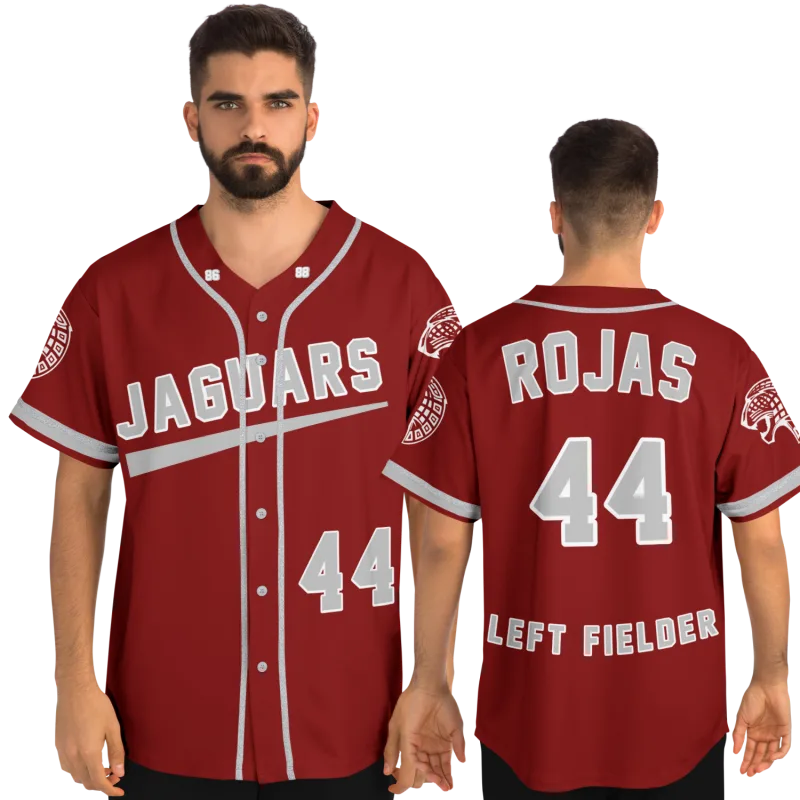
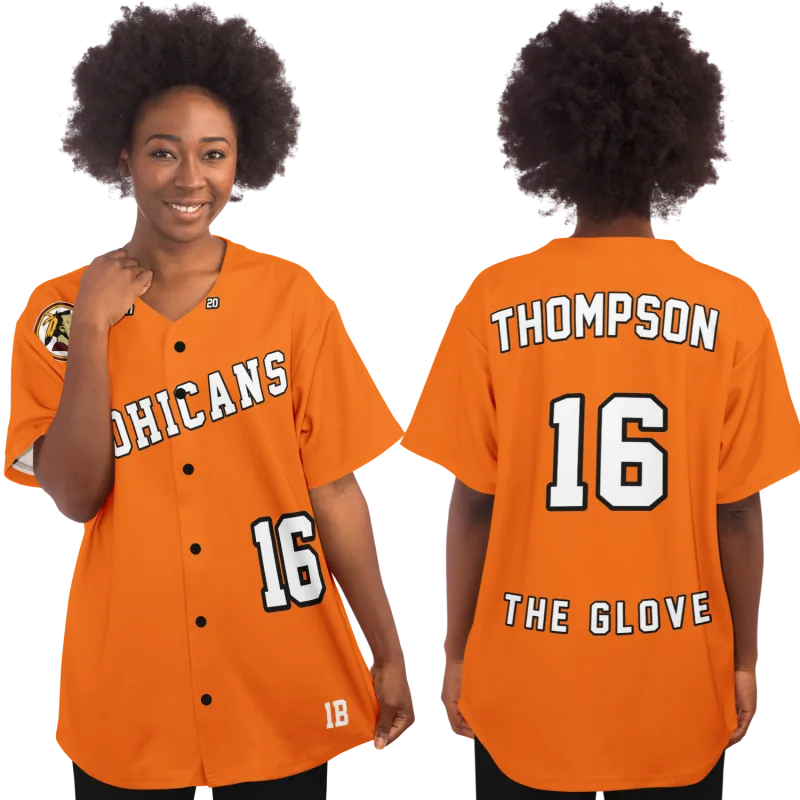
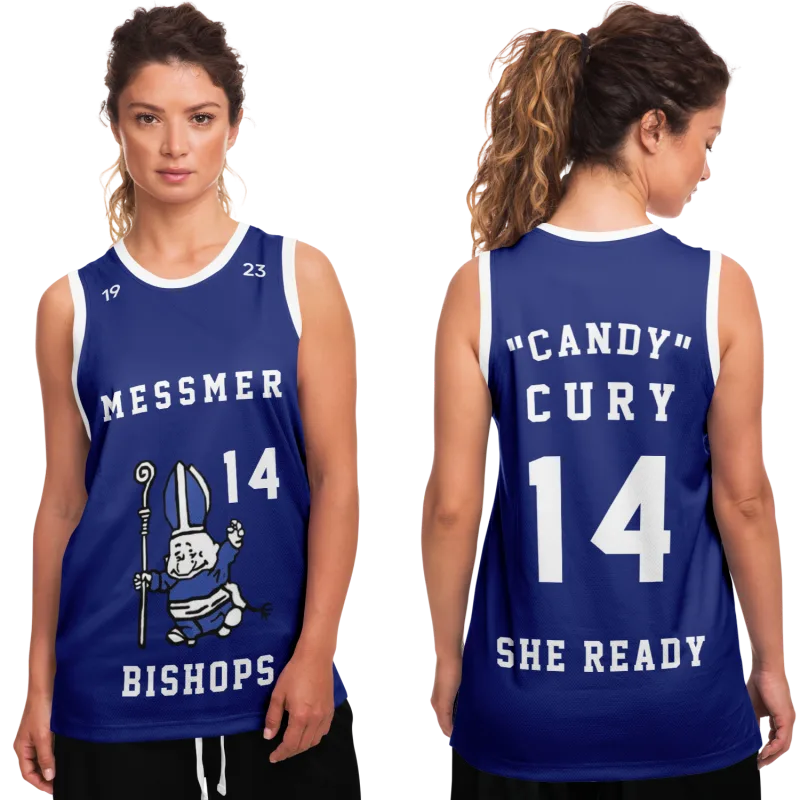
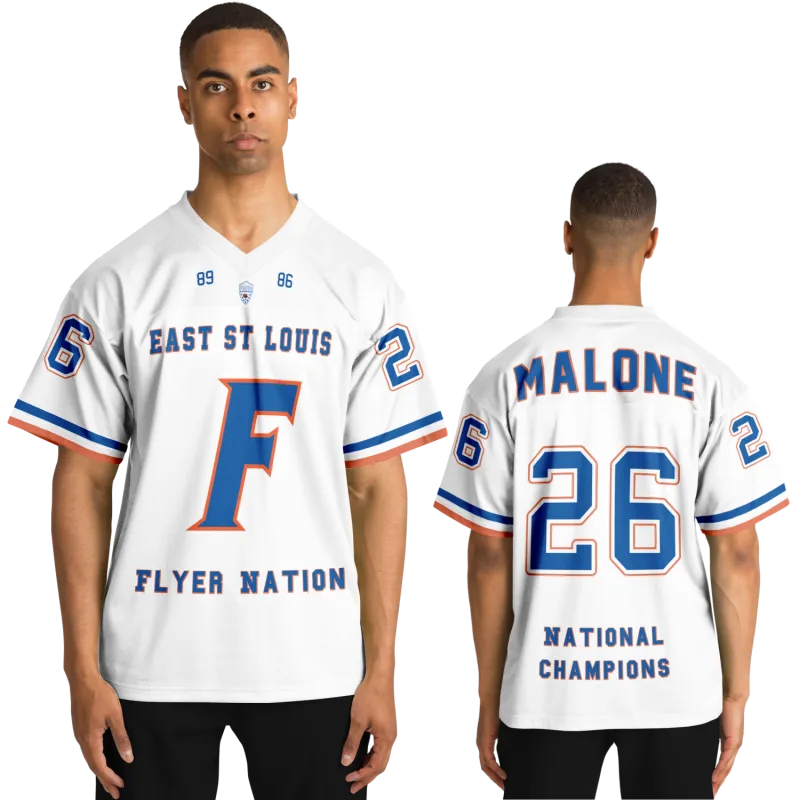
That clarity often pushes athletes to reclaim tangible pieces of their history. When you no longer have to defend the sport, you’re free to celebrate it in ways that feel authentic — displaying something with your name and number, for instance, without a hint of apology. The jersey isn't just fabric; it's a declaration that the identity stands on its own, no explanation required.
The Lasting Imprint of a Sport That Asked Everything
What competitive cheer demanded from its athletes over years of training produced the same lasting imprint that any serious athletic discipline produces in people who give it their full commitment.
The capacity to function under pressure — not just to tolerate pressure, but to execute technical skill at the highest level of precision precisely when the stakes are highest. The ability to absorb a mistake mid-performance, reset without losing the thread, and complete the routine as if the error never happened. The trust required to work within a team where every individual's execution affects the collective outcome, and everyone on the floor knows it. The discipline to hold a single technical standard through a thousand repetitions because the sport demanded it and the athlete learned, early, that the standard was non-negotiable.
These are not cheerleading-specific traits. They are athlete traits. And they appear, reliably and recognizably, in people who trained inside demanding competitive programs — regardless of whether those programs involved a ball, a pool, a track, a mat, or a scored competition floor.
The former competitive cheerleader who manages pressure with a quality her colleagues call composure but that she knows came from learning to hold her form at full effort in front of a packed arena. The one whose capacity for precision under constraint traces directly to a coach who held the standard when it would have been easier not to. The one who still feels, in her body, precisely what it costs to do something hard at the highest level she could reach.
None of that came from something that did not count.
It came from a sport — one that asked everything it asked, produced everything it produced, and deserved the name it carried all along.
The argument is over. The athletes knew the answer before anyone asked the question. Now the record reflects it. That is enough.
Why the Jersey Still Hits Different — A Tangible Piece of the Athlete Identity
There’s a reason the image sticks with you, even years after your last competition. The uniform. The way your school’s colors looked under competition lights, the way your name and number sat together on the fabric. For a long time, you probably didn’t think about it in those terms — it was just what you wore while you did the thing that mattered most. But after the seasons ended and the routines became memories, that uniform became something else. It became proof. A physical artifact of an identity that was always harder to explain than it should have been.
For athletes in most sports, that proof hangs in a closet or a frame somewhere — a baseball jersey with the sleeves still rolled the way you liked them, a basketball tank with the championship patch. For competitive cheerleaders, the uniforms weren’t always built to carry that same symbolic weight after the fact. They were performance gear, often shared, cycled out, returned. The visual identity — the name, the number, the team — was real, but it rarely got preserved in a form that let an athlete hold onto it years later.
That’s where the idea of a commemorative jersey — your name, your number, your school colors — becomes more than merchandise. It becomes a way to make the athletic identity visible again, on your own terms. Not a copy of what you wore. Not a reproduction. A personal recognition of the years you gave, designed by you through a simple, self-guided process that lets you choose how you want that identity to look. You get to decide the details, because you’re the one who lived the experience that makes those details meaningful.
When we talk to former competitive cheerleaders who design their own jersey, the thing we hear most often isn’t about nostalgia in a soft, sentimental way. It’s about finally closing a loop. The sport was real. The athlete was real. And now, the name and number that belonged to no one else — the combination that only you know the weight of — sits on something you can see and touch. It’s the kind of item that doesn’t need to be explained to anyone, because it explains itself when you catch a glimpse of it in your closet, or when someone asks, “Wait, you cheered?” and you can point and say, “For a long time.”
The colors bring back the gym. The number brings back the lineup. Your name on the back brings back the voice of a coach who called it out a thousand times. None of it asks you to be that athlete again. It only reminds you that you were, and that no asterisk, no debate, no sideline conflation can take that away.
Some athletes tell us the moment they open the package is unexpectedly emotional. It’s not just a shirt; it’s a quiet ceremony. You pull it out, see your name stitched across the shoulders, and suddenly you’re back in the gym for a split second — the chalk dust, the countdown to the routine, the way your heart hammered before the first tumbling pass. That feeling is a form of respect, and it’s yours to keep.
Designing the jersey yourself adds a layer of ownership. You pick the font that feels right, the placement of the number, the way the colors balance against each other. It’s a creative act, but more than that, it’s a deliberate act of memory. You’re not recreating a uniform; you’re building a monument to the version of yourself that earned the right to wear one. And when it’s done, it’s not something anyone else could have made — because only you know what needs to be on it.
Your jersey is still out there waiting.
Design yours in minutes and see your name and number just the way you remember it.
Frequently Asked Questions
Is competitive cheerleading officially recognized as a sport?
Recognition varies by governing body and institution. The NCAA has recognized competitive cheer as an emerging sport at the collegiate level, and numerous state high school athletic associations have granted it official varsity sport status. The International Cheer Union is an IOC-recognized federation, though full Olympic medal-sport status has not yet been granted. Institutional recognition has been catching up to the athletic reality — the physical demands and competitive structure were always present, regardless of where any given organization's classification stood.
What is the difference between sideline cheerleading and competitive cheerleading?
Sideline cheerleading is a performance activity designed to support another team's competition and engage a crowd. Competitive cheerleading is a standalone athletic competition in which teams are evaluated by trained judges on technical execution, difficulty, synchronization, and performance quality. The two activities share a name and some foundational skills — tumbling, stunting, choreography — but differ fundamentally in purpose, training demand, and competitive structure. Most public skepticism about cheer as a sport came directly from conflating these two distinct disciplines.
What physical demands does competitive cheerleading place on athletes?
At advanced levels, competitive cheerleading requires tumbling skills comparable to gymnastics — including full-twisting layouts and multi-skill combination passes — along with the strength and timing required for partner stunting and pyramid construction, advanced flexibility training, and the conditioning necessary to maintain technical precision through a full routine at competition intensity. Injury surveillance data from the National Center for Catastrophic Sport Injury Research has documented concussion rates, ACL injuries, and stress fractures in competitive cheer populations at levels consistent with other high-demand athletic disciplines.
Why did it take so long for competitive cheerleading to be widely recognized as a sport?
The delay was rooted in the conflation of sideline performance with competitive athletics, compounded by cultural assumptions about femininity and physical credibility that affected how the activity was perceived at the institutional level. The athletic evidence — training requirements, injury data, formalized competitive structure — was available and documented. The barrier was not evidence. It was the willingness, across institutions and in public discourse, to look at that evidence without the filter of a name that had been attached to a different kind of activity for decades.
See also: athletic identity after high school | the grief of losing your athletic career at 18 | what high school sports actually teach you
Can I design a jersey even if I don't have my old uniform anymore?
Absolutely. That's the beauty of the self-guided design tool: you don't need a physical reference. You'll select your school's colors from a palette, choose your number, and add your name. Many former athletes do it entirely from memory — the number they wore every season, the way the team's colors were arranged on the competition top. If you’re not sure about the shades, you can approximate; the result will still evoke the same gym, the same lights, the same pride. It’s your memory made visible, and no one can tell you it’s wrong.
What if I cheered at multiple schools or for different teams?
You get to choose which chapter of your cheer career to honor. Some athletes pick the program where they spent the most years; others go with the team where they achieved their highest competition level, or the school whose colors stir the most visceral memories. There's no wrong choice. The jersey is a tribute to a specific part of your story, and the decision is entirely yours. You can even create a design for each team if you want to commemorate more than one era of your athletic life.
How do I know the jersey will feel right — not like a cheap costume?
The jerseys are crafted from quality materials designed for comfort and durability, with stitched lettering and vibrant colors that hold up over time. They're made to be worn to a reunion, hung in a home gym, or simply kept where you can see them. The weight and feel of the fabric are a far cry from anything costumey; it's a garment that respects the seriousness of what it represents. When you pull it on, it sits against your shoulders the way competition gear did — substantial, real, worthy of the identity it celebrates.