


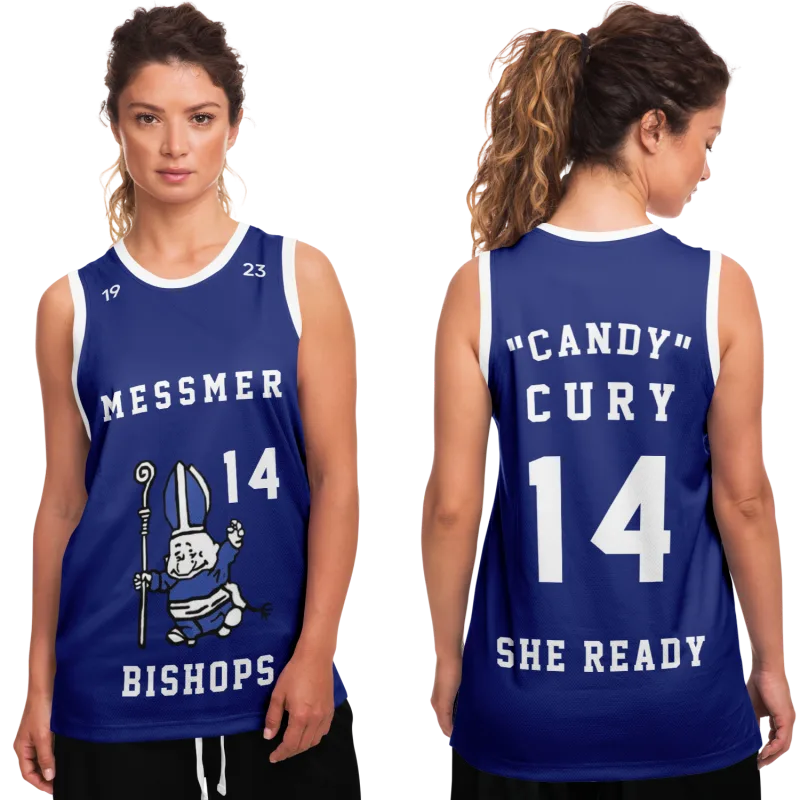

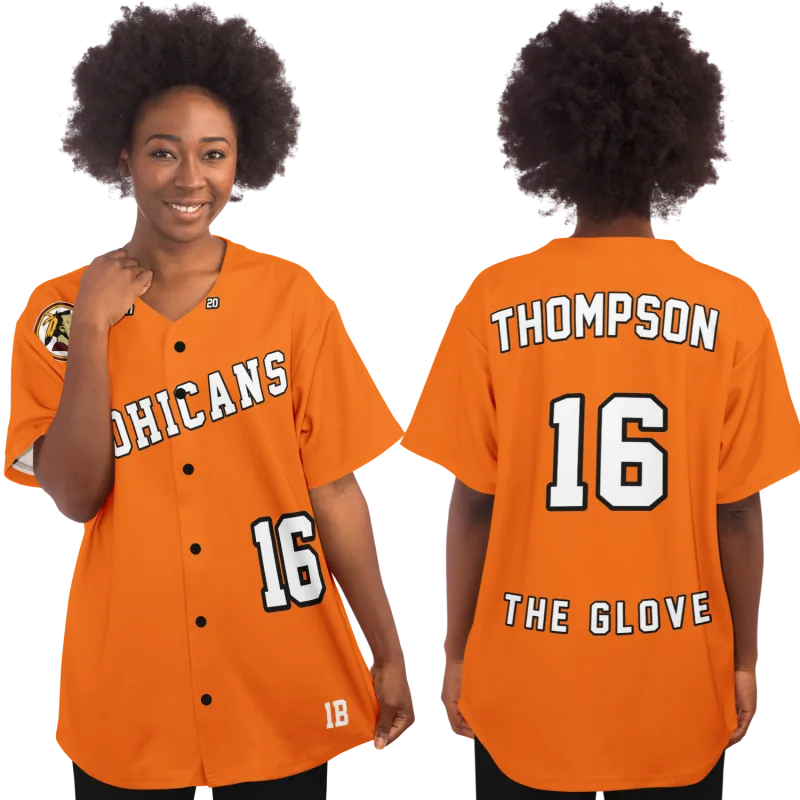

October arrives differently depending on where you've been. For some people it's playoff baseball and cooling evenings. For others it's the particular shade of pink that appears in stadiums and arenas and on the sidelines of games they've watched their whole lives — and that color carries weight that no merchandise campaign fully captures. Breast cancer awareness sports coverage in October tends to spotlight ribbons and gestures. This piece spotlights people. The athletes, the coaches, the competitors who received a diagnosis and decided their sport still belonged to them. Some kept competing through treatment. Some returned to their sport after it. Every one of them expanded the definition of what toughness actually looks like.
One thing worth saying directly at the start: these are not stories about cancer being conquered through force of will, as though the people who didn't make it simply wanted it less. These are stories about women who refused to let a diagnosis become their entire identity. Their athletic selves — the numbers they wore, the benches they walked, the courts and fields they claimed — were part of how they held onto who they were when everything else felt uncertain.
The Athletes Who Kept Showing Up
There is a specific kind of courage that doesn't read as dramatic from the outside. It looks like getting to practice. It looks like taking the court when your body is running a program you didn't install. It looks like pulling on a uniform — or lacing up shoes, or settling into a coaching chair — when stepping away would have been the simpler, more defensible choice.
Sheryl Swoopes belongs in any serious conversation about the greatest players in WNBA history — three MVP awards, four Olympic gold medals, and a competitive presence that defined an era of the game. In 2007, she publicly disclosed her breast cancer diagnosis, joining a group of high-profile athletes whose openness changed the register in which the sports world discussed the disease. Swoopes had built her career on athleticism, competitiveness, and a work ethic that opponents felt. Cancer introduced a different kind of work ethic — one that shows up to infusion appointments, manages treatment side effects, and still thinks about the game on the way home.

Martina Navratilova has spent more decades as a force in tennis than most careers last in total. In February 2023, she announced she was managing simultaneous throat cancer and breast cancer diagnoses. At 66, already a figure of permanent athletic history, her response was entirely in character: direct, clear-eyed, and oriented toward what came next. Navratilova has never softened inconvenient facts, about opponents or about herself. She approached her diagnosis the same way — as information to act on, not a verdict to accept.
Robin Roberts played basketball at Southeastern Louisiana University before becoming one of the most recognized voices in sports broadcasting. Her 2007 breast cancer diagnosis became public, and Roberts has spoken since about how her years as an athlete gave her a specific framework for treatment. Not immunity — a framework. The discipline of showing up when you're not at full capacity. The team culture that makes isolation harder to choose. The understanding that some days you perform at less than your best and that doesn't mean you stop performing.
The Coaches Who Never Left the Bench
A coach's situation during a personal health crisis carries a particular complexity. She is responsible for other people's performance, their growth, their emotional state — while navigating something privately enormous. The coaches who managed breast cancer diagnoses without stepping away from their programs didn't stay because they had no alternative. They stayed because their teams, their athletes, and those relationships were structural parts of their own lives. Removing them would have been its own kind of loss.
Tara VanDerveer has more wins than any coach in college basketball history — men's or women's. In 1995, she was diagnosed with breast cancer and managed treatment while continuing to coach Stanford's program. Her players described the experience as instructive in ways that went beyond basketball. Not because a coach should be required to sacrifice her wellbeing for a program, but because VanDerveer made a choice that was genuinely her own. The bench was where she understood the world. She wasn't going to give it up while she could still be there.
One detail that tends to get left out of the abbreviated version of this story: Stanford won the Pac-10 championship that year.
Kim Mulkey has built two powerhouse programs — at Baylor and at LSU — and is among the most successful coaches in the history of women's basketball. In 2021, she was diagnosed with breast cancer. She kept it private, continuing to coach, and disclosed publicly only in 2022 after completing treatment. In Mulkey's account, the decision to stay private wasn't avoidance. It was authorship. She chose when and how her diagnosis entered her public story. That insistence on controlling the narrative about yourself — on remaining the person who decides what your experience means — is as competitive an instinct as anything that happens in a game.
What the Numbers Actually Say
The statistics that run alongside October's awareness campaigns are worth knowing with some precision. According to the American Cancer Society, breast cancer is the most common cancer among American women (excluding skin cancers), with approximately 1 in 8 women in the United States developing invasive breast cancer over the course of her lifetime. In 2024, an estimated 310,720 new cases of invasive breast cancer were expected to be diagnosed in women in the U.S.
Those numbers exist inside locker rooms. They sit on coaching staffs. They're present in the stands and in front offices and in athletic training rooms. Sports does not exist in a separate world — it is made of the same people carrying the same risks.
What athletes and former athletes may bring to those situations that is genuinely different: a relationship with the physical body that is both more intimate and more adversarial than most. Athletes have trained themselves to push past physical signals, to override discomfort, to locate resources when everything feels depleted. That's an asset in treatment — the capacity to show up when you don't feel like it, to follow a protocol consistently, to trust that the process is working even when the immediate evidence is discouraging.
It is also, in a specific way, a risk. The same instinct that makes an athlete capable of high performance can make early symptoms easier to explain away. The awareness that matters most in sports communities isn't ribbon-colored. It's the kind that says: listen to the signal even when you've trained yourself not to.
A Fan Who Carried Both Things at Once
Denise M., 52, played two years of collegiate softball at a Division III program in the Midwest before a shoulder injury ended her playing career. She stayed connected to the sport afterward — coaching youth leagues, attending games regularly, keeping her old jersey on a shelf in her home office as a piece of furniture she never quite felt ready to put away.
When she was diagnosed with breast cancer at 47, she noticed something that surprised her: she kept reaching for athletic language to explain what she was going through. Not because the metaphors were always accurate, but because they were the vocabulary she trusted. "I kept telling people I was in the middle innings," she said. "Not losing. Not winning yet. Just in it."
After finishing treatment, she ordered a custom jersey in the style of her old number 14 — her college number, the one she'd worn for those two years — as a way of marking the completion of something. She wore it to her first post-treatment checkup. Her oncologist asked about the number. They talked about softball for twenty minutes. It was, she said, the first time since her diagnosis that she felt fully like herself.
How Public Stories Change What Feels Possible
The visible integration of breast cancer awareness into professional sports — the pink-accented equipment in October, the awareness campaigns run through major leagues — is recent enough that athletes from an earlier generation navigated their diagnoses without that cultural acknowledgment in place.
Marcia Nance, a runner who competed at the national level in masters track and field, has described being diagnosed in her late forties and finding almost no public athletic models to reference. She looked for stories of competitors who had kept training or racing through treatment. Very few were findable. "I had to construct my own version of what it could look like," she said. She built a version from scratch and ran it.
The current visibility — imperfect, and subject to fair criticism when it raises awareness without changing outcomes — has produced at minimum one thing of concrete value: stories. Public stories, told by named people, that give the next person to receive a diagnosis a reference point for what might be possible.
That is not a small thing. A newly diagnosed athlete or coach who has seen Navratilova face simultaneous diagnoses with directness, or who knows that VanDerveer coached through treatment and won a conference title in the same year, has something to reach toward. Not a guarantee. Not a template. A possibility — which is sometimes exactly what a person needs to be able to start.
The Uniform as Something That Holds
The psychological dimension of athletic identity during illness doesn't receive enough attention in most breast cancer awareness conversations. For people whose sense of self has been built significantly around physical capability and competitive identity, a diagnosis — and the treatment that follows — can threaten both at once. The physical changes of surgery and chemotherapy alter the body in ways that feel like a specific kind of loss to people who have spent years understanding their bodies as instruments of performance.
Coaches who continued coaching through treatment have described their program's daily structure — film sessions, practice planning, game preparation — as something that gave treatment a container. The disease couldn't expand to fill everything because there was already something in the space. The routine held.
Former athletes who find their way back to their sport in some form — to a team, to a game they coach, to a jersey that belongs to the version of themselves that existed on a court or a field — describe a similar effect. The identity persists. It doesn't disappear into the diagnosis. The illness is part of the story, but it doesn't get to be the whole story.
In our experience covering athlete stories across different sports and generations, the return-to-sport moment — whatever shape it takes — is described consistently as a return to self. Not a return to prior physical capability. A return to the person that sport helped build, who was there the whole time, waiting to be recognized again.
The Athletes We Remember
Honoring this month honestly means naming the athletes who didn't come through to the other side of their diagnoses.
Myra Kraft, whose family's decades-long ownership of the New England Patriots placed her at the center of professional sports life, died of cancer in 2011. Her presence in the organization — at practices, in the locker room, in the lives of players and coaches over years — was the kind of consistent, human presence that shapes a culture without appearing in a box score. The Kraft Family Foundation's subsequent work in her memory has directed significant resources toward cancer research.
The athletes lost to breast cancer and other diseases are not defeated by the fact of dying. They competed. They built things. They were present in the specific, irreplaceable way that only particular people in particular moments can be. The distance of a career or a life varies. The effort that fills it doesn't.
Your jersey is still out there waiting.
Design yours in minutes and see your name and number exactly the way you remember it — a tribute to the athlete you were and the years that shaped you.
Frequently Asked Questions
Which professional sports leagues participate in Breast Cancer Awareness Month?
Major League Baseball, the NFL, the NBA, the WNBA, the NHL, and the NWSL all run official Breast Cancer Awareness Month campaigns in October, featuring pink-accented equipment, uniforms, and merchandise. Many leagues direct a portion of proceeds from awareness merchandise to cancer research organizations, though the specific amounts and recipient organizations vary by league and year. The WNBA has historically maintained some of the most sustained and athlete-driven awareness programming, in part because players have been vocal advocates for the cause over many seasons.
Have any athletes competed professionally during active breast cancer treatment?
Yes, though the specifics depend heavily on the type of treatment, the stage of diagnosis, and the physical demands of the sport. Some athletes have continued to compete during hormone therapy or targeted therapy regimens, which carry fewer immediate effects on physical performance than chemotherapy. Coaches have more frequently continued in their professional roles during treatment, given the different physical demands of coaching versus competition. Each situation is individual, and publicly available accounts are limited by what athletes and coaches choose to share about their own experiences.
How can I honor Breast Cancer Awareness Month through sports?
The most direct approaches include supporting organizations that fund research and patient services rather than awareness alone — look for programs that allocate a high percentage of contributions to research, direct patient support, or early detection initiatives. Amplifying the stories of athletes and coaches who have spoken publicly about their experiences costs nothing and extends the reach of those stories. And if you played a sport and carry an athletic identity that has been part of how you understand yourself, that identity is worth honoring in whatever form feels authentic — including the ones that involve putting on a jersey that reminds you who you were.
What makes athlete voices particularly significant in breast cancer awareness conversations?
Athletes who speak publicly about breast cancer diagnoses reach communities that conventional health campaigns sometimes don't penetrate as effectively. Sports cultures often carry unspoken norms around physical toughness that can make vulnerability harder to express and health signals easier to dismiss. When a recognized athlete or coach speaks openly about a diagnosis, it changes what feels sayable and what feels possible within those communities. It also provides a specific kind of modeling — not that illness is easy, but that it doesn't require a person to stop being who they are.
See also: what high school sports teach you about resilience | the grief of losing your athletic identity | honoring a female athlete who shaped your life