

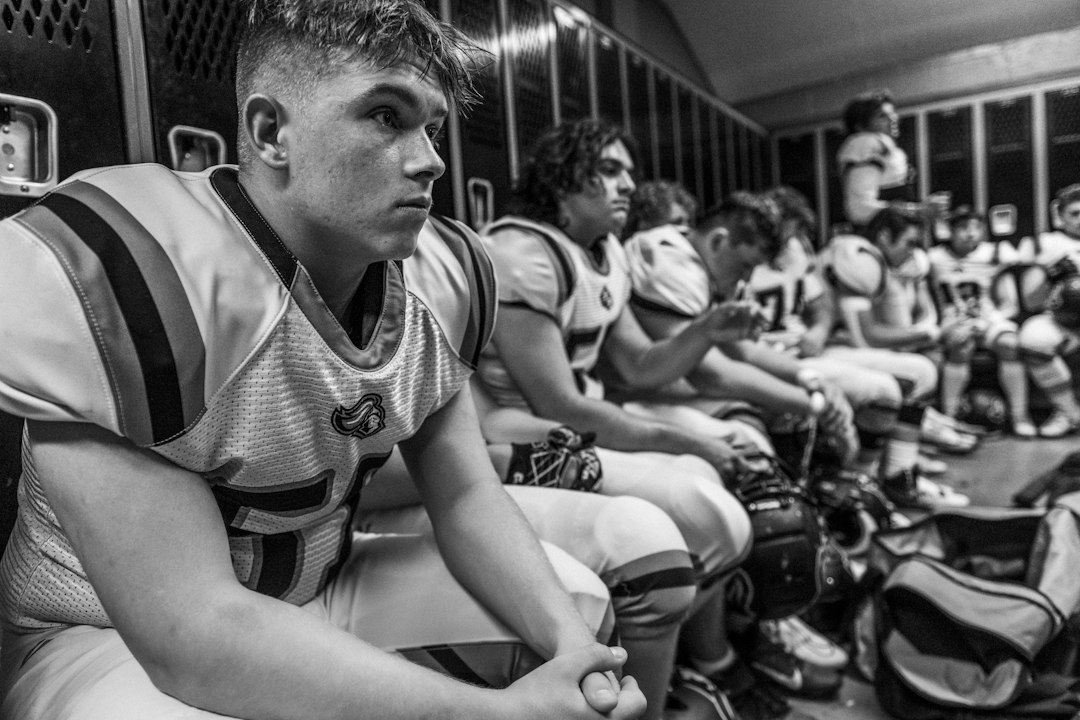




A real jersey has a particular presence to it. Not weight exactly — more like substance. It doesn't bunch at the shoulder seams or go translucent when you hold it up to the light. If you played at any level, your hands remember what that felt like the first time you suited up. The question every former athlete eventually asks is whether a cheap custom jersey can deliver that same feeling — or whether "affordable" is just a polite word for something that looks wrong in every photo and pills within a month.
The answer is more actionable than most guides let on. For former players searching for cheap custom jerseys, the difference between an order that disappoints and one that genuinely satisfies almost always traces back to three things you can verify before you commit to a single dollar: fabric weight, print method, and how the builder approaches sizing. Miss one of those three and the jersey arrives looking like it came out of a costume bin. Nail all three and you have something worth pulling on for years.
This guide walks through exactly what to look for — and what to walk away from — so the first order is the right order.
The Former Athlete's Standard (And Why Generic Jersey Advice Falls Short)
Most jersey buying guides are written for fans. They assume the reader has never worn a game jersey, has no feel for what a mesh back panel is supposed to do, and considers "looks good in a product photo" to be an acceptable finish line.
That is not the reader here.
If you played, you know the difference between a jersey that moves with your body and one that fights every step. You know how a sublimated number sits flush against the fabric while a vinyl one eventually lifts at the corners. You've felt a collar stretch out over a season and watched numbers crack after a few dozen washes. That accumulated muscle memory is a genuine advantage when you're ordering a custom jersey — because it gives you a standard that most buyers don't have. The challenge is knowing which builders actually meet it.


The honest answer is that some do and some don't, and the price tag is a poor predictor of which is which. A $50 jersey from a builder using the right fabric and print process will outlast a $95 jersey from one who doesn't. What matters is the specific evaluation criteria — not the number on the invoice.
Here is that evaluation, in full.
Fabric Weight: The Single Biggest Predictor of Whether Your Jersey Feels Authentic
Every former athlete remembers the moment they pulled on a jersey that felt like it meant something. That sensation is almost entirely a function of fabric weight.
Custom jerseys are built almost universally from polyester, which is correct. Polyester takes dye cleanly, manages moisture effectively, and holds its structure through repeated washing. The variable that separates a jersey that feels like a uniform from one that feels like a prop is the fabric's GSM — grams per square meter — which measures how dense the weave actually is.
What those numbers mean when you're evaluating a builder:
- Below 120 GSM: Thin, prone to wrinkling, semi-transparent under bright light. This is the fabric tier of the lowest-cost suppliers. It photographs poorly and feels immediately wrong when you put it on.
- 140–160 GSM: The range where quality custom jerseys live. Enough density to hold its shape, fully opaque in any lighting, resistant to pilling under normal use. This is the tier worth ordering in.
- 180 GSM and above: Heavier than most game jerseys. Some players prefer the feel; others find it too warm for recreational wear. Worth knowing this tier exists, but heavier is not automatically better.
The practical challenge is that most custom jersey builders don't lead with GSM in their product descriptions. In our experience, builders who know their product will answer a direct question about fabric weight — and builders who can't or won't tell you the GSM of their base material are giving you the answer you need.
One additional factor worth checking: weave structure. Moisture-wicking double knit is what most team jerseys are constructed from. It has a slight texture on the face side and a looped backing that moves sweat away from the skin. Standard single-layer polyester doesn't have either quality. When you're reading a builder's product description, look for "double knit" or "athletic mesh" — not just "100% polyester."
Print Method: The Difference Between a Jersey That Ages Well and One That Doesn't
This is the specification that ends more orders in disappointment than any other — and the one former athletes are most likely to notice immediately, because they've seen what a real number is supposed to look like after a full season of use.
Three print methods dominate the custom jersey market. They produce meaningfully different results.
Dye Sublimation
Sublimation is the right method for custom jerseys built to last. The ink is converted to a gas state and bonded at the molecular level with the polyester fibers — which means the design is not applied on top of the fabric. It becomes part of the fabric. The results are specific and verifiable:
- Colors stay vivid through hundreds of wash cycles without fading
- Numbers and graphics cannot crack, peel, or flake because there is no surface layer to degrade
- The design sits completely flat — no raised edges, no peeling corners after six months
- The entire jersey — base color, numbers, name, any graphic elements — is produced as a unified image
One limitation worth knowing: sublimation bonds only with white or light-colored polyester substrate. For dark colorways, quality sublimation builders print the design onto a white base that photographs as the target dark color. Ask specifically how any builder you're considering handles dark jerseys before placing an order.
Heat Transfer and Vinyl Numbers
This is the method used by mid-tier and low-tier builders trying to approximate the look of sublimation at a lower production cost. A design is printed onto transfer material and heat-pressed onto the finished jersey.
The result looks acceptable in a product photo taken the day it ships. After consistent wear and regular washing, the edges begin separating from the fabric. Within a year of normal use, the numbers are peeling. Former athletes who remember what their numbers looked like after a full season in authentic gear will spot this within the first few months.
There are legitimate uses for high-quality heat transfer — particularly for genuine tackle twill or embroidered applications on premium heavier jerseys. But in the price range most custom jersey buyers are shopping, heat transfer typically means vinyl. Ask directly whether numbers are sublimated or vinyl before the order goes through.
Screen Printing
Screen printing applies ink through a stencil mesh directly onto the fabric surface. It produces solid, saturated colors on the initial print and handles simple designs well. The limitation for jerseys worn and washed regularly: the ink sits on top of the fabric, and it eventually cracks under repeated stress — specifically at the shoulder seams and side panels where the fabric flexes most. For a display piece or an occasional-wear item, screen printing is acceptable. For a jersey that gets real use, sublimation is the only method that holds up without issue.
Sizing: Where More Orders Go Wrong Than Anywhere Else
The fabric weight is right. The print method is correct. And the jersey still arrives looking off — because custom jersey sizing doesn't follow the conventions of any other apparel category.
Most custom builder size charts are built on a single measurement: chest circumference. That number doesn't account for shoulder width, sleeve length, or torso length. A former offensive lineman and a former point guard can share an identical chest measurement and need completely different jersey proportions. The standard size chart doesn't see that distinction.
The approach that actually works:
- Pull up the builder's size chart and find the actual measurements — inches or centimeters — not just the S through XXXL label column.
- Measure your chest at its widest point. Then measure your shoulder width from seam to seam on a jersey that already fits correctly. Then measure your torso length from the base of your collar to your natural waistband. Compare all three against the chart.
- If the builder offers only one measurement to size by, go up one size. A custom jersey that's slightly large reads as intentional. One that's too small reads as a mistake.
For athletes with proportions that fall outside standard athletic build ranges — former linemen, former rowers, former throwers — look for builders offering custom measurement input rather than fixed size tiers. Several quality builders allow full measurement entry for a modest additional fee. That fee is almost always recovered in the avoided cost of a return and re-order.
One specific detail worth checking: jersey length varies significantly between builders and sport conventions. Skill position players generally wore shorter cuts; linemen wore longer drops at the front hem. If cut matters to your specific use, ask for the jersey's finished front hem length before the order is placed.
Marcus T., 38 — Former College Soccer Defender
Marcus ordered a custom jersey for his college team's ten-year reunion — his old colors, his number, the same general style he wore every Saturday. The first builder he tried produced a jersey where the number lifted at the bottom-left corner after the third wash. He reordered from a sublimation-first builder, confirmed the GSM directly with their support team, and sized up one step based on the chest measurement chart. The second jersey is what he wears to every pickup game now. Two years of regular use, and the numbers are still completely flat and vivid. The price difference between the two orders was eleven dollars. The difference in outcome was everything.
Evaluating Builders: What Separates the Ones Worth Your Time
The custom jersey market has expanded considerably, and the quality range is wide. Here is how to quickly filter the builders worth evaluating from the ones that will disappoint you.
Signs a builder is worth your time:
- They specify fabric GSM in product descriptions or answer the question directly when asked
- They state explicitly that their method is dye sublimation, not heat transfer vinyl
- They show real wear photos — jerseys after repeated washing, not just fresh-from-production imagery
- They provide a size chart with actual measurements, not just size label tiers
- They have a clear revision or return policy for sizing errors on their end
Signs to move on:
- The product page shows a jersey but describes neither the fabric weight nor the print method anywhere on the page
- Pricing falls below $25 for a fully custom jersey — at that price point, the fabric and print quality cannot meet the standard described above
- Reviews mention peeling, cracking, or color fading within the first three months of normal use
- No measurement-based size chart exists anywhere on the site
The price range where quality and value genuinely intersect for custom jerseys sits between roughly $45 and $85 for a single piece. Below $40 consistently signals compromised fabric or print method. Above $90 enters premium territory that most buyers don't need for a jersey they'll wear to reunions and recreational leagues.
According to the Sports and Fitness Industry Association, athletic apparel spending on personalized and custom items has grown steadily as former athletes look to reconnect with their playing-days identity — which means the market has attracted suppliers at every quality tier. Knowing how to evaluate them is the only reliable filter.
Getting the Number and Name Right
This is the detail former athletes care most about — and the one most buying guides skip entirely.
Font selection matters more than most buyers expect. The number font on your jersey should match the visual conventions of your sport. A basketball jersey with a football-style block number font looks wrong to anyone who played either game. Quality builders offer sport-specific font libraries. Use them. Don't default to the generic bold option because it looks passable in the design preview — what reads as "close enough" on a laptop screen at thumbnail size looks clearly wrong on a jersey at arm's length.
The same principle applies to nameplate fonts and sizing. College football nameplates traditionally run large and block-serif. College basketball runs narrower with more letter spacing. If the builder's design tool allows font size adjustment, check the convention for your sport before accepting the default setting.
The two name and number mistakes that show up most often:
- Choosing a number outline color that disappears against the jersey background — white outline on a light silver base, for example, reads as no outline at all
- Selecting a name font that is technically readable but doesn't belong to the visual language of the sport
Preview tools help narrow the gap, but only if the builder's preview renders at true proportional size. Some previews do not. Ask whether the preview is proportionally accurate before treating it as a final proof.
Your Jersey Is Still Out There Waiting
Design yours in minutes and see your name and number exactly the way you remember them.
Frequently Asked Questions
What is the minimum order quantity for cheap custom jerseys for former players?
Most quality custom jersey builders offer single-piece ordering with no minimum quantity requirement. Single-piece pricing runs higher per unit than bulk orders — expect $45 to $85 for a single jersey from a sublimation-first builder. If you are ordering for a reunion group of six or more players, ask about quantity pricing directly. Most builders apply a per-unit discount at that threshold, and the savings can be significant on larger orders.
Can I use my actual old number and team colors, or are there restrictions?
Your own number from your playing career is yours to use — there are no restrictions on a player ordering a jersey featuring their personal number. Colors are similarly unrestricted for recreational and personal custom orders. The restrictions that apply to licensed merchandise involve official trademarks — a professional or collegiate team's specific wordmarks and logos. A jersey in the style of your old school's colors, with your number, produced for personal use, does not require any license. The jersey is a tribute to your own playing days, not a licensed team product.
How long does production typically take for a custom jersey order?
Standard production time for a sublimation-printed custom jersey runs 7 to 14 business days from art approval to shipment, depending on the builder's current production queue. Most quality builders offer a rush option for an additional fee that reduces production time to 3 to 5 business days. Shipping time is in addition to production time — factor both when planning around a specific event date, and confirm the builder's current lead time before placing a time-sensitive order.
Is there a way to verify print quality before committing to a full group order?
The most reliable approach is to order a single test jersey before placing a group order. Some builders offer a physical sample or proof service — a jersey produced for review before the full run begins — for an additional fee. For a single personal jersey, the sample is the order itself, so evaluate based on the builder's posted review photos, their stated print method, and their return or revision policy for quality defects. A builder who stands behind defective print quality with a no-questions correction policy is signaling genuine confidence in their process.
What care instructions keep a sublimation-printed jersey looking right over time?
Wash sublimation jerseys inside-out in cold water on a gentle cycle. Avoid fabric softener — it coats polyester fibers over time and gradually degrades both moisture-wicking performance and color vibrancy. Tumble dry on low heat or hang to dry. High dryer heat is the primary cause of premature color fading on polyester sublimation fabric. If your jersey uses vinyl heat-transfer numbers rather than sublimation, hang-dry only and keep any iron or heat source away from the number and nameplate areas entirely.
See also: personalized sports gifts vs. generic options | custom softball jerseys for alumni games | jersey size chart and what those numbers actually mean | adult recreational leagues where former players suit up again