
There's a photo somewhere in your dad's house. Maybe it's buried in a box in the closet. Maybe it's sitting in a frame on a shelf that nobody's dusted in years. In it, he's young — really young — and he's wearing a uniform with a number on it. His number. And the look on his face is one you've never quite seen in any other photo of him.
That's the photo this article is about.
If you're searching for father's day gifts for sports dads, you've probably already scrolled past a hundred versions of the same answer: a team logo tumbler, a "World's Greatest Sports Dad" sign, a subscription to whatever streaming package carries his team. Those gifts are fine. They say I know you watch sports.
But there's a different gift. One that says I know who you were.
That's the distinction worth understanding before you spend a dollar on anything. And it's the one that separates a forgettable Father's Day from one he actually talks about.
Before you start scrolling or ordering, let that difference sit for a second. A gift for a sports dad who once played is not competing with the latest merchandise drop. It is competing with a memory. That means the bar is not about being clever; it is about being true. If you can get one detail right — the number, the colors, the way he said his name in the huddle — you have already done more than most gifts ever will.
The Fan and the Athlete Are Not the Same Person
Here's something worth sitting with: most sports dads who are serious fans didn't just grow up watching the game. They played it.
At some point — Friday nights under the lights, or Saturday mornings on a field that smelled like wet grass and chalk lines — they weren't spectators. They were participants. They had a position. They had a number. They had teammates who knew their last name better than their first. They had a coach who called on them specifically, by name, when it mattered.
That version of your dad is not the same as the man who watches games on the couch. The couch version is real, and he loves that couch, and he's happy there. But the athlete version? That one ran on something different. Something that doesn't show up in fan gear.
Sports psychologists who study athletic identity — including work published in the Journal of Sport and Exercise Psychology — have documented what many former athletes already feel intuitively: athletic identity is one of the most persistent self-concepts a person carries, often outlasting the sport itself by decades. Former high school athletes frequently describe their playing years as the period when they felt most themselves: most competent, most recognized, most alive to the specific thing they were good at.
That's not nostalgia for its own sake. That's identity.
Think about the way he still talks about his number, or how his voice changes when he tells a story from the field. Those details are not small. They are the outlines of a version of him that once ran out in front of a crowd and heard his name announced. A gift that goes there is not just a nod to his past; it is an acknowledgement that the player he was is still part of the man he is.
And here's what that means for you, practically: a gift that touches that identity, that says I see the player, not just the fan, lands in an entirely different emotional register than any mass-produced piece of team gear ever will. If that wording still feels slippery, it helps to understand the difference between a throwback jersey and a fan jersey. One is built to commemorate a team, the other to commemorate the person who wore it.
What He Actually Misses (It's Not the Winning)
Ask a former high school athlete what he misses about playing, and you'll usually get one of a few answers.
Some say the competition. Some say the camaraderie. A few say the specific physical feeling of being good at something with your whole body: the throw that left your hand perfectly, the catch that didn't require a thought, the moment where training and instinct converged into something clean and effortless.
But almost none of them say they miss watching highlights.
You might hear him mention the way the field looked after a rain, or the exact way his coach said his name when he was being called up, or the little piece of tape he always put on his wrist. Those details can sound trivial if you aren't listening closely. They aren't trivial. They are the physical remains of a version of himself he carries around without always being able to name it.
That's the quiet insight behind every truly great gift for a sports dad: he doesn't miss the outcome. He misses the experience of being in it. He misses the locker room smell. The pre-game ritual. The specific weight of his jersey before it was worn in. The way his number looked on his back. The walk from the bus to the field.
The fan experience is about other people's outcomes. The athletic experience is about his.
A gift that reaches back to the athlete doesn't need to be complicated. It doesn't need to be expensive. It needs to be specific: to him, to his sport, to his number, to his name. Specificity is what tells him that someone actually paid attention. That someone understood the difference between the man he is now and the player he was then — and thought that player was worth remembering.
Father's Day Gifts for Sports Dads That Actually Land
This is where it gets practical. Here are the categories of Father's Day gifts that consistently resonate with former high school athletes, not because they're trendy, but because of what they communicate.
The best gifts in this category share one trait: they treat his playing days as a lived experience rather than a theme. They are not built around a generic mascot or a one-liner. They are built around the specific markers he still sees in his own memory when he closes his eyes.
Gifts That Restore the Physical Object
There was a jersey. There was a uniform. For many former athletes, those objects are gone — lost in a move, worn out, outgrown in some combination of literal and figurative ways. Restoring that object — even a version of it — does something no amount of fan merchandise ever can.
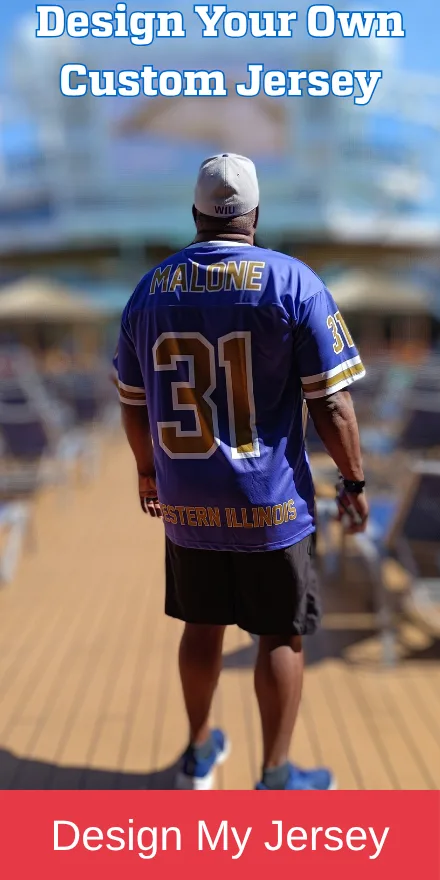
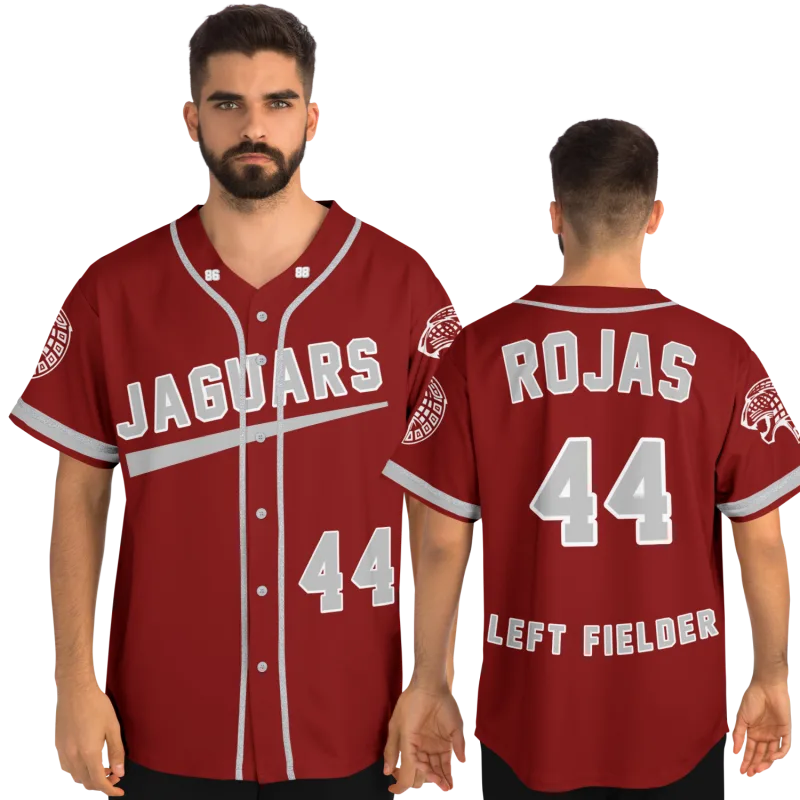
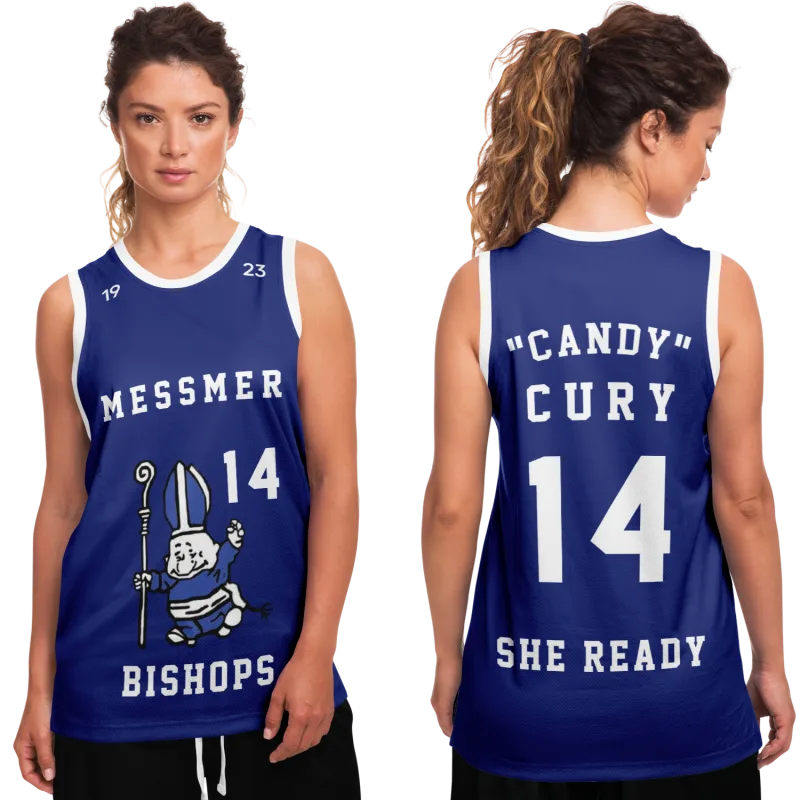
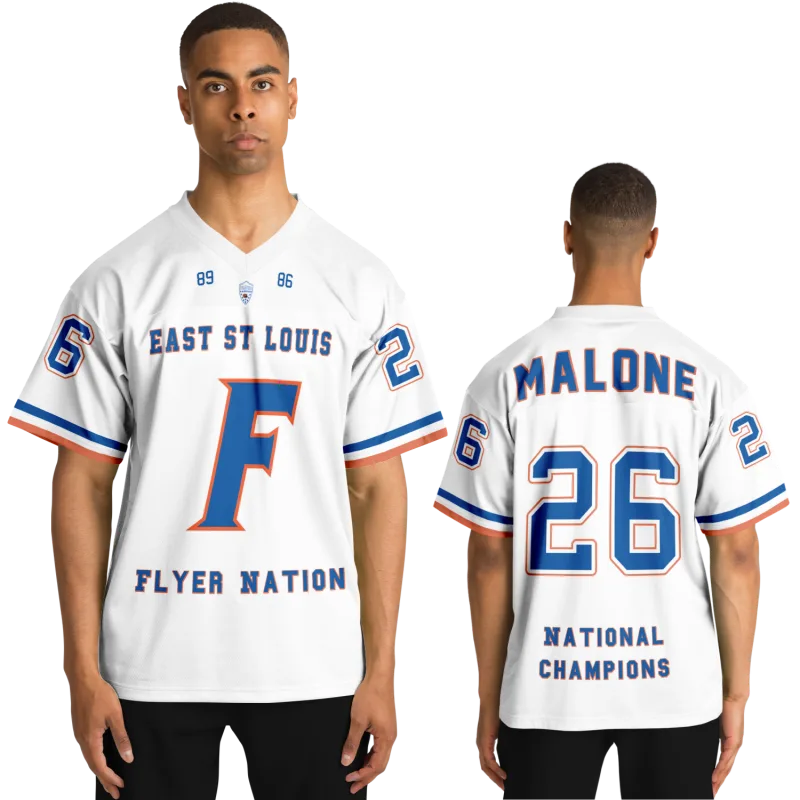
A custom-designed throwback jersey with his actual name, his actual number, and his actual school's colors isn't about someone else's legacy. It's a reconstruction of his own. Open it and the room tends to go quiet — the kind of quiet that precedes something being felt rather than said. The same details carry over to every sport. Gift ideas for the dad who played basketball begin with his name, his number, and the team he suited up for.
The specific elements that make this work:
- His name on the back, not a professional athlete's name. This is non-negotiable. A jersey with someone else's name, no matter how beloved that player is, reinforces that he's a fan. A jersey with his name reinforces that he was a player.
- His number. Not a random number. Not the number of his favorite current athlete. His number: the one he wore, the one his teammates called out, the one he looked down and saw when he suited up.
- His sport's visual language. The cut, the font style, the color blocking. These details are what make it feel authentic rather than generic. A football jersey built like a basketball jersey doesn't land the same way.
What makes these elements powerful is that they aren't decorative choices. They are the sensory markers he used to identify himself when he played. Seeing them again can trigger a feeling of wholeness that doesn't require him to explain anything.
Gifts That Recreate the Recognition
One thing that fades after athletic careers end — for most former high school athletes — is the specific experience of public recognition. Not fame, but the particular feeling of being seen as something. The scoreboard with your score on it. The box score with your name in it. The crowd that knew who you were in that context.
A framed custom stat card, a personalized print with his position and number, a piece of wall art that treats his high school career with the same visual seriousness that professional careers get — these gifts say: what you did was worth memorializing. That's not a small thing to say. For a lot of former athletes, nobody has said it since they stopped playing.
Gifts That Invite the Story
Some of the most meaningful Father's Day gifts for sports dads aren't objects at all. They're invitations. A custom-designed memory book that walks through his playing years. A recorded interview project where family members ask him to tell the stories he's told only in fragments. A framed question card that poses something like: "Tell me about the game you remember most."
These gifts do something the others don't: they make clear that you want to hear the story. That you're not just acknowledging he played — you're curious about what it was actually like. That curiosity is, for many former athletes, the thing they've been quietly waiting for.
One Father's Story
Marcus T., 54, played defensive back for his high school in East St. Louis, three varsity seasons, two playoff runs, and one interception in a regional semifinal that his teammates still text him about on the anniversary.
His daughter Emma searched for something to give him on Father's Day last year and kept running into the same wall: everything she found was about a team he follows now, not the team he played for then. She found a service that let her design a custom jersey with his name, his number — 28 — and the color scheme from his old school. When he opened it, he didn't say anything for almost a full minute. Then he said, "I didn't think anyone still knew I wore 28."
That's the whole thing right there. He didn't think anyone still knew.
Emma spent less on that jersey than she'd spent on previous Father's Day gifts that he thanked her for politely and set aside. That jersey is on a hanger in his bedroom, and he's worn it to two family barbecues.
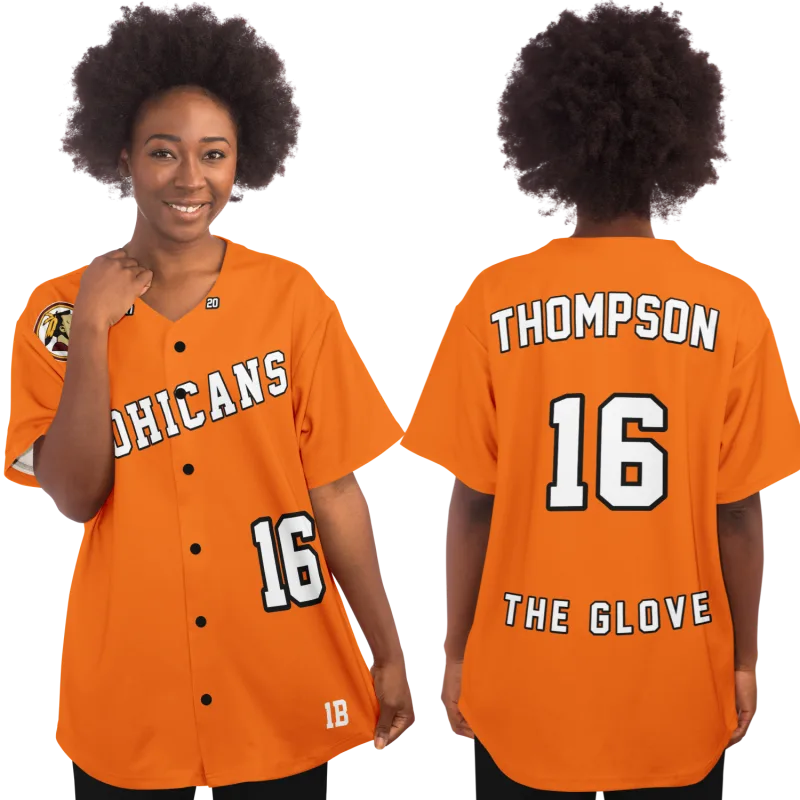
There's another version of this same moment that plays out every June. A son designs a baseball jersey for his dad, using the number he wore as a senior and the green and gold he wore every spring. The dad doesn't say much. Later, he puts it on to take out the trash and doesn't take it off until bed. When his wife asks him about it, he says, "I forgot how much I missed it." That's not a gift receipt moment. That's a memory being handed back in a form he can still put on.
The Difference Between Touching and Gimmicky
Not every "sports-themed personalized gift" hits the mark. It's worth being honest about what separates the ones that land from the ones that feel like they were generated by an algorithm.
What makes it land:
- Genuine specificity (his name, his number, his sport — not generic "athlete" framing)
- Visual quality that treats his history seriously, not kitschy
- The sense that someone thought about him, not about what sports dads as a category might like
What makes it miss:
- Generic personalization that just inserts a name into an otherwise mass-produced design
- Sentimentality that tips into condescension ("World's Greatest Retired Athlete" energy)
- Objects that are clearly designed to sit on a shelf and be appreciated in theory rather than actually used
The test is simple: when he opens it, does it feel like it was made for him specifically, or does it feel like it was made for anyone who played a sport? The former has a shot at meaning something. The latter goes in the "that was thoughtful" pile and rarely reappears.
If you're unsure between two directions, lean toward the smaller, truer detail rather than the bigger, generic one. A jersey with his number but no extra embroidery is better than a jersey with a cliché phrase and the wrong number. The truth is already enough; the job is just to get it out of the box.
How to Get the Details Right
If you're going the custom jersey route — which is genuinely the highest-signal gift in this category — there are a few things worth confirming before you order.
-
Verify the number. If you don't know it, ask someone who would: a sibling, his mother if she's around, an old friend from that era. Or just ask him. Framing it as "I was looking at old photos and couldn't read the number clearly" works fine and doesn't spoil the gift.
-
Get the school colors right. "Blue and white" is not enough. There's a specific blue. If you can find an old photo, screenshot it and use it as your color reference when designing.
-
Choose the sport-appropriate cut and font. A football jersey shouldn't look like a basketball jersey. A baseball jersey should have the correct button placket and sleeve style. The right platform will offer sport-specific templates. Use them. Generic "sports jersey" templates are detectable and feel off.
-
Check sizing generously. He may have been a different size at 17. Order with current measurements in mind, and when in doubt, go one size up. A jersey that fits him now is one he'll actually wear.
One more thing: order early enough to give yourself room for any adjustments. The best Father's Day gifts are not rushed. When you give yourself a little breathing room, you can review the number, check the colors against an old photo, and sit with the design until it feels like him.
Your jersey is still out there waiting.
Design yours in minutes and see your name and number the way you remember it.
Frequently Asked Questions
What makes a Father's Day gift meaningful for a former athlete versus a current sports fan?
A gift for a sports fan acknowledges what he watches. A gift for a former athlete acknowledges who he was. The distinction matters because athletic identity — the sense of self built during playing years — is one of the most persistent parts of how former athletes understand themselves. A gift that touches that identity, rather than his fan preferences, reaches something deeper and more personal. Custom items featuring his actual name, his actual number, and his actual sport hit differently than any piece of store-bought fan gear ever will.
How do I find out what number he wore if I don't already know?
A few reliable approaches: ask a sibling or parent who was around during his playing years, look for old photos on social media or in family albums, or reach out to former teammates if you have any connection to them. Alternatively, you can ask him directly under a light pretext — "I was trying to describe an old photo to someone and couldn't make out the number on your jersey" is a natural framing that rarely raises suspicion. Most former athletes remember their number immediately and without hesitation.
Is a custom jersey something he'd actually wear, or is it more of a display piece?
Both, and that's fine — but it's worth designing with wearability in mind if you want it to serve double duty. Choose a cut that fits his current size rather than his high school size, opt for a fabric weight that's comfortable in warm weather (lighter mesh works well for casual wear), and make sure the design looks like something he'd be comfortable wearing to a family gathering or a backyard cookout. A jersey that fits well and looks sharp is one he'll actually put on. A display-only version can be meaningful too, but the ones that get worn carry a different kind of significance.
What if I don't know much about the sport he played — will I be able to design something that looks authentic?
Yes, if you use a platform with sport-specific templates. Good jersey design platforms offer templates built around the visual conventions of each sport — football, basketball, baseball, soccer, track, and others — so the cut, numbering placement, and general aesthetic are already appropriate to the sport. Your job is to supply the personal details: name, number, colors, and any specific design preferences. The template handles the sport-specific accuracy.
Are there other gift ideas that work well alongside a custom jersey for a sports dad?
A few that pair naturally: a framed stat card that puts his position and number on the wall, a memory book that gathers the stories he's told in pieces over the years, and a print or photo from his playing days for the same shelf. None of them compete with the jersey — they just give it something to sit next to. And if you're shopping outside June, holiday gift ideas for someone who played football in high school come down to the same three things: his name, his number, and the team he actually suited up for.
See also: personalized sports gifts vs. generic store-bought options | why high school sports still matter to adults