

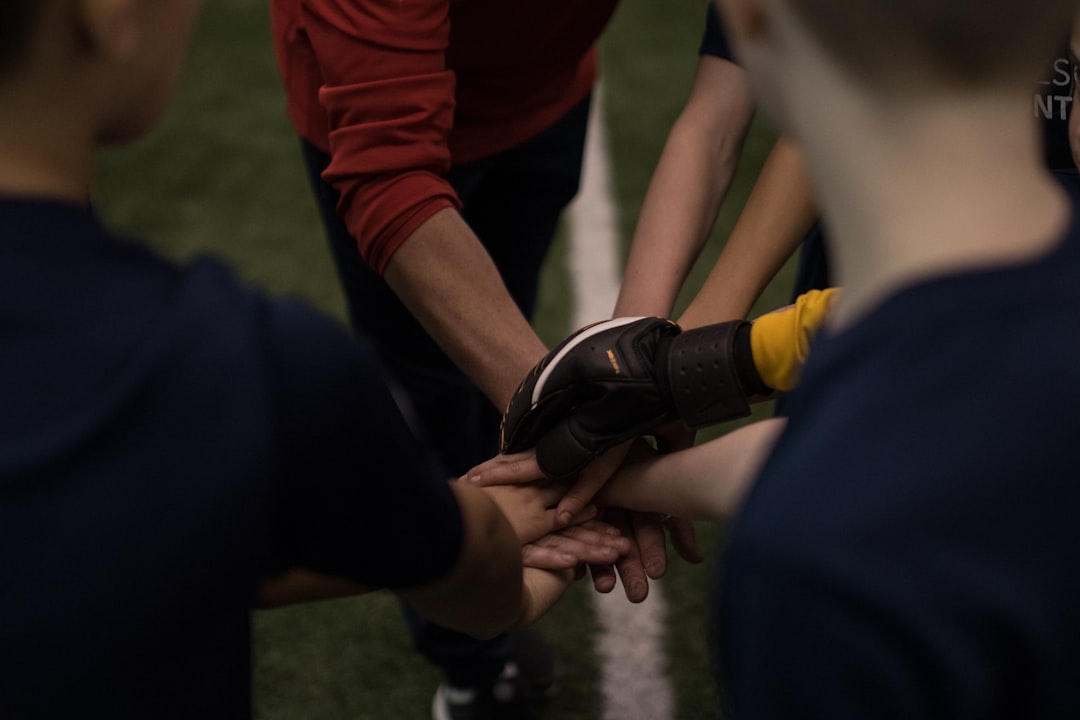
There's a moment every former athlete knows — the first week in a new job, when you realize the conference room runs nothing like a locker room, and yet somehow, somehow, you already know how to navigate it.
Former athletes in the workplace have been the subject of informal hiring wisdom for decades. Coaches' mantras pass through corporate corridors: hire the athlete, they'll figure out the rest. But informal wisdom isn't enough anymore. The question HR departments, team leads, and founders are asking now is sharper: What does the data actually say?
It turns out the answer is more specific — and more interesting — than anyone expected.
The Measurable Advantages Former Athletes Bring to Work
The research doesn't traffic in vague terms like "hustle" or "grit." It identifies specific, measurable cognitive and behavioral patterns that competitive athletic training produces — patterns that transfer almost directly into high-performance professional environments.
A Cornell University study on athletes and leadership development identified that varsity athletes demonstrate significantly higher scores in goal-setting persistence, structured feedback receptivity, and performance recovery after failure than their non-athlete counterparts entering the workforce. Those aren't soft skills. They're operational predictors of who performs under pressure.
The specifics matter here, so let's break them down.
Coachability: The Trait That Compounds Over Time
Ask any hiring manager what separates high performers from everyone else eighteen months into a role, and you'll hear some version of the same answer: the ones who got better, got better faster.
Athletes are trained to receive corrective feedback as information, not judgment. From the first season of organized competition, an athlete learns that the coach's critique exists to improve performance — not to evaluate worth. That reframe is not small. Most adults in professional settings experience corrective feedback as a threat to identity. Athletes experience it as data.
In our experience talking with former collegiate competitors who've transitioned to corporate roles, the pattern is consistent: they process criticism faster, they don't marinate in defensiveness, and they implement adjustments in the next performance cycle rather than the next quarter. That's a compounding advantage that grows more visible with every year on the job.
Tolerance for Structured Failure
Here's the counterintuitive piece that most "athletes make great employees" articles miss.

Athletes lose. Constantly. A basketball player who shoots 40% from the field is considered excellent — which means they miss 60% of the time and still step up to shoot again. A swimmer who finishes third in a dual meet at a Division II school has failed to win by every conventional metric, and then woke up the next morning and went back to the pool.
That repeated exposure to structured failure — failure within a framework of continued effort and measurable improvement — creates something specific in the psychological profile of former athletes. Psychologists call it failure tolerance with recovery orientation. The practical translation: former athletes don't catastrophize setbacks. They process, adjust, and move.
In high-velocity work environments — sales teams, product development cycles, client services — that failure tolerance isn't a nice personality trait. It's a competitive differentiator.
Goal Architecture: Systems Thinking Before It Had a Name
Competitive sports training is, at its core, a masterclass in backwards-planning from outcomes. Every athlete learns, at some level, how to identify a performance goal, break it into training components, execute against a daily practice schedule, and assess progress against measurable markers. That's a project management framework. It just happens to be taught in athletic shorts.
Former athletes don't need to be taught to work backward from a deadline. They've done it since they were sixteen, trying to peak for the state championship. When they enter professional roles, they bring a pre-installed operating system for goal architecture that many of their colleagues spend years trying to build.
What the Hiring Research Actually Shows
The anecdotal case for athletes has been made a thousand times in a thousand LinkedIn posts. The research case is more specific — and more useful.
Two landmark longitudinal studies stand out. The first — Kniffin, Wansink & Shimizu's "Sports at Work" study, published in the Journal of Leadership & Organizational Studies — tracked 931 World War II veterans roughly 60 years after high school. The second, from Harvard Business School research, followed more than 400,000 graduates across roughly 50 years. Together, they replace folklore with specific, measurable findings:
- Higher career earnings — and a gap that widens with time: The Harvard study of 400,000+ graduates found varsity athletes earn about 3.4% more over the course of their careers than non-athlete peers and are more likely to reach the C-suite. Just as notable is the timing: the advantage doesn't appear on day one. It emerges 5–10 years after graduation and widens 20–25 years out.
- Leadership, self-confidence, and self-respect: Kniffin, Wansink & Shimizu's "Sports at Work" study — 931 WWII veterans, surveyed about 60 years after high school — found varsity athletes reported significantly higher levels of leadership, self-confidence, and self-respect than non-athletes, and were more likely to land higher-status careers and upper-management roles.
- More prosocial behavior, not less: The same 60-year study surfaced a finding that runs against the "win-at-all-costs" stereotype: former athletes volunteered more of their time and donated more to charity than their non-athlete peers. The competitive edge, it turns out, carries a community-minded streak alongside it.
The pattern across these findings isn't accidental. Athletic training creates a specific psychological and behavioral profile. That profile maps almost precisely onto what high-performance professional environments require.
The Identity Factor Nobody Talks About
There's a dimension of former athlete performance in the workplace that the standard research barely touches — and it's arguably the most important one.
Athletes don't just develop skills. They develop identity.
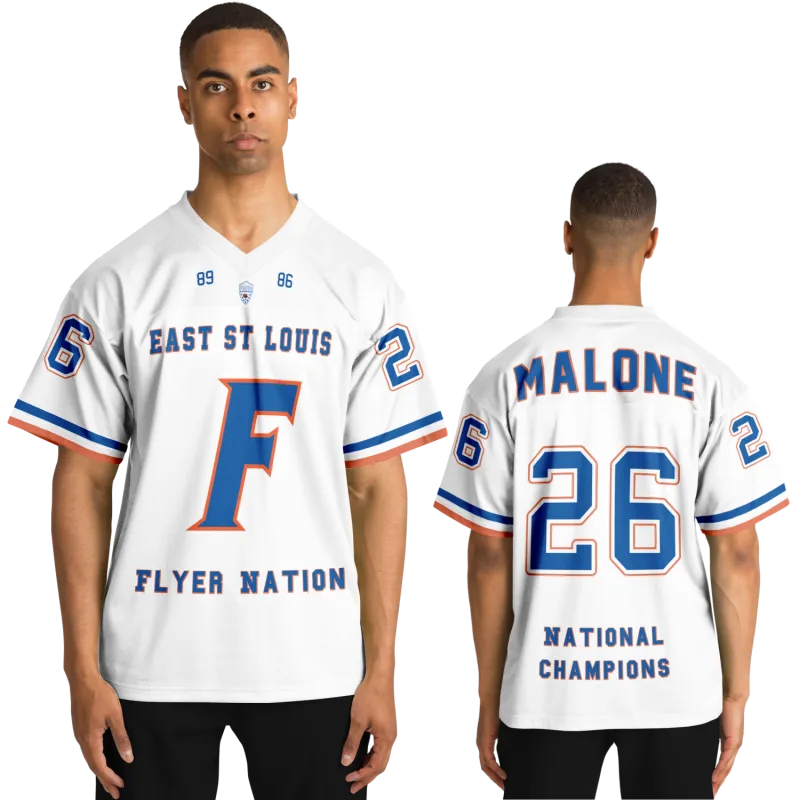
The jersey isn't decoration. It's a declaration. From the first time a young athlete wears their team colors, they're receiving a powerful behavioral signal: this is who you are, this is what you represent, this is the standard you're held to. That identity encoding runs deeper than most people appreciate.
Marcus T., 34, a former Division I soccer midfielder who now manages a regional logistics team, describes it this way: "I still think about what it meant to wear that jersey. It wasn't just a shirt. It was everything we had worked for. When I'm in a hard meeting now, I remember what it felt like to compete with that kind of accountability. It sounds strange, but it still works."
That's not nostalgia. That's a functional identity anchor — a reference point the former athlete can return to when professional pressure escalates. The research on identity-based motivation confirms that people who have internalized a high-performance identity as part of their self-concept are more likely to sustain effort through difficulty. The jersey, the number, the record — these aren't just memories. They're motivational infrastructure.
The Transferable Skills Matrix: What Each Sport Builds
Not all athletic backgrounds transfer the same way. Different sports develop different dominant skill profiles — and smart employers (and former athletes themselves) understand which dimensions of their training map most directly onto their professional context.
Individual Sports: Pressure Ownership and Self-Direction
Swimmers, wrestlers, golfers, gymnasts, and track athletes compete in environments where no one can help you mid-performance. You've prepared, and then you're alone with the result. That builds a specific variant of pressure tolerance: the ability to perform when the outcome is entirely yours to own.
Former individual-sport athletes tend to excel in roles requiring autonomous performance — individual contributor positions, solo project ownership, client-facing roles where every interaction is a one-on-one performance moment. They're comfortable being the only one on the line.
Team Sports: Communication Under Pressure and Distributed Accountability
Team sport athletes — basketball, soccer, volleyball, lacrosse, football — develop a different but equally valuable profile. They learn to trust decisions made by others, to communicate essential information in compressed timeframes, and to accept accountability for collective outcomes even when their individual performance was strong.
This profile maps directly onto matrix organizations, cross-functional teams, and any environment where success requires coordination across people who don't report to you. The ability to move a team without authority is one of the most valuable leadership competencies in modern organizations. Team sport athletes have been developing it since middle school.
Combat and Endurance Sports: Recalibrated Pain Thresholds
Distance runners, cyclists, wrestlers, and martial artists develop something that neither individual nor team sport athletes develop quite the same way: the learned knowledge that discomfort is not a stop signal.
In endurance sports, you learn that the feeling of wanting to stop is not the body saying stop — it's the body saying this is hard. That distinction — between genuine limit and perceived limit — recalibrates the athlete's relationship to difficulty. Former endurance athletes in the workplace routinely outlast colleagues on high-friction, long-cycle projects because they've already learned to separate the feeling of difficulty from the decision to quit.
The Coaching Relationship and Its Professional Echo
One of the most underexamined advantages former athletes carry into the workplace is their relationship to authority and guidance.
Most professionals learn to manage upward awkwardly. They're uncertain when to push back, uncertain when to defer, uncertain how to receive direction from someone with more context and a different vantage point. Athletes spend years learning this navigation with coaches.
The coach-athlete relationship is one of the most sophisticated authority dynamics in human development. The athlete learns to: receive direction without resentment, push back constructively when their own performance data contradicts the coaching call, earn autonomy incrementally through demonstrated performance, and hold the relationship itself as valuable separate from agreement with every decision.
That's a template for managing the boss-employee dynamic that most people take years to develop through trial and error. Former athletes arrive with the template pre-loaded.
What Former Athletes Need to Watch For
In the interest of being specific rather than promotional about this: the athletic profile doesn't transfer without friction. There are adjustment areas that former athletes in professional environments consistently navigate.
Hyper-competitiveness in collaborative contexts. The athlete who needs to win every room — every brainstorming session, every debate, every performance ranking — can exhaust colleagues and undermine the collaborative trust that sustains teams. Competition was externally directed in sports. Redirecting it internally can take deliberate effort.
Binary thinking about performance. Sports outcomes are binary: you won or you lost, you made the team or you didn't, you hit your time or you fell short. Professional success is rarely binary. Former athletes sometimes struggle with the ambiguity of "good enough" performance windows and the slow, non-linear arc of organizational change.
These aren't disqualifying tendencies. They're known adjustment areas with known solutions — the kind of clear feedback athletes have always responded well to.
Your jersey is still out there waiting.
Design yours in minutes and see your name and number the way you remember them — with colors that never crack, peel, or fade.
Frequently Asked Questions
Do former athletes actually perform better in the workplace, or is that just a hiring bias?
The evidence points to real performance differences, not just hiring bias. Studies tracking career outcomes over 5–10 years consistently show former athletes reaching higher compensation levels and faster promotion timelines than comparable non-athlete peers. The mechanism isn't mysterious: structured athletic training builds specific behavioral patterns — feedback receptivity, failure recovery, goal architecture — that directly predict professional performance. Hiring preference for athletes is partly bias, but the underlying performance data justifies at least part of that preference.
Which sports background is most valued by employers?
In our experience, employers in different industries tend to value different athletic backgrounds. Team sports (basketball, soccer, lacrosse, volleyball) translate well into collaborative, matrix-organization environments. Individual sports (swimming, wrestling, golf) translate well into autonomous contributor and client-facing roles. Endurance sports translate particularly well into long-cycle project environments and high-attrition roles that require sustained effort over months. The honest answer: the sport matters less than what the athlete developed within it.
How long does the athletic advantage last in a professional career?
The behavioral advantages are durable — coachability, failure tolerance, goal architecture, and pressure performance are traits, not skills, and they don't expire. The identity advantage — drawing on athletic identity as a motivational anchor — also appears to sustain across career stages, provided the athlete maintains a healthy relationship to that identity rather than using it to resist professional growth. Former athletes who integrate their athletic past as part of a larger identity narrative tend to outperform those who either cling to it or reject it entirely.
What's the best way for former athletes to communicate their athletic background in job applications?
The mistake is listing sports participation as a credential and leaving the work for the reader. The more effective approach is translating the specific experience: instead of "played Division I volleyball," write "managed a 35-person roster dynamic, received and implemented weekly performance feedback from a coaching staff, and competed in high-stakes evaluations across a 30-match season." That's the same experience, translated into the language of the professional value it created. Hiring managers don't need to care about volleyball. They need to see the transferable pattern.
See also: what high school sports actually teach you about discipline and teamwork | athletic identity that carries into adulthood | why high school sports still matter to the adults who played them