

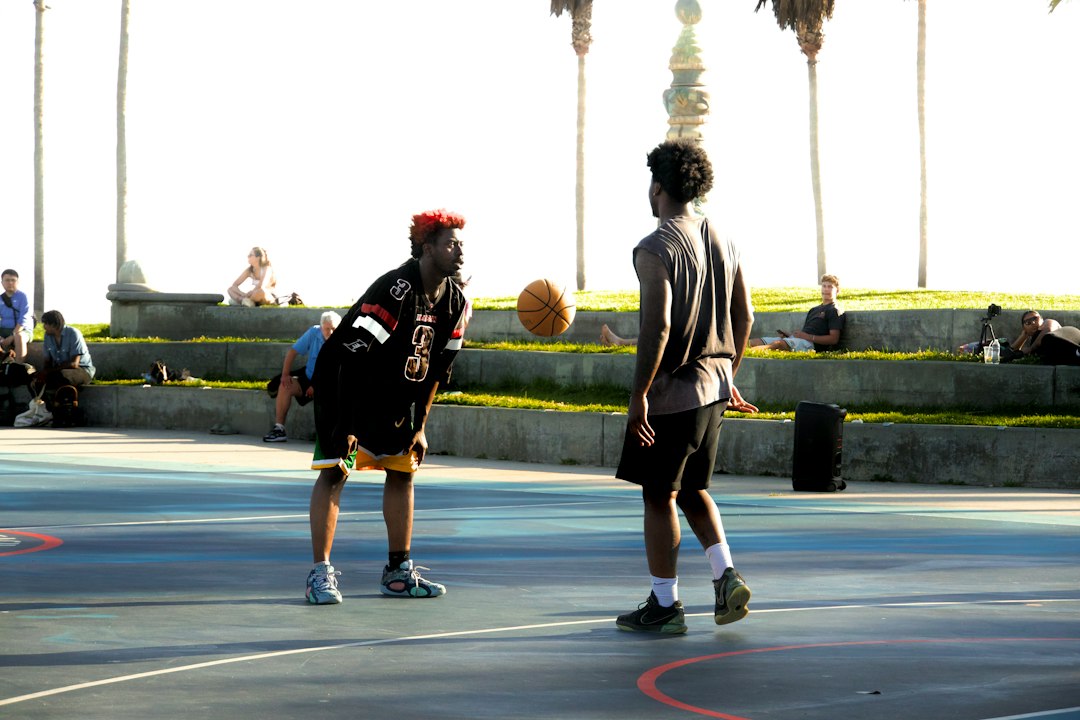




You remember exactly how it felt. The jersey hung a certain way — maybe it gripped your shoulders and barely cleared your waistband, or maybe it draped long over shorts that ballooned to your knees. That silhouette wasn't an accident. It was the uniform language of a specific era, a specific league, a specific version of you on that court. And if you're ordering throwback basketball jerseys today without thinking about the shorts that went with them, you're going to get half the memory right and spend the rest of the afternoon trying to figure out why the whole thing feels off.
That's the gap every other throwback guide skips past. They treat the jersey and the shorts as two independent purchases. They give you a product page and call it done. But if you played in the early '80s, the mid-'90s, or the mid-2000s, you already know the silhouette was a single artifact — the cut of the jersey and the length of the shorts told you the decade the moment you walked into the gym. This guide maps that silhouette by era so you can build the combination that matches the exact season you remember.
The Silhouette Is the Memory: Why Era Matching Changes Everything
Here's what the product pages don't tell you: a jersey styled after 1994 worn over shorts styled after 2003 looks like a costume. Not a tribute. A costume.
The reason is proportional contrast. Each decade of basketball uniform history had a specific relationship between jersey hem length and shorts rise. The jersey of one era was designed — consciously or not — to interact with the shorts of that same era. When you mix decades, the proportions break. The jersey looks too short or too long. The shorts look borrowed from someone else's memory.
Former players notice this immediately. The general public might not. But you will — and once you see it, you can't unsee it.


Before you place any order, answer one question first: what era am I actually building toward? Not the era that photographs best. The era you played in. The year you remember most clearly. That answer determines the jersey cut, the shorts length, the fabric weight, and the full silhouette — and all four have to move together.
Decade-by-Decade Silhouette Map for Throwback Basketball Jerseys
The Short-Short Era: 1970s and Early 1980s
This is the era most people picture when someone says "old school basketball." The shorts were genuinely short — a 3-inch inseam was standard, sitting high on the thigh with a fitted waistband at the natural waist, not the hips. The jerseys matched that proportion exactly: a close cut through the torso, a rounded hem that sat right at or just above the waistband, and minimal armhole depth.
Fabrics were heavy by modern standards. Mesh was present but woven tight. The numbers were tackle-twill — thick, raised, stitched with visible borders. If you played rec league or church league ball in this era, the jersey was often a simple reversible with a screened number, but the silhouette held regardless of level. Short shorts, tucked or barely-untucked jersey, proportions locked together.
What to build for this era:
- Jersey: fitted torso, short hem, minimal armhole drop
- Shorts: 3–4 inch inseam, high rise sitting at or above the navel, fitted through the thigh
The vintage basketball jersey of this era is the hardest to source authentically because the fitted silhouette has been out of commercial production for decades. Mitchell & Ness produces hardwood-inspired designs from this period, but sizing runs small relative to modern expectations — in our experience, sizing up at least one full size is necessary when ordering for wear rather than display.
The Transition Era: Late 1980s into Early 1990s
This is where the mix-up happens most often — and where most throwback orders go wrong.
The late '80s and very early '90s represent a genuine transition. The shorts started dropping. Not dramatically, not yet — but the inseam crept from 3 inches to 4, then to 5. The rise began to lower. The jersey stayed relatively fitted but the armholes deepened, adding freedom of movement. The overall silhouette was still athletic and proportionate, but it was clearly moving in a new direction.
If you played high school or college ball from roughly 1986 to 1993, this is your era. The uniform felt more modern than your parents' game, but nothing like what was coming.
What to build for this era:
- Jersey: slightly deeper armhole than the '70s cut, hem still above the hip, torso not yet boxy
- Shorts: 5–6 inch inseam, beginning to drop toward the hip rather than the natural waist
This is the era that trips up the most former players. A product listing that says "retro basketball jersey fit" may mean '90s retro, not '80s retro. Always check the specific inseam and rise measurements before ordering — the decade label alone is not enough.
The Baggy Era: Mid-1990s to Early 2000s
This is the era most players aged 35–50 remember wearing, and it's the one with the widest gap between jersey and shorts proportion.
The shorts got long fast. By 1995, the standard NBA short had an 11-inch inseam. By 1997, some players were at 13 inches. The rise dropped to the hip and the leg opening widened dramatically. The baggy basketball shorts era wasn't a gradual drift — it was a deliberate statement, shaped partly by hip-hop culture and partly by specific players who wanted freedom of movement in a longer cut.
The jerseys responded. The torso went boxy. The armholes deepened further. The hem dropped to cover more of the shorts rise, creating the layered-waistband look that defined the decade. Numbers shifted between tackle-twill and screen-printed depending on price point, then back to twill on premium versions.
If you played rec league ball in the mid-to-late '90s, your shorts hit somewhere between mid-thigh and the knee. Your jersey hem sat at approximately your hip. The silhouette was wide, long, and deliberately oversized — and it looked exactly right for the moment.
What to build for this era:
- Jersey: boxy torso, deeper armhole, hem at the hip
- Shorts: 9–12 inch inseam, low rise sitting at the hip, wide leg opening
This is the era most authentically served by the Mitchell & Ness hardwood-inspired catalog. Their designs for this decade are sized generously — they may actually fit true to modern measurements, unlike the more fitted '70s-era designs.
The Return-to-Athletic Era: Mid-2000s to Early 2010s
Around 2004–2006, the NBA moved toward a uniform size policy that pulled the silhouette back toward proportionate. The shorts shortened — not to '80s length, but to a more moderate 9-inch inseam with a slightly higher rise. The jerseys compressed back toward the body. The boxy '90s torso gave way to a more tapered cut.
If you played in a league or picked up rec ball during this stretch, you remember a uniform that felt streamlined compared to the decade before. Still not tight — but athletic. Proportionate. A silhouette that read as a uniform rather than a statement.
What to build for this era:
- Jersey: tapered torso, moderate armhole, hem landing between the hip and the natural waist
- Shorts: 8–9 inch inseam, moderate rise, narrower leg opening than the '90s cut
This era is the least served by dedicated throwback production because it doesn't trigger the same nostalgia as the two eras that bookend it. Custom jersey options often work better here — you can specify the cut and proportions directly rather than accepting what a mass-market '90s or '10s design gives you.
The Jersey-Shorts Matching Matrix
One table does more work than three paragraphs. Use this before you place any order:
| Era | Jersey Cut | Hem Length | Shorts Inseam | Shorts Rise |
|---|---|---|---|---|
| 1970s–Early '80s | Fitted, narrow | At/above waistband | 3–4 inches | High (at navel) |
| Late '80s–Early '90s | Moderate, deepening armhole | At hip | 5–6 inches | Mid (between hip and navel) |
| Mid-'90s–Early 2000s | Boxy, wide | At/below hip | 9–12 inches | Low (at hip) |
| Mid-2000s–Early 2010s | Tapered, athletic | Between hip and waist | 8–9 inches | Moderate |
Print this out. When you're on a product page and the description says "classic fit" with no measurements attached, this is what you reference.
A Story from the Alumni Game
Marcus T., 48, ordered a mid-'90s-era jersey for a charity alumni game — the team he played for in high school during that exact season. He got the jersey right. Recognized it the moment it arrived: the boxy torso, the deep armhole, the number in thick twill. Then he wore it with modern compression shorts because they were comfortable and the game was 40 minutes of actual basketball.
He said it looked like he'd bought a jersey at a souvenir shop and forgotten the rest of the uniform. His teammate, who'd ordered the full era-matched set — mid-'90s jersey plus the long, low-rise throwback basketball shorts — walked in and it looked like 1994. Same gym, same game, completely different memory. Marcus ordered the shorts before the next alumni night. It's a small thing. It's also not a small thing at all.
Cross-Sport Context: Why Football and Soccer Players Get This Right More Often
Basketball isn't the only sport with an era-specific silhouette — it just has the most dramatic version because the proportions shifted so visibly within a 15-year window.
In football, throwback jersey conversations center on a specific championship season or historic uniform design. NFL throwback jerseys — Pittsburgh Steelers throwback jerseys, Philadelphia Eagles throwback jerseys, Seattle Seahawks throwback jerseys — are almost always tributes to a specific documented season, and the matching element is the helmet stripe or pant color, not the shorts. The silhouette didn't transform the way basketball uniforms did, so football throwback players generally get the era match right because the visual cues are more explicit.
Soccer throwbacks operate similarly. A Manchester United retro jersey from a specific trophy season is a well-documented design artifact — the collar style, the kit number placement, the fabric — and clubs have often offered the matching shorts as part of a set. Former football and soccer players tend to order the full set more reliably because the sets are marketed together as a unit.
NBA and rec-league basketball players get separated from their shorts because the shorts went through such a dramatic transformation that most manufacturers focus attention on the jersey and treat the shorts as generic. A Seattle Seahawks throwback jersey or a Spurs throwback shirt from a specific era carries enough visual context — color, stripe placement, number style — that the era is clear without a silhouette guide. A throwback basketball jersey in white and blue could be from 1979 or 1999, and the shorts are what actually tell the story.
That's the gap. And now you have the map to close it.
Three Decisions That Determine Whether It Looks Right
Before you go to any product page — licensed NBA tribute, custom provider, or independent shop — make these three decisions in order. Everything else follows from them.
Decision 1: Lock the year, not just the decade.
"Mid-'90s" is not specific enough. 1993 and 1998 are both mid-'90s and they produce different silhouettes. If you played in a specific season, pick the year. If you played rec ball across a stretch of years, pick the specific season you remember most clearly — the one with the best team, the best run, the clearest memory.
Decision 2: Measure the shorts you already own.
Before you order anything, take the shorts you're most comfortable wearing right now and measure the inseam. That number tells you where you currently sit in the silhouette spectrum and helps you assess whether you're ordering toward your comfort zone or toward era accuracy. Sometimes those two things align. Sometimes they don't. Know which situation you're in before you spend money.
Decision 3: Decide whether you're wearing this or displaying it.
A display-quality design and a wearable game jersey have different sizing requirements. Designs that prioritize era authenticity mean the fitted eras run small and the boxy eras may be baggier than you expect out of the box. If you're wearing this for an actual alumni game or pickup league, size up. If you're displaying it, order true to the documented size of the era.
Frequently Asked Questions
What is a throwback jersey?
A throwback jersey is a design inspired by a uniform from a past era — typically referencing the colors, numbering style, and construction approach of a specific decade or historic moment in a sport's history. In basketball, throwback jerseys most commonly draw from NBA team designs spanning the 1970s through the 2000s, produced with era-informed materials and construction details. The term also applies to custom jerseys built in the style of a past era without referencing a specific licensed team — which is the approach most former rec-league and school-team players use to honor their own playing days.
What are throwback jerseys typically made from, and does the fabric match the era?
Premium throwback designs — particularly those in the Mitchell & Ness hardwood-inspired line — use mesh construction and tackle-twill numbering that closely reflects the original manufacturing of the era. Budget options typically use polyester mesh with screen-printed numbers regardless of the era being referenced, which can compromise the authenticity of the silhouette even when the colorway and design are correct. For former players building an era-accurate set, the fabric weight and number construction matter as much as the cut — the way a heavyweight mesh jersey drapes is part of the memory, not just the look.
Can I get the shorts custom-made to match a specific era inseam and rise?
Yes — and in our experience, this is often the smarter path for rec-league-era players who don't need a licensed NBA tribute design. Custom jersey providers can specify the inseam, rise, and leg opening to match a specific decade's proportions precisely. If your priority is wearing the full era-accurate silhouette for an alumni game or league rather than owning a licensed design, a custom-built set gives you far more control over the specific measurements than any off-the-shelf option.
Why do designs inspired by '70s-era basketball jerseys run so small?
The original uniforms were manufactured to fit the body types and fit expectations of the era — closer to the body, with less allowance for layering or movement preference. Designs that prioritize era accuracy reflect those original measurements, which means a tagged "Large" in a '70s-inspired design may fit like a modern "Medium." Always check the specific chest and length measurements rather than relying on the size label when ordering an era-informed design from that decade.
Does the jersey-and-shorts silhouette rule apply to women's basketball throwbacks?
Yes, with a slight timing variation. Women's college and rec-league basketball followed similar silhouette trends but typically ran 2–3 years behind the NBA's shifts. The baggy era arrived in women's recreational basketball in the late '90s and held longer into the 2000s than the men's game did. Women building throwback sets for their playing era should use the same decade-by-decade silhouette map but confirm against their specific league's adoption timeline rather than assuming exact year-for-year alignment with the NBA calendar.
Your jersey is still out there waiting.
Design yours in minutes and see your name and number exactly the way you remember it.
See also: personalized sports gifts versus generic options | getting the right jersey size when ordering | custom softball jerseys built for alumni games