

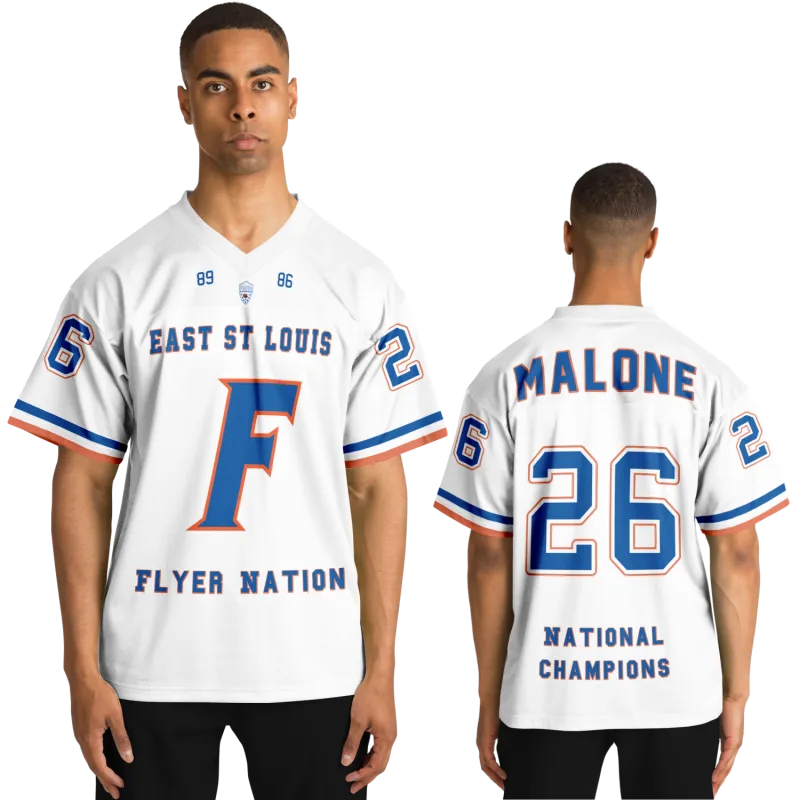
There's a specific feeling that comes back every fall — something about the angle of the light, the smell of cut grass, the sound of a whistle in the distance — and suddenly you're seventeen again, pulling on a jersey that had your name on the back.
What it was like playing high school sports is something that doesn't fully translate to anyone who wasn't there. Not just the sport itself, but the specific texture of it. The inside jokes on the bus. The coach who said the same thing before every game. The way your stomach felt in the tunnel or the locker room or the starting blocks, depending on which world you lived in.
Every sport had its own subculture. Its own schedule, its own pain, its own version of glory. Football wasn't cross country. Swimming wasn't softball. And nobody who played volleyball ever confused their experience with the basketball kids two gyms over.
This is the sport-by-sport version of that experience: told honestly, with all the early mornings and taped ankles and bus rides and heartbreaks that made it real.
Football: Friday Nights Were the Whole Point
If you played football, the entire week was architecture built around Friday.
Monday you were still sore. Tuesday the film sessions started and the coaches were either quiet (bad sign) or animated (worse sign). Wednesday was the hardest practice of the week. Nobody ever explained why, it was just understood. Thursday was walkthrough and you started to feel it, that low hum of anticipation that made everything else seem far away.
And then Friday came.
The locker room before kickoff had a sound that's hard to describe: pads clicking, music from someone's phone, someone dry-heaving in a corner, the pre-game speech building slowly until the volume in the room was physical. Then the tunnel. Then the lights.

The thing about football that people who didn't play don't understand is that the Friday night experience was maybe 10% of what the sport actually was. The other 90% was August two-a-days in hundred-degree heat, being so dehydrated you could feel your teeth. It was film study at 6am and extra conditioning after school and the specific indignity of the freshman getting absolutely worked by the seniors in practice.
The bond it created was real, though. The kind where you can see someone from your team twenty years later and not even need a full sentence to communicate something.
The Positions Had Their Own Personalities
Linemen lived in a different sport than skill players. Quarterbacks had a weight that followed them into homeroom. Kickers existed in a kind of permanent social limbo: beloved when things went well, radioactive when they didn't. Running backs had the bruises. Defensive backs had the confidence, warranted or not.
If you played football, you know precisely which version of the experience was yours. And you probably still remember the specific game where everything either came together or fell apart.
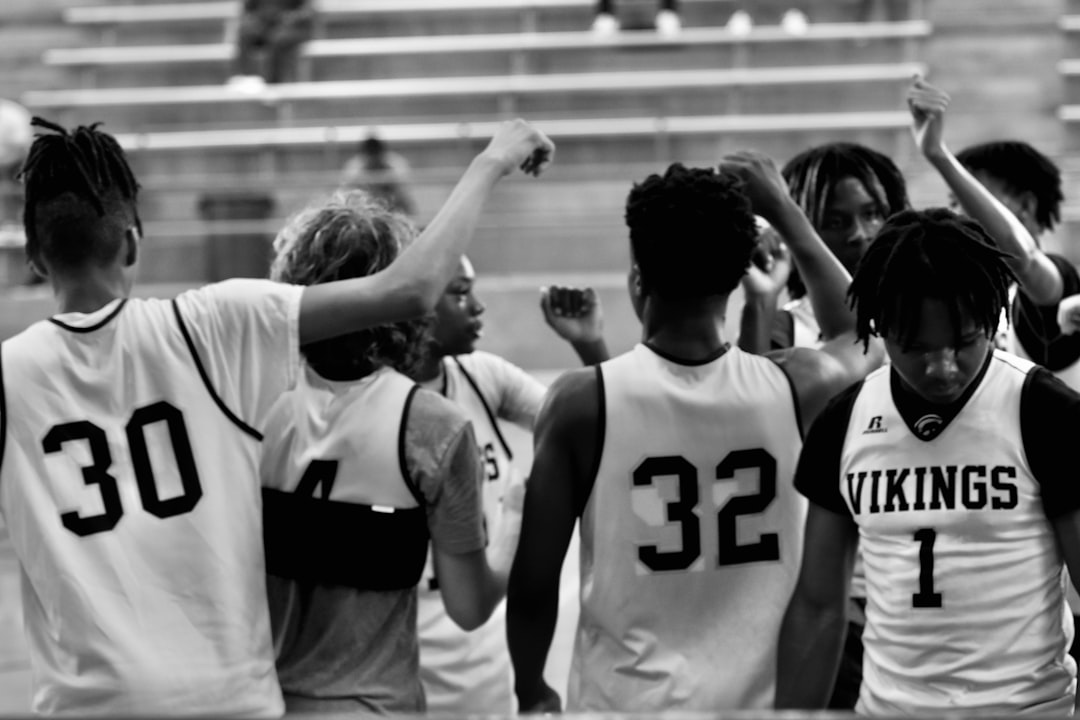
Basketball: The Sport That Never Really Stopped
Basketball season officially started in November. Unofficially, it started the moment football ended.
The gym was always available. The ball was always somewhere. And if you were serious about it, you were in there during lunch, after school, on weekends — not because someone made you, but because the sport had a grip on you that was difficult to explain to anyone outside it.
In my experience as a former player, what players remember most is almost never the big game. It's practice. The specific scrimmage where something clicked. The day the coach finally ran the play you'd been asking for. The way the gym sounded empty at 7am when you were the only one in there.
High school basketball had a social dimension that few sports matched. The gym held everyone (students, parents, teachers, rivals) and the sound of the gym at tip-off lives in your bones long after your last game. The student section was loud in a way that felt personal, like the noise was aimed specifically at you. Road games meant buses and hostile gyms and the weird pride of winning somewhere that didn't want you to.
The conditioning was relentless. Suicides until someone fell. Wind sprints that never quite ended when you thought they were ending. The understanding that being in shape for basketball meant something specific: a kind of fitness that didn't transfer cleanly to anything else in life, and that you miss in a way that's hard to articulate.
Swimming: The 5AM Crowd
Nobody chose swimming because it was glamorous.
You were up before the sun. You were in cold water before your brain was fully operational. You smelled like chlorine by second period and your hair was in a permanent state of mild disaster. Your shoulder carried a low-grade ache that became so normal you stopped noticing it.
And yet, the swimmers were often the most quietly committed athletes in any high school. Not because they were forced to be, but because the sport demanded a relationship with discomfort that self-selected for a specific kind of person.
Meets were civilized compared to football games or basketball gyms. Quiet. Technical. The gun went off, you swam, you touched the wall, you looked at the board. The margin between a great swim and a disappointing one was sometimes a tenth of a second. That specificity created a relationship with effort that carried forward in ways swimmers don't always connect to the sport until years later.
Relay events were different. Suddenly it wasn't just your time, it was the team's time, and the weight of a baton handoff (or, for swimmers, the touch of the wall before the next person dove) felt enormous in a way that individual events didn't.
The locker room after a good meet had an exhausted, satisfied quality that was its own reward. Wet hair, tired muscles, and the specific pride of knowing you'd done the thing you came to do.
Soccer: Ninety Minutes of Controlled Chaos
The rhythm of soccer was different from almost every other high school sport.
The game ran continuously. There was no huddle, no timeout, no moment to breathe and reset. You covered ground — in my experience as a former player, high-level high school players logged between five and eight miles per game — and the tactical thinking never stopped. You were always tracking position, space, the ball, the player you were marking, the teammate making a run you might not be able to see yet.
Practices had a specific structure that built something cumulative. The small-sided games. The crossing and finishing drills. The conditioning that the coaches insisted wasn't conditioning but clearly was. The days when everything was flowing and you could feel the team understanding each other without words.
The field itself mattered. Some schools had beautiful grass fields. Others had turf that left a specific kind of burn when you slid. Some played on surfaces that were generous to the ball and some played on fields where the bounce was essentially random. You adapted, or you didn't.
Volleyball: The Sport That Tape Was Made For
Marcus T., 34, still has a specific relationship with athletic tape. He played two years of varsity volleyball and taped his fingers before every practice — not because he was injured, but because that's what you did. "I'd watch my teammates' hands during warmups," he said. "You could tell who was serious by whether they'd taped up before they even touched the ball."
That's volleyball in a single detail.
The sport was technically demanding in ways that weren't always visible from the outside. Serve receive required a specific stillness — you had to read the ball off the server's hand before it crossed the net, adjust your platform angle, and get your body behind the ball in a way that looked simple and wasn't. Setting was almost meditative in its precision. And hitting — swinging through a set at the right moment, making contact at the top of your reach — produced a sound that players remembered for years.
Matches had a particular tension because momentum shifted so visibly. A three-point run could change everything. The rotation meant everyone was in every position eventually, which meant there was nowhere to hide and no one who could coast. The team either worked as a unit or it didn't work at all.
The bus rides home after a hard loss had a specific quality: quiet in a way that wasn't uncomfortable, shared without needing to be spoken.
Cross Country: The Philosophy Club with Running Shoes
If you ran cross country, you know the look.
It's the look people gave you when you told them what sport you played. Not dismissive, not really. More like a polite confusion. You just... run? In the woods? And that's the sport?
Yes. That's the sport.
Cross country was the most internally demanding sport on the high school schedule. No crowd in the traditional sense. No halftime. No timeouts. Just the course, the pack, and the specific conversation you were having with yourself about whether to surge or hold, whether the pain in your legs was the normal kind or the kind you should listen to, whether the person thirty meters ahead of you was beatable in the final 800.
The team dynamic was strange and genuine at the same time. You ran your own race, and yet team scoring meant every place mattered. The fifth runner on a cross country team could be the difference between a trophy and going home empty. That specific weight — being the fifth runner, carrying the team in a way nobody saw — built something.
The early-season practices in August heat were their own kind of endurance event. The mid-season races where your fitness finally arrived and you felt like you could run forever. The late-season meets where the cold arrived and your breath made clouds and the course was half mud. Each stage had its own character.
Baseball and Softball: The Long Season
The baseball and softball seasons were long in a way that changed how you experienced time.
Other sports compressed everything into a few months of intensity. Baseball and softball stretched across spring in a way that meant the season aged with the weather. You started in cold, raw March — infield practice with numb fingers, batting practice where the ball stung your hands through the batting gloves. By May, the games were warm and green and felt genuinely beautiful in the way spring baseball always does.
The rhythm of the game mattered. The standing around that wasn't really standing around. The specific focus required to stay in a defensive posture for an entire game, ready for a ball that might not come to you for six innings and then suddenly was screaming at your face. The at-bat process (stepping in, reading the pitcher, making a decision in a fraction of a second) repeated two or three times a game.
The dugout had its own culture. Every team had its own set of rituals, superstitions, nicknames, and running jokes that accumulated over the season like sediment. By playoff time, the inside references were so dense that conversations were half incomprehensible to anyone who hadn't been there since March.
The smell of a baseball field — cut grass, clay, leather, sunscreen — is one of the most evocative sensory experiences in sports. Former players rarely need to explain this to each other.
Track and Field: Every Event, a Different World
Track was not one sport. It was twelve sports wearing the same uniform.
The sprinters were a different breed from the distance runners. The throwers occupied their own corner of the facility and had their own social hierarchy entirely. The jumpers (long jump, triple jump, high jump) were technicians who could spend an entire practice on a single phase of a single event. The pole vaulters were, by general consensus, in a category of their own.
The dual-meet format meant long afternoons with pockets of intense activity separated by waiting. You warmed up, competed in your event in a three-minute window, and then waited for the next one. The management of that rhythm — staying physically and mentally ready across an afternoon — was its own skill.
The state-qualifying moments were the kind that stayed with athletes for decades. The specific race, the specific jump, the specific throw where the number came up on the board and you knew what it meant. Those moments didn't require verification. Your body knew before your brain caught up.
The Things Every Sport Had in Common
The early mornings.
The specific relationship with a coach who either saw something in you or didn't, and the way that shaped the experience more than almost anything else.
The bus rides — road games meant hours in a vehicle with your teammates, which compressed the team's social reality in ways that practice didn't. You learned more about your teammates on away-game buses than in any other context.
The uniform. The specific feeling of pulling on a jersey with your name and number on it — the weight of it, the way it changed how you carried yourself, the thing it meant to wear your school's colors in a context where it actually mattered.
The NFHS participation data consistently shows over seven million students participating in high school sports annually — seven million individual versions of the experience described in every section above, each one specific and irreplaceable and worth remembering well.
But the sport-by-sport version leaves one thing unspoken — not what it felt like in the moment, but what it quietly deposited in you that only showed up later.
The lessons didn't announce themselves at the time. Resilience didn't feel like resilience; it felt like getting up for the third set when your legs were gone, or finishing the race when finishing was the only thing left to do. Showing up didn't feel like a skill; it felt like the 5am alarm, the Tuesday practice you didn't want, the game you showed up for anyway. Nobody handed you a certificate for it. You just became someone who shows up, and that turned out to be worth more than almost anything else they taught in those years.
Knowing your role arrived the same way — quietly, and sometimes painfully. Maybe you weren't the star. Maybe you were the fifth runner, the left guard, the kid who kept the bench warm and the energy up. High school sports taught you that a team works because everyone does their specific job, not because everyone gets the highlight. That lesson showed up twenty years later in meetings, in families, in the unglamorous parts of a job nobody claps for. You already knew how to do them, because you'd done them before, in a jersey, for people who were counting on you.
You also learned how to lose. Not the hollow version, but the real one — the bus ride home, the quiet locker room, the sting that didn't go away by Monday. And you learned how to be coachable, how to take correction from someone who pushed you harder than you thought you could go, and how to be part of something bigger than your own stat line.
None of it felt like a lesson at the time. It felt like practice. But that's the thing about high school sports — they were building you the whole time, in ways you couldn't see until the season was twenty years behind you.
Your jersey is still out there waiting.
Design yours in minutes and see your name and number just the way you remember them.
Frequently Asked Questions
What made high school sports different from youth league or club sports?
High school sports carried a social weight that youth and club leagues rarely did. You were playing for your school — the institution where you spent most of your waking hours — in front of classmates, teachers, and community members who had a specific stake in the outcome. The rivalries were local and personal. The stakes felt higher, even when they technically weren't, because the audience was your daily life. That combination of identity, community, and competition was specific to the high school context and is largely impossible to recreate afterward.
Why do high school sports memories feel so vivid decades later?
Adolescent experiences encode differently in memory. The neurological reality is that the brain during those years is particularly sensitive to emotionally charged, socially meaningful events — and high school sports delivered both consistently. Add to that the physical intensity, the team bonds, and the fact that many of those experiences were genuinely novel (first real competition, first real team loss, first real athletic achievement), and the vividness makes sense. The smell of a locker room or the sound of a starting gun can pull someone back thirty years because those sensory details were encoded alongside some of the most emotionally significant moments of that period. That's why those memories still land decades later — the encoding runs deeper than for almost anything else you'll ever experience.
Is it worth re-creating your high school jersey as an adult?
For most former athletes, the jersey represents something that transcends the sport itself — it's a physical marker of a specific chapter, a specific version of themselves, a specific group of people they were part of. A well-made re-creation with your actual name, number, and school colors serves as a tangible connection to that experience. It's not nostalgia for nostalgia's sake — it's a way of honoring something that genuinely shaped you. Whether that's worth it depends entirely on what that chapter meant to you. For most people who played, it meant quite a lot.
Which high school sport had the most intense team culture?
This varies enormously by school, coach, region, and era — but sports with the most demanding physical requirements and the most interdependent team structures tend to produce the most cohesive cultures. Swimming, cross country, and football consistently appear in former athletes' accounts as sports where the shared suffering of practice created bonds that lasted beyond the season. The sports where individual performance directly determined team outcome — relay events in swimming and track, volleyball rotations, baseball's defensive dependence — tended to produce the sharpest sense of mutual accountability.
How do former high school athletes typically describe what they miss most?
It's almost never the trophies or the wins, though those matter. The consistent answer across sports is the people and the daily structure — the rhythm of practice, the inside language of a team that builds over a season, the specific group of people you went through something difficult with. The wins are events. The teammates are relationships. Former athletes consistently describe missing the latter long after the former has faded.
See also: why high school sports still matter so deeply to adults | what high school sports taught you that nothing else could | the grief of watching your athletic career end at 18 | the bus ride home after a tough loss