



There is a specific kind of intelligence that develops in a person who plays setter.
It is not the intelligence of the person who hits the hardest or runs the fastest. It is the intelligence of the person who has to know, before the rally ends, exactly where everyone else is — what they can do, what they're about to do, and which of those things serves the moment best. Every former female volleyball player who ever ran a rotation understands this on a level that is almost impossible to explain to someone who never played.
She also understands it without a credential. Without a title. Without anyone in the building calling it leadership.
But that is exactly what it was.
The Court Taught You to Read a Room Before You Knew That Was a Skill
Walk into any executive leadership seminar and you will eventually encounter a module on situational awareness — the ability to assess an environment in real time, identify where the pressure is building, and adjust before the moment passes. It's usually presented as a skill you develop in your thirties, with practice, over years of managing teams and absorbing feedback.
A girl who played volleyball at any competitive level developed a version of this skill by the time she was sixteen.
The moment the opposing team's setter touched the ball, you were already calculating. Which hitter had the angle? Where was the block forming? What had that libero been reading for the last three rotations? You were not reacting — you were anticipating. And you were doing it under noise, under pressure, with a ball moving at a speed that gave you approximately no time to think consciously about any of it.
That is not a sport skill. That is a cognitive architecture.
What I've noticed, watching former athletes describe their professional lives, is that the volleyball players almost always name the same thing: the ability to see what's about to happen before it does, and to position themselves — or others — accordingly. They don't always call it by its leadership vocabulary. They call it "reading the room" or "knowing when to push" or "feeling when something is about to go sideways." But what they're describing is the same skill they spent years training on a 30-by-60-foot court.


The court gave you a laboratory. Every repetition refined the instrument. By the time you walked off that court for the last time, the instrument was yours to keep.
The Rotation System Was Actually an Org Chart
Here is something that doesn't get said often enough about volleyball: it is, structurally, one of the most organizationally complex team sports in existence.
Every player moves. Every player's role shifts depending on where the rotation puts them. You are not a fixed position in a fixed location — you are a role that travels, and your responsibilities change based on where you are in the sequence relative to everyone else. The team functions only when every player knows not just their own role but everyone else's, because the coverage gaps are filled by anticipating where your teammates will be, not where they are.
This is an org chart in motion.
And if you played at any level where the system was actually taught — not just practiced, but understood — you know what it feels like to operate inside a structure that only works when every person executes their piece with full awareness of the whole. You know what it feels like when one rotation breaks down because someone was thinking about themselves and not the system. You know what it feels like when everyone is locked in and the whole thing hums.
That feeling of the team functioning as a single organism is what every good manager is trying to recreate in every meeting, every project, every quarter. Most of them are still learning how to build it. You already know what it feels like from the inside.
If you played, you know: there is a version of that feeling that nothing else quite replicates. The court had its own specific gravity, and everything else has been measured against it in some quiet way ever since.
What Calling Plays Actually Taught You About Accountability
Melissa R., 34, played libero at a Division II program in the Southeast before spending a decade in operations management. She describes her first time running a cross-functional team meeting as "the exact same feeling as calling a rotation adjustment when we were down in the third set." She didn't mean the pressure. She meant the clarity — the sense that someone had to see the whole court at once and be willing to say what needed to happen next, even if it wasn't comfortable.
That willingness to call the play, to accept that the call is yours, to live with the outcome, is something that competitive volleyball builds into you over years of repetition.
Accountability in the professional world is one of those concepts that gets discussed constantly and practiced inconsistently. It sounds simple: own your decisions, follow through on your commitments, don't deflect when something goes wrong. But for most people it is genuinely difficult, because ownership is uncomfortable and the natural human response to discomfort is to distribute it or defer it.
The former female volleyball player has a specific advantage here. She has called plays that lost points. She has made the wrong read on a serve receive, run the wrong set, trusted the wrong matchup — and then she has had to keep playing, in front of the same teammates, in the same rotation, in the same rally. There is no meeting to reschedule. There is no email to draft carefully. There is only the next ball.
That compressed accountability loop — mistake, consequence, continue — trains something that leadership development programs spend enormous resources trying to cultivate. It trains the capacity to fail without collapsing, to own without deflecting, to adjust without catastrophizing.
By the time you walked into your first real professional failure, you had already been through the volleyball version dozens of times. The scale was different. The recovery mechanism was already there.
The Things You Learned Between Sets That Don't Have Names
Every former athlete remembers the conversations that happened in the huddle, in the timeout, between the first and second set, walking back to the service line. These were not the conversations that coaches planned or that practice schedules formalized. These were the ones that happened because you were in it together and someone had to say something real.
"She's telegraphing the line. Watch her left shoulder."
"Stop trying to be perfect and just play."
"I've got you. Put it up and I'll finish it."
These moments — the specific, direct, un-managed communication between people who trust each other under pressure — represent a relational intelligence that is extraordinarily difficult to develop outside of a competitive team environment. Most people never learn to communicate with that kind of precision and honesty because most of the environments in which they operate do not require it and do not reward it.
The volleyball court required it. And it rewarded it immediately, in the only currency that mattered in the moment: it worked, or it didn't.
Trust didn't come before the work, though; it was built the same way every other skill on the court was, one rep at a time. Volleyball teaches you to trust the person next to you before you trust yourself, and once that trust is in place, it changes the way you communicate everywhere else.
The former female volleyball player carries that relational vocabulary into every professional relationship she builds. She has a higher baseline for directness than most. She is more comfortable with honest feedback, because the feedback she received was not cushioned — it was delivered in the fifteen seconds before the next serve. She knows the difference between communication that feels comfortable and communication that actually accomplishes something, because she has experienced both and knows which one wins.
This is not a small thing to carry. In a professional culture that frequently mistakes politeness for clarity and avoidance for kindness, the ability to say the direct thing with warmth is rare. You have it. The court gave it to you.
The Part Nobody Talks About: Learning to Lead Without the Ball
The most demanding leadership moments in volleyball have nothing to do with the ball in your hands.
They happen when you are not in the play. When the ball is going to someone else, your job is to create the condition in which they can succeed — to be in position, to communicate, to absorb the defensive pressure that frees them to do what they're there to do. The setter who is not setting is still running a play. The libero who is not receiving is still managing the defensive system with her positioning, her communication, her read of the incoming ball.
This — leading without the ball — is perhaps the most transferable skill the game produces.
The hardest version of professional leadership is the version where you are not the person making the decision, and your job is to create the conditions under which the right person can make it well. It is the version where your excellence is defined not by what you do but by what you enable. Most people are not prepared for this. It is counterintuitive in a culture that equates leadership with visibility.
The former female volleyball player understands it intuitively because the game taught it to her without naming it. She knows what it feels like to do the invisible work that makes the visible result possible. She knows that the most important play sometimes happens three touches before the kill shot. She has already been the infrastructure that everyone else performs on.
That understanding is leadership. Real leadership — the kind that builds things that last rather than just making noise in the moment.
The Emotional Part of Leadership Nobody Names
There is a version of leadership that never shows up in a highlight reel, because it happens entirely inside the person doing it. It is the setter who is frustrated, exhausted, or quietly furious at her own last mistake — and still runs the next play with a flat voice and a clear head, because the team reads her face first.
That is emotional labor, and volleyball teaches it earlier than any management seminar does. You learned to set aside your own emotional needs and respond to what the team needed — not because someone told you to, but because the game punished you the instant you didn't. A setter who lets frustration leak into her body language tilts the whole rotation. So you learned to manage your own state, not so you'd feel better, but so the six of you could keep functioning.
Nobody calls this a leadership skill in the moment — they call it shaking it off. But it is exactly the skill every good manager spends years trying to develop: absorbing your own turbulence without making your team absorb it for you. It showed up, too, whenever the pass came to you low or off the net — you made it work, because that was your job.
And here is the part that gets even less attention: you never had to earn that discipline alone. You had a coach who decided, early and on purpose, to back you. The first person who called you a leader wasn't your peers — it was the one above you, who handed you the offense and stood behind you while you ran it. That vote of confidence taught you what sponsorship actually looks like: you choose someone, you tell them you believe in them, and then you let them fail in public without pulling the rug.
When you manage people now, you already know what that felt like from the inside. So you do it for the people under you — you back them and you stay behind them while they figure out how to lead.
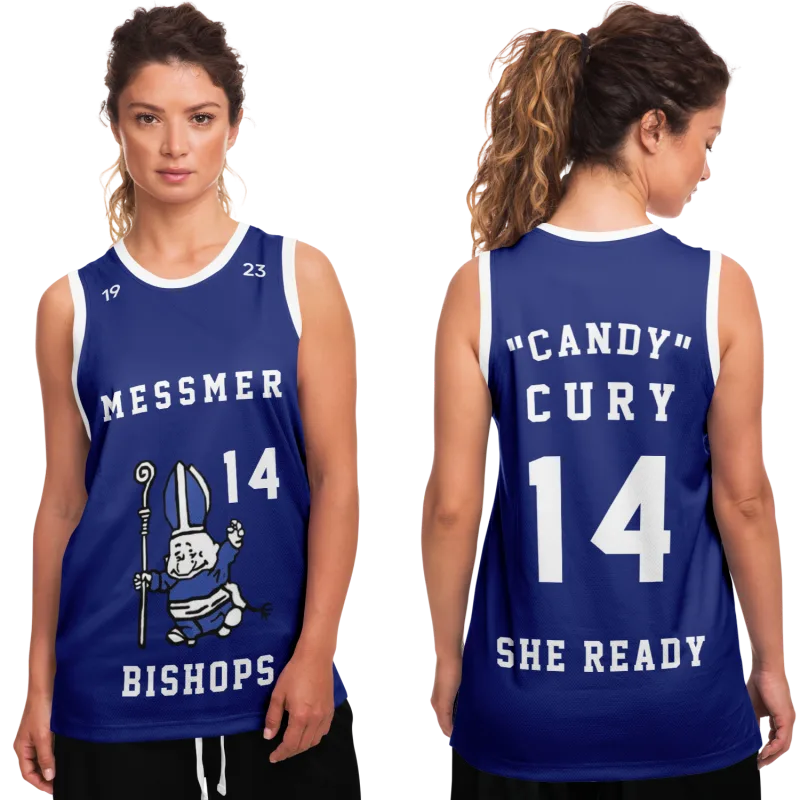
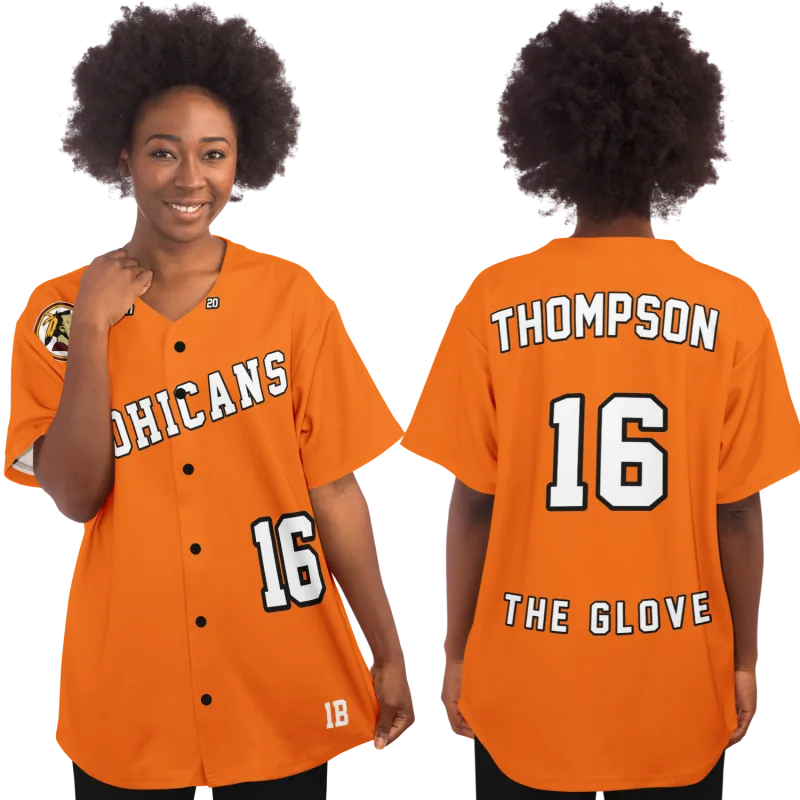
Your Jersey Is Still Out There Waiting
The number you wore. The name on your back. The school colors you competed in for four years, or two, or six, or however long the game was yours.
Design yours in minutes and see your name and number exactly the way you remember it.
Frequently Asked Questions
Does the leadership intelligence you build in volleyball actually transfer to professional environments, or is it sport-specific?
The transfer is real, and it's well-documented. The skills that develop in competitive team environments — situational awareness, accountability under pressure, direct communication, leading without formal authority — are structurally identical to the competencies that organizational psychology research identifies as foundational to effective leadership. The context changes. The underlying cognitive and relational architecture does not. Former volleyball players consistently report that the game gave them a frame for professional challenges before they had the professional vocabulary to describe what they were doing.
Is this specific to volleyball, or do athletes from other sports have the same experience?
The core transfer, competitive experience building leadership capacity, is common across team sports. What makes volleyball specific is the combination of role fluidity (every player rotates, every player's responsibilities shift), the compressed feedback loop (consequences are immediate and visible), and the emphasis the game places on communication (the sport functionally cannot be played without it). This combination produces a particular kind of relational and organizational intelligence that shows up in how former volleyball players describe their professional relationships and decision-making styles. None of it was theoretical — what it was really like playing high school volleyball is where all of it was built, and it's still yours.
What do you do with this identity when the playing days are over and nobody around you knows you played?
You carry it without needing it to be visible. The skills are yours whether or not anyone in the room knows where they came from. That said, there is something real about the desire to keep the identity connected — to honor what the game built in you in a way that's more than a memory. That's why the jersey matters to a lot of former players. It's not nostalgia. It's a physical acknowledgment of something that actually shaped who you became.
Do these skills require Division I or elite-level competition to develop, or does JV and club-level experience count?
The level of competition affects the intensity of the environment, not the fundamental nature of what's being built. A player who spent two years on a JV squad learning to read the court, manage a rotation, and communicate under mild competitive pressure developed the same architecture as the Division I starter — at a different resolution. The instrument is the same. The sharpness of it varies. What matters is that you were in a competitive team environment where the feedback was real and the stakes were felt, even if the stadium was a middle school gym.
See also: what high school sports actually teach you that no classroom can | athletic identity that follows you long after the final whistle | why high school sports shape adults in ways they rarely expect