

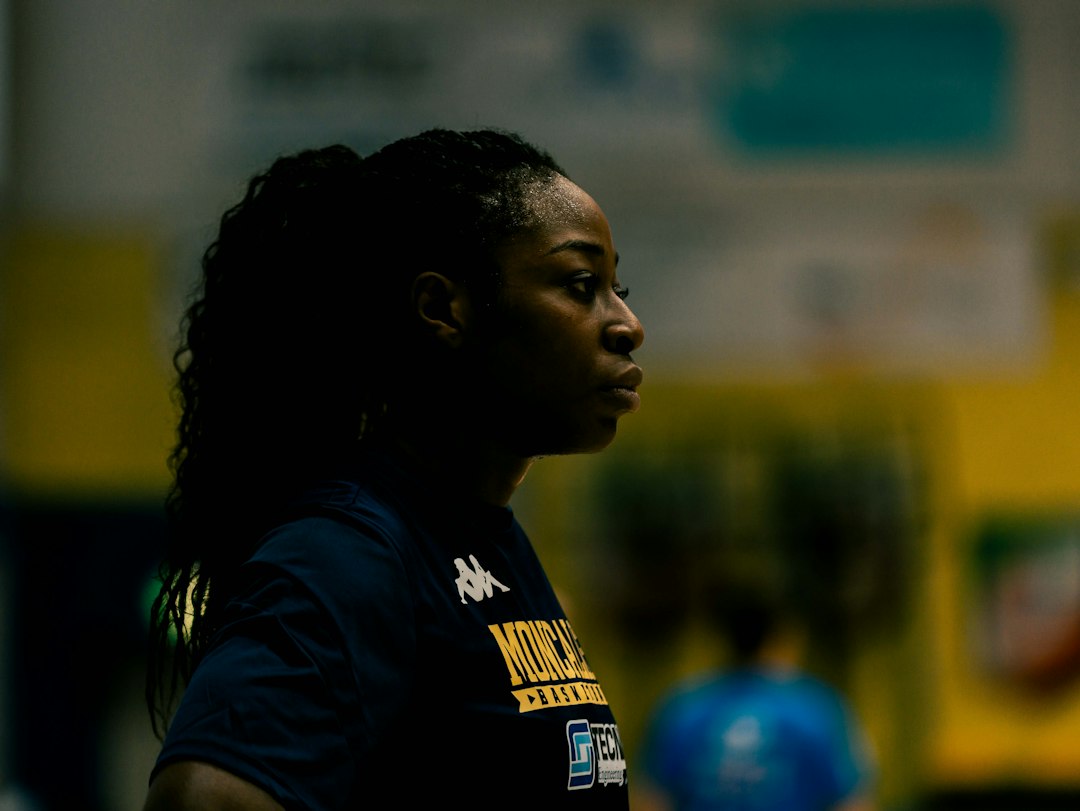




You can still hear the whistle, can't you?
Maybe it's been fifteen years. Maybe twenty-five. But somewhere in your head there's a voice that says your name the way only one person ever said it, and your spine straightens before you've decided to straighten it. That's the real story behind the strict coach tough love benefits nobody puts in a coaching manual: the voice outlasts the season, the team, the jersey, and sometimes the school itself.
If you landed here, you're probably remembering a particular person. A coach who raised her voice, ran you past comfortable, and refused to tell you that you were doing great when you weren't. Maybe you cried in a car afterward. Maybe you quit once and came back. And now, with enough years between you and that gym, you're quietly wondering whether you owe her a thank-you.
This is that article. It's part memoir, part honest accounting, and part guide to telling the difference between the coach who built you and the one who just got away with being loud.
The Coach Everyone Remembers (and Nobody Admitted to Liking)
Ask any group of former players about their coaches, and the nice ones blur together. The ones who handed out participation praise and let drills run short are pleasant, forgettable, and gone from memory by the time the season banquet ends.
Then there's the other one.
She had a clipboard she never looked at. She knew your splits, your errors, and what you did against that team last October. She stood with her arms folded at the end of the court, and when she said "Again," the gym got quiet, because everyone knew "again" meant again until it was right, not until you were tired.
We've talked with enough women who played high school sports to notice the pattern: the coach they describe with the most specificity is almost always the hardest one. Not the kindest. Not the funniest. The one whose standards felt, at the time, like an act of personal aggression.
What a Tough Coaching Style Actually Looked Like
It rarely looked like movie coaching. There were no inspirational speeches in the rain. A tough coaching style in a real high school program looked like:


- A 6am practice in January where the heat in the gym hadn't kicked on yet
- A teammate benched for being late by ninety seconds, no exceptions, no discussion
- A film session where every missed rotation was paused, rewound, and named out loud
- The phrase "That's what you're giving me?" delivered flatly, without a raised voice, and somehow worse than yelling
Notice what's missing from that list: cruelty. We'll come back to that, because it's the most important distinction in this whole conversation.
What the Yelling Actually Taught Us
Here's the uncomfortable thing about hindsight. The lessons weren't in what she said. They were in what she refused to let you get away with.
Discomfort Is Information, Not an Emergency
At sixteen, when your lungs burn and your legs go heavy, your brain issues a very convincing alarm: stop, something is wrong. A strict coach teaches you, rep by rep, that the alarm is often wrong. That the feeling of "I can't" arrives well before the reality of "I can't."
Years later, that lesson shows up in places the gym never anticipated. The first month of a demanding job. A hard conversation you'd rather avoid. A toddler's third sleepless night. You notice the alarm, and you hear her: Not yet. Keep going.
Accountability Without an Audience
A hard coach holds you to a standard even when the score doesn't demand it. Up 20 points, she still wanted the box-out. Third day of a tournament, she still wanted the sprint back on defense.
That's a rare gift in a culture of grade inflation and "everyone did their best." She taught you that the standard doesn't change based on whether anyone's watching or whether it matters on the scoreboard. In our experience, women who played for a coach like this are often the ones who quietly do the unglamorous thing at work, at home, in the community, without needing credit. They learned early that effort is its own receipt.
Feedback Isn't a Verdict
This one takes decades to see. When a coach yells "Wrong!" about a footwork error, she isn't saying you're a bad person or even a bad player. She's saying that specific thing, right now, is fixable.
Athletes who survived tough coaching often become unusually good at receiving criticism as data instead of damage. They can hear "this draft isn't working" without hearing "you're not good enough." That emotional skill is worth more than most of what's taught in a classroom, and it usually gets built the hard way, in front of teammates, at an age when everything feels like a referendum.
Respect You Earned Rather Than Received
Here's the part that surprises people. The coaches we remember most fondly are often the ones whose praise was rare. When she finally said "Good," it landed like a medal. When she nodded once after a hard-fought game, you carried it for a week.
A coach who praises everything devalues praise. A coach who withholds it until it's earned makes every kind word count. That scarcity wasn't coldness. In the best cases, it was calibration.
Where Tough Ends and Harmful Begins
We'd be writing a dishonest memoir if we pretended every screaming coach deserves a thank-you note. Some don't. The research on youth sports is clear that coaching climate shapes whether athletes thrive or burn out, and the American Academy of Pediatrics' guidance on youth sports specialization and burnout makes the case that the way adults handle pressure matters as much as the pressure itself: AAP clinical report on sport specialization and intensive training.
So how do you tell the coach who built you from the one who just hurt you? Look back and ask honest questions.
The Test: Was the Standard About the Work or About Her?
A tough coach's anger is aimed at a behavior: the missed assignment, the lazy effort, the excuse. A harmful coach's anger is aimed at a person: your body, your intelligence, your worth.
"You didn't rotate. Again." is tough. "You're useless" is not.
One tells you what to fix. The other tells you what you are.
Four Signs It Was Tough Love, Not Abuse
- The standard was the same for everyone. Her best player got yelled at too. If only the weakest or most vulnerable girls absorbed the volume, that wasn't a standard. That was a target.
- She showed up for you off the court. She wrote the recommendation letter. She noticed when you were struggling at home. She called your parents when something was actually wrong. The toughness lived next to real care.
- She could say "I was wrong." Even once. Even gruffly. A coach who can apologize has an ego smaller than her purpose.
- You got better, and you knew why. The improvement was real, traceable, and tied to specific things she demanded.
Warning Signs That Were Never Okay
Some things don't get softened by hindsight, no matter how many trophies came with them:
- Comments about weight, body shape, or appearance
- Punishment through public humiliation of one player
- Threats, intimidation, or physical contact that crossed a line
- Pressure to play through real injury
- Isolation: turning teammates against one another
If your coach did these things, the gratitude you feel may be real, but it deserves a second look. You can be proud of what you built and honest that some of it shouldn't have cost what it did. Both can be true. If any of this sounds familiar and still weighs on you, talking to a counselor who works with former athletes can help; so can resources from the Women's Sports Foundation.
A Letter We Never Sent
Sometimes the clearest way to understand a coach is to write to her. Here's the kind of letter we hear versions of, again and again, from former players:
Coach,
I hated you in October of my sophomore year. I hated the early practices, the conditioning that felt like punishment, and the way you looked at me when I made excuses, like you could see right through to the part I was hiding.
I'm writing because last week I stood in front of a room of forty people and delivered bad news to my team, and my voice didn't shake. I thought of you. I thought of the way you never flinched when a hard thing needed saying.
You didn't make it easy. I'm grateful you didn't.
That's the heart of why I'm thankful for my strict coach, and why so many of us carry the same unsent letter. We don't miss the pain. We miss being held to something. We miss being seen as capable of more than we were offering.
What a Strict Coach Looks Like in Hindsight: Three Stories
The details change. The shape of the story doesn't.
Dana R., 34, former volleyball setter. Her coach made the team re-run a serve-receive drill eleven times in a row because one player's feet were wrong. Dana spent most of that night furious. Today, she manages a regional logistics team and says her signature move is the thing she learned in that gym: don't move on until the foundation is correct. "I fix the process, not the person," she told us. "I got that from someone who made me do it eleven times."
Priya M., 28, former track sprinter. Her coach never once told her she was fast. He told her what her hands were doing wrong on the drive phase, over and over, until a meet in May when she dropped a half-second. He said one word: "There." She's a nurse now, and when a new hire freezes under pressure, Priya hears herself using the same flat, steady tone. "Calm is a skill," she says. "Somebody had to teach it to me by not panicking when I did."
The one we don't tell. There's a third kind of story, the player who left a program and never played again because of how she was treated. Those women exist, and their experience is not a footnote. A genuine memoir of tough love holds space for them too: the lessons from a hard coach are real, but they're not a justification for every coach who raised her voice.
How to Honor the Coach Who Shaped You
If your gratitude is real, there are better things to do with it than let it sit.
Step 1: Find the Specific Thing
Don't write "thanks for everything." Name the exact lesson: the drill, the phrase, the moment. Specificity is the difference between a polite note and one that gets framed. "You taught me to keep my head up when we were losing" will mean more to her than a paragraph of general warmth.
Step 2: Reach Out, Even If It's Awkward
Coaches rarely hear what they meant to someone. They hear complaints during the season and silence afterward. A message years later is a rare, valuable thing. Email the school, find her through the athletic department, or send a note care of the program. Most coaches will remember the athletes who wrote them far longer than the ones who won them a title.
Step 3: Pass It On, Carefully
The best tribute to a hard coach is becoming a coach, mentor, or demanding-but-fair presence for someone younger. Keep the standard. Drop the cruelty. That's the version of her legacy worth carrying: high expectations, real care, no humiliation.
The Jersey in the Closet
Here's a small thing that tends to surface in conversations like this one. Almost every former athlete we talk to has a jersey tucked somewhere: a closet shelf, a cedar chest, a garage bin. Some are faded. Some don't fit anymore. A few are missing entirely, lost in a move or loaned to a younger cousin and never returned.
That number on your back was the number she shouted. It's the one she used when she called you out and the one she used when she finally, grudgingly, gave you the nod. A coach doesn't say your name. She says your number, and she says it like it means something.
If yours is gone, or if you want one that looks the way you remember it, there's a way to get it back.
Your jersey is still out there waiting.
Design yours in minutes and see your name and number exactly the way you remember it.
Frequently Asked Questions
Is a strict coach actually good for high school athletes?
It depends on what "strict" means. A coach who holds every player to the same demanding standard, corrects specific behaviors, and shows real care off the court can produce lasting discipline, resilience, and confidence. A coach who humiliates, targets individuals, or crosses into intimidation does harm, regardless of results. The benefits of a hard coach come from the standard, never from the cruelty.
Why am I thankful for a coach I hated at the time?
Because you now have context the sixteen-year-old version of you didn't. You can see that the standards were attached to something real: you got better, you learned to push through discomfort, and you carried those skills into adult life. Gratitude often arrives late because it requires distance. It's common, and it's not a sign you were wrong to struggle back then.
What's the difference between tough love and verbal abuse in coaching?
Tough love targets a behavior and gives you something to fix: "You dropped your elbow. Fix it." Abuse targets who you are: your body, your worth, your intelligence. Tough love is applied evenly across the roster and paired with real care. Abuse is selective, personal, and often leaves athletes feeling smaller. If you're unsure which one you experienced, ask whether the criticism ever came with a path to improvement.
Do yelling coaches produce better results?
Not reliably. Many successful coaches rarely raise their voices and rely on clarity, consistency, and high expectations instead. Volume is not the active ingredient. What actually produces results is a clear standard, honest feedback, and accountability. Some yelling coaches succeeded despite the volume, not because of it. The lessons athletes remember are usually about the standard, not the decibels.
How do I thank a former coach after many years?
Keep it specific and brief. Name one moment, drill, or phrase and tell her what it taught you and where you still use it. Send it through the school's athletic department, a former teammate who's still in touch, or a direct email if you can find one. Most coaches treasure a note like this far more than you'd expect, because they rarely hear how the lessons landed.
What if my strict coach was genuinely harmful?
Your experience is valid, and gratitude isn't required. If a coach used humiliation, body-shaming, threats, or pressure to play through injury, the harm doesn't get erased by a winning season. Talking with a counselor, connecting with other former athletes, or reaching out to organizations that support women in sport can help you sort what was valuable from what shouldn't have cost what it did.
See also: what high school sports taught you that nothing else could | why high school sports matter to adults | the science of why your senior season memories are so vivid | the bus ride home after a loss | the difference between a sports fan and someone who actually played