

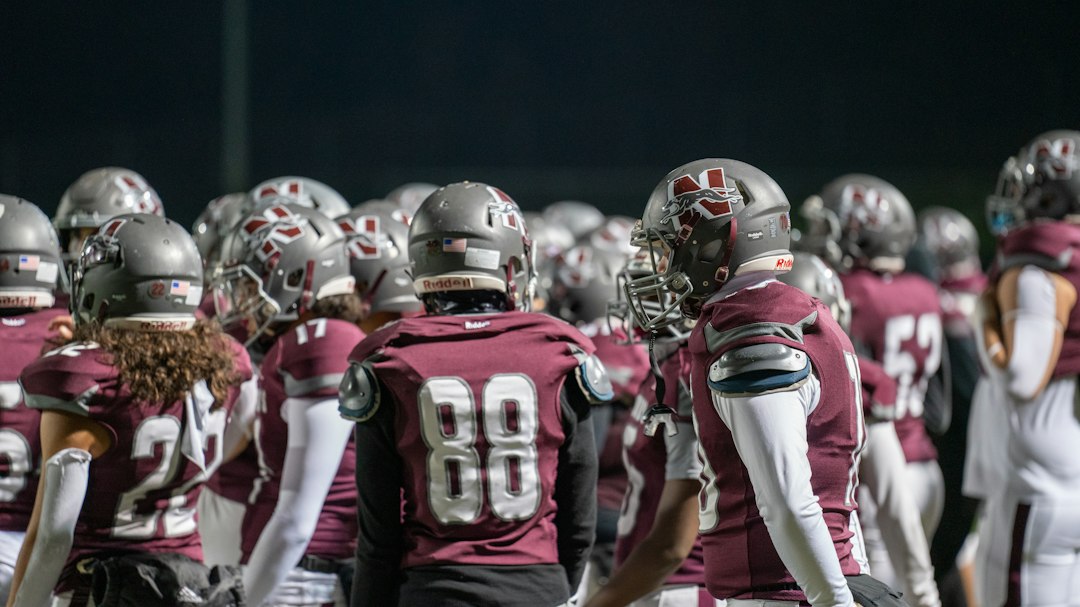




Prattville just moved to the top of the Alabama High School Football Top 25 state rankings for October 29, 2026 — claiming the No. 1 spot on a list that every program in this state measures itself against, from the first Friday in September through the final whistle of November.
For anyone who ever pulled on a helmet in Alabama, that number carries a weight no box score can touch.
It isn't just a ranking. It's a whole town's week, compressed into two digits.
When the Rankings Drop, the Whole Town Holds Its Breath
Every former Alabama high school football player knows this feeling without needing it described.
You didn't need a push notification. You didn't need anyone to read it to you. You already had a rough sense of where your team stood — from the way Monday's practice felt, from the score differential of the last two games, from the way your coach talked about the road ahead. But when the official rankings came out, something shifted. The number became real in a way the scoreboard hadn't quite made it. It became something you could point to.
For Prattville's players, coaches, and everyone inside the Lions community, waking up to a No. 1 ranking is exactly that kind of moment. It's the thing that gets screenshotted and texted to players who graduated years ago. It surfaces in group chats that went quiet after the last reunion. It makes former players feel something they weren't expecting to feel on an otherwise ordinary Thursday morning.
The Alabama Top 25 has always been more than a media poll. In a state where high school football operates as something close to a civic religion, these rankings function as a weekly report card for every program that believes it belongs at the top — and a rallying point for every program that's been told it doesn't.


Our team has covered prep sports communities across the country, and no state treats its high school football rankings with the same collective seriousness as Alabama. These aren't curiosity numbers people glance at and forget. They're stakes.
Every Former Player Has a Rankings Memory
Once you've actually played the game, here's what rankings really are: they're a timestamp.
Every former player carries at least one. The week your team cracked the Top 25 for the first time in years — and the athletic director bought pizza for the whole school. The week you fell off the list after a bad loss on a cold, muddy field, and the locker room felt like a room nobody wanted to be in. The week you were unranked and nobody outside your county gave you a chance, and then you went out and beat the No. 3 team in the state on their home field.
That's what rankings do that box scores and stat lines can't. Statistics tell you what happened in a single game. Rankings tell you what you meant to people who never watched you play — people somewhere who looked at your schedule, your margins, your opponents' records, and decided whether your season was worth paying attention to.
When you made the list, you were real. When you dropped off it, you were hungry.
Every former Alabama player reading about Prattville's No. 1 position this week is running the same quiet mental math without even choosing to: Where did we peak? What was our highest ranking? What week should we have been higher than we were?
Those questions don't really go away. They just go quiet for a while.
What the Top 25 Actually Feels Like From Inside the Helmet
Here's what the national conversation about high school football rankings consistently misses: the players themselves have a complicated relationship with the list.
You want to be on it — badly. But you also understand, even at seventeen, that rankings create targets. The moment your school appears in the Top 25, every team left on your schedule circles that game differently. Coaches who might have run a standard game plan suddenly spend an extra half-day in the film room. Student sections that would have been half-full show up early and stay loud. The bus ride to an away game feels different when you're ranked and the home team isn't.
For Prattville's players right now, sitting at No. 1 means all of that, amplified. Every remaining opponent is playing for the upset. Every Friday night from here forward is a referendum on whether that number is legitimate.
Former players know exactly what the Lions' locker room feels like this week — the specific mixture of pride and pressure that settles in when you become the team everyone else is chasing. It is the best and most uncomfortable position in a Friday night season, simultaneously.
Marcus T., 34, played linebacker for a Central Alabama program that broke into the Top 10 in the mid-2000s. He remembers the week his coach pinned the rankings on the bulletin board without saying a single word about them. "He just put the paper up and walked out. We all stood there looking at our name on that list for maybe thirty seconds, and then we had the hardest practice of the year. He didn't need to say anything. The number said it." Marcus still has a photo of that bulletin board saved on his phone.
The Towns Behind the Rankings
What the Top 25 really represents isn't teams. It's towns.
In Alabama, high school football programs function as civic institutions in a way that resists easy explanation to anyone who didn't grow up inside one. The head coach of a Top 25 program is often among the most recognized people in the county. Games routinely draw more fans than the town has households. Businesses close early on Fridays. Family schedules are reorganized for four months. The lit-up field on Friday night is the most important piece of real estate in the community from late August through November.
Prattville is a city of roughly 40,000 people south of Montgomery, with deep football history and a program that has consistently competed at the upper levels of the AHSAA. A No. 1 ranking here isn't a surprise to people who follow Alabama prep football closely — but it still lands with weight. It is the validation of a full season's work, and it arrives carrying expectations that only grow from here.
For every former player who ever represented a program from a town like this — whether your school was a perennial contender or a long-running underdog — there's a shared understanding of what these rankings mean to people who will never pull on a uniform. The retired coach who still stands near the end zone fence for every home game. The grandmother who was in the pep band in 1971. The local business owner who played offensive line in 1993 and still shows up wearing the school colors. For all of them, the Top 25 is a community scoreboard, not a media metric.
When your town is ranked, everybody feels it. And when former players see that list, they don't just see the current team — they see every version of that program that ever took the field.
What Rankings Never Could Measure
Here's the thing about the Top 25 that every former player eventually arrives at: the number could never capture the most important parts of what happened on those Friday nights.
It couldn't capture the third-string sophomore who practiced every week for two years and finally got his number called in garbage time and made the most of forty seconds. It couldn't capture the quiet leadership of a senior captain who stayed after every practice to help freshmen learn what they were doing. It couldn't capture what it felt like to run through that banner — or out of that tunnel, or however your school did it — with thousands of people in the stands who showed up specifically to watch your team.
Rankings measured outcomes. They could never measure the weight of the jersey.
And the jersey is what stayed. Long after the rankings were archived and the season was memory and the cleats were retired to the back of a closet, the jersey was the artifact. The number on your back. Your name — or your school's name — across the front. The colors that told everyone in that stadium exactly which team you were, where you came from, and what you were playing for.
A lot of Alabama high school football players still have theirs. Folded in a drawer, hung in a frame, passed down to a younger sibling. And a lot of former players who don't have theirs anymore still think about it.
The Ranking Is for Right Now — The Jersey Is Forever
Prattville's No. 1 ranking belongs to this week, this season, this specific group of players who earned it one game at a time. In a few months, the rankings will reset. The offseason will begin. This version of the team will play its last game together, and the next chapter of the program will start forming.
But the jerseys those players wore this season? Those are permanent.
Every former Alabama high school football player who clicks on a rankings article this week isn't really there for the poll numbers or the program breakdowns. They're there for a feeling — the specific feeling of having been part of something that mattered to a whole community. A team. A town. A season. A number on a bulletin board that nobody needed to explain.
That feeling doesn't require you to still be playing. It doesn't require your program to currently be ranked. It just requires that you were there — that you wore the jersey and understood, even then, what it meant.
If you were there, you already know. And if those days have been on your mind lately — if something about seeing Prattville at No. 1 made you think about where your team stood during your season — that's not just nostalgia.
That's recognition of something worth honoring.
Your jersey is still out there waiting.
Design yours in minutes and see your name and number exactly the way you remember them — a tribute to the team, the town, and the season that shaped you.
Frequently Asked Questions
What does the Alabama High School Football Top 25 ranking mean for a program like Prattville?
Being ranked No. 1 in Alabama's Top 25 is the highest single-week recognition a high school football program in the state can receive. For Prattville, it reflects consistent, high-level performance across the season and positions the Lions as the standard every other ranked program is measuring itself against heading into the final stretch of the year. It also signals to college recruiters, opposing coaching staffs, and the broader Alabama prep football community that this is one of the state's elite programs in 2026.
How are the Alabama High School Football Top 25 rankings determined?
The rankings are compiled by media outlets and sports journalists covering Alabama prep football. They take into account win-loss record, strength of schedule, margin of victory, and results against other ranked or competitive programs. They are not an official AHSAA product, but they are widely followed across the state as the most authoritative weekly measure of where programs stand relative to one another.
Why do high school football rankings still resonate with former players years after they stopped playing?
Rankings mark time in a way individual scores don't. For former players, a ranking represented external validation of what the team was building internally — a verdict from people outside the program about whether the work was registering. That emotional significance doesn't fade. Seeing a current ranking pulls former players directly back to the specific weeks their own team appeared on — or fell off — that list, which is why rankings continue to travel far beyond the current fan base of any given program.
Can former players get a custom jersey that honors their old high school program?
Custom jersey options allow former players to create a jersey in the style of their playing days — with their name, number, and school colors — as a tribute to the program and season they were part of. iPlayedFor specializes in exactly this kind of custom work for former players who want to hold on to the physical connection to what they played for.
What makes Alabama high school football rankings different from rankings in other states?
Alabama has one of the most deeply invested high school football cultures in the country — more community identity tied to Friday night programs, more sustained family and civic engagement with prep sports, and more pipeline programs producing college-level talent than nearly any other state. The rankings in Alabama carry community weight that extends well beyond parents of current players. Former players, local business owners, school alumni going back decades, and entire towns track these numbers because the program's identity is genuinely tied to the community's identity. That's what makes the weekly Top 25 feel like a civic event in Alabama, not just a sports media product.
See also: why high school sports still matter to adults long after the final whistle | Alabama's place among the most football-crazy states in America | the science behind why those Friday night memories never fade | what playing under the lights in front of a packed Alabama crowd actually felt like