





The rankings dropped on September 14, 2026, and they told a story that anyone who has ever played New England high school football already knows by heart: nobody's safe in Week 3.
SI High School Sports reported that Xaverian Brothers held firm at No. 1 in the region's Top 25, but the top-ranked teams from New Hampshire, Rhode Island, and Vermont all stumbled — losses that rippled through the rankings and sent coaches, players, and entire towns into the kind of Sunday-morning reckoning that defines this sport in the northeast.
For anyone who ever pulled on a helmet in New England — who ever played under those grey September skies with the smell of cut grass and cold air mixing on a Thursday practice field — this week's rankings aren't just numbers on a page. They're a map of every feeling you thought you'd left behind when you graduated.
You haven't. Nobody does.
When the Rankings Come Out, You Always Look for Your School First
Doesn't matter how many years it's been. Doesn't matter if you're 24 or 54. The moment you see a New England high school football Top 25 list, your eyes move to one place first.
You're not reading it as a fan. You're reading it the way a former player reads it — scanning for the name of the town that made you, the program that taught you what it meant to be accountable for something bigger than yourself.
Maybe your school is on the list. Maybe it never was and never will be. That's not really the point.
The point is that you looked.
That reflex — the involuntary scan for your number, your colors, your name — is the clearest evidence that high school football never actually ends for the people who played it. The games stop. The practices stop. The Friday night bus rides stop. But the part of you that was forged in a two-a-day in August, that bled for a regional title, that stood in a locker room and heard a coach say something you still think about today — that part doesn't punch out.


Xaverian Brothers at No. 1 in Massachusetts means something to the players in that program right now. But it also means something to every kid who played against them over the last three decades. Every former player who lined up across from a Xaverian squad knows the particular feeling of going up against a program that's been built that way. There's a specific kind of respect that lives in your body when you've actually been on the field against a perennial contender.
The rankings remind you that you earned that.
What the Upsets in New Hampshire, Rhode Island, and Vermont Actually Mean
Here's the thing about early-season New England football that every former player already understands viscerally, even if they've never put it into words: Week 3 is when you find out who you actually are.
Week 1 is emotion. Week 2 is adjustment. Week 3 is truth.
The top-ranked teams in New Hampshire, Rhode Island, and Vermont all lost this week. Not close losses, the kind you can explain away with special teams mistakes or a fluky turnover. Real losses. The kind that force a program to look at itself.
Every former player knows this week. You might not have been a top-ranked team. You might have been a two-win program that played in front of forty people on a field with no scoreboard lights. It doesn't matter. You know the feeling of Week 3, when the preseason optimism has burned off and you're left with what you actually have.
Some teams find out they're better than they thought.
Some teams find out they have work to do.
Both of those findings are gifts. You just can't see that when you're 17 and staring at the film on a Saturday morning, trying to figure out what went wrong.
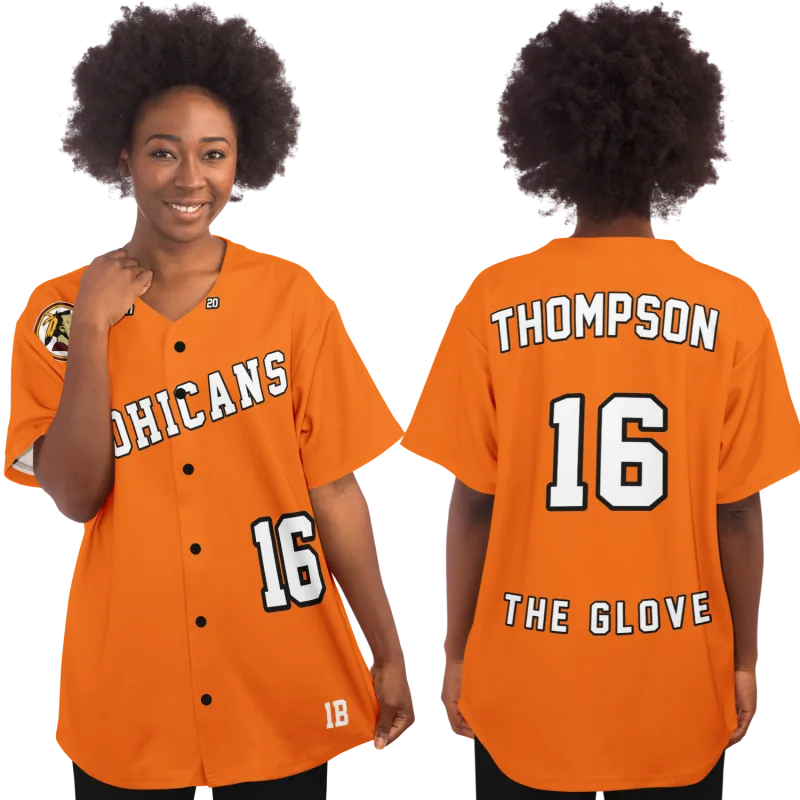
Marcus T., 38, played defensive end for a mid-sized program in central Connecticut in the early 2000s. He still watches the New England rankings every week in September — not because he follows any particular program, but because, as he put it, "it takes me right back to that tape room. I can still hear my coach's voice. The rankings made everything feel real. Like what we were doing mattered beyond our town." He recently ordered his old jersey through iPlayedFor and said seeing his number on it again hit him harder than he expected. Some things just stay with you.
That's not nostalgia for its own sake. That's the recognition of something real that happened to you — something that changed the shape of you permanently.
Every Former Player Knows What Those Rankings Did to a Sunday
Remember when the rankings came out on Sunday afternoons?
You'd be at someone's kitchen table, or waiting at practice, or — later — scrolling your phone. And the moment you saw your school's name, everything else compressed. Your ranking was either a validation or a challenge. There was no neutral response.
If your team moved up, you showed up Monday feeling like the building was tilted slightly in your favor — like the week had started with a point already on the board.
If your team dropped, or got dropped from the list entirely, that feeling was its own specific species of motivation. Something between embarrassment and fury. The kind of thing that made you stay after practice to work on the thing that wasn't good enough.
Every former player knows both of those feelings. And they know that the second one — the drop, the loss, the public accounting — was often the one that made them better.
That's what's happening to the teams in New Hampshire, Rhode Island, and Vermont right now. The players on those rosters don't know it yet, but they're getting one of the most valuable things high school football can give you: the experience of being knocked down early and having to decide what you're going to do about it.
The teams that answer that question correctly will be different teams in November than they are today.
The players who answer it correctly will be different people for the rest of their lives.
What Xaverian at No. 1 Represents Beyond Massachusetts
Xaverian Brothers holding at No. 1 in the New England Top 25 after three weeks of play isn't just a Massachusetts story. It's the kind of program-level consistency that every former player in every state in the region understands as the product of something beyond talent.
You can't sustain a No. 1 ranking across multiple weeks on talent alone. Not in New England. Not with the parity this region produces. Not with the coaching depth that exists in Connecticut, New Hampshire, and Rhode Island programs that are chasing you every single week.
Sustained excellence in high school football is a culture product. And every former player who was part of a consistently good program knows exactly what that culture costs — the offseason work that nobody sees, the accountability structures that feel brutal in August and feel like home by October, the specific way a program that's been built correctly handles adversity differently than one that hasn't.
When you see Xaverian at No. 1 in Week 3, you're seeing the visible tip of something that was built in weight rooms and on practice fields and in film sessions that happened when nobody was watching.
That's the part that former players recognize. Not because we're romanticizing it. Because we lived it, or tried to live it, or watched it work against us when we lined up across from a program that had it and we didn't.
The Rankings You Remember Were Never Really About the Rankings
Here's what no sportswriter puts in a ranking piece: the list was never the point.
The rankings were a referendum on your effort, your program, your coaches, your town. They were the public accounting of private choices. Every Thursday-night film session, every sixth-rep in the weight room when five was the assignment, every two-minute drill you stayed after to run one more time — the rankings were the scoreboard for all of that.
That's why former players still check them. Not because we're living in the past. Because we understand what they represent in a way that a casual observer doesn't.
When a top-ranked team in Vermont loses in Week 3, the ranking drop is the least interesting thing that happens. The most interesting thing is what that program does with it. Does the coaching staff panic, or do they trust the process they've built? Do the players fold, or do they use it?
You can't answer those questions from a ranking. But former players know which answer they're rooting for, because they've been in both rooms — the one where a team fell apart after a loss, and the one where a loss became the beginning of something.
September 14, 2026 is just one Sunday in a long season. For the players in those New Hampshire, Rhode Island, and Vermont programs right now, it might be the Sunday they remember for the next thirty years.
Your Jersey Is Still Out There Waiting
Your name. Your number. The colors that meant everything on a Friday night.
Design yours in minutes and see it exactly the way you remember it.
Frequently Asked Questions
What does the New England High School Football Top 25 ranking cover?
The New England Top 25 is a regional ranking that evaluates high school football programs across Massachusetts, New Hampshire, Rhode Island, Vermont, Connecticut, and Maine. It's compiled by sports media covering the region — including outlets like SI High School Sports — and reflects performance through the current week of the season. The September 14, 2026 rankings follow Week 3 results and show Xaverian Brothers holding the top position in Massachusetts while the top-ranked teams from New Hampshire, Rhode Island, and Vermont each suffered losses.
Why do early-season losses matter so much in high school football rankings?
Early-season losses carry disproportionate weight in rankings because the Top 25 has limited data to work with. A loss in Week 3 can drop a team several spots — or out of the rankings entirely — because pollsters haven't yet seen enough results to separate a bad week from a structural weakness. For the programs involved, an early loss also triggers the kind of internal reckoning that shapes the rest of a season. Programs that respond well to early adversity are often the ones still playing in November.
How often do New England high school football rankings change during the season?
Rankings are typically updated weekly throughout the regular season, with significant movement occurring after major upsets or when previously unbeaten teams lose for the first time. The most volatile period tends to be Weeks 2 through 5, when the sample size of game results is still small and a single outcome can dramatically shift the standings. By late October, rankings stabilize as the playoff picture comes into focus and programs have accumulated enough results to be evaluated more reliably.
What makes Xaverian Brothers a consistent presence at the top of New England football rankings?
Xaverian Brothers in Westwood, Massachusetts has maintained program-level excellence over multiple decades through a combination of coaching continuity, player development culture, and a tradition that recruits — and retains — competitive players. Programs that sustain top rankings across multiple seasons share common traits: systematic offseason development, consistent coaching staff, and a culture that holds players accountable in ways that compound over time. Xaverian's Week 3 hold at No. 1 reflects all of those factors playing out through early-season results.
See also: what high school football teaches you that nothing else could | why high school sports still matter so much to adults | the most football-crazy states in America | why your senior season memories from Friday night games are so vivid