

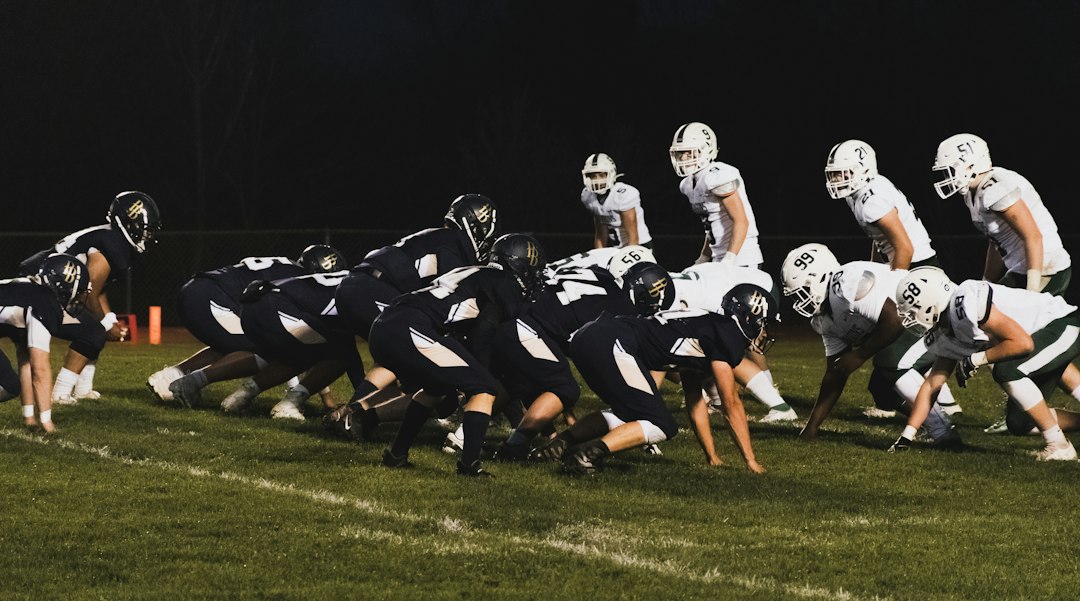




There's a moment every September in New England — the leaves just starting to think about turning, the air carrying that first bite of October before October actually arrives — when the Friday night scoreboards start meaning something again.
The New England High School Football Top 25 Regional Rankings for September 21, 2026 are out, and if you follow prep football in this corner of the country, you already know the headline: Xaverian Brothers holds the No. 1 spot, as steady and immovable as they've been all early season. But the story isn't at the top. The story is everywhere else — because top-ranked teams in New Hampshire, Rhode Island, and Vermont have already suffered losses, and we're barely three weeks in.
Wild start to the 2026 season. Classic New England football.
For anyone who ever pulled on a helmet in this region — under those specific stadium lights that seem somehow brighter in September than anywhere else — this week's rankings aren't just a list. They're a time machine.
The Rankings That Stopped You Mid-Scroll
Xaverian Brothers at No. 1 is the kind of certainty that anchors a shaky early-season landscape. When everything else is in flux, there's something grounding about a program that simply does what it does, year after year, with the kind of institutional consistency that most programs spend decades trying to build.
But the chaos below that top line is where September lives.
The top-ranked teams from New Hampshire, Rhode Island, and Vermont have already taken losses. Three weeks in. That's not a footnote — that's the entire story of why high school football in New England is unlike anywhere else. The geography alone makes scheduling unpredictable. A Vermont program can go from a dominant in-state performance to a road game against a Massachusetts power and find out in one Friday night exactly where they actually stand.


The 2026 rankings reflect that reality honestly. The teams that survive this early gauntlet — the ones who absorb a loss, reset, and come back the following Friday — those are the programs that show up in November when it counts.
Every former player knows that feeling from the inside.
What Those Rankings Actually Feel Like When You've Played
Here's the thing about a Top 25 list that no sports journalist can fully capture from the press box: when you've played high school football, especially in New England, rankings aren't abstract. They're physical.
You remember the week your program cracked the regional list for the first time. The way the coach mentioned it at practice — almost casual, deliberately understated — and the way that casualness fooled nobody. The locker room buzzed differently that afternoon. The tape on your wrists felt tighter. The bus ride Friday felt longer and shorter at the same time.
You also remember the week you dropped out. Or the week a ranked opponent came to your field and your job was to be the upset. You remember that specific weight.
The teams sitting in positions 15 through 25 in this week's New England rankings are carrying both of those feelings simultaneously. They made the list. They're also watching the teams ahead of them absorb losses, which means the rankings are fluid — which means there's opportunity — which means every practice this week has an edge to it that wasn't there before September.
That edge is the thing. That's what the rankings produce that has nothing to do with polls or voting or regional committees. They produce an edge in practice on a Tuesday afternoon in September that makes better football players out of teenagers who were already working hard.
The New Hampshire, Rhode Island, and Vermont Storylines
When top-ranked programs in three different states all lose before the calendar flips to October, it tells you something specific about the 2026 New England football landscape: the talent is distributed differently than the preseason assumed.
New Hampshire has traditionally been a state where a small number of programs dominate the top of the rankings year after year. When the top seed stumbles early, it usually means one of two things — either a mid-tier program has made a genuine leap, or the top seed made a scheduling decision in August that looked manageable and turned out not to be. Either storyline is worth following.
Rhode Island operates in a compressed competitive universe — the state is small, the top programs know each other extremely well, and upsets there carry a particular sting because everyone involved has played each other before. When a top-ranked Rhode Island program loses in September, the locker room conversations that follow are specific and pointed in ways that out-of-state losses simply aren't.
Vermont is the wildcard it always is. Vermont high school football has its own rhythms, its own weather considerations starting earlier than most states want to acknowledge, and its own tradition of programs that quietly build over four-year cycles and then arrive fully formed in a given season. A Vermont team losing its No. 1 ranking in week three might be finding itself. The next eight weeks will tell the story.
What connects all three state storylines is the same thing that connects every high school football season everywhere: the rankings at the end of September are a draft, not a verdict.
Remember When Your Rankings Week Felt Like This?
Every former player has a specific September memory tied to a rankings moment. Not the championship — that comes later, and it carries its own weight. The September memory is different. It's smaller and somehow more vivid.
Maybe it was the first time you saw your school's name on a printed list in a newspaper that someone's dad brought to practice. Maybe it was a coach reading rankings aloud on a Monday morning and pausing — just a half-beat — before your program's name. Maybe it was the away game against the top-ranked team in your state and the moment you stepped off the bus and saw their facility and understood, for the first time, exactly what the ranking meant in concrete terms.
Jess M., 34, played linebacker for a small New Hampshire program that cracked the regional Top 25 her senior year — the first time in the school's history. She remembers the morning the rankings posted less for the number next to her school's name and more for the phone call from her grandmother, who had never once asked about football, asking if she'd seen the news. "That was the moment I understood what the program meant to the town," she says. "Not to me — to the town." Twenty years later, she still has the printout somewhere in a box in her parents' house.
That's what a September ranking does. It doesn't just measure football programs. It gives a community something to point at.
What Xaverian Holding No. 1 Means for the Rest of the Field
Xaverian Brothers at the top of the New England rankings isn't a surprise — but in a season where the chaos below them has been real, their consistency carries a different kind of weight.
For the programs chasing them, the math is simple and brutal: you can't move Xaverian off the top line by being good. You have to be exceptional, and you have to do it on a night when it's being witnessed by the people who determine the rankings. That's a specific kind of pressure that filters into every position meeting, every film session, every conditioning drill between now and when the bracket gets set.
For the programs nowhere near the top 10, Xaverian at No. 1 is almost abstract — a benchmark so distant it functions more as motivation than target. Those programs are playing their own internal rankings game, measuring themselves against the team two slots above them in the 18-through-25 range, calculating what a win this Friday would do to their positioning.
That's the beautiful machinery of a ranked system applied to a sport being played by 16- and 17-year-olds on fields that sometimes don't have full bleachers. The stakes are enormous and entirely self-generated. Nobody outside the program, the school, and the town is watching most of these games. And yet the kids playing them are playing like the whole world is.
Because when you're 17 and it's September and the rankings just dropped and your name is on the bus list for Friday — the whole world is.
The New England Football Tradition That Rankings Can't Capture
There's a specific texture to New England high school football that the Top 25 list gestures toward without fully containing.
It's the weather variable — the way a program in northern Vermont is already thinking about what November games on frozen ground look like while a Connecticut team is still playing in 80-degree heat. It's the historical weight of some of these programs, institutions that have been playing football for over a century and have the faded photographs in gymnasium hallways to prove it. It's the regional pride that isn't quite state pride — a Massachusetts program doesn't care only about beating Massachusetts teams. They care about the broader New England standing, which is why a regional Top 25 means something different here than a state-only ranking would.
The signal in this week's list — Xaverian steady, three states' top seeds already stumbled, the middle of the bracket completely unsettled — is that 2026 is going to be one of those seasons that produces unexpected November stories. The team that ends up hoisting something in late November probably isn't the team that most analysts would have identified in August. It rarely is.
That's the whole game. That's why former players follow the rankings in September even when they graduated fifteen years ago.
Because the story is always the same and always different. And if you played it, you're always a little bit inside it.
Your Jersey Is Still Out There Waiting
The New England football season is unfolding exactly the way it always does — with certainty at the top and beautiful chaos below. And if reading this week's Top 25 sent you back to your own Friday nights, your own rankings week, your own locker room in September, that feeling belongs somewhere more permanent than a memory.
Design yours in minutes and see your name and number exactly the way you remember it.
Frequently Asked Questions
What does it mean for a program when their top-ranked team loses early in the New England season?
An early loss for a top-ranked New England program reshapes the entire competitive landscape below them. Teams in positions 5 through 15 immediately recalibrate their own positioning, and the pressure on the fallen top seed to respond in the following week is significant. In most cases, a ranked program that loses early and responds with a dominant performance will hold most of its ranking. The ranking system rewards responsiveness.
Why does New England regional high school football get ranked separately from individual state rankings?
New England's six states share enough geographic and competitive overlap — particularly in border regions between Massachusetts, New Hampshire, Rhode Island, and Connecticut — that a regional ranking captures competitive reality more accurately than six separate state lists. Programs in those border areas regularly schedule across state lines, and a regional ranking gives a common currency for comparing performances across those games.
How are the New England High School Football Top 25 regional rankings determined?
Regional rankings like the New England Top 25 are typically determined by a combination of factors: win-loss record, strength of schedule, margin of victory against common opponents, and regional media and coaching panel input. No single formula governs every publication's methodology, which is part of why rankings can vary between outlets — and part of why early-season losses to strong opponents can damage a ranking less than a close win over a weak opponent.
When do the New England high school football rankings matter most for playoff positioning?
The rankings carry the most competitive weight heading into October and early November, when playoff eligibility and seeding are being determined at the state level. September rankings function more as reputation signals — they shape how programs schedule, how officials assign game-day crews, and how programs recruit within their communities. By late October, the rankings and the actual bracket begin to converge into the same document.
See also: what high school football taught you that no classroom ever could | the most football-crazy states in America | why Friday night lights meant so much to the players under them