

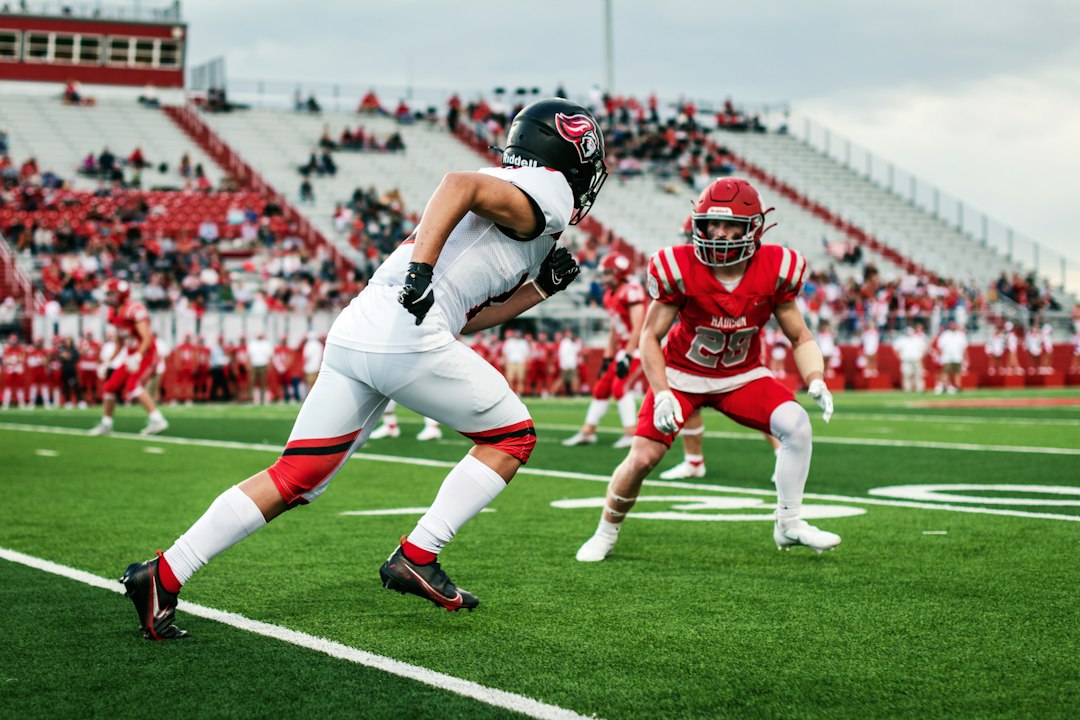




There's a moment every fall in Maryland — sometime between the last gasp of summer heat and the first real cold snap — when the state's high school football rankings drop and the whole ecosystem tilts. Coaches check them first thing. Boosters text each other. Players pretend they don't care, then absolutely care. And somewhere, in a basement or a break room or on a phone screen during lunch, a former player sees the list and feels something they weren't expecting to feel.
That happened again this week.
Gilman School and Loyola Blakefield are back in the Maryland Top 25 after another weekend that scrambled the order, reshuffled expectations, and reminded everyone watching that Maryland prep football in late October is genuinely, beautifully unpredictable. The top of the poll shifted. Teams nobody saw coming made their move. Programs that were supposed to be locks found themselves looking up.
If you follow Maryland high school football as a fan or a parent, that's a good story. If you ever actually played — if you ever wore a numbered jersey on a Friday night in this state — it's something else entirely.
What the Rankings Actually Meant When You Were In Them
For anyone who ever laced up cleats and ran out of a tunnel in this state, the rankings weren't just a list. They were a verdict. A public declaration of where your team stood in relation to everyone else, printed and posted and discussed in hallways before first period on Monday.
You remember the feeling. The Sunday night scroll. The way your stomach did something specific when you found your school's name — or didn't. The way a top-10 ranking felt like confirmation that everything you'd been doing at 5:30 AM in August, everything you'd ground through in two-a-days, had a number attached to it now. A number the whole state could see.


Rankings in high school sports carry a weight that's hard to explain to people who didn't play. They're not like professional standings, where it's business, where rosters turn over and city loyalty gets complicated. High school rankings are personal in a way nothing else is. That's YOUR school. YOUR number. YOUR teammates' names attached to that ranking. When Gilman climbs back into the Top 25, the guys who played for Gilman twenty years ago notice. They always notice.
The schools on this list — the ones fighting their way back in, the ones holding their position, the ones who slipped and are trying to recover — they're not just programs. They're collections of moments. Specific, irreplaceable moments that belong to the people who were there.
The Topsy-Turvy Weekend That Brought Them Back
The latest Maryland rankings shakeup came after what the folks at SI High School Sports called another "topsy turvy weekend" — and that phrase alone should resonate with anyone who played. Because if you were in the middle of a season like this, you know exactly what topsy turvy feels like from the inside.
It's not chaos, exactly. It's more like the moment in mid-October when every team has enough tape on everyone else that upsets stop being upsets and start being the logical result of preparation meeting opportunity. Gilman and Loyola Blakefield returning to the rankings isn't a surprise — it's both programs doing what programs with that kind of tradition tend to do. They find their way back.
What makes late October in Maryland football so compelling — and what the rankings capture imperfectly but still somehow accurately — is that this is the moment when the season stops being theoretical and starts being real. Playoffs are coming. Every game is a referendum. Every ranking shift is a signal.
Former players know this phase of the season in their bones. The physical memory of it: the cold that started showing up in practice, the way the field smelled different, the way the lights at home games seemed brighter because you knew there weren't many of them left.
The Names on the List That Used to Be People You Knew
Here's what no rankings graphic can capture: the names on those schools used to belong to people you knew personally.
Marcus T., 44, grew up in Baltimore County and spent three years on the offensive line for a program that showed up in and out of the Maryland Top 25 throughout the mid-90s. He still checks the rankings every October. Not because he has a kid playing — his youngest is in middle school — but because seeing his old school's name in the poll triggers something automatic. "It's like the ranking is still partly mine," he said. "Like some small percentage of whatever that program built, I helped build it. Even now."
That's not nostalgia in the soft, sentimental sense. That's something more structural — the recognition that what you put into something doesn't disappear just because the season ended. Every former player who sees Gilman or Loyola Blakefield climb back into the Top 25 knows this. The current players are carrying something forward. They just don't know yet how long they'll be carrying it.
Remember When Your Number Was Everything
Every former player knows this specific experience: your jersey number was your identity in a way your name almost wasn't.
In the weight room, on the practice field, in the film session — you were your number. Coaches called it. Teammates knew it. On game days, the parents in the stands would shout the number, not the name, because the number was what they could see from forty rows up. And when the local paper ran the box score or mentioned your team in a rankings context, the number was the thing that made it real.
The moment you graduated, the number got reassigned. Some freshman got your number — and your locker, and your spot in the two-deep. That's how it works. That's how it has always worked. But the number you wore? That one stays yours in a way the program can't reclaim. You wore it on Friday nights that mattered. You wore it in games that decided playoff seeding, that reshuffled rankings, that put your school's name on a list that kids twenty years later are still competing to appear on.
It doesn't matter whether you were a starter or a backup. Whether your team was ranked or not. The number was yours, and the season was real, and what happened on those Friday nights happened. Full stop.
The current Maryland Top 25 is full of players living exactly that experience right now. They just can't see it yet. They're in it.
What This Week's Rankings Say About Maryland Football Right Now
Setting aside the former-player feeling for a moment — and only a moment — the actual state of Maryland high school football in late October 2026 is worth acknowledging.
The return of Gilman and Loyola Blakefield to the Top 25 speaks to something consistent about both programs: they recruit and develop with continuity, they have coaching staffs that don't panic after a hard week, and they exist in a competitive landscape within their classification that demands sustained excellence just to stay relevant. A topsy turvy weekend doesn't break a program like that. It reveals it.
Maryland prep football has always had this quality — the competition is layered enough that a single bad performance can shake a team out of the rankings, but deep enough that falling out doesn't mean falling apart. Getting back in means you handled your business the following week. That's what both Gilman and Loyola Blakefield did.
For anyone tracking the playoff picture, the reshuffling at the top of this week's poll matters practically. But for former players watching from a distance, what it mostly confirms is that the sport continues to be exactly what it was when they played it: hard, unpredictable, and rewarding in ways that compound over time.
The Friday Night Feeling Nobody Can Franchise
There's a reason former players stay connected to high school football in a way they don't stay connected to most other things from that era. It's not purely nostalgia — or rather, it's not the soft kind of nostalgia that fades with time. It's something more durable.
Friday night high school football is one of the few communal experiences in American life that is entirely local and entirely real. The players are from the community. The coaches know the families. The stands are full of people who have actual stakes — not as fans of a brand or a franchise, but as people with skin in the game. The ranking your school holds in the state Top 25 is a reflection of something your neighbors built.
When you played for one of these programs, you were part of that community fabric in a specific, named, numbered way. You were on the sideline. You were in the film session. You were running the drill at 6 AM when nobody except the coaches and your teammates could see you. And then on Friday nights, all of that became public. Visible. Ranked.
Gilman and Loyola Blakefield are back in the Maryland Top 25 this week because the players and coaches in those programs did invisible work that became visible on a scoreboard. Every former player watching understands that equation. They've lived it.
Two Things the Rankings Can't Measure
The Top 25 is good at measuring wins and losses, strength of schedule, margin of victory. It is structurally incapable of measuring two things that former players know matter most:
What it cost. The rankings don't show the early mornings, the August heat, the practices you ran through when you had nothing left. They show a number next to a school name. The number is the output. The cost is invisible — and it's the part that stays with you.
What it built. The relationships formed in a high school football program have a specific texture that's different from friendships formed in other contexts. You were in actual physical difficulty together, regularly, under evaluation, with something at stake. That builds a different kind of bond. The rankings don't show that either. They just show where your program stood on a Tuesday in October. The former players know what that ranking was built on. They helped build programs that came before, and they recognize the structure of effort underneath the current one.
Your Jersey Is Still Out There Waiting
Your number is still yours. The season was real. And if it's been a while since you've seen your name on the back of a jersey — or since you've held that specific visual of who you were when you played — this is the moment.
Design yours in minutes and see your name and number exactly the way you remember it.
Frequently Asked Questions
Why do Maryland high school football rankings change so much in October?
October is when Maryland's high school football schedule tends to feature the highest concentration of in-conference and rivalry games, which means ranked teams are regularly playing each other. A single loss between two top-25 programs reshuffles the entire list. Late October also tightens the playoff picture, which amplifies the consequences of every result — and the rankings reflect that volatility in real time.
What makes Gilman and Loyola Blakefield historically significant in Maryland high school football?
Both programs have long track records of consistent competitive success within Maryland's private school landscape. Gilman School and Loyola Blakefield operate within one of the most competitive independent school football ecosystems on the East Coast. Their return to the Top 25 after a competitive weekend reflects institutional program depth — coaching continuity, strong development pipelines, and the kind of culture that rebounds quickly after setbacks rather than falling into extended down cycles.
How do former players stay connected to their high school football programs?
Most former players maintain connections through alumni networks, homecoming events, and — especially in the social media era — by following local sports coverage that tracks current rankings and results. Many former players report that checking their old school's standings in October feels automatic, even decades later. The connection is less about keeping up with the sport generally and more about a specific, personal investment in a particular program's continued success.
What is iPlayedFor and how does it connect to high school sports?
iPlayedFor is an informational resource for former athletes who want to reconnect with their playing-day identity. The platform covers the sports culture, nostalgia, and community around amateur and high school athletics, and offers a custom jersey design experience so former players can recreate the number and name they wore when it mattered most. It's built for the person who sees a ranking like this week's Maryland Top 25 and feels something specific — because that feeling deserves a tangible place to land.
See also: why high school sports still matter to adults | the difference between watching football and having actually played it | Friday night lights under a Maryland sky | why those senior season memories refuse to fade