

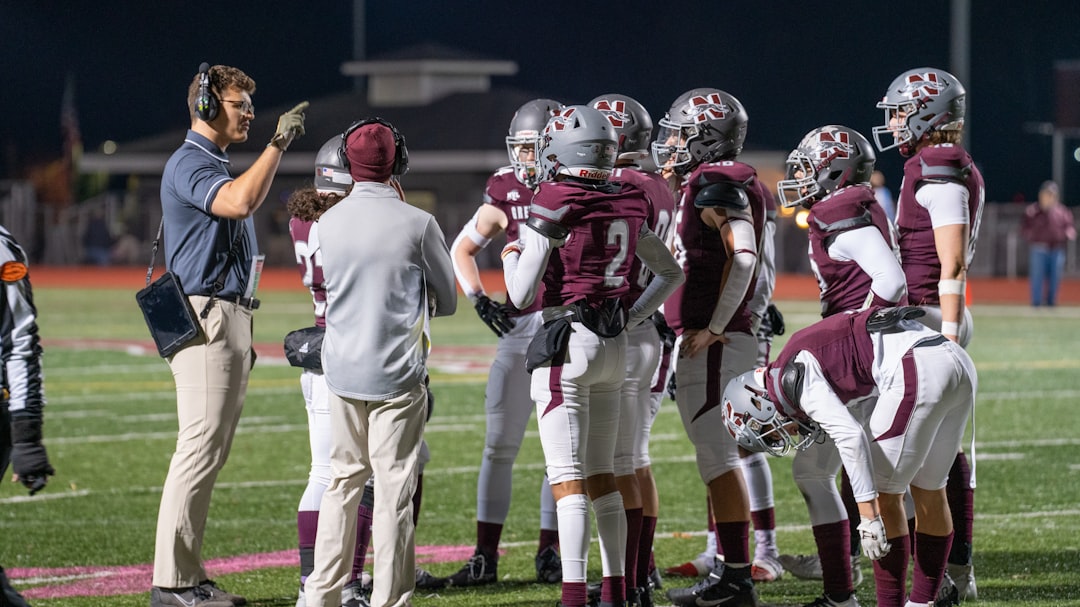



Maryland high school football is no stranger to turnover on the sideline. Every spring, programs across the state cycle through assistant hirings, coordinator shuffles, and the occasional head coaching vacancy that ripples through a community for months. It's the rhythm of the sport. According to reporting from SI High School Sports, roughly 15 percent of Maryland's approximately 235 varsity football programs see a new head coach in any given year. That's normal. That's expected.
But 2026 is not a normal year.
Thirty-six programs across Maryland entered the 2026 season with a head coach their players had never played for. Thirty-six locker rooms heard a different voice deliver the first team speech of fall camp. Thirty-six sets of captains shook a new hand before the first whistle. That number — more than 15 percent of the entire state's varsity programs simultaneously — is a wave, not a ripple.
For anyone who ever pulled on a helmet and ran onto a Friday night field, that number hits differently than a statistic should.
What 36 New Coaches Actually Means for the Kids in Those Locker Rooms
Here's what the headlines don't capture about a coaching change at the high school level: it isn't a personnel transaction. It isn't a business decision reviewed by a board and executed by an HR department. It is one of the most human things that can happen in a young athlete's life, and it can go either direction in terms of what it means for that player.
A new coach walks through the door carrying everything: a different offensive system, a different philosophy on practice tempo, a different voice at the front of the room during film. Sometimes that difference is exactly what a program needed. Sometimes the outgoing coach had built something fragile and the transition cracks it. Sometimes a new staff inherits talent it doesn't yet know how to use. Sometimes they see things in a sophomore that the previous staff missed entirely.

Those thirty-six programs are not experiencing thirty-six identical situations. Some of those new coaches are internal hires: a trusted offensive coordinator stepping up, already known to the players, already trusted. The speech changes, but the face doesn't. That's a different experience than the program that brings in a coach from three counties away with a system no one in the building has run before.
Both are classified as "coaching changes." Both are absolutely not the same thing.
For the players in those programs, the next eight months are going to define how they remember their high school football career — in part because of who is standing at the front of the room.
Every Former Player Knows This Feeling
There's a moment that lives in the memory of almost every person who played high school football, and it isn't the biggest game or the best play. It's the first practice under a new staff.
Maybe it was a coordinator change that shifted your role. Maybe it was a full rebuild — a new head coach with a new staff who came in with clipboards and didn't know anyone's name. Maybe you were a freshman walking into a program you'd heard about for years, about to meet the person who would shape your development for the next four years.
That first practice has a texture to it that's unlike any other. The drills are slightly different. The tempo is unfamiliar. You're reading the new voice, trying to figure out where you stand before a word has been said about depth charts. Every rep feels like an audition. Every missed assignment feels more expensive than it would with a coach who already knows you.
It is one of the most alert states a young athlete can be in: full attention, total investment, reading every signal.
Every former player knows this feeling because we all lived it.
The thirty-six programs in Maryland right now are full of players living it in real time. Some of them are freshmen who never knew the previous staff anyway. This is their only frame of reference. Some of them are seniors who have three years of relationship equity with the outgoing coach and are starting over in their final season. Those two experiences, separated by two years of eligibility, are completely different.
The Coach You Never Forgot
Marcus D., 34, spent two seasons at a program in central Maryland before his family relocated ahead of his junior year. He'll tell you — unprompted, years later — that the coach he played for during those two seasons is the reason he still follows high school football at all. Not because the team won big. They didn't. But because that coach had the specific skill of making a 16-year-old feel like his effort mattered even when the scoreboard didn't reflect it.
That's the thing about high school coaches that professional and college football never quite replicates. At the professional level, the relationship is transactional by design. At the college level, recruiting relationships and scholarship decisions add layers of complexity. At the high school level, especially at a small or mid-size program, the coach and the player are in proximity in a way that shapes the player permanently.
The coaches most former players remember weren't necessarily the ones who ran the most sophisticated systems. They were the ones who knew when to push and when to let something go. The ones who called you by a nickname. The ones who pulled you aside after a hard loss not to correct your technique but to ask if you were doing all right. The ones who showed up to your basketball game in February when football season was four months away, just because they said they would. The ones who saw something in you before you saw it in yourself.
Thirty-six programs in Maryland have that opportunity right now — to be the coaching staff that a player remembers at thirty-four years old when someone asks who shaped them.
That's not a small thing.
What Makes a Coaching Transition Work (and What Doesn't)
Not every coaching change produces a transformative result. History inside Maryland high school football — and high school football broadly — is full of transitions that went sideways despite the best intentions on both sides. The players weren't wrong. The coach wasn't wrong. The fit just wasn't there, and a program paid for it in lost seasons and broken confidence.
A few patterns hold across successful transitions at the high school level:
The new coach learns before they lead. The programs that handle transitions best are typically the ones where the incoming coach spends the spring genuinely listening — to players, to boosters, to community members who have watched the program for decades. Walking in with a fully formed opinion about what needs to change, delivered before you've earned the trust of the room, is one of the fastest ways to lose a locker room before the season starts.
The seniors get heard. In any coaching transition, the players with the most at stake are the seniors. They've invested three years into a program built under a specific set of expectations, and now the final chapter is being rewritten. The new coaches who handle this well make a specific, observable effort to acknowledge that investment. Not to defer to it, but to recognize it.
The system serves the players, not the other way around. At the professional level, players are acquired to fit the system. At the high school level, the system has to fit the players that are already there. An incoming coach who falls in love with a run-heavy power scheme and inherits a roster built around three skilled wide receivers and a mobile quarterback faces a real decision: adapt the system to what's available, or spend a year forcing a mismatch. The programs that handle transitions without losing a season are typically the ones where the new staff adapts first and installs their preferred system over time.
The community is treated as a partner, not a spectator. High school football in Maryland — like high school football everywhere — exists inside a community that has opinions and investment that predate the new staff's arrival. Those opinions can either be channeled into energy that supports the transition or allowed to calcify into resistance that undermines it. The new coaches who last in a program are almost always the ones who understand that the field is the community's, not theirs.
What the Number Tells Us About Maryland High School Football Right Now
Thirty-six programs. Out of roughly 235 in the state. That's closer to 15 percent, but at the higher end of what's considered routine, and happening simultaneously across programs at every competitive level.
Some of this is natural attrition: coaches who built something over fifteen or twenty years and decided it was time. Some of it is the ongoing challenge of filling head coaching positions at the high school level, where the job asks an enormous amount of someone for compensation that rarely reflects that ask. Some of it reflects the broader reality of high school athletics administration: the pipeline of qualified candidates who are willing to take on the full scope of a head coaching role is not growing as fast as the demand.
What this means for the 2026 season in Maryland is that a significant portion of the competitive landscape is in a reset state. Programs that were contenders under outgoing coaches are going through the uncertainty that comes with any transition. Programs that had stagnated may be entering a growth cycle under new leadership. The competitive ripple effects of thirty-six simultaneous changes will play out across conferences and regions throughout the fall.
For fans, it's an interesting year to pay attention.
For the players in those thirty-six programs, it's the most important year of their careers — regardless of what happens on the scoreboard.
Four weeks into the season, the number has left the talking stage. Maryland's 2026 season opened on September 4, 2026, which means all thirty-six of those transitions are now being tested on actual Friday nights, in front of actual crowds, under real scoreboards.
And the churn reached the very top of the state this year. The teams that finished No. 2, No. 3, and No. 7 in last year's final Maryland state rankings all entered 2026 with a new head coach. SI High School Sports' Maryland coverage has followed the biggest of those changes closely. At DeMatha, Bill McGregor, one of the winningest coaches in state history, stepped aside before the season for personal reasons and remains Director of Football Operations, while alumnus Bryce Bevill was named interim head coach. At Archbishop Spalding, Kyle Schmitt stepped down after 13 seasons and four straight MIAA A Conference titles to coach tight ends at Maryland, and former Navy assistant R.B. Green takes over. And at Williamsport, assistant Joe Austin took over after Tim Small stepped down and won his debut 16-7 over Brunswick on September 4.
The same reshuffling shows up in state rankings well beyond Maryland, a reminder that coaching churn is a story everywhere Friday nights still matter.
The Jersey That Outlasts the Season
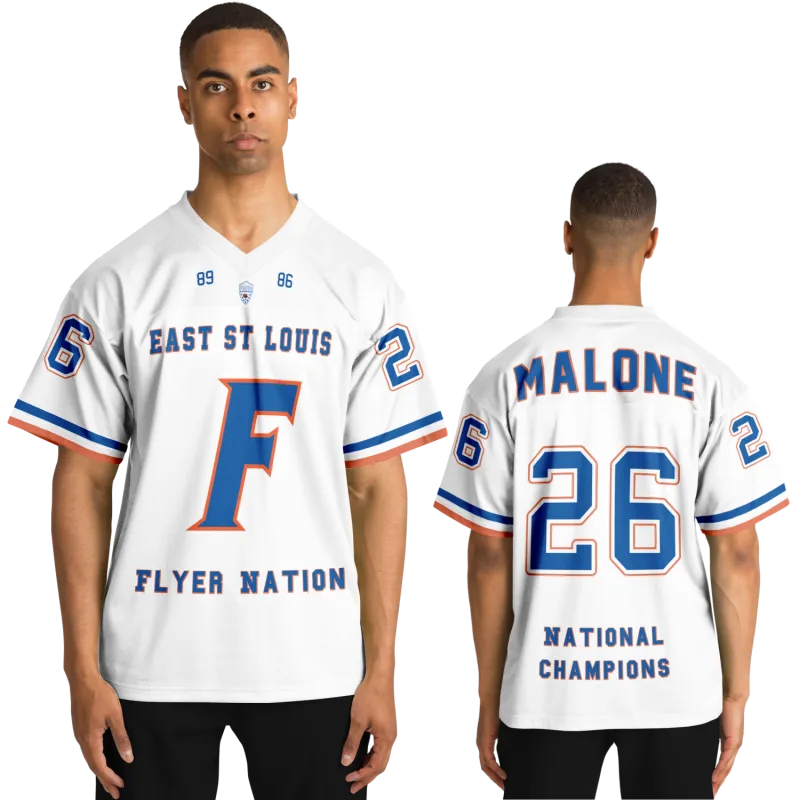
Here's what every former player figures out eventually, usually sometime in their mid-to-late twenties: the coach mattered. The system mattered less than you thought at the time. The games mattered less than the relationships. What you carry forward isn't the score of the rivalry game — it's the name on your back, the number on your chest, and the specific memory of what it felt like to wear that uniform and be part of something larger than yourself.
Thirty-six programs in Maryland are building those memories right now, under new leadership, with players who don't yet know which moments they'll still be talking about twenty years from now.
For most of us, the photographic proof is thin: the visual record of a playing career often comes down to a grainy yearbook photo and a memory.
If you played — anywhere, any program, any level — you already know what those moments feel like. And if you haven't thought about your own jersey in a while, maybe this is the year you bring it back.
Your jersey is still out there waiting.
Design yours in minutes and see your name and number exactly the way you remember it.
Not ready to design yours yet? See what others have made.
Frequently Asked Questions
How many high school football programs in Maryland have new head coaches in 2026?
According to reporting from SI High School Sports, 36 Maryland high school varsity football programs entered the 2026 season with new head coaches. Maryland has approximately 235 varsity football programs total, making this a turnover rate at or above the historically routine 15 percent threshold.
Is a 15 percent coaching turnover rate at the high school level considered normal?
Yes. Roughly 15 percent annual head coaching turnover has been the historical norm across Maryland high school football. What makes 2026 notable is the concentration of those changes occurring simultaneously across programs at multiple competitive levels, rather than distributed unevenly as in most years.
How does a coaching change affect high school football players differently than players at higher levels?
At the high school level, the coach-player relationship is significantly more personal and formative than at the college or professional level. High school players are in critical developmental years, and coaching changes affect not just scheme and playing time but mentorship, confidence, and program culture. Seniors are particularly impacted, as they may have built multi-year relationships with an outgoing staff and must adapt to a new system in their final season.
What typically determines whether a high school coaching transition succeeds?
The most consistent factors in successful high school coaching transitions include the new staff's willingness to learn the program's culture before implementing changes, specific acknowledgment of returning players' prior investment, system flexibility that adapts to the existing roster rather than forcing a mismatch, and genuine engagement with the broader school community as a partner in the program.
Where can I follow Maryland high school football coaching changes and news in 2026?
SI High School Sports maintains ongoing coverage of Maryland high school football, including coaching changes, program news, and season previews across the state's competitive landscape. Design your own — custom football jerseys.
See also: what high school sports teach you that nothing else could | the most football-crazy states in America | what it really means to play under the Friday night lights