

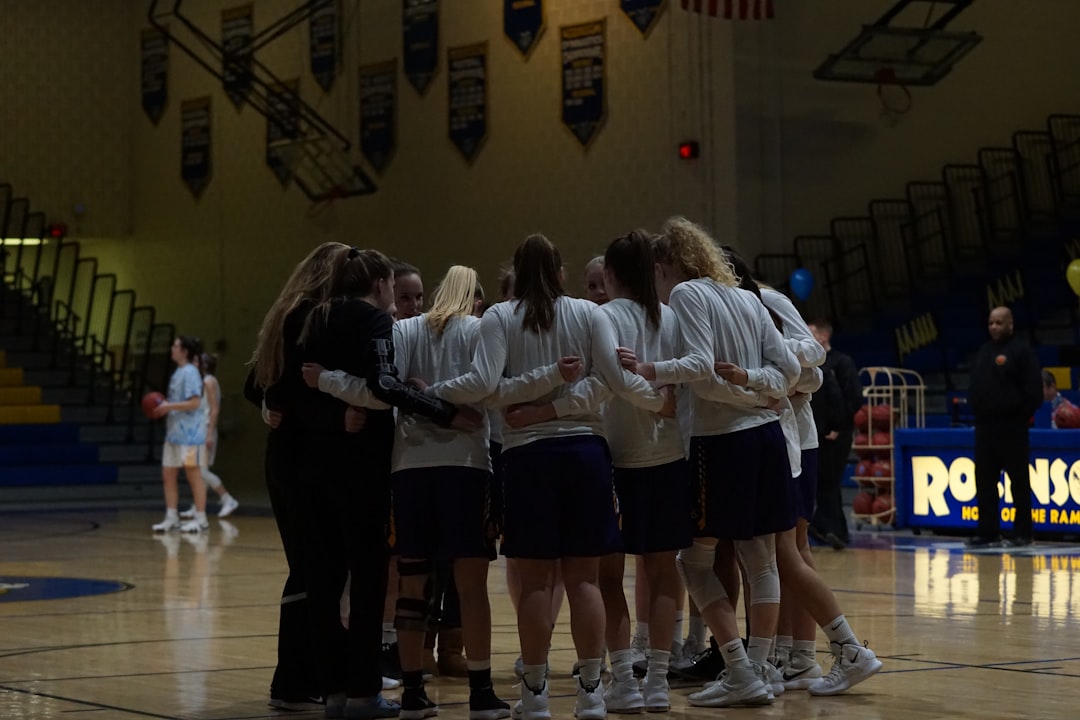
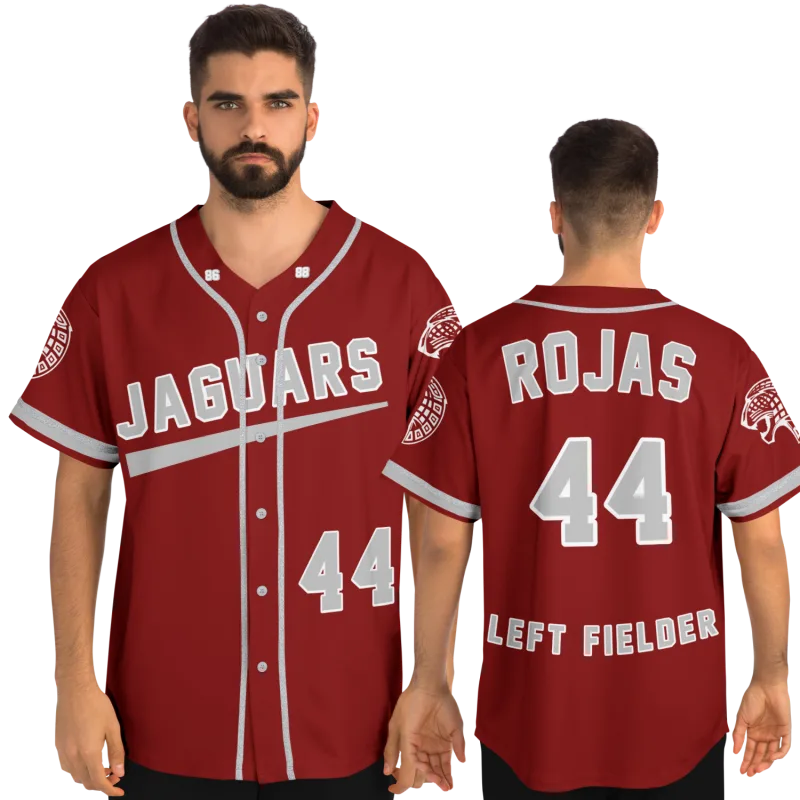
The final whistle goes and everything changes. You hand back the jersey, walk out of the gym or off the field, and step into a world that doesn't run drills, doesn't make halftime adjustments, and doesn't hand out varsity letters.
But here's what nobody told you: the teamwork skills from high school sports in the workplace are some of the most bankable assets you will ever carry into a job interview. The problem isn't that those skills don't transfer. The problem is that most former athletes have never been given a framework for translating them — so they sit in interviews talking about "being a team player" and wondering why that phrase lands with the same thud as everyone else's.
This isn't a recycled piece about how sports taught you discipline. This is a concrete framework for identifying what you genuinely learned on the field or court, naming it with professional precision, and deploying it where it counts.
The Translation Problem (And Why Most Athletes Get It Wrong)
Every career counselor says some version of the same thing: your sports experience is valuable. What they rarely explain is how to convert that experience into language that resonates with a hiring manager who has never run a two-minute drill.
The result is a generation of former athletes defaulting to two responses that consistently underperform.
The first is the vague virtue claim. "I'm a hard worker." "I know how to be a team player." These phrases have been repeated so many times they register as background noise. A hiring manager hears them and mentally checks a box labeled everyone says this.
The second is the story without the framework. "I was team captain my junior year." Great — but captain of what, doing what, producing what result? Without the professional translation, a captaincy is just a title on a résumé.
The fix is what our team calls the Locker Room-to-Boardroom Translation: the discipline of taking a specific athletic experience, naming the underlying skill with professional vocabulary, and anchoring it to a specific, observable outcome. That's what this article teaches you to do.

10 Genuine Transferable Skills From Athletics — And How to Articulate Them
These aren't metaphors. These are specific cognitive and behavioral competencies that research in organizational psychology consistently identifies as high-value — and that competitive team sports reliably develop. Here's how to name them and use them.
1. Coachability (The Skill Employers Actually Mean When They Say "Growth Mindset")
Every sport has a coach. Every coach has feedback. What separates athletes who improve from athletes who plateau is not talent — it's the ability to receive corrective information, process it without defensiveness, and implement it the next rep.
In professional environments, this skill is called coachability or learning agility, and it is one of the most consistently cited qualities in high-performer profiles. The core mechanism: you developed the ability to decouple your identity from your performance. When a coach told you your footwork was wrong, you didn't experience that as an attack on who you are — you experienced it as information that would make you better.
The interview translation: "I've been coached at a high level since I was fourteen. That experience taught me to seek out feedback rather than wait for performance reviews — and to treat corrective input as data, not criticism. When my manager flagged a gap in how I was handling client communication, I asked for a concrete example, adjusted my approach, and followed up two weeks later to confirm the change had landed. That loop — feedback, adjustment, confirmation — is something athletics trained me to run quickly."
2. Role Clarity and Subordination of Ego
Not every athlete is the star. Most aren't. And what non-stars learn — if they stay and compete — is something far more transferable than scoring: the ability to execute a defined role at a high level, even when that role isn't glamorous, because the team outcome depends on it.
This is role clarity paired with ego subordination, and it is genuinely rare in professional environments. Most workplace dysfunction traces back to people who are either unclear about what their role requires or unwilling to prioritize the team outcome over their own visibility.
A mid-rotation player on a basketball team who shows up every day to defend the opponent's best scorer, take no shots, and get no headlines — and does it well for three years — has developed something a lot of graduate school graduates haven't: the discipline to serve a function rather than a personal narrative.
The interview translation: "My role on the team wasn't to score. It was to defend and set screens — work that doesn't appear in box scores but that the coaches tracked carefully. I got comfortable knowing my contribution mattered even when it wasn't visible. I bring the same orientation to team projects: I'd rather we hit the deadline than get individual credit for the interesting piece."
3. Performance Under Pressure With a Fixed Deadline
This one gets generalized constantly. "Sports taught me to perform under pressure" is the vague claim. Here is the underlying mechanism that makes it credible.
Competitive athletes develop what sports psychologists call pre-performance routines — repeatable sequences of behavior that bring physiological arousal to an optimal range before high-stakes moments. Whether they name it or not, athletes who compete at the varsity level have spent years finding the mental and physical state that produces their best output on demand, under time pressure, with an audience watching.
In professional terms, this is stress inoculation and deadline performance competency. These aren't soft skills. They are specific cognitive regulation skills developed through repeated exposure to high-stakes, time-bound situations.
The interview translation: "I competed in situations where I had to perform at a specific level within a specific window — no extensions, no warm-up period, full output required. Over four years of varsity competition, I developed a pre-performance routine I've adapted for professional presentations, major client calls, and deadline-driven deliverables. I don't perform worse under pressure — I've trained for it."
Maya R., 24, had been a starting setter for three years on her high school volleyball team before stepping into a marketing coordinator role at a mid-sized firm. When the team's lead designer left two weeks before a major campaign launch, Maya restructured the project timeline, redistributed tasks, and put in three consecutive fourteen-hour days to deliver on time. "I defaulted to tournament mode," she said. "You figure out what the team needs and you fill it." Her manager later told HR it was the most composed crisis response she'd seen from someone fewer than three years into their career.
4. Film Study: The Habit of Deliberate Self-Evaluation
Not every sport uses literal film. But every competitive sport at the high school varsity level has some version of reviewing what happened, identifying what went wrong, and building a corrective plan before the next game.
Athletes who participated in this process — even informally — developed what organizational psychologists call deliberate self-evaluation: the structured practice of reviewing your own performance against a clear standard and generating targeted improvement actions. This is distinct from vague self-reflection. It is systematic, criterion-referenced review.
In professional environments, this is the difference between employees who grow quickly and those who plateau: fast growers review their work critically, identify gaps, and address them before being asked to.
The interview translation: "Our coaching staff had us review every game looking for patterns — not just 'we lost' but 'here are the three decisions that changed the outcome.' I carry that habit into professional work. After any major project, I run a personal debrief: what worked, what didn't, what I'd change. It's not always comfortable, but it's why my output improves cycle over cycle."
5. Communication Under Adversity
Talk to any experienced coach about what separates good teams from great ones and the answer is almost always communication — communication that doesn't break down under fatigue, frustration, or failure.
This is a specific and sophisticated skill. It's straightforward to communicate clearly when everything is going well. The athletic context develops something different: the ability to give and receive accurate, useful information when the game is close, the clock is running, and the emotional stakes are high. The shortstop calling off the left fielder on a popup in the bottom of the ninth. The point guard communicating a defensive switch mid-play while exhausted. Both require the same underlying competency — clarity under pressure.
The interview translation: "In sports, communication failures cost you games. You can't go quiet when things get hard — that's precisely when accurate information matters most. I learned to give clear, direct information to teammates even when we were down by two with two minutes left. I bring the same standard to professional situations: when a project is in trouble, I communicate the problem, the constraint, and the specific ask, instead of waiting and hoping it resolves itself."
6. Accountability Without External Enforcement
Team sports create accountability structures that are qualitatively different from classroom or office environments. When you miss an assignment at work, the consequences are often delayed and mediated — a review cycle, a manager conversation, a performance discussion. When you miss a defensive rotation in a critical game, the consequences are immediate, visible, and shared by the people standing next to you.
This develops a specific and valuable competency: intrinsic accountability — the orientation toward owning your role without requiring external enforcement. Former athletes who internalized this standard don't need a manager following up to confirm their work is done. They experience the gap between what they committed to and what they delivered as personally unacceptable, because they spent years in an environment where that gap had immediate and visible consequences.
The interview translation: "In sports, if I missed my assignment, my teammates paid for it right away. That built a standard I carry into every role: I own my work completely, I communicate proactively when something is off-track, and I don't wait to be asked for a status update. My accountability isn't managed externally — it runs internally."
7. Tolerance for Ambiguity and Real-Time Adjustment
Here is a transferable skill from athletics that almost never gets named in career advice articles: the ability to execute a plan that is actively failing, make real-time adjustments without losing composure, and re-engage at full intensity.
Every athlete who has sat through a halftime where the game plan wasn't working — absorbed new information, modified their approach, and executed under pressure in the second half — has developed what organizational researchers call adaptive performance. This is one of the most studied competencies in high-performer research, and one of the hardest to develop in professionals who have only ever worked in low-stakes, slow-feedback environments.
The interview translation: "My position required constant real-time adjustment — reading what the defense was doing and making decisions in under two seconds. I got genuinely comfortable with the experience of 'the plan isn't working, adapt now.' That comfort with mid-course correction is something I bring to project environments where the initial scope changes or a key dependency falls through."
8. Resilience — The Practiced Kind
Resilience gets cited so often in career contexts that it has become a placeholder. Here is the version that competitive sports develop, named with more precision.
Competitive athletes lose — repeatedly, publicly, in front of their community, after maximal effort. The ones who stay and compete develop a specific relationship with failure: they experience it as information and motivation rather than a terminal condition. This is not simply navigating difficult circumstances. It is a practice-derived ability to re-engage with full effort after public failure, repeatedly, over years.
The interview translation: "I competed through seasons where we lost more than we won. What I took from that isn't just 'I handle failure well' — it's that I know what to do after a setback: identify the cause, adjust the behavior, and re-engage without carrying the emotional weight of the loss into the next performance. That cycle — fail, analyze, adjust, re-engage — is a practiced skill, not a personality trait."
9. Trust-Building in Compressed Windows
Teams are assembled, not chosen. You don't select your teammates — you inherit them, and you have a season to build enough trust to function at a high level together. That is an accelerated version of a skill that takes most professionals years to develop in traditional environments.
Athletes who competed on team sports at the varsity level developed the ability to build functional working trust quickly — to read what a teammate needs, demonstrate reliability through consistent behavior under pressure, and calibrate communication style to the person rather than just the task.
In professional environments, this shows up as the capacity to integrate into new teams quickly, earn responsibility early, and contribute effectively in cross-functional projects where nobody chose to work together.
The interview translation: "Every season brought new players, new dynamics, and a narrow window to function as a unit. I got skilled at the early stages of team-building: being reliable in small things first, learning how different teammates communicated, and making sure my actions matched my words from day one. That's how I approach new teams and new roles."
10. The Practice Mindset: Full Effort When No One Is Watching
The last skill is the hardest to describe but the easiest for any former athlete to recognize immediately. It is the orientation toward full effort in practice — in the unglamorous, unobserved sessions where nobody is keeping score and the outcome doesn't count.
Most work environments reward output, not process. The former athlete who shows up with a practice mindset — who works at full intensity on preparation, detail, and foundational work that nobody sees — is operating with a compounding advantage.
The interview translation: "Sports taught me that performance is downstream of preparation. The quality of the game is determined by the quality of practice. I bring that standard to professional work: the draft nobody reviews, the prep for the meeting that seems routine, the process I follow when no one is watching. That's where the results actually come from."
The Interview Framework: Turning Athletic Experience Into Specific Stories
Naming these skills is only part of the work. The other part is building the evidence that makes them credible. In our experience, the athletes who convert their sports background most effectively in interviews use a three-part structure:
- Name the professional skill first, not the sport. Lead with "adaptive performance" or "intrinsic accountability," then trace it back to athletics. Don't lead with the sport.
- Give the concrete athletic example — with a result attached.
- Bridge to a professional application — a moment in a work context where you used the same skill and what happened.
That sequence — skill name, athletic evidence, professional bridge — transforms "I was a team player" into a specific, credible, memorable answer that most candidates across the table can't match.
Your jersey is still out there waiting.
Design yours in minutes and see your name and number the way you remember it.
Frequently Asked Questions
Can I list high school sports on my résumé if it was more than five years ago?
Yes — with one condition. If you're listing it, pair it with a concrete output: a leadership role, a team achievement, or a recognition that means something. "Varsity soccer, four years, team captain senior year" communicates substance. "Soccer" does not. As you move further from graduation, the sport itself becomes less relevant than the skills it produced — and those skills are what your résumé language and interview answers should center.
What if I wasn't a starter or team captain? Does my athletic experience still count?
Completely. Some of the most transferable competencies — role clarity, ego subordination, showing up at full effort when your contribution is invisible — are developed more deeply by non-starters than by stars. A bench player who kept working and competing for four years has demonstrated something a natural talent who was always in the spotlight often hasn't: the ability to deliver value without external validation. Name that in interviews. It is a differentiator.
How do I discuss sports experience in a job interview without sounding like I peaked in high school?
The framing is everything. You're not talking about what happened in high school — you're talking about competencies developed during that period that you have continued to apply. The distinction the American Psychological Association's research on athletic identity draws is between athletes who over-identify with their sport and those who integrate athletic experience into a broader professional identity. In interviews, demonstrate the latter: "Athletics gave me this skill, and here is how I applied it in a professional context last quarter." The conversation is always anchored to now, with athletics as the origin story — not the headline.
What if I played an individual sport — does this framework apply to me?
Most of it does. Skills 3 (performance under pressure), 4 (deliberate self-evaluation), 8 (resilience), and 10 (practice mindset) are at least as strong in individual sport athletes as in team sport athletes — often stronger, because there is no team to absorb a poor performance. The team-dynamic skills (2, 5, 6, 9) require more translation, but most individual sport athletes competed within a team structure at some point — club teams, relay events, dual-meets — where those dynamics were present. Pull from those experiences when you need them.
See also: what high school sports actually teach you | athletic identity that doesn't disappear when the final whistle blows | why high school sports continue to shape adults long after graduation | reconnecting with former teammates who shaped who you are