

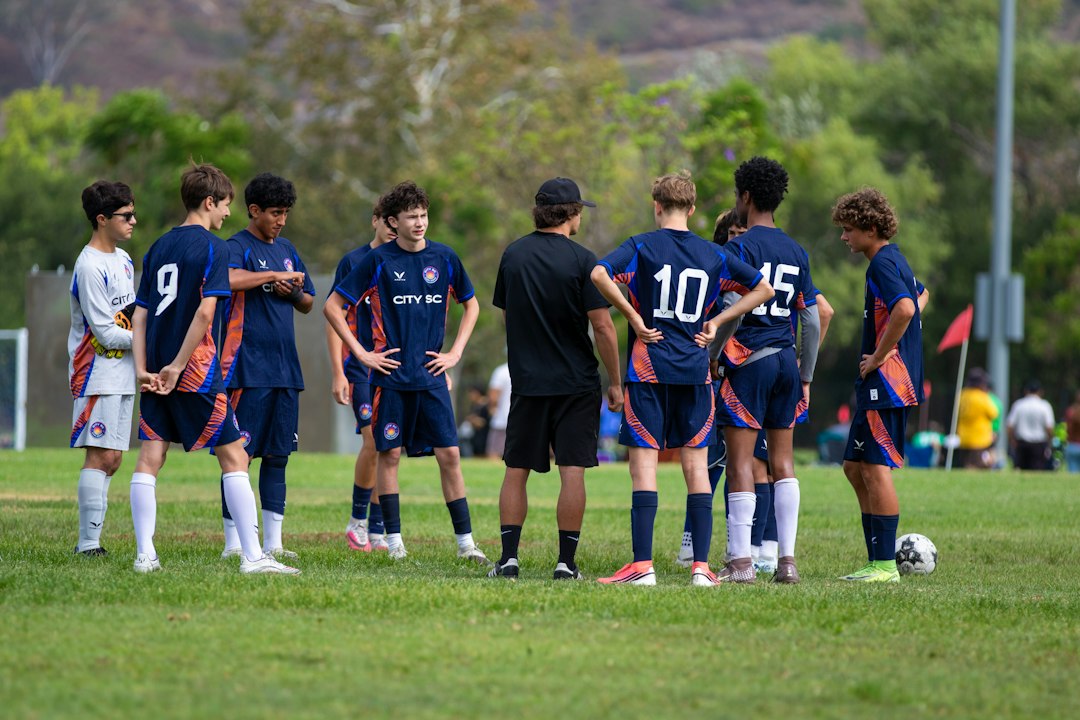




Class reunion sites are where most former athletes start their search — and, more often than not, where they stall out.
The reason is structural, not accidental. Platforms like Classmates.com and Reunion.com are organized around a single axis: your graduating class at your specific high school. That framework works reasonably well for finding the person who sat near you in AP History. It does not work for finding the center who graduated two years before you, the midfielder who came up from JV your senior season, or the three sprinters who ran the relay with you on a roster that pulled from four different graduating classes simultaneously.
If you played a sport — if you were part of a team with a roster, a coaching staff, a schedule, and a trophy case — you have access to search angles that no class reunion website was architected to surface. This is the owner's manual for those angles, built specifically for former athletes, organized by effort and expected return.
What Class Reunion Sites Deliver — And the Precise Gap They Leave for Athletes
The major class reunion websites operate as self-registration databases. You create a profile, declare your school and graduation year, and become searchable by anyone else who did the same. For a 10 year HS reunion, coverage on these platforms is often reasonable when a dedicated organizer has been actively seeding the group — posting reunion countdowns, tagging old photos, and personally nudging former classmates to register.
In our experience, those platforms work best as a starting list, not a definitive one. They surface who opted in. They cannot surface who graduated in a different year, who never registered, or who played on your team as an underclassman while you were already a senior.
That last gap is the one that hits former athletes hardest. According to the National Federation of State High School Associations, more than 7.8 million students participate in high school athletics each year — nearly every one of them part of a multi-class roster that no class reunion website can reconstruct from a graduation year search alone.


The athlete-specific search layers covered in this guide exist to fill exactly that gap. They begin with the institution that was documenting your team's existence long before any reunion platform came along.
The Athletics Department Archive: The Search Tool Most Former Athletes Never Try
Your school's athletics department holds something no class reunion site can access: actual rosters, organized by sport and year, sometimes spanning two or three decades of records.
Most high school athletics departments retain printed game programs, digital rosters, or both as part of standard administrative record-keeping. Some have built those records into formalized alumni databases. Many have not — but the underlying information exists regardless, and a direct, specific email to the current athletic director is one of the highest-return single contacts available to a former athlete trying to reconstruct a team.
Writing the Email That Gets a Response
Keep it to four sentences. Identify yourself by name, sport, and the years you were active. Name the head coach from your era if you remember them — it signals immediately that you are a genuine former participant rather than a generic inquiry. Ask two specific questions: whether the department maintains roster records from that period, and whether the current coaching staff has any ongoing relationship with the program's alumni network.
That second question is the one most people skip. Programs with winning cultures — especially in smaller communities where athletics are woven into local identity — often maintain informal alumni networks that run directly through the current coaching staff. A coach who has been with a program for fifteen years may personally know where a dozen of your former teammates ended up. That knowledge is not in a database. It lives in a phone call. But it produces results that no class reunion website was built to deliver.
The Yearbook as a Roster Reconstruction Tool
When the athletics department cannot provide direct roster access, the school yearbook archive is the most reliable next step. High school yearbooks consistently include team photos with full caption identification — every player named, often with position and class year noted alongside the image.
Most school libraries maintain yearbook archives, and a growing number have been digitized through local historical preservation initiatives. Once you have names — even a partial list — you have something specific enough to search across every social platform that follows.
The Social Platform Stack, in the Order That Produces Results
A roster in hand transforms social platforms from search-by-memory exercises into precision tools. Work through this sequence in order:
- Facebook reunion groups — Search your school name combined with your graduation year. An active group almost certainly exists, either as an official reunion planning page or an informal alumni group that has been accumulating members for years. Post a specific request — not "does anyone know what happened to the basketball team?" but "[First name] [Last initial], played varsity shooting guard, graduated 2009 — anyone have contact info?" Specific names, specific positions, specific years generate responses. Vague requests generate silence.
- LinkedIn alumni search — Go to your high school's LinkedIn page, click the alumni tab, and filter by graduation year. Coverage is incomplete by design — LinkedIn skews toward former athletes who entered professional careers and maintained active profiles — but it surfaces people who left Facebook years ago and would otherwise be unfindable through social search.
- Instagram hashtag search — Search your school name, the team name, and the coach's name as hashtags. What surfaces is frequently a trail of tagged photos going back a decade or more, and sometimes active accounts belonging to former teammates who simply migrated away from other platforms.
Marcus T., 34, Found His Entire 2007 Lacrosse Lineup From a Box in His Parents' Basement
The printed game program from Marcus's team's state semifinal run had been sitting in a box his mother kept without telling him. When he finally opened it, he had twelve names, positions, and jersey numbers — more specific information than any class reunion website had ever returned when he searched for those same teammates.
He scanned the program, cross-referenced every name through LinkedIn's alumni search, and located nine of the twelve within two hours. The remaining three took another week of Instagram and Facebook cross-referencing before they surfaced. He arrived at his 15-year reunion with contact information for every starter from that season. "I thought three or four would be findable at most," he said. "The program made the whole search feel almost unfair — like I had a resource everyone else had forgotten existed."
The physical archive angle deserves that emphasis. Game programs, tournament brackets, local newspaper sports sections — these are records that named your teammates in print at the exact moment you were competing together. Your state's high school athletics association maintains historical tournament records. Local newspapers have searchable digital archives going back further than most people realize. These are not glamorous research tools. They are specific in a way that no class reunion site ever will be, and specificity is what the athlete's search requires.
The Coach-as-Connector Approach
Former coaches maintain relationships with former players at a rate that consistently surprises people who try this for the first time. A coach who ran a program for two decades may have personally tracked the careers of hundreds of former athletes — not through any formal system but through the natural accumulation of staying present in a community they helped shape.
Finding a former coach is often easier than finding a former teammate. Coaches frequently remain in the same community. Many stay in education or athletic administration for their entire careers. A targeted Google search of the coach's name alongside the school name or sport will often return a current employer, an active LinkedIn profile, or a recent local news mention.
When you reach out, be direct about the purpose: you are trying to reconnect with specific former teammates ahead of a class reunion, you played during a defined period, and you are hoping the coach can point you toward contact information or make a personal introduction. Coaches who are reachable are almost always willing to help — and many will personally broker the introduction rather than simply handing over a phone number.
The Alumni Apparel Signal: How Team Identity Stays Visible Across Time
There is a parallel reconnection layer that runs through visible team identity, and it is more practical than it first appears.
Communities built around shared athletic experience tend to maintain that identity through gear worn long after the final whistle. The DD214 alumni shirt tradition in military communities illustrates this logic clearly: veterans wear branch-specific and unit-specific apparel — including the DD 214 alumni shirt air force editions that have become recognizable within that community — not purely as commemoration but as a recognition signal. The gear identifies membership to other members across time and geography, starting conversations that would not otherwise happen in a crowd of strangers.
The same dynamic operates across athletic alumni communities. NFL alumni apparel and NFL alumni shirts exist because former players want to signal team membership, not just general affiliation with the sport. Western Michigan alumni apparel and Western Michigan alumni shirts serve Broncos alumni the same way — visible identity that creates immediate recognition among people who share the same program history. Nike alumni shirt designs across college programs follow identical logic. Even the Hogwarts alumni t-shirt — whether you find a hogwarts alumni tshirt at a specialty shop or a hogwarts alumni shirt at Target — operates on this principle: signaling membership in a shared community through a visible identifier.
Your custom jersey from your actual playing days does this work more specifically than any of those items. A jersey inspired by your team's colors and style, carrying your name and number, is a conversation-starting tool at a class reunion that a name tag simply cannot match. It signals to the two or three other people in that room who played alongside you exactly who you are before you get within speaking distance — and it does it as a tribute to the specific team and season you shared, not as a generic alumni gesture.
The Multi-Year Roster Problem — and How to Solve It
Class reunion websites search by graduation year. Your team did not graduate in a single year.
This is the structural limitation that makes the athletics department contact essential rather than optional. It is the only tool that captures your actual team membership rather than your graduating class membership — and the difference between those two things is often half the roster.
When posting in Facebook groups or reaching out through any channel, specify the years you were active in the sport alongside your graduation year. "I played JV and varsity soccer from 2006 to 2009 — graduated in 2009 — looking for anyone from those rosters" will surface teammates from multiple class years. The graduation-year-only approach misses everyone who was not in your exact graduating class, which on most multi-year rosters is a substantial portion of the people you are actually trying to find.
Your jersey is still out there waiting.
Design yours in minutes and see your name and number exactly the way you remember it.
Frequently Asked Questions
Can class reunion websites find teammates who graduated in a different year than me?
Not through standard search. Class reunion sites are organized by graduation year, so a teammate who graduated a year before or after you will not appear in your class's registry unless they have separately enrolled in your specific reunion group. The practical workaround is contacting your school's athletics department for roster records that span multiple years, or posting in your school's Facebook alumni group with a specific sport, name, and year-range request. A former coach is often the single most productive contact for multi-year rosters because they knew players across all class years at the same time.
What if my high school no longer exists or merged with another school?
Start with the successor school or district — whoever absorbed the program likely inherited the athletics department records, or at minimum the yearbook archives. Your state's high school athletics association maintains historical tournament and championship records that include school names, team rosters, and coach information even for schools that have since closed. Local historical societies and public library newspaper archives are productive for programs that predate digital record-keeping. Physical records have a longer institutional memory than any website.
Is there a faster approach if the reunion is only a few weeks away?
Prioritize two contacts immediately: the current athletics director at your former school, and the most active organizer of your reunion planning group. The reunion organizer has usually already done significant outreach and may hold contact information you do not. A direct message explaining that you are a former athlete trying to reconnect with specific teammates before the event will almost always receive a response from someone already in organizing mode. Combine that with a targeted post in the reunion Facebook group naming specific teammates by first name, sport, and position — specific requests get answered where general ones do not.
Do any class reunion websites offer sport-specific or team-specific filtering?
None of the major class reunion websites currently offer sport-specific, team-specific, or position-based filtering. Classmates.com and comparable platforms are organized by school and graduation year only. The athlete-specific search work happens outside those platforms — through athletics departments, coaching staff contacts, physical archives like game programs and yearbooks, and targeted social media outreach. That combination surfaces information that class reunion sites were simply never built to hold.
See also: how to find and reconnect with former high school teammates | why high school sports still matter to adults | finding your old high school game film and highlight footage