

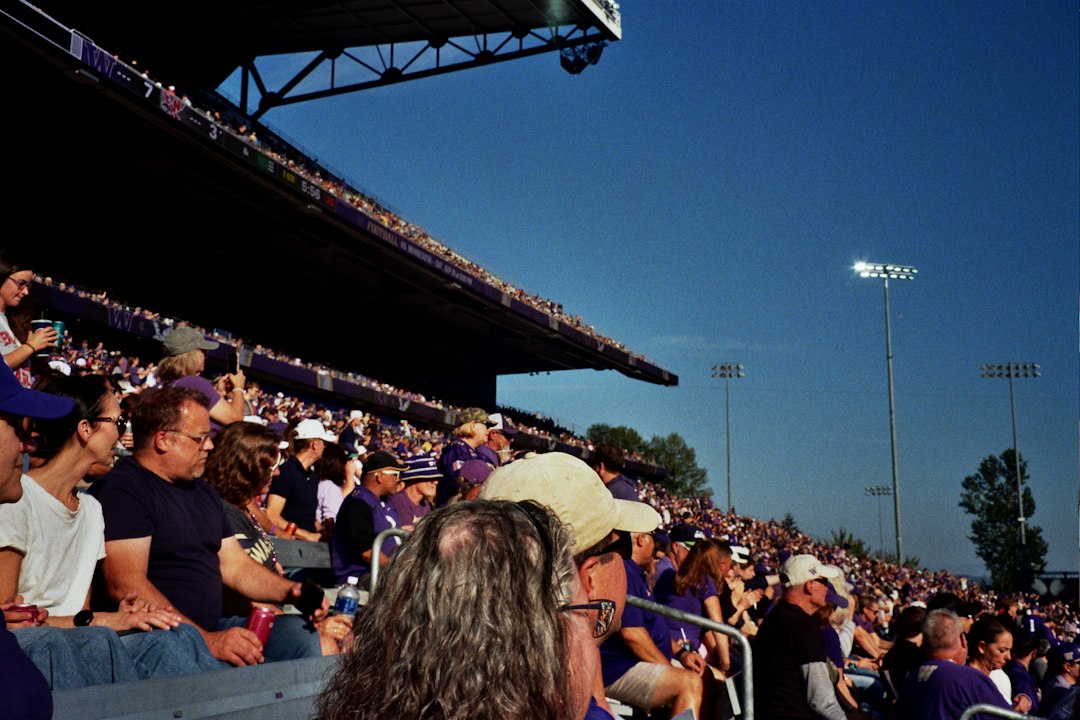




The brackets are out. Third-round matchups in South Carolina are set for Nov. 20, the second-round scores are in, and somewhere a team that was 4-6 in September is still alive in November. If you want the full bracket, Sports Illustrated's high school coverage has the updated matchups and state championship dates.
But you didn't come here only for pairings. You came because a bracket is never just a bracket if you played.
For anyone who ever buckled a chinstrap in the cold, this time of year does something strange. You glance at a list of team names and seeds, and your chest tightens in a way a spreadsheet has no right to cause. Your hands remember the tape. Your ears remember the band. Somewhere between "third round" and "state championship," you are seventeen again, and nobody can tell you otherwise.
The Week the Season Becomes the Only Thing
Playoff week has its own physics. Regular season Fridays are a rhythm: game, film, practice, game. In the playoffs, the rhythm breaks. Every snap is the last snap you might ever get, and everybody in the building knows it without anyone saying it out loud.
Every former player knows the particular quiet of the locker room on a playoff Thursday. Fewer jokes. More focus. Someone's taping an ankle that doesn't need taping, because the tape is something to do with the nerves. The coach says the same things he said in August, but now they land differently, because "one game at a time" stops being a slogan and becomes the only way to survive the week.
That's what a bracket really is. It's a promise and a threat in the same grid of lines. Win, and you play again. Lose, and a season of 5 a.m. conditioning, two-a-days in August heat, and bus rides home with your headphones on ends in a single evening.
What the Seeds Don't Tell You
A seed is a number someone assigned from a records formula. It tells you nothing about the kid who played through a sore shoulder all October, the senior who moved from second string to starter in week six, or the line that finally started moving as one organism around midseason.


Anyone who has been inside a program knows the best playoff stories are never the ones the seeding predicted. They're the underdog that clicks in November, the team that peaked late, the group of seniors who decided together that they weren't ready for it to end. When you scan a bracket and see an unfamiliar school beating a higher seed, you're not looking at an upset. You're looking at a locker room that decided something.
Remember the Walk?
Not the game. The walk.
Think back to the moment between the bus and the field. The way the lights looked bigger than they did during the season, though they were the same lights. The way the crowd noise seemed to arrive a half-second before you could see the stands. The smell of cut grass mixed with something frying at the concession stand, a smell that, in your memory, is the actual smell of being seventeen.
Every former player has that walk. For some it's the tunnel. For others it's a gravel path from the parking lot, or a chain-link gate held open by a booster dad in a team windbreaker. The geography is different everywhere. The feeling is identical.
And here's what makes playoff football in South Carolina, or Texas, or Ohio, or anywhere the sport matters to a town, so potent: the walk gets heavier. Regular-season Friday, you walk out as a team. Playoff Friday, you walk out carrying a whole town. The grocery store clerk who asked about the game. The neighbor with the flag. The grandparent in the third row who has not missed a home game in thirty years.
The Small Details That Stay
Ask any group of former players to describe their playoff memories and notice how rarely they talk about the score. They talk about:
- The cold metal of the bleachers when you were on the sideline during a defensive series
- The specific way a teammate yelled your name when you made a play
- Hot chocolate from a thermos, handed over by someone's mom, tasting better than anything you've had since
The details are always sensory and always small. The scoreboard fades. The feeling doesn't.
What a Third-Round Game Actually Costs the Players
By the third round, these are teenagers who've given a year of their lives to the thing. They've lifted in the offseason, run in the summer, played through August humidity that felt like breathing through a wet towel. They've balanced school, jobs, and the quiet pressure of knowing that for many of them, this is the last time football will be the center of their world.
That last part is what former players understand best. For the vast majority of high school athletes, the senior season is the end of organized football. No college tryout, no next level. Just a final Friday that arrives whether you're ready or not, followed by a Saturday morning where you wake up and realize you don't have anywhere to be.
Marcus T., 41, played linebacker for a small-town program in the Carolinas and still remembers waking up the morning after his team's playoff loss. "I put my cleats by the door out of habit," he says. "Then I just stood there looking at them. Nobody warns you that the hardest part isn't losing the game. It's waking up the next day with nowhere to put all of it." He says that morning is the reason he's never missed a playoff Friday since, even when he doesn't know a single kid on the field.
That's the thing about a playoff bracket. It's a calendar of other people's last chances, and anyone who has lived one can feel the weight of every line on it.
Why Former Players Can't Look Away
There's a reason you refresh the bracket. There's a reason you pull up the scores on your phone at 9:40 p.m. on a Friday while pretending to watch something else with your family.
You aren't following the games. You're visiting.
Every high school playoff game is a portal to a version of your life that was simple in the best way: one goal, one team, one night that mattered more than anything else on earth. You can't go back, but you can stand at the edge of it and look through the window. Following a bracket, even for a team you've no connection to, lets you stand there for a few minutes.
In our experience talking with former players, the ones who say they've "moved on" from football are often the ones who check scores most closely. The feeling doesn't expire. It just waits for November.
The Number You Wore
Ask a former player their jersey number and watch what happens. There's no hesitation. A man who can't remember where he parked yesterday will say "thirty-four" or "eighty-one" instantly, with a small involuntary lift in his posture, as if the number still fits.
That number was your name on Friday nights. It was what announcers called you. It was what a hand-painted banner said when the cheerleaders ran it through the paper hoop. It was the thing your little cousin wrote on his own t-shirt with a marker because he wanted to be like you.
Ask yourself honestly: where is that jersey now? In a box in the attic, if you're lucky. Faded, stretched, maybe missing a sleeve number. Or it went back to the equipment room at the end of the season, because it was never yours to keep. Plenty of players hand back their jersey at the senior banquet and never see it again.
The Season That Lives in the Stands, Too
It isn't only the players who carry playoff Fridays.
The parents who learned the entire roster by number. The younger brother who watched from the fence and swore he'd be out there someday. The band kid who played the fight song so many times it's still stuck in his head. The cheerleader who stood in the cold in a skirt because that's what the uniform demanded. Playoff football is a whole community's memory, and if you were part of it in any role, you know the feeling of a stadium at full volume on a November night.
Dana R., 38, cheered through four years of high school football and now has a daughter in the same program. "I got chills watching the first playoff game from the stands as a parent," she says. "Same lights. Same band. Same smell. Somebody handed me a hot chocolate and I just about lost it." She admits she spent the second half barely watching the game, watching the band instead, remembering her own seventeen-year-old self hoping the team would keep winning so the season wouldn't end.
The stands hold as much memory as the field does.
How to Honor the Feeling
You can't replay the season. But you can do something with the feeling instead of just letting it pass through you every November.
- Call someone from the team. Not a group text. A call. Ask them what they remember about the playoff run, and let them talk. You'll learn something about your own season you'd forgotten.
- Go to a playoff game this week. Pick any school, any bracket line. Sit in the bleachers. Buy the bad hot chocolate.
- Put your number back on something real. Not a framed photo. Something you can hold, wear, and hand to the next generation.
That third one is where many former players get stuck. The memory is vivid, but the physical proof is gone. The jersey is in a closet two states away, or it never left the school. You have the story and no artifact.
Getting the Artifact Back
A custom jersey with your name, your number, and your team's colors does something a photograph can't. It has weight. It has fabric. You can hand it to your kid and say, "This was me." You can wear it to your own town's playoff game and feel the stands recognize something familiar. You can hang it on a wall where it does its quiet work of reminding you who you were on the nights that mattered most.
Our team recommends starting with the details you remember best: the exact number, the colors, the way the lettering curved across the chest. Most people find the design details come flooding back once they start. The shade of the away jerseys. Whether the numbers had a border. Whether your school used block lettering or something more traditional. The memory is more detailed than you think.
The Long View: Why Bracket Season Never Gets Old
Years pass. The roster changes. The coach retires. The stadium gets a new scoreboard and a turf field, and the old grass becomes something you describe to your kids with the same reverence your father used describing his.
But November still arrives. The brackets still drop. A new group of teenagers still lace up cleats and chase the same impossible thing: one more week. One more game. One more Friday night where everything in the world narrows to a hundred yards of grass and a clock counting down.
If you played, that feeling isn't a memory you visit occasionally. It's a part of how you're built. It surfaces every fall without being invited, and it has no expiration date. The best thing you can do with it is stop apologizing for it. Lean into it. Go to the game. Call the old friend. Say the number out loud.
Because the people on that bracket right now, the ones playing in the third round, are going to wake up someday forty years old and feel exactly what you're feeling now. And someone, somewhere, will remind them it was real.
Your jersey is still out there waiting.
Design yours in minutes and see your name and number exactly the way you remember it.
Frequently Asked Questions
Why do high school football playoffs feel so emotional for former players?
Playoff football compresses an entire season of effort into elimination games where every snap might be your last. For most players, senior year is the final organized football they'll ever play, which gives those games a permanence regular-season games lack. The emotional charge comes from the stakes, the shared effort with teammates, and the knowledge that the experience can't be repeated. That feeling doesn't fade with age, which is why bracket season still pulls at players decades later.
Where can I find the latest South Carolina high school football playoff brackets and scores?
Sports Illustrated's high school coverage publishes updated South Carolina playoff brackets, round-by-round scores, and state championship dates as the postseason progresses. The South Carolina High School League also posts official bracket information. Because matchups update after each round, check the source close to game day for the most current pairings.
I lost my high school jersey. Can I get a replacement with my old number?
Yes. Many former players recreate their jersey as a keepsake by designing a custom version with their original name, number, and team colors. Start by gathering what you remember: your number, your school's colors, any distinctive lettering style or trim. Old yearbook photos, team pictures, and conversations with former teammates can fill in details you've forgotten. A custom jersey won't be the exact one you wore, but it can capture the look and the feeling.
Why do I still check high school scores even though I haven't played in years?
Following high school football lets you reconnect with a time when the stakes felt enormous and the focus was simple. Many former players describe checking scores as a way of "visiting" that part of their lives. It's common, it's normal, and it usually intensifies in the fall. The feeling reflects how formative those seasons were, not any inability to move on.
How can I stay connected to my old team after all these years?
Start small: message one former teammate and ask what they remember about your best game. Attend a local playoff game, even if it's not your old school. Look for alumni events, homecoming weekends, or team reunions, which often happen around the same time as playoff season. Many former players also find that having a physical keepsake, like a custom jersey, helps keep those memories close and gives them something to share with family.
See also: what playing under the lights actually felt like | why your senior season memories are so vivid | why high school sports still matter to adults | the bus ride home after a loss | football-crazy states