





You sent the save-the-date six months out. You followed up twice. You built a Facebook event, a group text, and a Google Form. And still — the people you most wanted there, the ones who actually played, the ones whose names you still say out loud when that season comes up — sent the same polite decline they've sent for the last three reunions.
It's not them. It's the format.
The standard class reunion ideas circulating everywhere — dinner cruise, hotel ballroom, rooftop bar — are designed for people who want to reconnect over drinks in nice clothes. Former athletes want to reconnect over the thing they actually did together. Until the reunion gives them that, the ones who claim they "don't do reunions" will keep not doing them.
This is the article that changes that. Below are 12 class reunion formats built specifically around what former teammates actually do — the alumni scrimmage, the field walk, the locker-room tour, the pre-game picnic — because those are the only formats that reliably pull the athletes who've ghosted every ballroom invite for twenty years. Whether you're deep into class reunion planner mode or just sketching the first concept, at least three of these fit your group right now.
The Real Problem With Standard Class Reunion Ideas (And Why Athletes Specifically Bail)
Here's what the reunion planning guides skip over: athletes have a very specific relationship with their playing days. It isn't nostalgia in the abstract — it's tactile. It's the smell of the locker room, the weight of the pads, the particular sound of that gym floor on a Tuesday night in February. Asking former athletes to stand in a hotel ballroom and approximate those feelings over a cash bar and a slide show is — and they can feel this even when they can't name it — the wrong container for the experience.


The hs reunion ideas that actually land for athletic alumni share one structural feature: they put people back in the physical context of what they did together, or they create a new physical experience that activates the same team-based chemistry. Ballrooms accomplish neither.
Research published by the American College of Sports Medicine consistently shows that shared physical activity accelerates social bonding in ways that passive social settings do not — which is precisely why former athletes who would never attend a dinner reunion will drive four hours for an alumni scrimmage. The activity is the reunion. The venue is just where it happens.
The 12 formats below are organized by planning complexity, from lightest lift to full production, so you can find your entry point regardless of how much runway you have.
4 Zero-Pressure Class Reunion Formats That Need Almost No Budget
1. The Pre-Game Picnic
This works because it's already a known format — it doesn't feel like a "reunion event," which is exactly why people say yes to it. Alumni who'd attend a current home game anyway now have a structured reason to show up two hours early and actually see each other.
Set up in the parking lot or a designated picnic area before kickoff, tip-off, or first pitch. Food, a canopy, a speaker. Let current players or coaches stop by if the school allows it. The game itself becomes the shared activity that fills the silences a ballroom never can.
In our experience, this format produces the lowest barrier to attendance of anything on this list. "Come watch the game with us" is a sentence former athletes can say yes to without overthinking it.
2. The Field Walk or Court Walk
No catering. No venue fee. Just access to the field, court, or track — and an hour together.
Walk the space. Stand on the exact spot where the thing happened. Let people talk when they want to, go quiet when they need to. The physical space does emotional work that no slide show can match. Coaches, managers, trainers — invite everyone who was part of the program, not only the letter-winners.
This format works beautifully as a warm-up to something larger — dinner afterward, a local bar — but it also stands completely alone for groups where presence matters more than programming.
3. The Group Watch Party
Pick the game. The championship. The rivalry. The one everybody still references when that season comes up. Stream it, project it, or find a sports bar willing to put it on a dedicated screen for the group.
The watch party works because it gives the room a shared focal point — exactly what the actual game used to provide. People who haven't seen each other in fifteen years don't have to manufacture conversation. The footage does it for them. "What were you thinking right before that play?" opens three hours of real talk without any further prompting.
4. The Alumni Dinner — at the Fieldhouse, Not the Hotel
Same dinner concept. Completely different emotional register. If the school grants access — more on how to ask for that below — holding the dinner in the gym, the field house, or even the corridor outside the locker room transforms the texture of the evening. The catering stays the same. The room handles everything else.
This is the lowest-lift upgrade available to any class reunion planner already committed to a dinner format. The ask to the athletic department is direct: "We'd like to hold our alumni dinner in the facility where we trained. We'll handle catering, cleanup, and we'll keep it to [X] people."
4 Active Class Reunion Formats Built Around the Sport Itself
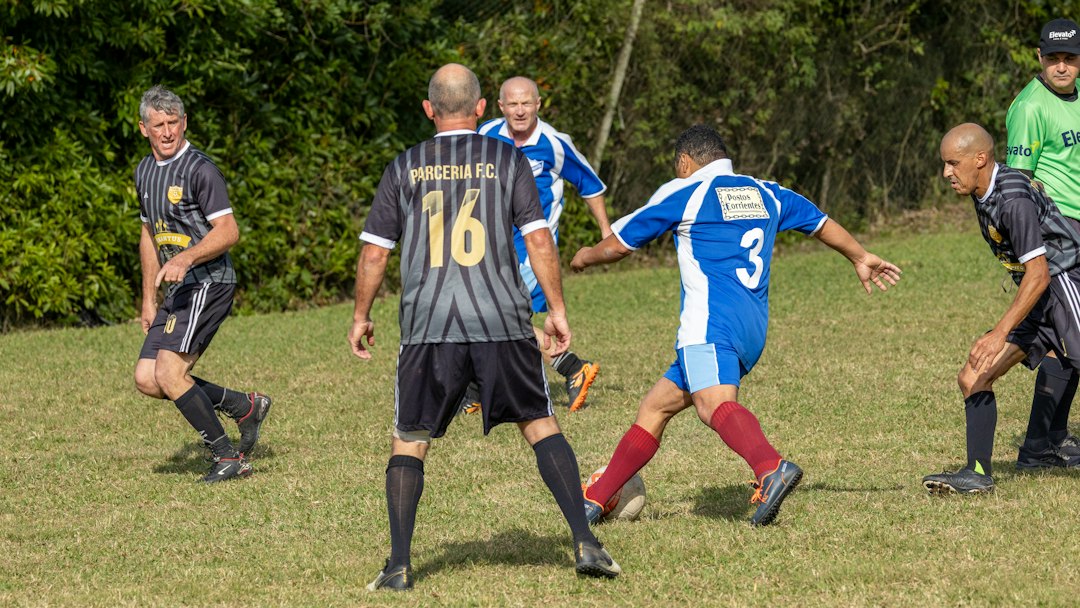
5. The Alumni Scrimmage
This is the one. The single format that produces the most reliable "yes" from athletes who decline everything else.
The alumni scrimmage works for football, basketball, soccer, softball, baseball, lacrosse, hockey, and track relay events. The structure is consistent: current roster versus alumni, or two alumni squads organized by era. Keep it short — 45 minutes of actual play is enough. Nobody needs to prove anything for longer than that.
Coordinate with the athletic department at least 60 days out. Confirm facility access, equipment availability, and whether the current coaching staff wants to be involved — many do, because it is genuinely good for the program's culture. Require that participants acknowledge the recreational nature of the event in writing. And be straight with the group about expectations: this is a jog-and-laugh situation, not a tryout.
The photos alone justify the planning effort. There is no hotel ballroom image that competes with a 45-year-old in her number 23 jersey making a legitimate post move on her 19-year-old replacement.
6. The Locker Room Tour and Jersey Ceremony
Most former athletes haven't been inside the locker room since graduation day. Pairing that access — locker room, weight room, training room — with a structured jersey ceremony, where former players receive a custom jersey bearing their name and number, creates one of the strongest emotional payoffs in reunion planning.
The jersey component lands harder than most planners expect. Maria C., 38, a former Division III volleyball libero, received a jersey with her name and number at her five-year alumni event and said she didn't realize how much she'd missed seeing her name on the back of something until she held it in her hands. She wore it the rest of the evening. Four teammates placed their own orders the following week.
The ceremony doesn't require elaborate production. Names called, jerseys presented, a photo together. The emotional architecture is already built into the object itself.
7. The Skills Challenge
Not a scrimmage — a structured competition that people at every current fitness level can enter without risking injury or embarrassment.
Football: accuracy throws, kick distance, informal combine drills. Basketball: three-point shootout, free throw percentage, half-court shot bracket. Soccer: penalty kicks, juggling count, crossing accuracy. The format is immediately recognizable from their playing days, competitive enough to generate real energy, and low-stakes enough that the person who hasn't trained in a decade doesn't feel exposed.
Skills challenges also serve multi-sport alumni events well — situations where committing to one sport's scrimmage format would implicitly leave half the room on the sideline.
8. The Road Trip Reunion
Pick a current game — a rivalry, a postseason appearance — within reasonable driving distance. Organize the carpool. Go watch it together.
The road trip format recreates the specific away-game energy that former athletes consistently describe as the most bonding experience of their athletic careers. Five hours in a van with three former teammates is worth more actual reunion time than five hours in a ballroom with a hundred of them.
This format scales down beautifully. Twelve people. Two cars. One game. That's a reunion.
2 Formats for Multi-Era, Large-Scale Alumni Events
9. The Alumni Weekend (Multi-Era, Multi-Sport)
When the goal is reconnecting alumni across multiple graduating classes and multiple sports programs, the Alumni Weekend is the only structure that handles that complexity without collapsing into a generic banquet.
Friday evening: facility access for informal tours and low-key gathering. Saturday: alumni scrimmages and skills challenges scheduled by sport — football in the morning, basketball in the afternoon — followed by a structured dinner with program-specific recognition. Sunday: optional informal brunch or watch party.
The two-day structure lets people self-select into the activities that fit their lives. Parents of young children can commit to a single evening. Out-of-state alumni can justify the travel when a full weekend of programming makes the trip worthwhile. The DD214 alumni model — military branch reunion formats — uses a nearly identical multi-event weekend structure to handle reconnecting people across years, geography, and intensity of shared experience. The same logic applies here: give people multiple entry points and let them choose their own depth of participation.
10. The Themed Throwback Event
Pick the year. Recreate the look and feel. The championship season, the year of the big upset, the run that everyone still references when that era comes up.
Decorate with photos, programs, and stats from that specific year. Source the uniform style or warm-up jacket from that era — a tribute to that period, rendered fresh for the occasion. Play the music from that time. Screen the game film if it exists.
Themed events carry the strongest social media amplification of any format on this list. People who skipped this reunion will see the photos and give a different answer next time. That downstream effect matters more than most reunion planners account for.
2 Formats Built Around What People Wear
11. The Jersey Photo Activation
Not a standalone event — an activation that lives inside a larger one. Set up a photo station with a clean backdrop and good lighting. Invite former athletes to arrive in a jersey: their original from their playing days, a tribute version in the style of that era, or a custom piece with their name and number. Take the photo. Post it with their name, number, sport, and graduating year.
This format works at any scale and has been used at hall-of-fame ceremonies, homecoming weekends, and informal bar gatherings alike. The photos become the lasting artifact of the event — more shareable than any group shot taken under a hotel chandelier.
The Nike alumni shirt and Western Michigan alumni apparel in a bookstore serve a real function: they let former athletes signal their affiliation in everyday life. A custom jersey with a name and number serves a deeper function. The bookstore hoodie says "I went there." The jersey says "I played there — this was my number."
12. The Virtual Reunion With a Physical Component Mailed in Advance
For groups spread across wide geographies, the virtual format isn't a consolation prize. It's often the only format that achieves genuinely high attendance.
The upgrade that makes it work: mail something physical before the event. A program from that season. A printed photo. A custom jersey in the style of what the team wore — made for the person, not the program. When people open a package containing their name and number three days before a scheduled video call, both attendance and real engagement during the call increase meaningfully compared to virtual events with no physical component.
The Hogwarts alumni shirt phenomenon — the way a piece of apparel bearing a specific affiliation marker becomes a genuine identity object — illustrates the mechanism exactly. The object does emotional work the video call alone cannot. Send it first. The call becomes the occasion to share the experience of receiving it.
How to Ask the School for Access and Actually Get a Yes
The formats above that require facility access — the locker room tour, the field walk, the alumni scrimmage — all depend on one conversation with the athletic department. Here is the approach that works.
Contact the current head coach or athletic director directly, not the general school office. Lead with what you're offering the program rather than what you need from it: current players benefit from seeing what the program produced. Alumni engagement supports booster activity. The event generates positive visibility for the school. Be specific about dates, times, headcount, and your cleanup commitment. Offer to coordinate with whoever manages the facility schedule. Ask for a 60-minute window and propose a backup date.
The schools most likely to say yes are those where the ask is framed as a partnership — not a favor.
Your jersey is still out there waiting.
Design yours in minutes and see your name and number exactly the way you remember it.
Frequently Asked Questions
How far in advance should I start planning a reunion built around athletic events?
For formats requiring facility access — alumni scrimmages, locker room tours, field walks — begin the conversation with the athletic department at least 90 days out. This gives you time to work around the current team's schedule, handle any facility agreements or liability acknowledgments, and still have 60 days for actual promotion. For lower-lift formats like the pre-game picnic or a watch party, 45 to 60 days is workable. Insufficient lead time is the single most common cause of poor attendance at alumni athletic events — people need time to arrange travel, childcare, and time away from work.
What's the best format when athletes from multiple sports need to be included?
The skills challenge (Format 7) and the alumni weekend structure (Format 9) both handle multi-sport groups well. For a single-day event, build a skills challenge rotation across two or three sports with short windows — 20 minutes per sport, structured so everyone can participate regardless of current fitness level. For a weekend event, schedule sport-specific scrimmages in parallel and let people move between them. The rule: never default to one sport's format and implicitly leave everyone else watching from the sideline.
How do we handle attendees who cannot participate physically?
Design every active format to include a non-participating role that is clearly part of the event — not an afterthought. The alumni scrimmage needs scorekeepers, sideline photographers, and people running the grill. The skills challenge needs judges and timers. The field walk includes everyone regardless of physical condition. Nobody should feel like a bystander at their own reunion. Every format on this list has a meaningful job available for everyone who shows up.
Do custom jerseys have to be ordered months in advance for a reunion event?
Most custom jersey providers can fulfill standard orders in three to four weeks. If you are ordering for a large group as part of a jersey ceremony, build in six weeks minimum to account for size collection, design approval, and shipping time. For individual orders tied to a virtual reunion mailing, four weeks is a comfortable window. Rush options exist but add cost — plan early and avoid that expense entirely.
What is a realistic budget range for an alumni athletic reunion weekend?
The range is genuinely wide. A pre-game picnic for 30 people can run under $500 in food and supplies if the venue is free. An alumni scrimmage weekend with facility access, catering, photography, and custom jerseys for 60 attendees can reach $8,000 to $15,000 or beyond, depending on whether formal recognition elements are included. The formats on this list span that entire range deliberately. Start with what your group can realistically fund through ticket sales or alumni contributions, then choose the format that fits — not the other way around.
See also: how to find and reconnect with former high school teammates | adult recreational leagues for former high school athletes | why high school sports still matter so much to adults | the shared experiences that bond former teammates for life