




Former athletes in the workplace carry something that professional development seminars don't teach and personality assessments don't fully capture. It was installed on a practice field, a gym floor, or a pool deck — sometimes before you were old enough to drive. And it shows up every single day, whether you recognize it or not.
Maybe it surfaces in how you handle a deadline that's slipping — not panic, but a locked-in calm your colleagues seem to find unusual. Maybe it's the way you absorb a missed promotion or a project that fell apart, and you're back at your desk the next morning like it's game day. Maybe it's the low hum of competitiveness you've learned to dial down in meetings because not everyone reads "I want to win this" as a compliment.
This article is about what that thing actually is, where it came from, and why it still shapes every high-stakes moment of your working life.
The Identity You Built Before You Knew You Were Building It
Sport is a complete education system disguised as a game.
By the time most high school athletes finish their playing careers — whether that ends sophomore year or at the final whistle of senior night — they've logged thousands of hours inside a specific kind of learning environment. One with immediate feedback. Real consequences. A scoreboard. And no way to fake effort.
That environment doesn't teach skills. It installs patterns.
The athlete who ran wind sprints at the end of a two-hour practice when every muscle was already spent wasn't learning cardiovascular fitness. They were learning what it feels like to keep going when stopping feels entirely reasonable. That's a different category of knowledge — not intellectual, not even physical, but behavioral. It becomes the default response to exhaustion and resistance, and it doesn't switch off when the season ends.
This is why the athletic background career advantages that former competitors carry aren't generic traits like "hard work" or "discipline." Those words are too thin to describe what actually happened. The real patterns are far more specific — and measurable. An Ernst & Young study found that 94% of women in the C-suite played sports, a data point that suggests the connection between athletic formation and professional leadership isn't anecdotal but structural.

The two core installations:
- Threshold calibration. Former athletes have a recalibrated sense of what counts as hard. Not because they're tougher in some abstract sense — because their baseline was set by two-a-days, overtime periods, and coaches who didn't apologize for the demand. A difficult quarter at work doesn't register the same way it does for someone whose frame of reference was never stretched that far.
- Feedback tolerance. Getting corrected — publicly, specifically, immediately — was Tuesday. Athletes develop the ability to receive critical feedback without collapsing their sense of self. A performance review that would devastate someone without that training is, to a former competitor, just halftime adjustments.
Neither of these patterns shows up on a résumé. Both of them show up every single day. And the work ethic high school sports built into you before you ever had a job turns out to be the thing no onboarding program, professional development course, or performance improvement plan can replicate after the fact.
What Competitive Wiring Actually Looks Like in Practice
The competitive mindset at work is often misread — including by the former athletes carrying it.
It tends to express itself not as raw aggression or obvious ambition, but as a specific orientation toward problems. Athletes are trained to read a situation, identify the gap between current state and desired outcome, and move. Not to analyze into paralysis, but to execute, observe, and iterate. The plan is always provisional. The direction is constant.
Here's what that looks like in a real work context.
The Clock Is Always Running
Former athletes operate with implicit urgency. Not manufactured stress — a genuine internal sense that time is a resource being spent, and standing still is a choice with consequences. This comes directly from sport, where the clock is literal, visible, and completely indifferent to your comfort.
In the workplace, this wiring shows up as a bias toward action. A former athlete in a meeting where consensus has stalled will feel physical discomfort at the drift — and will often be the one who says "okay, what are we actually deciding today?" That instinct is not impatience. It's a clock that was set years ago and never fully reset.
Losing Is Data, Not Identity
This is probably the most underrated advantage former athletes carry into professional life.
Athletes lose constantly. They lose practices, games, and starting spots. They get cut. They get outrun. And they are expected — by teammates, coaches, and themselves — to come back and compete again. The alternative is not presented as an option.
This repeated exposure to public failure, and the mandatory return from it, does something specific to a person's relationship with setbacks. It separates outcome from identity in a way that most professional development programs spend years trying to cultivate artificially. A former athlete who doesn't land the account, doesn't get the promotion, doesn't nail the presentation — processes that event differently than someone who was never trained to detach performance from personhood.
In our experience covering the high school sports and career success space, this is the pattern that surfaces most consistently in the stories former athletes tell about their professional lives. Not the wins. The recovery from losses — and how quickly it happened compared to colleagues who hadn't been through that formation.
Coaching Is a Love Language
Former athletes don't just tolerate feedback. At their best, they actively seek it.
The relationship between athlete and coach is built on a specific premise: the coach's job is to make you better, and making you better sometimes requires pointing out precisely what you're doing wrong — specifically, immediately, without softening. Athletes who thrived in that environment learned to read criticism as investment, not attack.
That reframe is a career superpower. The professional who can receive a difficult performance review as coaching — as information, not verdict — learns faster, adapts sooner, and builds stronger working relationships with managers who have something real to offer but are rarely thanked for offering it.
The Patterns That Don't Translate (And What To Do About Them)
Honesty requires naming both sides.
The same wiring that makes former athletes effective in high-stakes, high-feedback, deadline-driven environments can create friction in contexts that demand something different. Recognizing the mismatch is part of developing the mature version of athletic identity at work.
Where the wiring can misfire:
- Collaboration that feels like losing. Athletes are trained to compete. Compromise can register as defeat, especially in environments where the scoreboard is ambiguous and "winning" is poorly defined. The former athlete who pushes too hard to be right in a collaborative setting is often running competitive software in a cooperative context. The fix isn't suppressing the wiring — it's redirecting it toward the shared goal rather than the teammate across the table.
- Ambiguity tolerance. Sport has rules, roles, and a defined field. The workplace — especially in knowledge work, creative fields, or matrix organizations — is often deliberately ambiguous. Former athletes can find this uncomfortable in a specific way: not because they can't handle hard things, but because they're used to knowing what winning looks like. When the scoreboard disappears, the competitive instinct has nowhere clean to land.
- Rest as productive. Athletes are trained to equate effort with output and stillness with stagnation. Recovery — actual deliberate rest — is a skill many former athletes have to consciously develop as professionals. Burning through a career the way you'd run a season is not a sustainable pace, and the burnout pattern is recognizable among former high achievers who never learned to periodize their effort.
- The late-start identity gap. One pattern that surfaces in athlete-to-professional transitions — and that most coverage misses — is the quiet sense of being behind. Athletes who spent their formative years training and competing often arrive at professional careers on a different timeline than peers who followed a linear academic-to-internship pipeline. This can register as imposter syndrome: a feeling of being less prepared, less credentialed, less "legitimate" than colleagues who took the standard path. The athletic identity built something real and valuable. It just built a different foundation — and that difference can feel like a deficit until you recognize it for what it actually is.
These aren't weaknesses. They're specific applications of well-developed patterns to contexts those patterns weren't designed for. Naming them doesn't disable them — it lets you choose when to apply them and when to adapt.
The Locker Room Nobody Talks About
Priya S., 31, former high school varsity soccer midfielder, now a product manager at a SaaS company in Austin, described it this way: "I always knew I was competitive. What I didn't realize was how much my tolerance for being wrong in front of people — and just moving on — came from years of halftime adjustments and post-game film sessions. My team thinks I handle criticism unusually well. I think I just had an unusually good coach."
Priya didn't consciously connect her soccer formation to her professional reputation until a colleague pointed it out. That gap — between the athletic origin and the professional behavior — is where identity gets lost, and where this conversation needs to happen more clearly.
Do former athletes make better employees? That's the wrong question, and it's why most existing coverage of this topic feels flat. Former athletes aren't universally better. They're specifically, durably, traceably different — in ways that map directly to the environments sport created and the demands those environments placed on them.
The better question is: do you know which patterns you built, and are you deploying them with intention?
Connecting the Playing Days to the Professional Present
The problem with most career identity work for former athletes is that it treats the playing days as background — a fun fact, a résumé line, something that shaped "who you are" in a general and sentimental way.
It's more specific than that.
Every sport installs specific behavioral patterns based on its specific demands. A distance swimmer develops solitary performance under pressure and extreme internal self-monitoring — patterns that often produce unusually self-aware professionals. A basketball point guard develops real-time decision-making under chaotic conditions and hyperawareness of team dynamics. A volleyball libero learns to anticipate, recover, and reset in fractions of a second — a pattern that transfers directly into crisis management and rapid pivoting under pressure.
Understanding what your sport says about how you handle pressure today is the first step in making that unconscious wiring conscious — and deploying it with intention rather than instinct.
These aren't metaphors. They're pattern transfers. And they're recoverable even years after the final game.
How to Map Your Sport to Your Professional Wiring
This exercise is worth doing once, carefully.
-
Name the core demand your sport placed on you. Not the skills — the demand. Distance running demanded sustained discomfort tolerance. Wrestling demanded real-time problem-solving under extreme physical duress. Team sports demanded subordinating individual preference to collective strategy, often in real time with imperfect information.
-
Identify where that demand shows up in your current role. Where does your work ask you to do precisely what sport trained you to do? Those are your highest-performance zones — the moments where effort and output align without strain, where you feel like you're playing rather than grinding.
-
Name one place the pattern doesn't fit. This is the calibration step. Where does the athletic wiring operate in a context it wasn't designed for? Naming it doesn't eliminate the wiring — it gives you the awareness to choose when to apply it and when to consciously shift registers.
That three-step inventory takes thirty minutes. The clarity it produces tends to last considerably longer.
Why This Still Matters Years After the Final Whistle
Here's what nobody tells former athletes clearly enough: the playing days are not behind you.
The formation happened there. The patterns live here — in how you respond to pressure, how you absorb feedback, how you define effort, how you process failure and return from it. The field is gone. The wiring remains, running in the background of every professional situation you enter.
This is why the former athlete who built something real during their high school career carries something permanent into every role, every team, every high-stakes moment of their working life. Not a credential. Not a memory. A set of deeply embedded behavioral patterns, calibrated under real pressure, that operate whether they're consciously deployed or not.
The difference between a former athlete who drifts through their career and one who excels in it often comes down to a single variable: one of them knows what they built. The other carries the same patterns, unexamined, and wonders why certain things feel instinctive while others feel like swimming upstream.
Knowing changes the equation. You can direct what you can name. You can leverage what you understand. You can adapt what you see clearly rather than react to blindly.
Your high school sports and career success aren't separate chapters in a biography. They're the same story, still being written, with the formation from those years still doing its work — every deadline, every setback, every moment when the clock is running and the outcome isn't guaranteed.
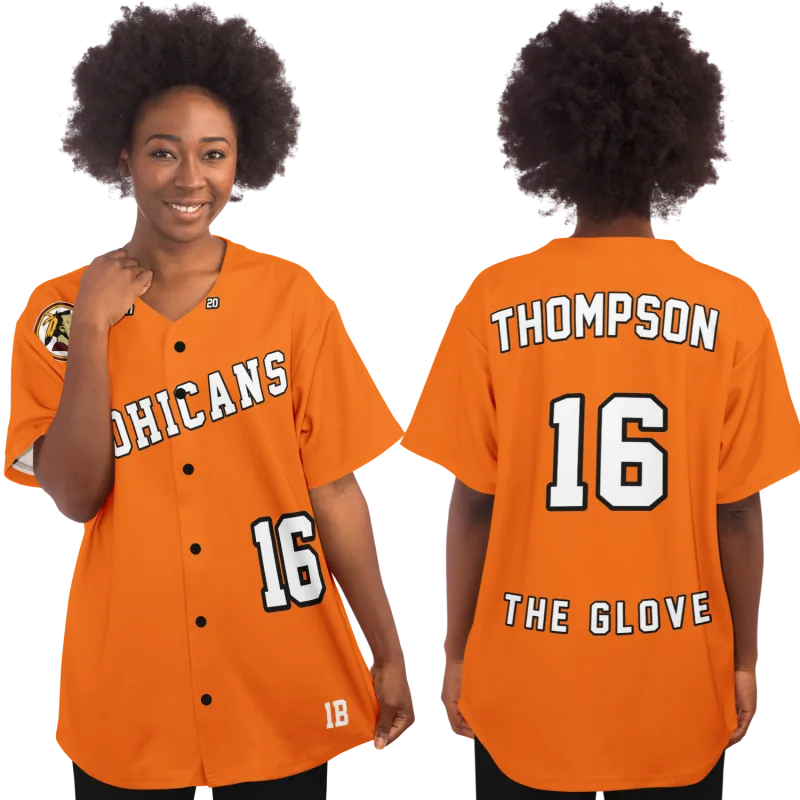
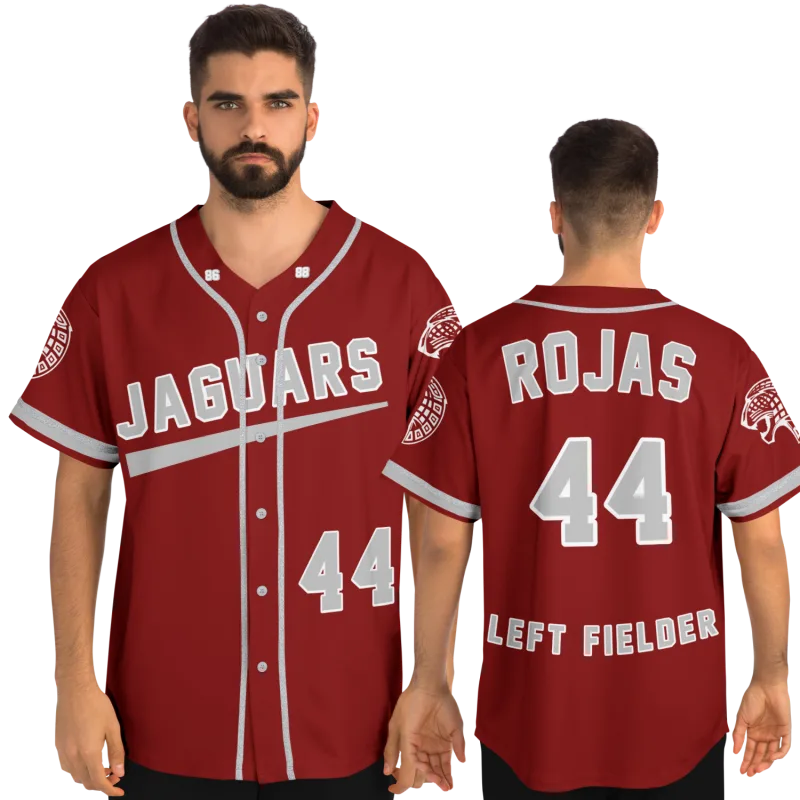
Your jersey is still out there waiting.
Design yours in minutes and see your name and number the way you remember it.
Frequently Asked Questions
Do former athletes actually perform better at work, or is that largely a stereotype?
The honest answer is: it depends on the role and the environment. A 2023 study published in the Journal of Leadership and Organizational Studies found that former athletes scored significantly higher on persistence and performance under pressure — but the advantage was most pronounced in roles with clear metrics, frequent feedback, and defined goals. In ambiguous, low-feedback environments, the edge narrows considerably. Former athletes don't universally outperform everyone around them — they tend to outperform in environments that structurally resemble sport: measurable, demanding, and iterative.
How long does the athletic mindset stay active after someone stops competing?
The behavioral patterns don't have a natural expiration date, but they do atrophy without reinforcement. Former athletes who land in professional environments that demand similar responses — performance pressure, accountability, team dynamics, feedback loops — tend to retain the wiring actively. Those who spend years in low-demand, low-feedback environments often report the competitive edge going quiet, though it resurfaces quickly when the conditions change. The patterns aren't lost. They're dormant, waiting for a context that calls them back.
What if I only played one or two seasons of high school sports? Does the formation still apply?
Yes — with appropriate calibration. Duration matters less than intensity and the specific nature of the experience. An athlete who played one demanding season in a sport that required public performance under real pressure absorbs more formative experience than someone who participated casually for several years without meaningful stakes. The question isn't how long you played. It's what the environment asked of you while you were there. If it asked for genuine effort under genuine pressure with genuine consequences, something was installed — regardless of how brief the season was.
Is there a practical way to reconnect with the athletic identity if it feels distant now?
The most direct path is to name it explicitly and specifically — not in a nostalgic way, but as a current and active part of your professional identity. Saying "I'm a former competitive athlete, and here's what that specifically trained me to do" in a professional context — a performance conversation, an interview, a team retrospective — reconnects the formation to the present. Many former athletes report that the act of articulating the connection precisely, rather than vaguely referencing their playing days, is itself the reconnection. The identity was never gone. It just hadn't been named in a professional context in a while. If any of this sounds familiar — 10 signs you're still a high school athlete at heart.
See also: athletic identity after high school | what high school sports actually teach you | the difference between a sports fan and someone who actually played | why high school sports still matter to adults