





Some numbers you read once and keep thinking about long after you've put the phone down.
Missouri's Week 6 high school football delivered exactly that kind of week. A 435-yard passing performance. A school record that finally gave way. A six-touchdown night that had sidelines erupting and opposing defensive coordinators running through their adjustments with the grim certainty that none of them were going to be enough. Sports Illustrated's Missouri high school football coverage spotlighted the standout performances from September 28 through October 3 — and what those players did deserves more than a vote tally. It deserves a real moment of recognition from anyone who ever put on a helmet and understood, somewhere deep in their chest, exactly what it costs to produce a night like that.
This is not a recap. Box scores live everywhere. This is about what those numbers actually mean — to anyone who played, to anyone whose old cleats are sitting in a storage bin somewhere waiting for a reason to matter again, to anyone who still carries the specific memory of a cool October night when the game made complete, total sense and everything clicked at once.
Missouri gave us some of that in Week 6. It's worth sitting with.
The Numbers From Week 6 That Stopped Everyone Mid-Scroll
Context is everything when performances reach this level, so let's establish it clearly.
A 435-yard passing game in high school football is not a product of favorable circumstances or a soft schedule on a given Friday. That total requires a quarterback operating with sustained, disciplined precision across four quarters — reading defensive coverages at the line, identifying the open window before it closes, trusting the route, and delivering the ball with enough accuracy to convert possession into points, repeatedly, under pressure that compounds with every drive.
Every single completion in a performance like that demands a processing speed that most players — regardless of level — never consistently reach. The arm is one piece. The mind running the calculation behind every snap is the part that separates a 435-yard night from a competent 200-yard night.

The school record that fell during this stretch carries its own separate weight. Records in high school programs are not abstract statistical benchmarks — they are the accumulated history of every player who ever suited up for that program, across every coaching era, every system, every generation of Friday night effort. When someone breaks one, they are not simply having a strong game. They are standing at the summit of everything that came before them and staking a new claim. That is a different kind of pressure than a standard game, and performing through it while the record is visible in the back of your mind is a discipline that doesn't always get named in the write-up.
Six touchdown passes in a single game. That number translates simply: your offense scored on roughly every other meaningful possession. Your defense spent the night watching from the sideline wondering what adjustments were left to try.
These are the performances SI's Missouri coverage is asking the community to recognize — and they are performances that deserve to be understood for what they actually represent, not just tallied.
What Every Former Player Recognizes in a Night Like That
For anyone who ever laced up cleats, strapped on a helmet, and stepped under Friday night lights — performances like Missouri's Week 6 standouts retrieve a specific memory without warning.
It doesn't have to be your best game. It might not even be a game your team won.
But there's a moment most former players carry somewhere: the night when the game slowed down. When the coverage unfolded in front of you with unusual clarity. When your body made the right decision before your conscious mind finished the calculation. When the noise of the stadium became background texture rather than distraction and you were operating inside something that felt less like effort and more like flow.
That is the mental state behind a 435-yard passing performance. Not just arm strength. Not just talented receivers. The mental condition where the game is running at a speed you can actually read — where the rush of the pocket feels manageable, where the decision has already been made before you consciously know you've made it.
Every former player who reached that state, even once, even briefly, on even a modest stage, recognizes what Missouri's Week 6 quarterbacks were experiencing. The numbers are the visible evidence of a mental and physical state that is genuinely rare and genuinely hard to produce under game conditions.
That's what makes these performances worth more than a scroll-past.
The School Record and What It Weighs
Here is something that rarely makes it into the coverage: players who are close to school records usually know about it before the game starts.
You don't drift into record territory by accident. Somebody — a coach, a stat-tracking parent, a teammate who pays attention to that kind of thing — has been watching the number approach. Has maybe mentioned it during the week. Has possibly posted it somewhere visible.
That means you carry it into the stadium on Friday night. Every incompletion costs you ground. Every stalled drive pushes the record further out of reach. Every quarter that ends without progress is a quarter where the number slips. And somewhere in your peripheral awareness, you know the player whose record you're approaching. Maybe personally. Maybe only through the program's lore. Either way, their mark is the ceiling you're trying to lift.
Jenna R., 29, played volleyball at the high school level and spent years thinking about the night she finished one kill short of her school's all-time single-match record — in a match her team won in five sets. "I drove home holding both things at once — the win and the near-miss. They don't sit comfortably together. The players who actually reach those records and break them deserve credit for managing both emotions simultaneously and still performing through all of it." She now has a jersey made in the style of her team's uniform from that season, her original number on the back — not to mark the record she didn't reach, but to mark the team that won when the moment demanded it.
For the Missouri players who broke school records in Week 6, the weight of both emotions landed on the right side. That is harder than the final number makes it look.
What These Individual Performances Actually Represent
A six-touchdown, 435-yard night does not happen because one person decided to have one.
It happens because:
- An offensive line held its assignments long enough for the quarterback to go through his reads
- Receivers ran routes with enough precision to earn the targets thrown their way
- A coaching staff designed and called a game plan that put all of those moving parts in the right position
High school football is the most embedded version of the sport that exists. At professional and college levels, statistical performances are partially insulated from team context by the quality of supporting infrastructure. At the high school level, the quarterback who throws for 435 yards also ran the same conditioning drills as everyone else that week, carries his own equipment, and operates within a program held together by community investment and coaches who are often there because they love the game.
The Missouri Week 6 standouts produced their performances inside that context. Their numbers belong to them — and to the programs that built the environment where those numbers were possible.
October Football Carries Something the Early Season Doesn't
There is something specific about early October in high school football that players understand before they can fully articulate it.
The air changes. Not cold yet — not in Missouri, not at the end of September — but different. The light at Friday night games in late September and early October has a quality that summer two-a-days in August don't carry. You begin to feel the season accelerating. By Week 5 or 6, most players have a clear sense of the shape of what remains: the games left, the opponents still ahead, the possibility of what the end of the season might look like.
For seniors, this arrives with unmistakable weight. Every Friday night in October carries the awareness that the Fridays are finite. That is not a sad realization — it is a clarifying one. It sharpens focus and sharpens effort in ways that Week 1 cannot manufacture.
The Missouri Week 6 performances happened inside that October urgency. The players who produced them understood, at some level, that the season was narrowing and the games were carrying real weight. Performing at the level they did — inside that compressed, meaningful window — is what separates a statistical performance from a memory.
Every former player who made it to October of their final season carries a version of this awareness. The games feel different. The effort feels different. And when someone performs at the level Missouri's Week 6 standouts did, inside that specific window, those performances take on the kind of significance that stays with a program for years.
Your Jersey Is Still Out There Waiting
These performances belong in the record books. Yours belongs somewhere you can actually see it.
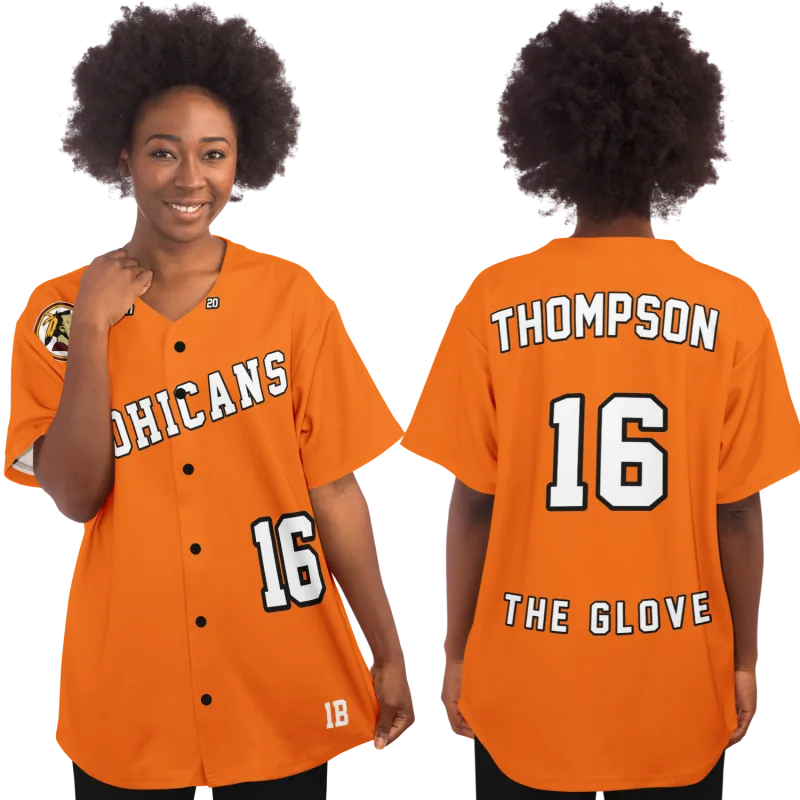
If Missouri's Week 6 pulled up a memory — a number, a name, a specific Friday night when everything lined up and the game made complete sense — that's worth holding onto in a form you can actually touch. A jersey made in the spirit of your team's colors, your name across the shoulders, your number on the back, built as a tribute to the season that shaped you.
Design yours in minutes and see your name and number exactly the way you remember it.
Frequently Asked Questions
How does SI determine who gets nominated for Missouri High School Football Player of the Week?
Sports Illustrated's Missouri high school sports coverage identifies candidates through a combination of reported game statistics, community submissions, and standout performances surfaced through statewide prep coverage. The nomination pool each week reflects the most statistically significant and contextually meaningful individual performances across the state, with community voting determining the final recognition.
What makes a Week 6 performance carry more weight than early-season numbers?
By Week 6, teams have established their defensive identities and made meaningful adjustments from early-season film. Offensive performances at the mid-season mark happen against opponents who have had weeks to prepare — which is why a 435-yard passing game or a six-touchdown night in October reads differently than the same numbers in Week 1. The competitive context is simply more demanding.
Why do high school program records carry significance that college or professional records don't?
A high school program record measures performance against the entire history of a specific community's football tradition. It is not a comparison against a national or international talent pool — it is a comparison against every player who ever wore that program's uniform across every era of the program's existence. Breaking one means standing at the top of a very particular, very local mountain. That specificity is what gives program records their particular weight.
How can former players stay connected to what they felt during their playing days?
Many former players reconnect with their playing experience through reunions, local prep coverage, and tangible reminders tied to their specific seasons — a jersey made in the style of their team's uniform, carrying their original name and number, built as a tribute to the team and the time. The specific details matter: the colors, the number, the name. Generic memorabilia doesn't carry the same weight that something tied to your actual experience does.
What does a 435-yard passing game require beyond arm talent?
The physical tools are one component. The cognitive load behind a 435-yard night is the less-discussed piece — pre-snap reads, coverage recognition, decision timing under pressure, and the mental discipline to sustain that processing across four full quarters of game action. Most players who have played quarterback at any level understand that the arm produces the statistics but the processing speed determines whether the performance holds up from the first quarter through the fourth.
See also: what high school football taught you that no classroom ever could | why Friday night lights meant so much to everyone who played under them | the most football-obsessed states in America